
I left Poway on Tuesday, November 8 to catch up with the Bird and Mammal team from the San Diego Natural History Museum. The science team had been at their Cima Camp since Sunday. Most of the museum excursions are four-day affairs, but this trip had two camp-outs, back-to-back. The second stay was at Cedar Canyon, 15 miles south of our Cima Camp.

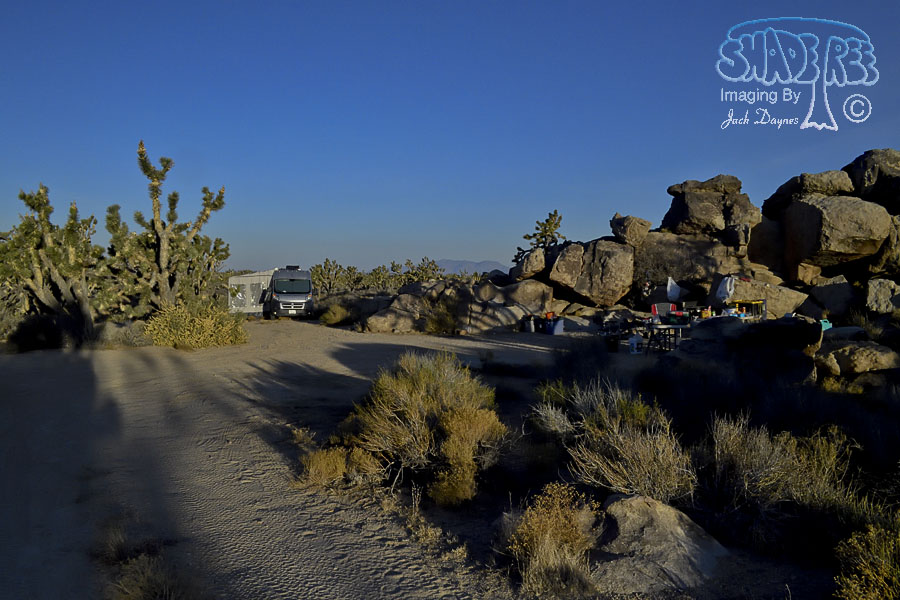
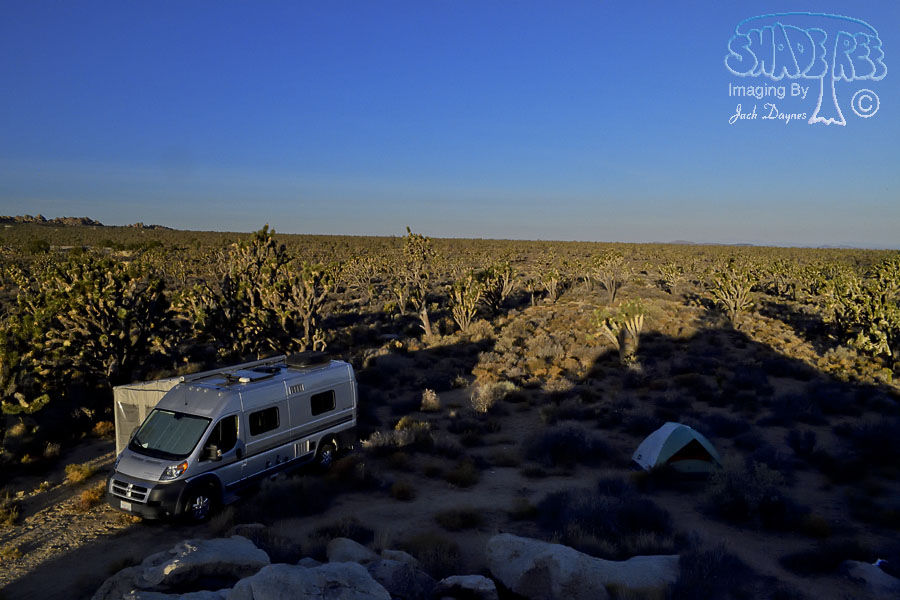
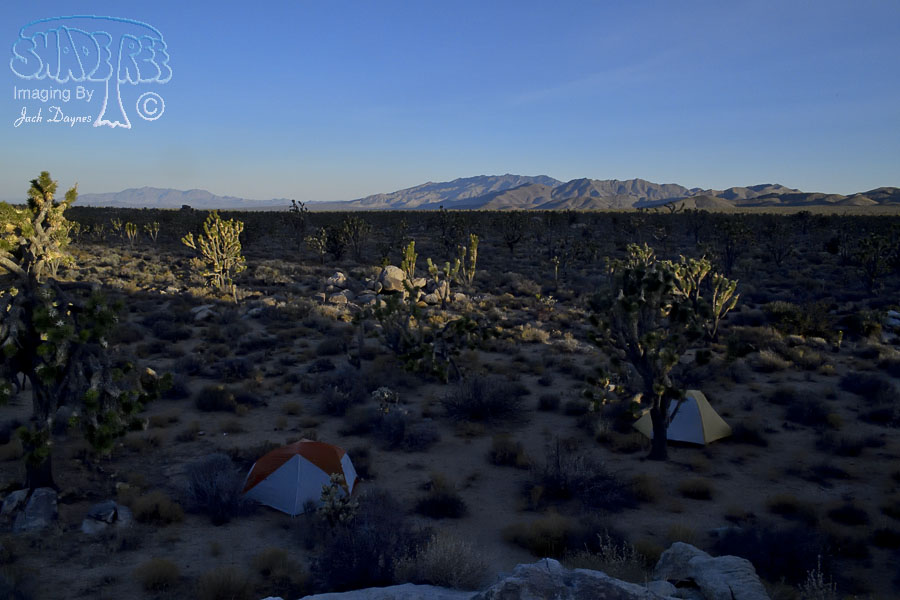
The camp at Cima was about 40 miles southeast of Baker, California. Sites selected for these camps followed as closely as possible, prior studies of the early 1900s and 1940s. It’s about a four and half hour drive from my home to the first camp at Cima. To reach the camp, I drove the I-15. Twenty-seven miles past the world’s tallest thermometer in Baker California (toward Las Vegas) and turned south on Cima Road for 11 miles. The Mojave Memorial Cross was the landmark mentioned where we turned from the road. The elevation at our camp was just under 5000 feet and in the middle of a vast Joshua Tree forest. The setting’s serene beauty immediately struck me. There were 20-30 foot tall Joshua Trees stretching into the distance as much as 15 miles away.
Part of the reason for my delayed departure was to finish up projects I’d started in the Travato. I rebuilt one of the undersized drawers under the bunk, increasing the use of space and increasing the capacity by more than 50%. I also purchased an “Add-A-Room” for the awning, enclosing the area with walls that zip together and provided an 8’x10’ (four-bit room) wind free zone to enjoy while on extended stays. More than adding extra area, I hoped it would give me a studio which I could use to photograph the small mammals that have become my primary focus of late. I’d hoped to practice setting up the room before I left on this trip, but after finishing with the drawer and packing, all I had time to attend was to build a bracket for the rear ladder I could rest the bag that carried the Add-A-Room.
I arrived at the camp to find the entire team hard at work preparing specimens they’d collected that morning and the previous day. My trial-by-fire, learning to assemble the Add-A-Room would begin now. The instructions were less than clear, and the descriptions jumped from one configuration to another and used terminology that assumed prior knowledge. I finally gave up on the instructions and used my noggin. I learned that some keeper pins for the assembly were missing, and I had to improvise a temporary solution. The literature spoke to a 15 minute assembly process. I think with practice, my times might be better, but the first-time setup required substantially more time invested than that. I left off some steps that fit the material to the van for now (I’ll spend time at home on these), but even so, the room provided a comfortable setting to work with the small mammal photography.
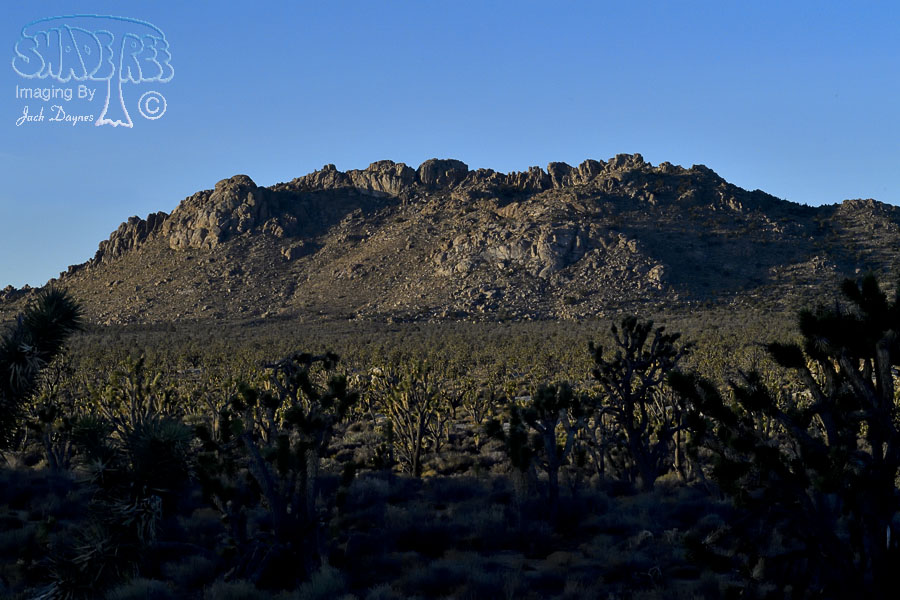
Scenery Near Camp(n/a) |
|
Description: Scenes from around our camp with the Science Team from the San Diego Natural History Museum and gathering data as a followup study from previous studies of about 80 years prior. Mojave National Preserve in San Bernardino County, California. |
Date Taken: 2016:11:09 4:42 |
|
Location:
Cima Camp |
|
Camera Information: NIKON D5, 105 mm, f/18.0, 1/2000 |
File Name: Scenery_D5X6124 |
| © 2016 Jack Daynes, shadeTreeImaging.com |

|
Description: Camped with the Science Team from the San Diego Natural History Museum and gathering data as a followup study from previous studies of about 80 years prior. Mojave National Preserve in San Bernardino County, California. |
Date Taken: 2016:11:09 4:50 |
|
Location:
Cima Camp |
|
Camera Information: NIKON D5, 28 mm, f/18.0, 1/4000 |
File Name: Scenery_D5X6164 |
| © 2016 Jack Daynes, shadeTreeImaging.com |
|
Description: Joshua Trees as far as the eye can see. Camped with the Science Team from the San Diego Natural History Museum and gathering data as a followup study from previous studies of about 80 years prior. Mojave National Preserve in San Bernardino County, California. |
Date Taken: 2016:11:09 4:48 |
|
Location:
Cima Camp |
|
Camera Information: NIKON D5, 28 mm, f/18.0, 1/3200 |
File Name: Scenery_D5X6160 |
| © 2016 Jack Daynes, shadeTreeImaging.com |
|
Description: Scenes from around our camp with the Science Team from the San Diego Natural History Museum and gathering data as a followup study from previous studies of about 80 years prior. Mojave National Preserve in San Bernardino County, California. |
Date Taken: 2016:11:09 4:48 |
|
Location:
Cima Camp |
|
Camera Information: NIKON D5, 28 mm, f/18.0, 1/2000 |
File Name: Scenery_D5X6152 |
| © 2016 Jack Daynes, shadeTreeImaging.com |
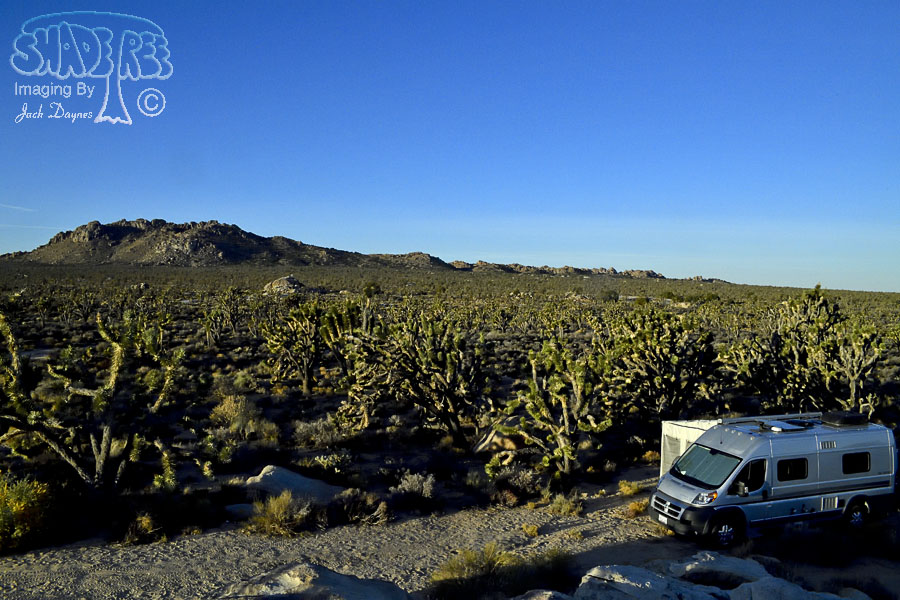
Scenery Near Camp(n/a) |
|
Description: Scenes from around our camp with the Science Team from the San Diego Natural History Museum and gathering data as a followup study from previous studies of about 80 years prior. Mojave National Preserve in San Bernardino County, California. |
Date Taken: 2016:11:09 4:47 |
|
Location:
Cima Camp |
|
Camera Information: NIKON D5, 28 mm, f/18.0, 1/4000 |
File Name: Scenery_D5X6145 |
| © 2016 Jack Daynes, shadeTreeImaging.com |
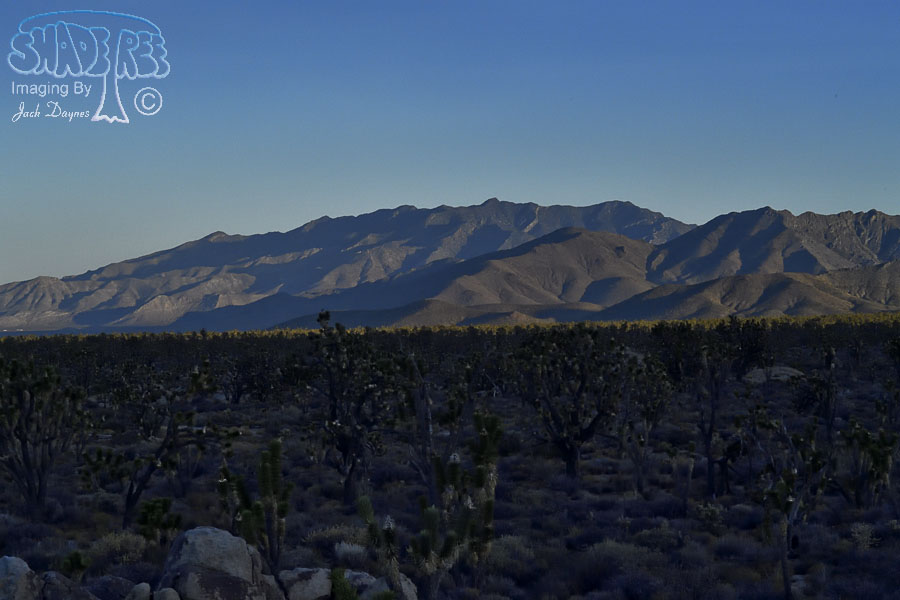
|
Description: Scenes from around our camp with the Science Team from the San Diego Natural History Museum and gathering data as a followup study from previous studies of about 80 years prior. Mojave National Preserve in San Bernardino County, California. |
Date Taken: 2016:11:09 4:43 |
|
Location:
Cima Camp |
|
Camera Information: NIKON D5, 105 mm, f/18.0, 1/2500 |
File Name: Scenery_D5X6137 |
| © 2016 Jack Daynes, shadeTreeImaging.com |
Click map markers to reveal further information
