

The first shift’s vigil at the National Butterfly Center’s “Big Sit” event began on Sunday at 5:00am. The sunlight had not begun to show. In the darkness, we could hear the songs of distant Common Pauraque and the ever-present Northern Mockingbirds. One of the sharper-eyed team members spotted the silhouette of a creature landing in the overhead branches of the nearest tree. When we shone our lights, we could see it was an Eastern Screech Owl. It was the first sighting of the day.
Only at about 6:30am, did the sky begin to illuminate. And that initiated the “Dawn Chorus”, when every bird in the area started singing their hearts out. Our biggest challenge during these pre-dawn moments was differentiating the calls and songs of the mockingbirds, from the nearby birds they imitated.
I consider my skills at bird-song identification to be above average (like the kids from Lake Wobegon), but we had on our team one of the most skilled birders in the region. I first met Ryan Rodrigez in 2021, during the first “Big Sit” I attended. Then, the 14-year-old was under the tutelage of one of Texas’ most beloved and amazing birders, Mary Gustofsen. We lost Mary to cancer in November 2022, and Ryan, now 17 years old, was on his own. His skill at bird identification was invaluable.
The Big Sit is just one of several state-wide birding competitions put on by Texas Parks and Wildlife under the name of the Great Texas Birding Classic. The goal of the Big Sit competition is to identify by sight or sound as many birds as possible, while staying inside a 50 foot diameter circle. Prior to the Covid-19 pandemic, the organizers restricted the circle to a diameter of 17 feet. But to maintain respectful social distancing guidelines, they changed it to 50 feet, where it remains today.
The NBC teams for the past few years counted over 100 species, and they won the competition for the past two years. When we compiled our sightings for the day (5am-9pm), we had 98 species on our list. One factor that diminished our count, was the severe drought conditions the region has suffered over the past few years. This year, the 60 acre reservoir bordering the property’s eastern boundary was dry. In normal years we would get shorebirds, waders, and waterfowl fly-overs that could have pushed our count past the 103 species that were recorded last year. We all hoped for more, but despite the intense heat (106°F) and high humidity, it wasn’t the numbers that we counted, but the memories and the company of the people on the team that I will treasure.
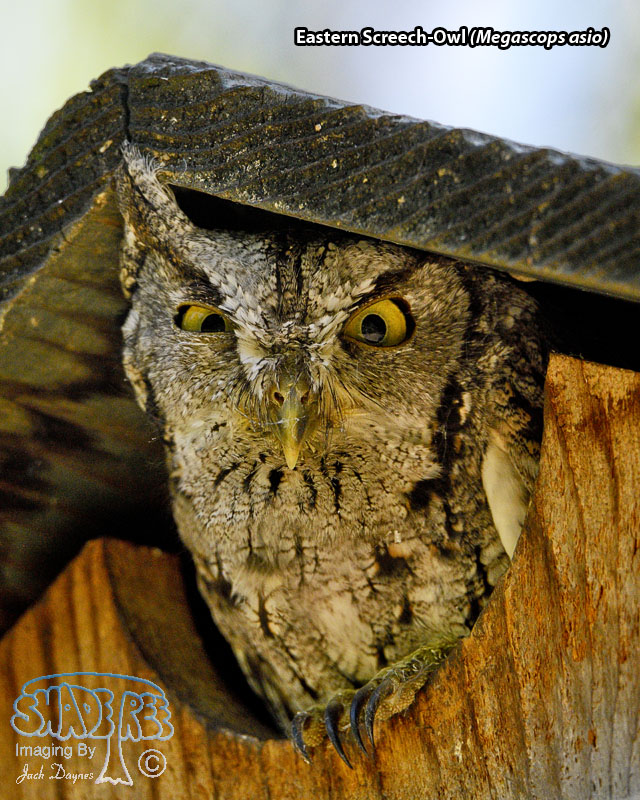
Eastern Screech-Owl(Megascops asio) |
|
Description: Eastern Screech-Owls haunt the grounds at the National Butterfly Center, but they don’t always show themselves. Several times, I walked past this location without seeing the bird. I was grateful it finally popped up to say hello. |
Date Taken: 2022:09:25 10:37 |
|
Location:
National Butterfly Center |
|
Camera Information: NIKON D850, 800 mm, f/8.0, 1/1000 |
File Name: EasternScreechOwl_8506465-NationalButterflyCenter |
| © 2022 Jack Daynes, shadeTreeImaging.com |

|
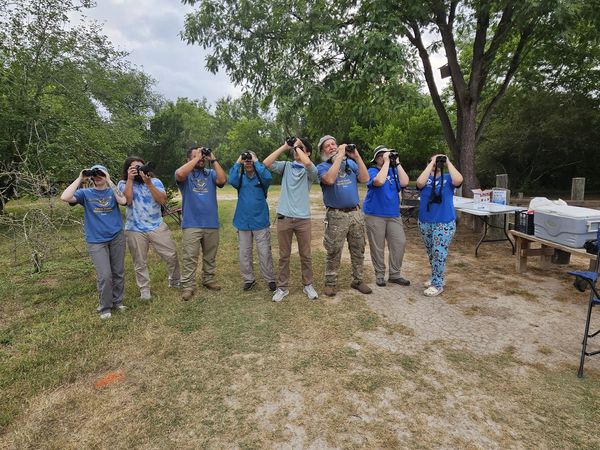
Description: Selene Shores, Roy Rodgers, Nestor Hernandez, Joe Salazar, Ryan Rodriguez, Jack Daynes, Kristy Baker, Amanda Hernandez. Not pictured: Luciano Guerra and Judy Salinas |
Date Taken: 2024:04:28 7:19 |
|
Location:
National Butterfly Center |
|
Camera Information: |
File Name: NBC-Five-to-Nine-Shift-Spoofing |
| © 2024 - Jack Daynes - shadeTree Imaging |
|
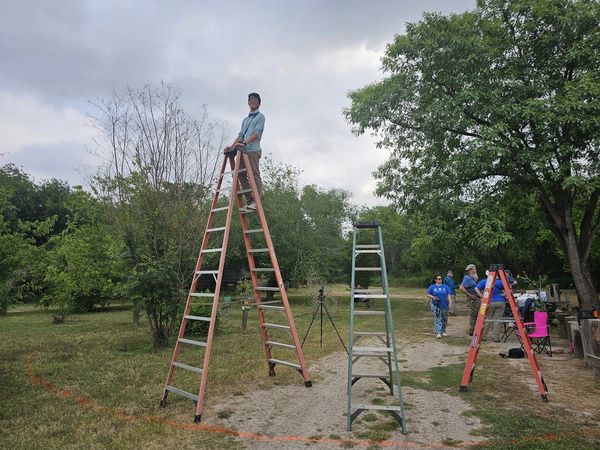
Description: Ryan Rodriguez taking the high road. |
Date Taken: 2024:04:28 7:19 |
|
Location:
National Butterfly Center |
|
Camera Information: |
File Name: NBC-The-High-Road |
| © 2024 - Jack Daynes - shadeTree Imaging |
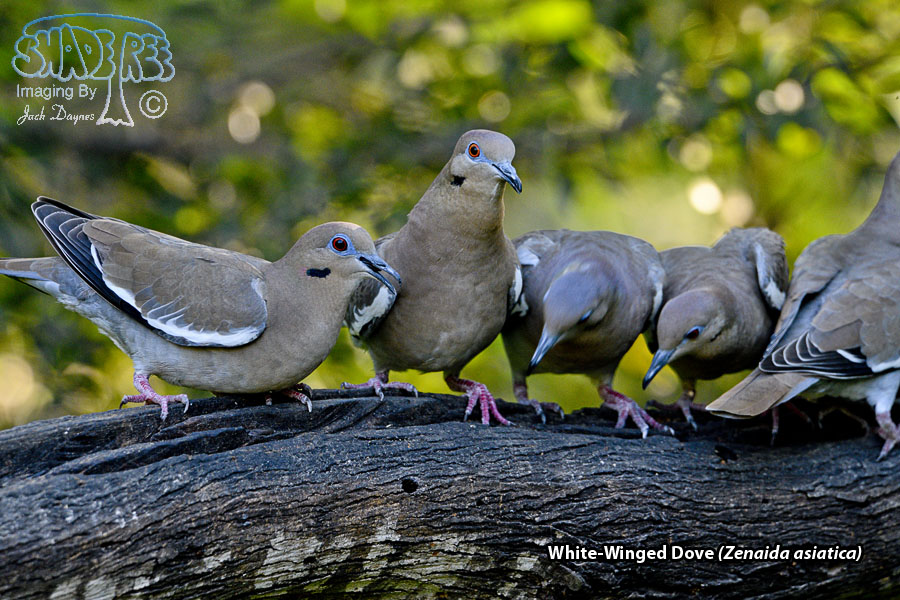
White-Winged Dove(Zenaida asiatica) |
|
Description: White-Winged Doves at the National Butterfly Center are shy, but they know when the feeders are refilled. Though they may not rush right in, the lure of the seeds gives them the courage to overcome their shyness. |
Date Taken: 2022:09:25 9:26 |
|
Location:
National Butterfly Center |
|
Camera Information: NIKON D850, 800 mm, f/8.0, 1/250 |
File Name: WhiteWingedDove_8506396-NationalButterflyCenter |
| © 2022 Jack Daynes, shadeTreeImaging.com |
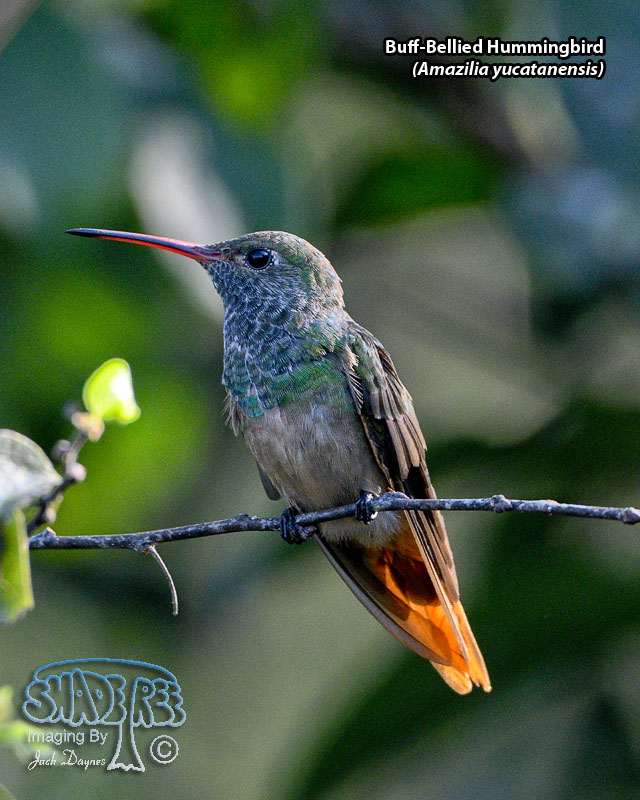
Buff-Bellied Hummingbird(Amazilia yucatanensis) |
|
Description: Buff-Bellied Hummingbirds are the most common hummingbird in south Texas. Here at the National Butterfly Center in Mission Texas, they seem to have a year-round presence. |
Date Taken: 2022:09:25 9:13 |
|
Location:
National Butterfly Center |
|
Camera Information: NIKON D850, 800 mm, f/8.0, 1/400 |
File Name: BuffBelliedHummingbird_8506309-NationalButterflyCenter |
| © 2022 Jack Daynes, shadeTreeImaging.com |
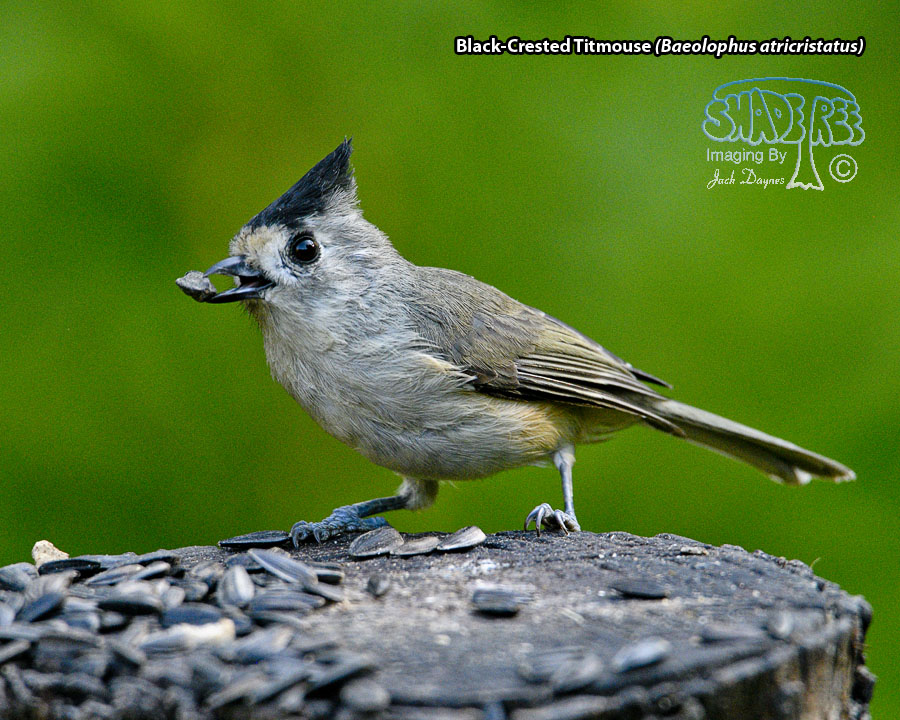
Black-Crested Titmouse(Baeolophus atricristatus) |
|
Description: Typical among the various members of the Titmouse clan, Black-Crested Titmouse behaves at feeders like a thief; snatching a morsel, and quickly retreating to some nearby hidden perch to hammer open the seeds it loves. |
Date Taken: 2022:09:25 9:01 |
|
Location:
National Butterfly Center |
|
Camera Information: NIKON D850, 800 mm, f/8.0, 1/250 |
File Name: BlackCrestedTitmouse_8506241-NationalButterflyCenter |
| © 2022 Jack Daynes, shadeTreeImaging.com |
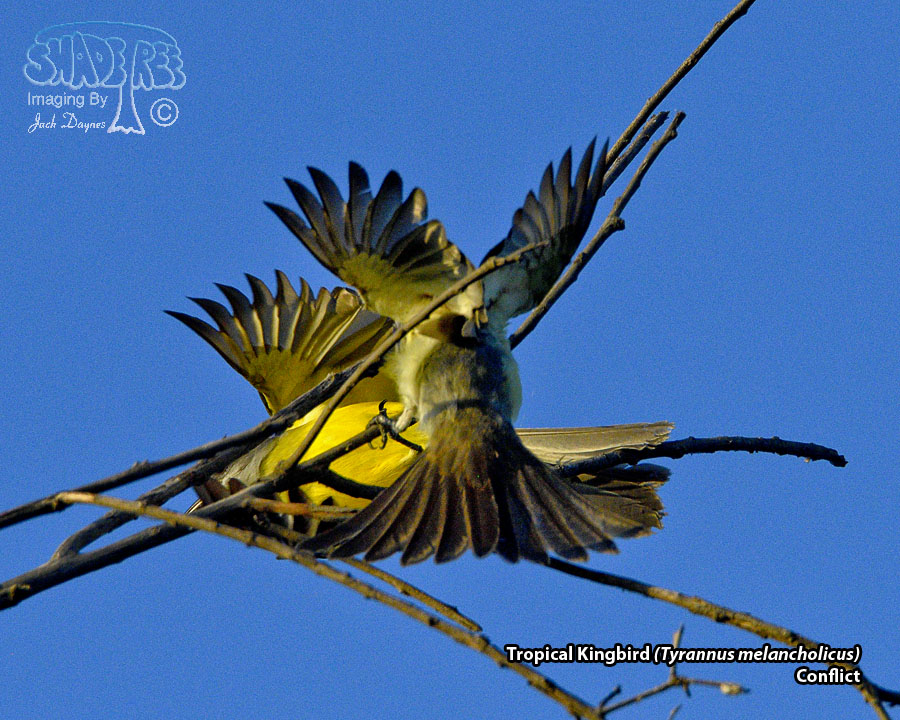
Tropical Kingbird(Tyrannus melancholicus) |
|
Description: Tropical Kingbirds at the National Butterfly Center may be present year-round. In summer they share territory with Couch’s Kingbirds, which can only be differentiated in the field by their calls. |
Date Taken: 2022:09:24 18:46 |
|
Location:
National Butterfly Center |
|
Camera Information: NIKON D850, 800 mm, f/8.0, 1/5000 |
File Name: TropicalKingbird_8506227-NationalButterflyCenter |
| © 2022 Jack Daynes, shadeTreeImaging.com |
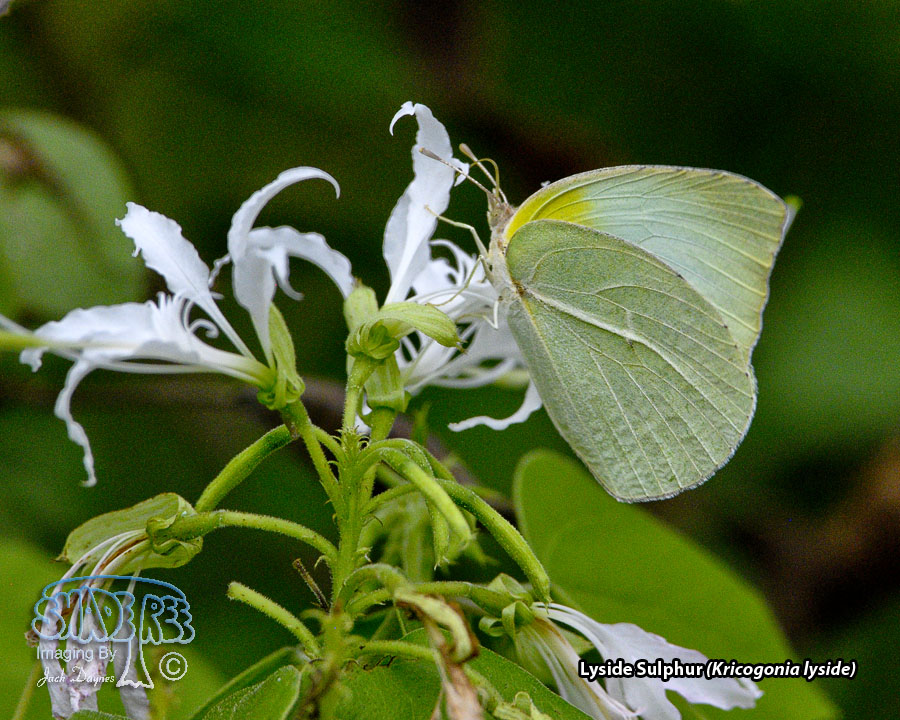
Lyside Sulphur(Kricogonia lyside) |
|
Description: Lyside Sulphur were just one of many butterfly species that visit the National Butterfly Center, where nearly every planting provides them with sustenance. |
Date Taken: 2022:09:24 11:24 |
|
Location:
National Butterfly Center |
|
Camera Information: NIKON D850, 800 mm, f/8.0, 1/2000 |
File Name: LysideSulphurButterfly_8505801-NationalButterflyCenter |
| © 2022 Jack Daynes, shadeTreeImaging.com |
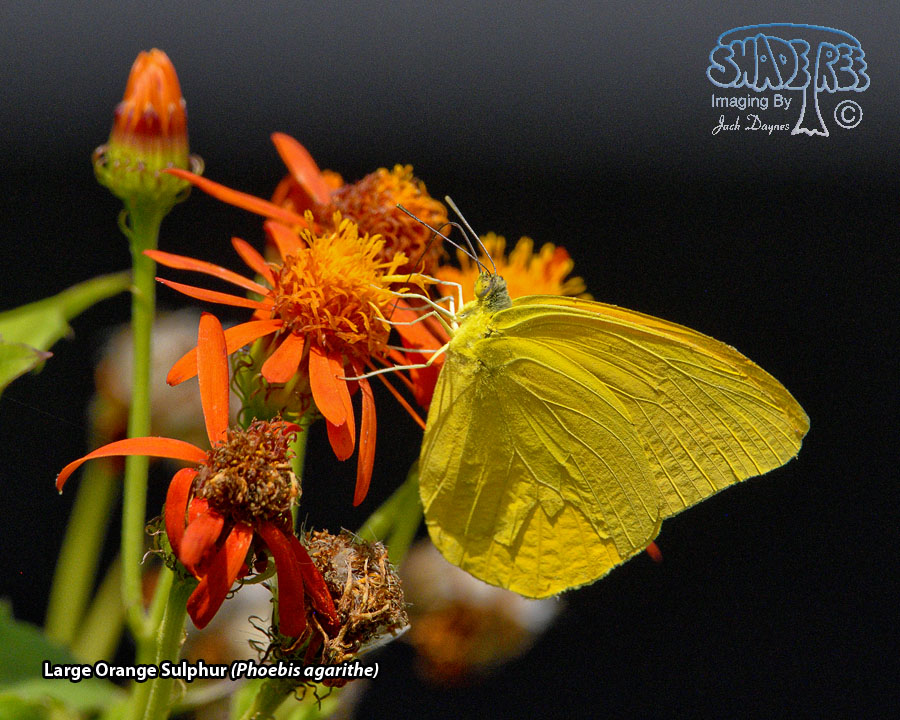
Large Orange Sulphur(Phoebis agarithe) |
|
Description: Large Orange Sulphurs were just one of many butterfly species that visit the National Butterfly Center, where nearly every planting provides them with sustenance. |
Date Taken: 2022:09:24 11:19 |
|
Location:
National Butterfly Center |
|
Camera Information: NIKON D850, 800 mm, f/8.0, 1/5000 |
File Name: LargeOrangeSulphurButterfly_8505776-NationalButterflyCenter |
| © 2022 Jack Daynes, shadeTreeImaging.com |
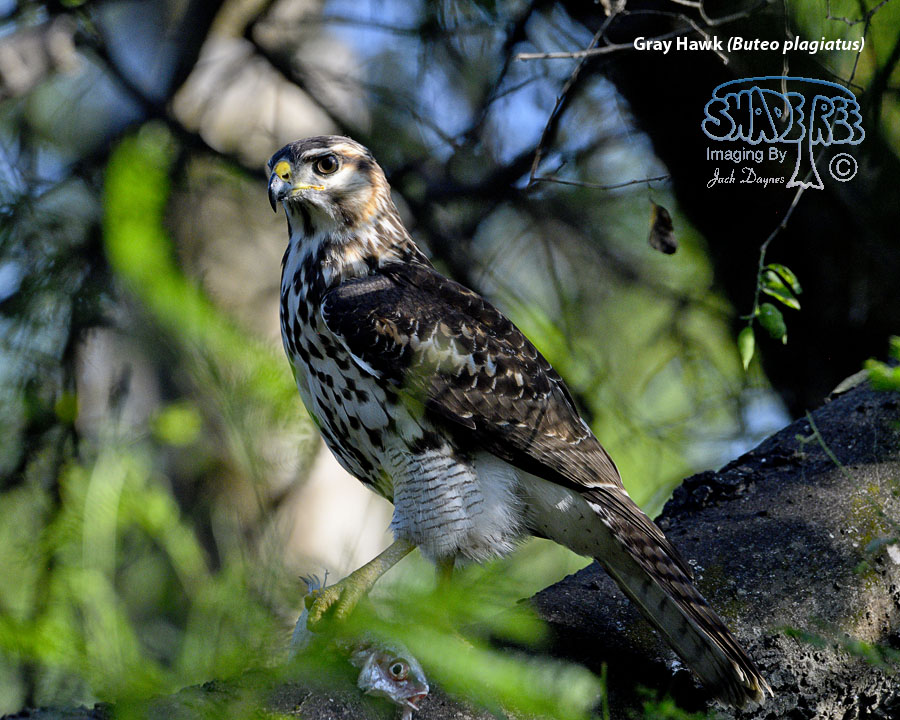
Gray Hawk(Buteo plagiatus) |
|
Description: Gray Hawks nest near the National Butterfly Center, and have their offspring to prove it. I found this juvenile bird having fish for dinner. |
Date Taken: 2022:09:24 17:37 |
|
Location:
National Butterfly Center |
|
Camera Information: NIKON D850, 800 mm, f/8.0, 1/800 |
File Name: GrayHawk_8505868-NationalButterflyCenter |
| © 2022 Jack Daynes, shadeTreeImaging.com |
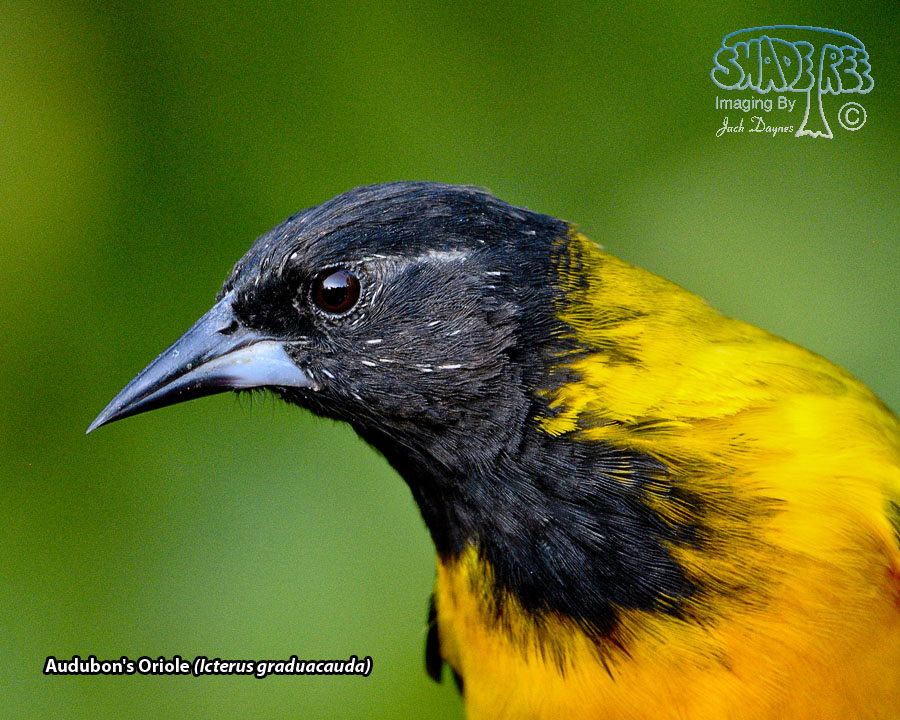
Audubon's Oriole(Icterus graduacauda) |
|
Description: Audubon's Orioles look similar to Scott’s Orioles, and while Scott’s live in west Texas, the Lower Rio Grande Valley is the domain of the Audubon’s Orioles. The National Butterfly Center puts up hummingbird feeders, which the orioles eagerly take advantage of. |
Date Taken: 2022:09:24 18:36 |
|
Location:
National Butterfly Center |
|
Camera Information: NIKON D850, 800 mm, f/8.0, 1/320 |
File Name: AudubonsOriole_8506159-NationalButterflyCenter |
| © 2022 Jack Daynes, shadeTreeImaging.com |
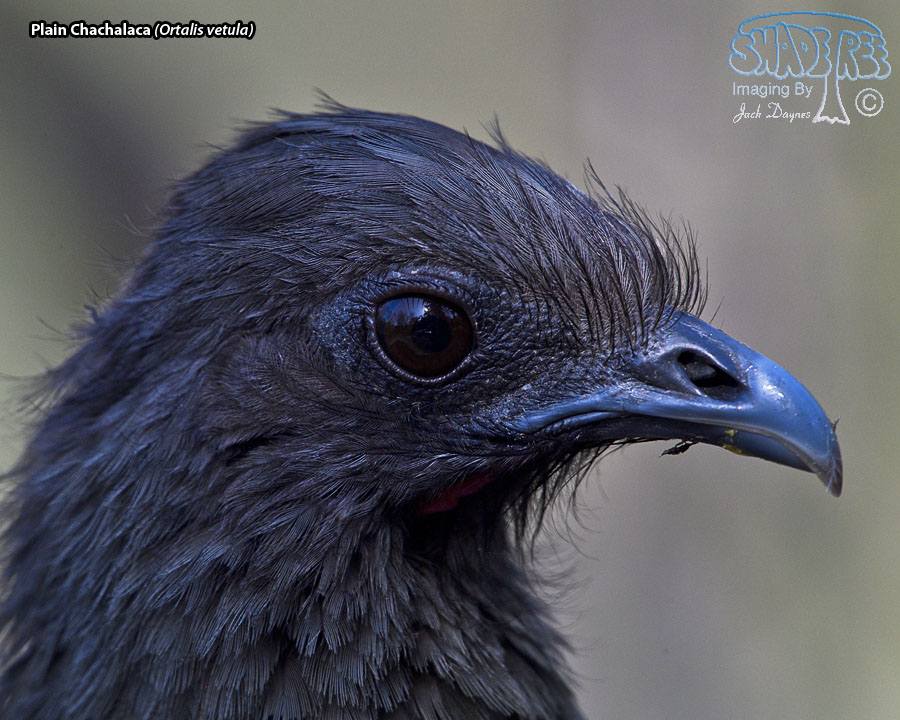
Plain Chachalaca(Ortalis vetula) |
|
Description: Chachalacas were so used to people here, they would almost walk over your feet if you remained still. The National Butterfly Center held a “Big Sit” event on Sunday. They invited me to join the team, and in between shifts, I walked the grounds in search of photo opportunities. |
Date Taken: 2021:04:25 17:31 |
|
Location:
National Butterfly Center |
|
Camera Information: NIKON D5, 800 mm, f/8.0, 1/1000 |
File Name: PlainChachalaca_D5X1612-NationalButterflyCenter |
| © 2021 Jack Daynes, shadeTreeImaging.com |
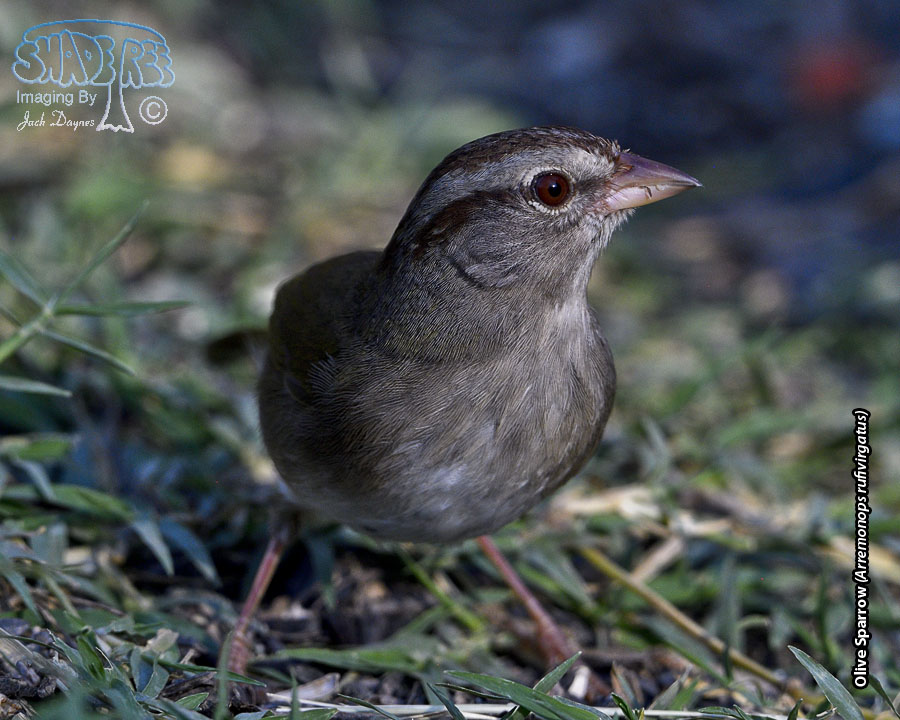
Olive Sparrow(Arremonops rufivirgatus) |
|
Description: Often unnoticed, Olive Sparrows haunt the understory of thorny woodlands. The National Butterfly Center held a “Big Sit” event on Sunday. They invited me to join the team, and in between shifts, I walked the grounds in search of photo opportunities. |
Date Taken: 2021:04:25 18:05 |
|
Location:
National Butterfly Center |
|
Camera Information: NIKON D5, 800 mm, f/8.0, 1/1000 |
File Name: OliveSparrow_D5X1894-NationalButterflyCenter |
| © 2021 Jack Daynes, shadeTreeImaging.com |
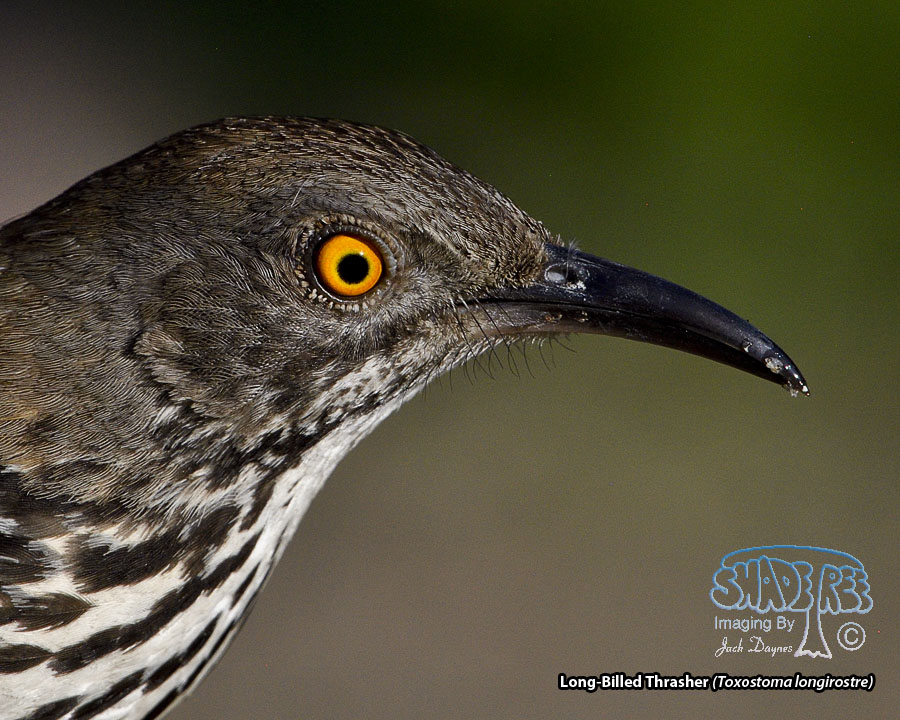
Long-Billed Thrasher(Toxostoma longirostre) |
|
Description: Three thrasher species live in south Texas; mockingbirds, this bird and the Curve-Billed Thrasher. The National Butterfly Center held a “Big Sit” event on Sunday. They invited me to join the team, and in between shifts, I walked the grounds in search of photo opportunities. |
Date Taken: 2021:04:25 18:04 |
|
Location:
National Butterfly Center |
|
Camera Information: NIKON D5, 800 mm, f/8.0, 1/3000 |
File Name: LongBilledThrasher_D5X1870-NationalButterflyCenter |
| © 2021 Jack Daynes, shadeTreeImaging.com |
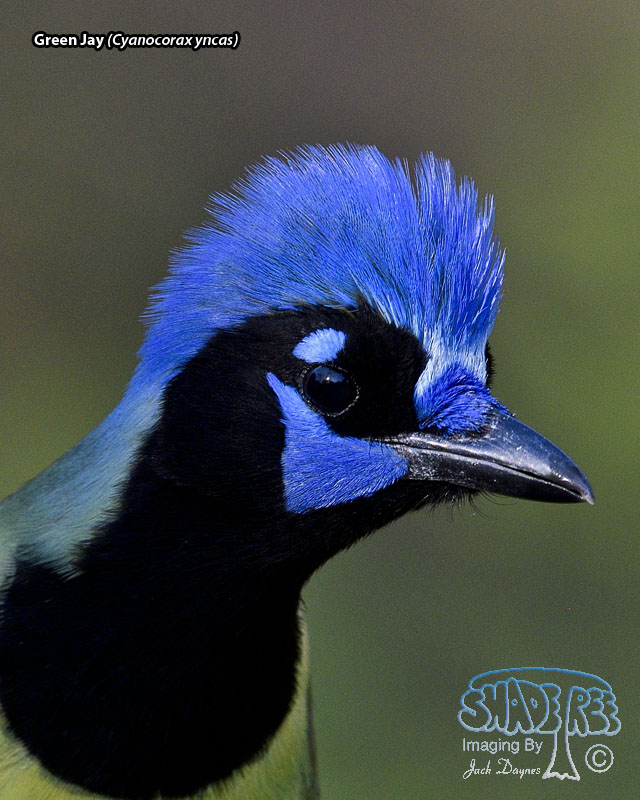
Green Jay(Cyanocorax yncas) |
|
Description: Green Jays are always an interesting study. As part of The Great Texas Birding Classic, The National Butterfly Center held a “Big Sit” event on Sunday. They invited me to join the team, and in between shifts, I walked the grounds in search of photo opportunities. |
Date Taken: 2021:04:25 18:00 |
|
Location:
National Butterfly Center |
|
Camera Information: NIKON D5, 800 mm, f/8.0, 1/800 |
File Name: GreenJay_D5X1824-NationalButterflyCenter |
| © 2021 Jack Daynes, shadeTreeImaging.com |
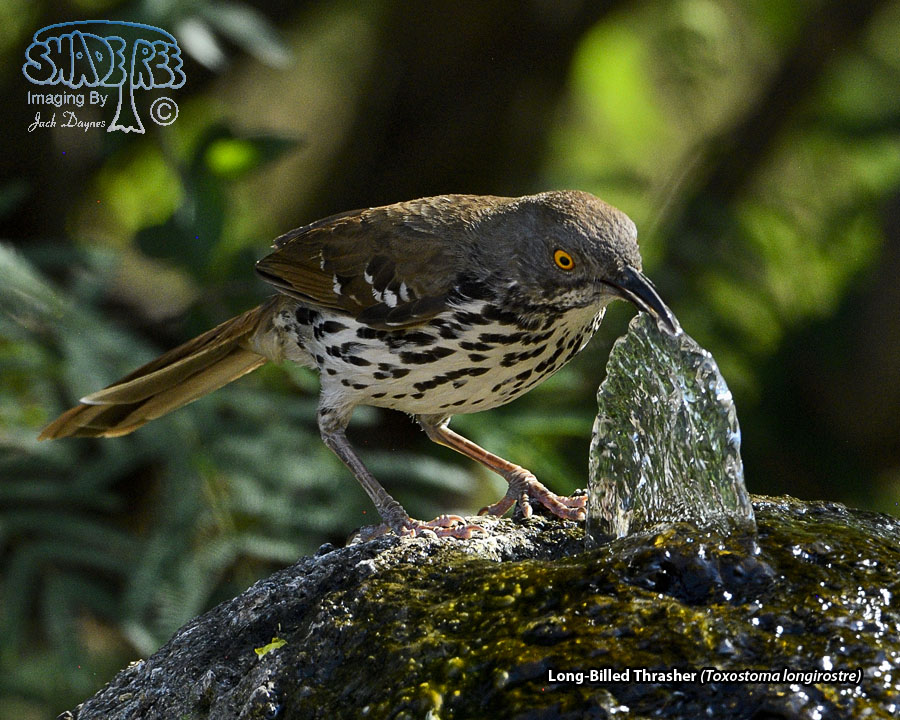
Long-Billed Thrasher(Toxostoma longirostre) |
|
Description: Three thrasher species live in south Texas; mockingbirds, this bird and the Curve-Billed Thrasher. The National Butterfly Center held a “Big Sit” event on Sunday. They invited me to join the team, and in between shifts, I walked the grounds in search of photo opportunities. |
Date Taken: 2021:04:25 17:05 |
|
Location:
National Butterfly Center |
|
Camera Information: NIKON D5, 800 mm, f/8.0, 1/800 |
File Name: LongBilledThrasher_D5X1587-NationalButterflyCenter |
| © 2021 Jack Daynes, shadeTreeImaging.com |
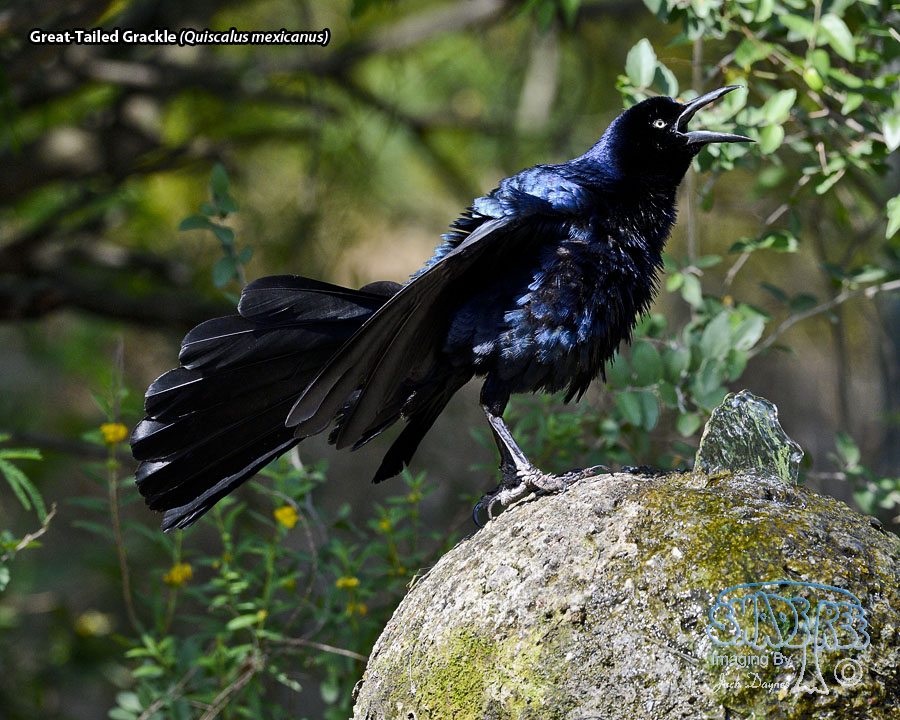
Great-Tailed Grackle(Quiscalus mexicanus) |
|
Description: Never a shy bird, grackles are always glad to put on a show. As part of The Great Texas Birding Classic, The National Butterfly Center held a “Big Sit” event on Sunday. They invited me to join the team, and in between shifts, I walked the grounds in search of photo opportunities. |
Date Taken: 2021:04:25 10:32 |
|
Location:
National Butterfly Center |
|
Camera Information: NIKON D5, 400 mm, f/8.0, 1/1000 |
File Name: GreatTailedGrackle_D5X1479-NationalButterflyCenter |
| © 2021 Jack Daynes, shadeTreeImaging.com |
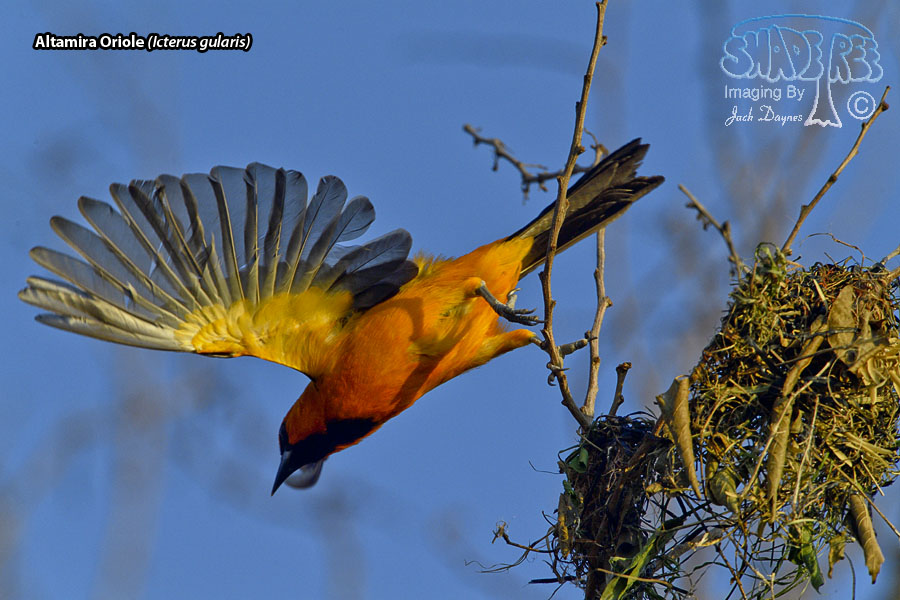
Altamira Oriole(Icterus gularis) |
|
Description: Altamira Orioles were weaving a nest overhead from our observation circle. As part of The Great Texas Birding Classic, The National Butterfly Center held a “Big Sit” event on Sunday. They invited me to join the team, and in between shifts, I walked the grounds in search of photo opportunities. |
Date Taken: 2021:04:25 19:16 |
|
Location:
National Butterfly Center |
|
Camera Information: NIKON D5, 800 mm, f/8.0, 1/2000 |
File Name: AltamiraOriole_D5X2035-NationalButterflyCenter |
| © 2021 Jack Daynes, shadeTreeImaging.com |
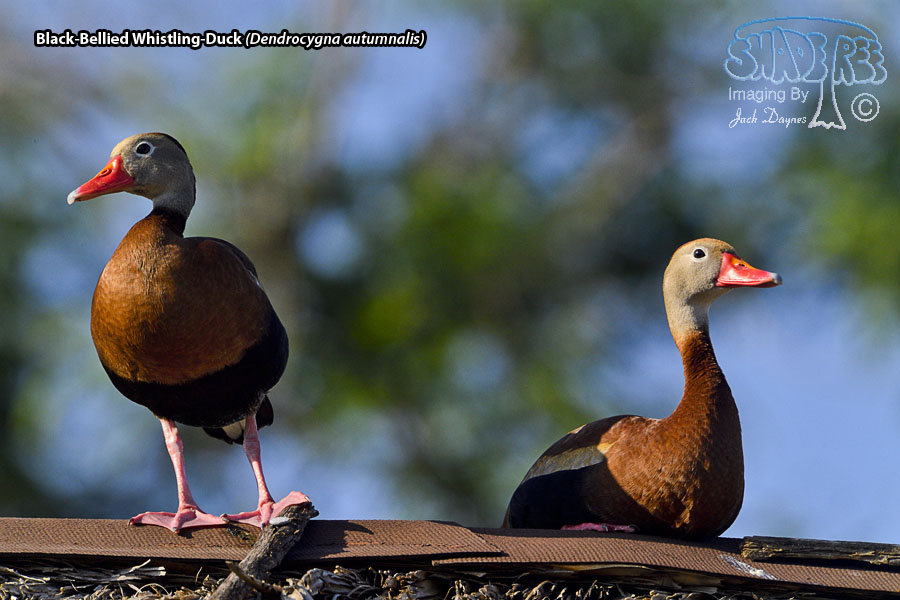
Black-Bellied Whistling-Duck(Dendrocygna autumnalis) |
|
Description: Whistling Ducks mostly flew over us, but some stayed and visited for a while. The National Butterfly Center held a “Big Sit” event on Sunday. They invited me to join the team, and in between shifts, I walked the grounds in search of photo opportunities. |
Date Taken: 2021:04:25 9:04 |
|
Location:
National Butterfly Center |
|
Camera Information: NIKON D5, 800 mm, f/8.0, 1/2000 |
File Name: BlackBelliedWhistlingDuck_D5X1362-NationalButterflyCenter |
| © 2021 Jack Daynes, shadeTreeImaging.com |
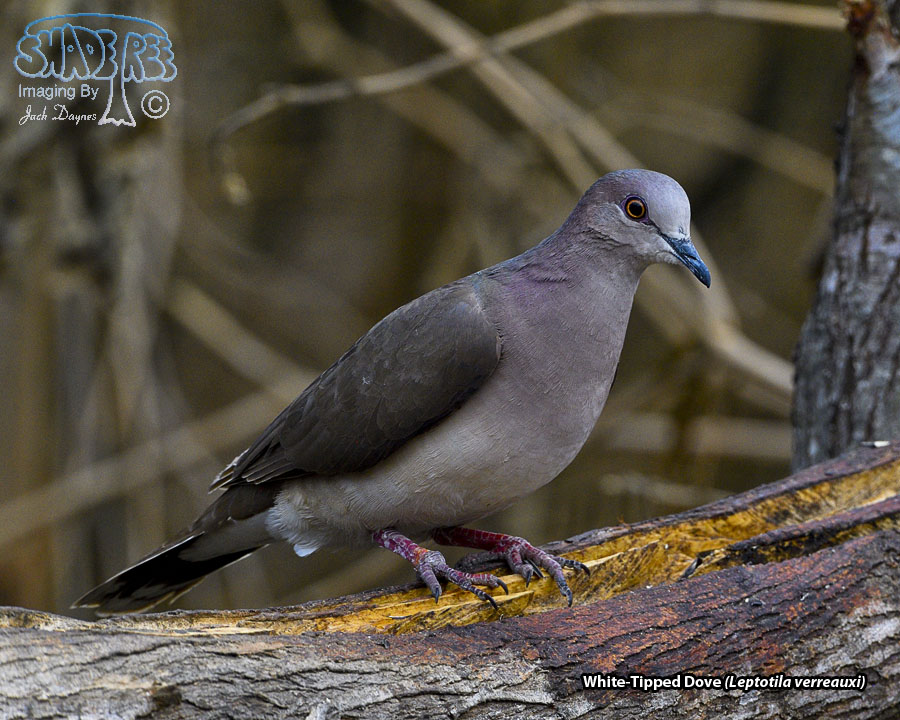
White-Tipped Dove(Leptotila verreauxi) |
|
Description: White-Tipps were the only doves I saw at the feeding station here. For my last expedition while camped in Palmview (Texas), I drove two miles to explore the National Butterfly Center near Mission. I found it was a lovely place to meet birds and some like-minded nature lovers. |
Date Taken: 2021:02:25 10:48 |
|
Location:
National Butterfly Center |
|
Camera Information: NIKON D5, 800 mm, f/8.0, 1/800 |
File Name: WhiteTippedDove_D5X5502-NationalButterflyCenter |
| © 2021 Jack Daynes, shadeTreeImaging.com |
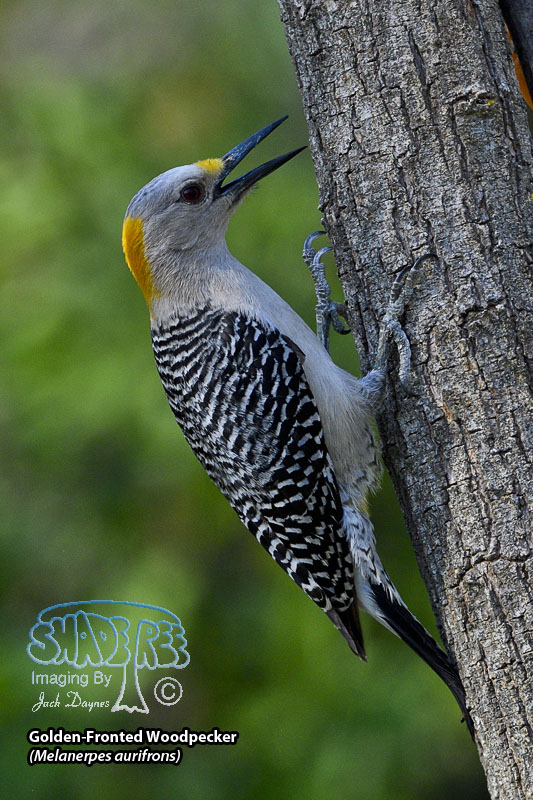
Golden-Fronted Woodpecker(Melanerpes aurifrons) |
|
Description: South Texas has but two resident woodpeckers; this bird and the Ladder-Backed Woodpecker. As part of The Great Texas Birding Classic, The National Butterfly Center held a “Big Sit” event on Sunday. They invited me to join the team, and in between shifts, I walked the grounds in search of photo opportunities. |
Date Taken: 2021:04:25 17:38 |
|
Location:
National Butterfly Center |
|
Camera Information: NIKON D5, 800 mm, f/8.0, 1/800 |
File Name: GoldenFrontedWoodpecker_D5X1660-NationalButterflyCenter |
| © 2021 Jack Daynes, shadeTreeImaging.com |
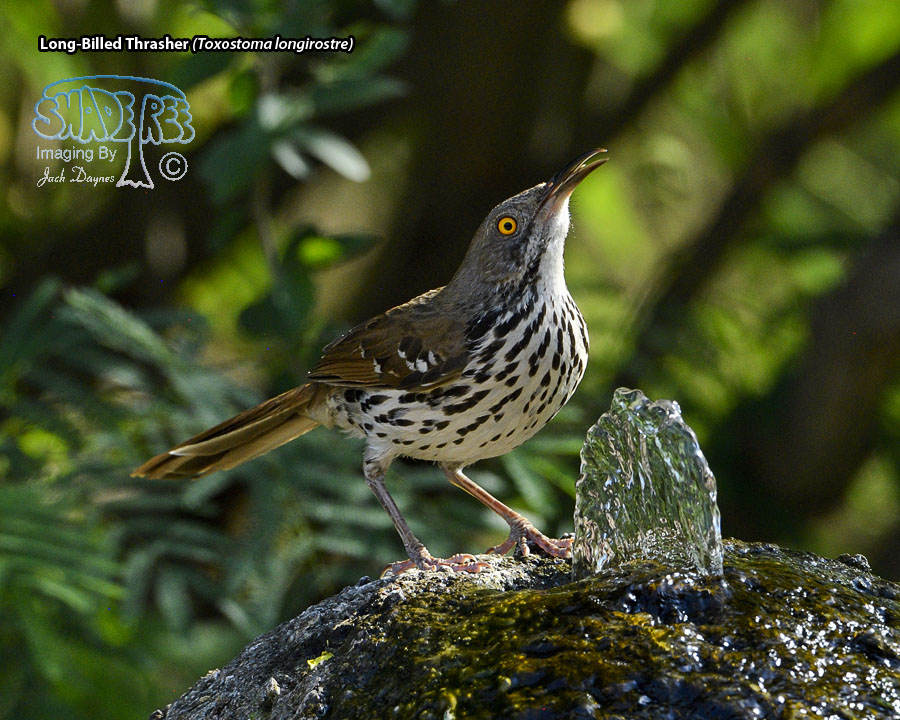
Long-Billed Thrasher(Toxostoma longirostre) |
|
Description: Three thrasher species live in south Texas; mockingbirds, this bird and the Curve-Billed Thrasher. The National Butterfly Center held a “Big Sit” event on Sunday. They invited me to join the team, and in between shifts, I walked the grounds in search of photo opportunities. |
Date Taken: 2021:04:25 17:06 |
|
Location:
National Butterfly Center |
|
Camera Information: NIKON D5, 800 mm, f/8.0, 1/800 |
File Name: LongBilledThrasher_D5X1592-NationalButterflyCenter |
| © 2021 Jack Daynes, shadeTreeImaging.com |
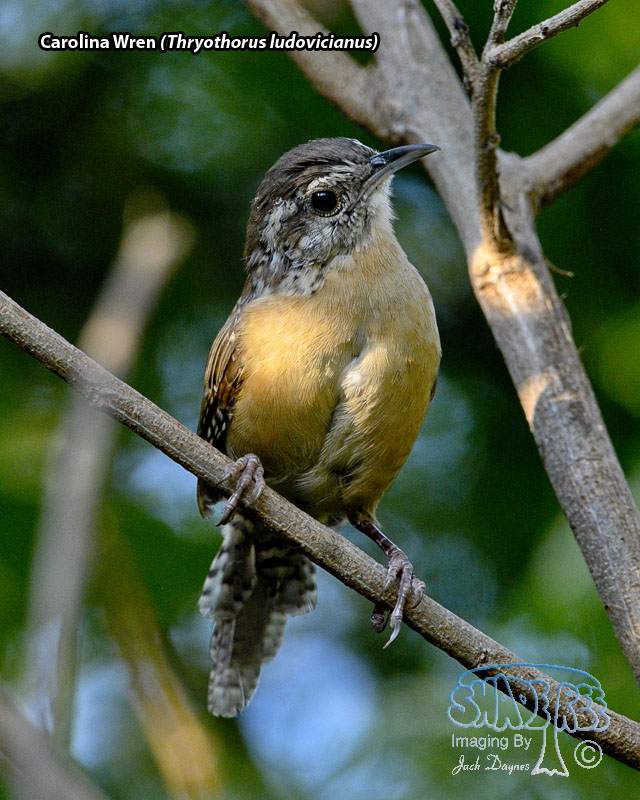
Carolina Wren(Thryothorus ludovicianus) |
|
Description: Carolina Wrens are the primary representatives of the ‘wren clan’ in south Texas. Their inquisitive nature makes them easier to find here than some of the shier species. |
Date Taken: 2022:09:24 18:10 |
|
Location:
National Butterfly Center |
|
Camera Information: NIKON D850, 800 mm, f/8.0, 1/500 |
File Name: CarolinaWren_8506024-NationalButterflyCenter |
| © 2022 Jack Daynes, shadeTreeImaging.com |
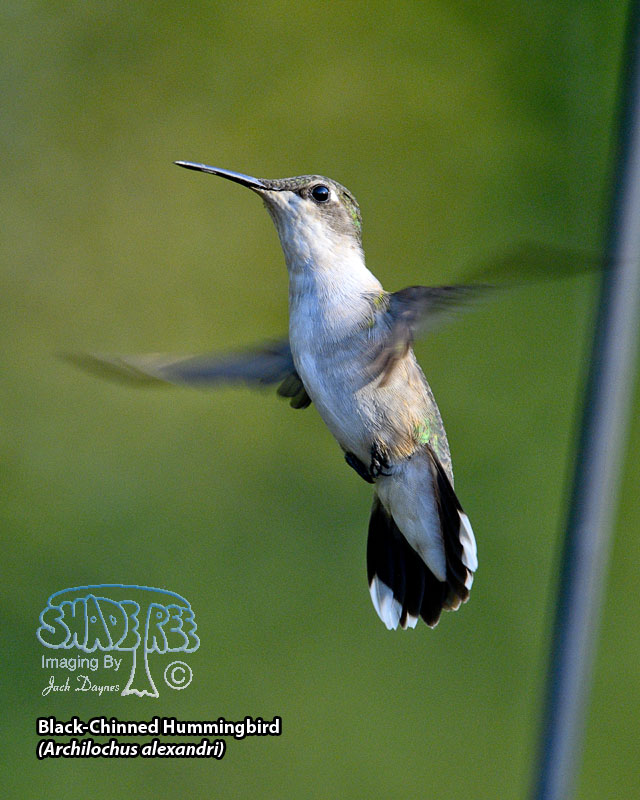
Black-Chinned Hummingbird(Archilochus alexandri) |
|
Description: Black-Chinned Hummingbirds migrate though south Texas, and the National Butterfly Center puts up feeders for their sugary jet-fuel needs. |
Date Taken: 2022:09:24 18:25 |
|
Location:
National Butterfly Center |
|
Camera Information: NIKON D850, 800 mm, f/8.0, 1/640 |
File Name: BlackChinnedHummingbird_8506071-NationalButterflyCenter |
| © 2022 Jack Daynes, shadeTreeImaging.com |
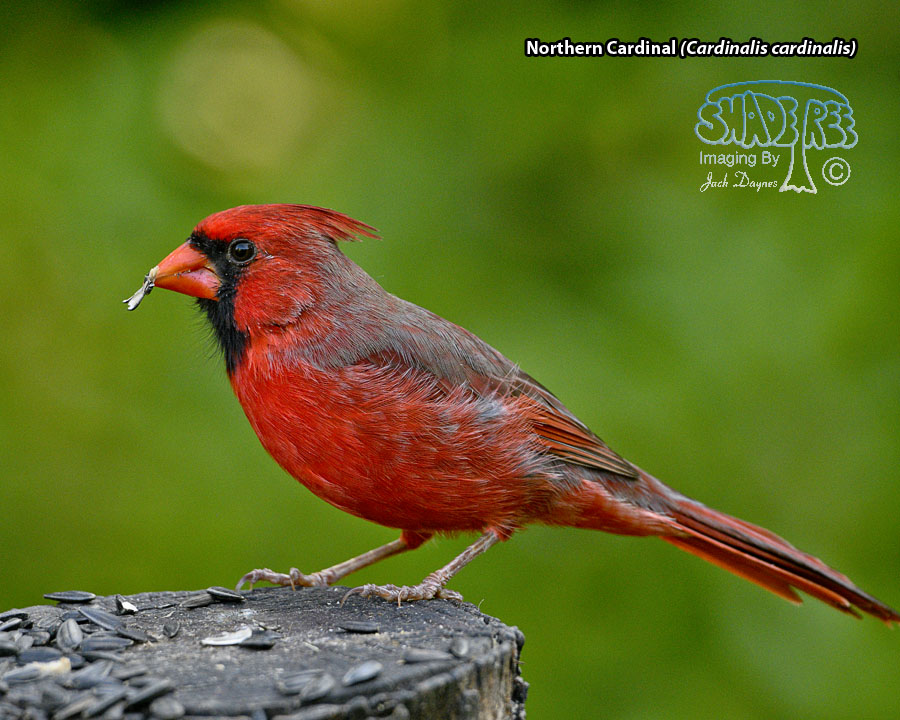
Northern Cardinal(Cardinalis cardinalis) |
|
Description: California doesn’t see many Northern Cardinals, though they are well represented in Arizona. Here at the National Butterfly Center, as well as most of the eastern United States, they are well loved members of most communities here. |
Date Taken: 2022:09:25 9:09 |
|
Location:
National Butterfly Center |
|
Camera Information: NIKON D850, 800 mm, f/8.0, 1/250 |
File Name: NorthernCardinal_8506284-NationalButterflyCenter |
| © 2022 Jack Daynes, shadeTreeImaging.com |
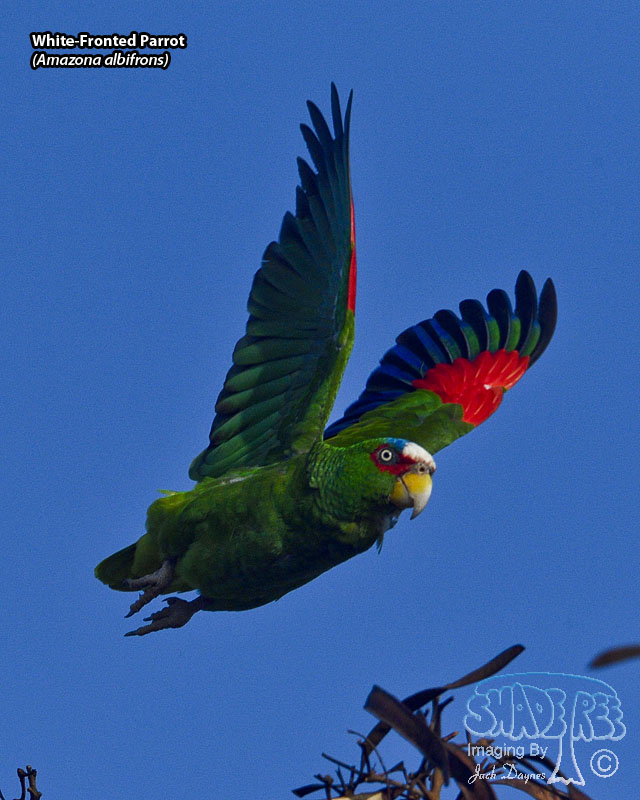
White-Fronted Parrot(Amazona albifrons) |
|
Description: We could not count this non-native bird, but that didn’t mean we couldn’t enjoy its visit. The National Butterfly Center held a “Big Sit” event on Sunday. They invited me to join the team, and in between shifts, I walked the grounds in search of photo opportunities. |
Date Taken: 2021:04:25 8:22 |
|
Location:
National Butterfly Center |
|
Camera Information: NIKON D5, 800 mm, f/8.0, 1/6000 |
File Name: WhiteFrontedParrot_D5X1280-NationalButterflyCenter |
| © 2021 Jack Daynes, shadeTreeImaging.com |
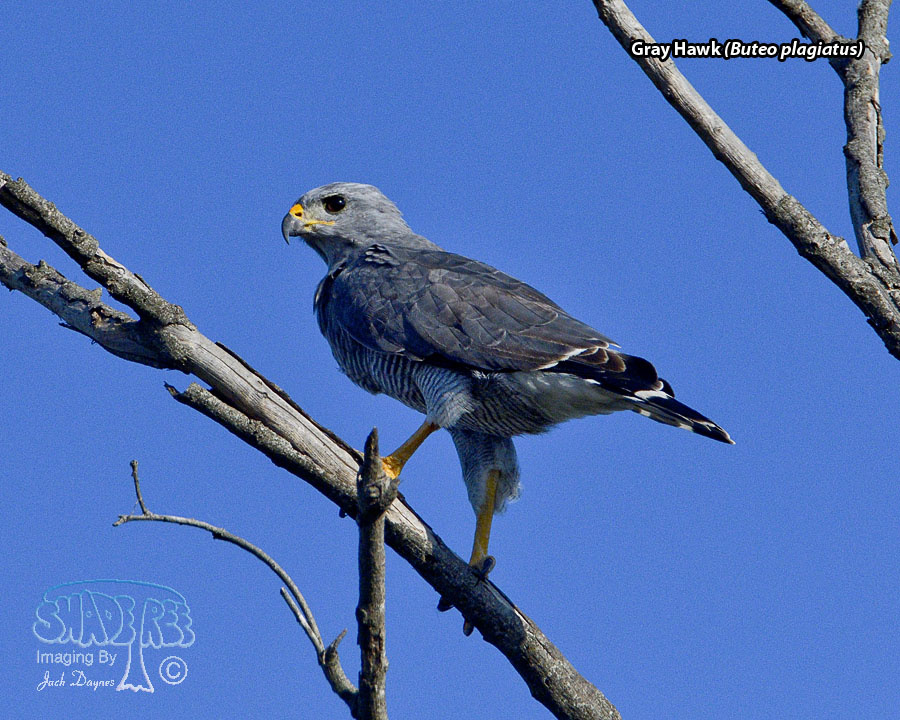
Gray Hawk(Buteo plagiatus) |
|
Description: Gray Hawks nest near the National Butterfly Center, and have their offspring to prove it. |
Date Taken: 2022:09:24 17:33 |
|
Location:
National Butterfly Center |
|
Camera Information: NIKON D850, 800 mm, f/8.0, 1/8000 |
File Name: GrayHawk_8505848-NationalButterflyCenter |
| © 2022 Jack Daynes, shadeTreeImaging.com |
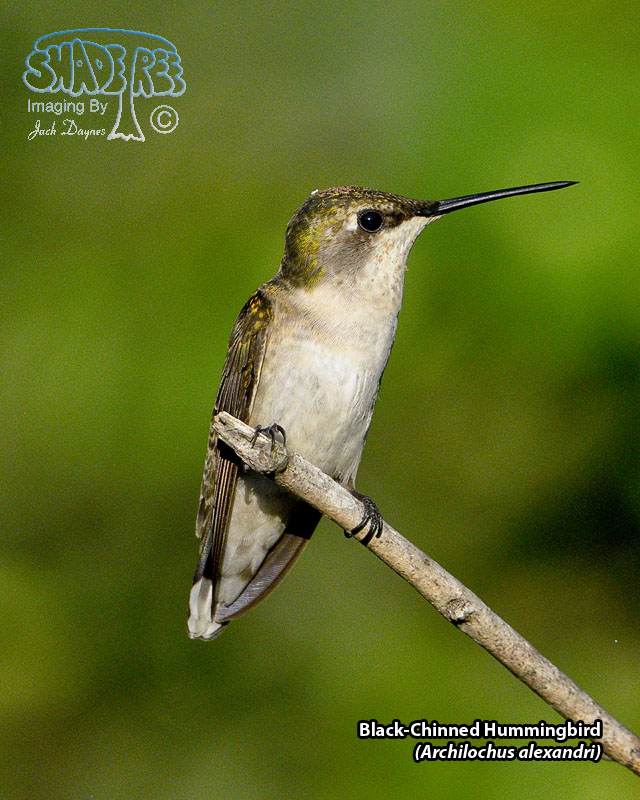
Black-Chinned Hummingbird(Archilochus alexandri) |
|
Description: Black-Chinned Hummingbirds migrate though south Texas, and the National Butterfly Center puts up feeders for their sugary jet-fuel needs. |
Date Taken: 2022:09:24 18:18 |
|
Location:
National Butterfly Center |
|
Camera Information: NIKON D850, 800 mm, f/8.0, 1/3200 |
File Name: BlackChinnedHummingbird_8506049-NationalButterflyCenter |
| © 2022 Jack Daynes, shadeTreeImaging.com |
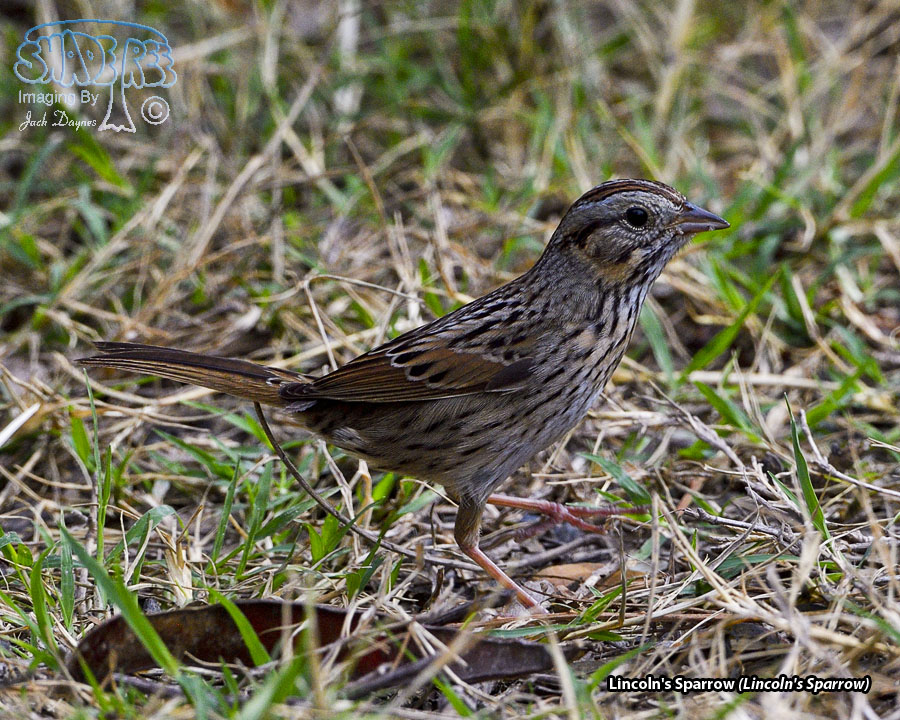
Lincoln's Sparrow(Melospiza lincolnii) |
|
Description: Sparrows, such as this Lincoln’s lurked in the brush and undergrowth on the property. For my last expedition while camped in Palmview (Texas), I drove two miles to explore the National Butterfly Center near Mission. I found it was a lovely place to meet birds and some like-minded nature lovers. |
Date Taken: 2021:02:25 10:34 |
|
Location:
National Butterfly Center |
|
Camera Information: NIKON D5, 800 mm, f/8.0, 1/1000 |
File Name: LincolnsSparrow-D5X5402-NationalButterflyCenter |
| © 2021 Jack Daynes, shadeTreeImaging.com |
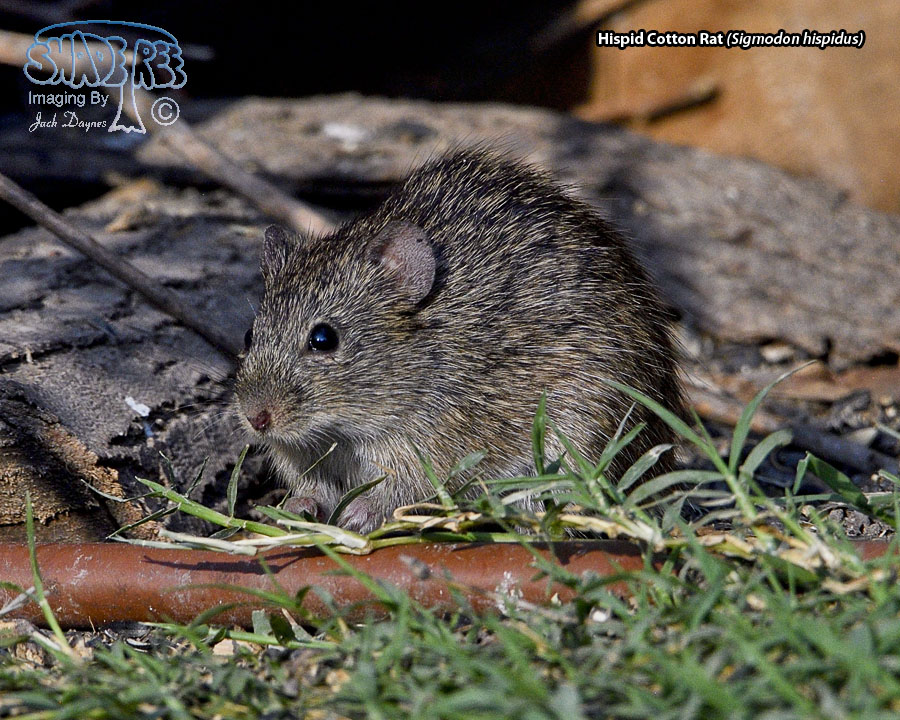
Hispid Cotton Rat(Sigmodon hispidus) |
|
Description: Cotton Rats are a common prey item for predatory birds. The National Butterfly Center held a “Big Sit” event on Sunday. They invited me to join the team, and in between shifts, I walked the grounds in search of photo opportunities. |
Date Taken: 2021:04:25 18:18 |
|
Location:
National Butterfly Center |
|
Camera Information: NIKON D5, 800 mm, f/8.0, 1/1500 |
File Name: HispidCottonRat_D5X1965-NationalButterflyCenter |
| © 2021 Jack Daynes, shadeTreeImaging.com |
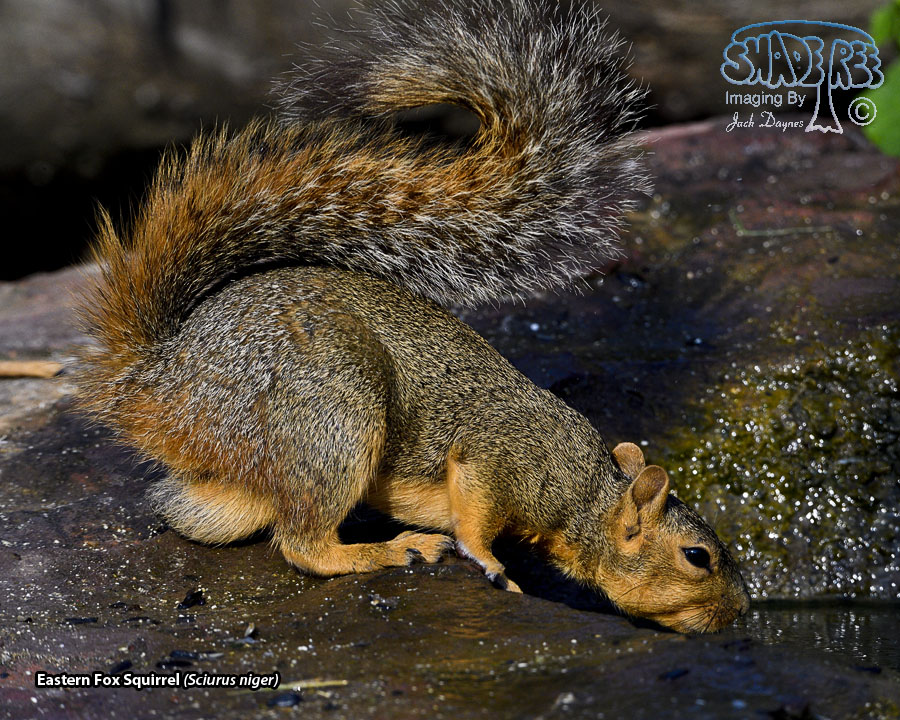
Eastern Fox Squirrel(Sciurus niger) |
|
Description: It wasn’t a part of our target species for the contest, but I couldn't resist capturing it as it quenched its thirst. As part of The Great Texas Birding Classic, The National Butterfly Center held a “Big Sit” event on Sunday. They invited me to join the team, and in between shifts, I walked the grounds in search of photo opportunities. |
Date Taken: 2021:04:25 18:08 |
|
Location:
National Butterfly Center |
|
Camera Information: NIKON D5, 800 mm, f/8.0, 1/1500 |
File Name: EasternFoxSquirrel_D5X1912-NationalButterflyCenter |
| © 2021 Jack Daynes, shadeTreeImaging.com |
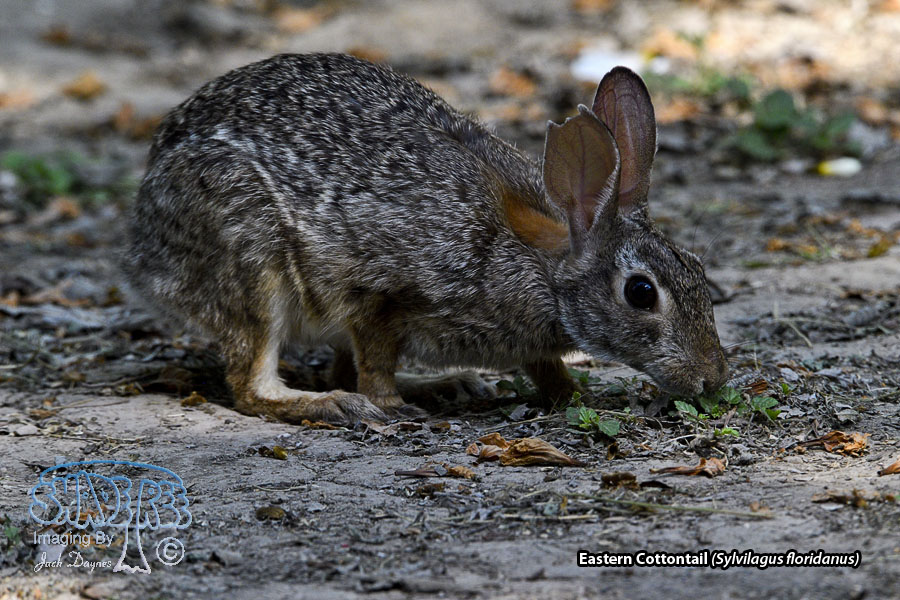
Eastern Cottontail(Sylvilagus floridanus) |
|
Description: This bunny looks similar to our Desert Cottontail in the west, but it wasn’t a part of our target species for the contest. As part of The Great Texas Birding Classic, The National Butterfly Center held a “Big Sit” event on Sunday. They invited me to join the team, and in between shifts, I walked the grounds in search of photo opportunities. |
Date Taken: 2021:04:25 10:37 |
|
Location:
National Butterfly Center |
|
Camera Information: NIKON D5, 800 mm, f/8.0, 1/800 |
File Name: EasternCottontail_D5X1515-NationalButterflyCenter |
| © 2021 Jack Daynes, shadeTreeImaging.com |
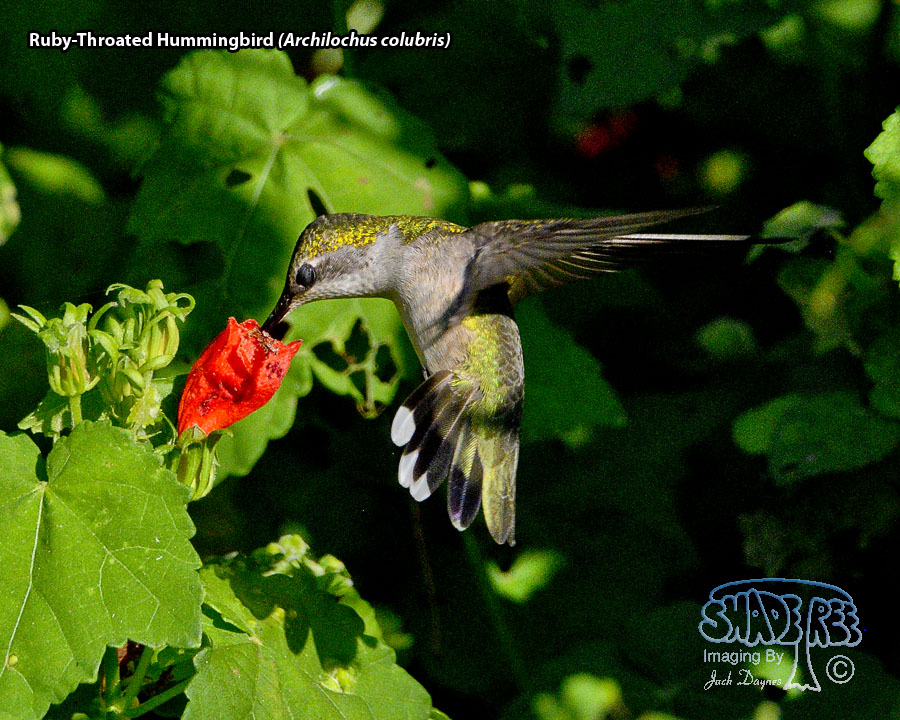
Ruby-Throated Hummingbird(Archilochus colubris) |
|
Description: Ruby-Throated Hummingbirds migrate though south Texas, and the National Butterfly Center puts up feeders for their sugary jet-fuel needs. |
Date Taken: 2022:09:24 17:48 |
|
Location:
National Butterfly Center |
|
Camera Information: NIKON D850, 800 mm, f/8.0, 1/4000 |
File Name: RubyThroatedHummingbird_8505959-NationalButterflyCenter |
| © 2022 Jack Daynes, shadeTreeImaging.com |
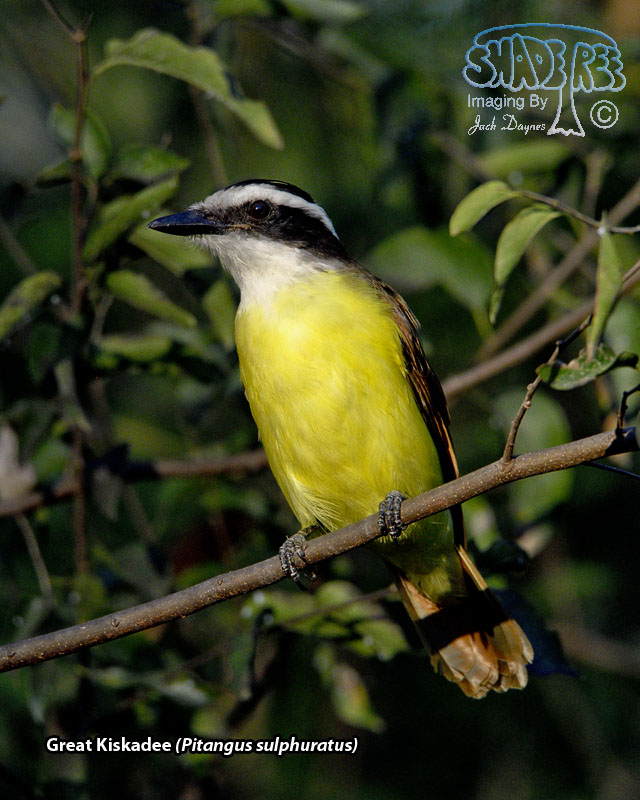
Great Kiskadee(Pitangus sulphuratus) |
|
Description: Great Kiskadees sound off loudly, and here at the National Butterfly Center, like most places in south Texas, their calls echo constantly through the woods. |
Date Taken: 2022:09:24 18:37 |
|
Location:
National Butterfly Center |
|
Camera Information: NIKON D850, 800 mm, f/8.0, 1/3200 |
File Name: GreatKiskadee_8506167-NationalButterflyCenter |
| © 2022 Jack Daynes, shadeTreeImaging.com |
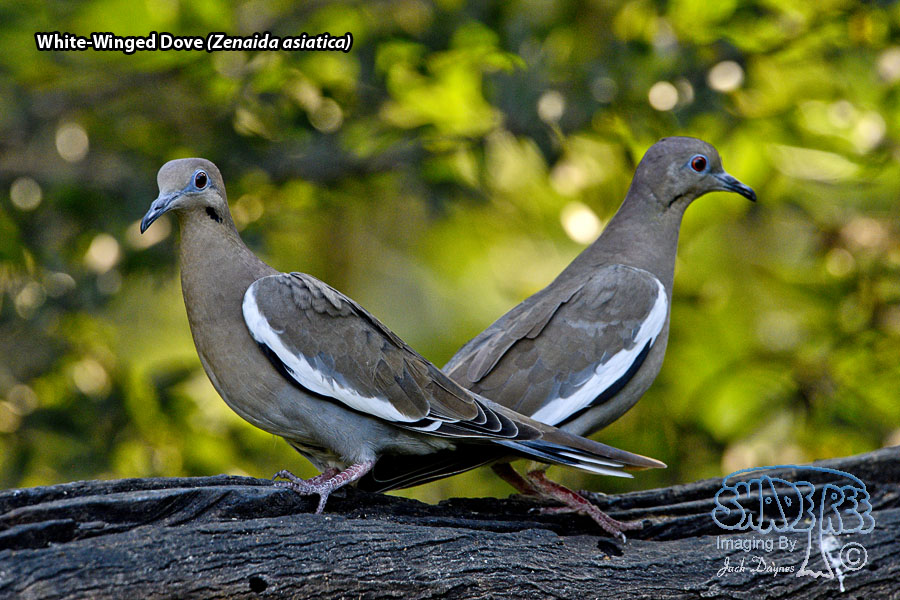
White-Winged Dove(Zenaida asiatica) |
|
Description: White-Winged Doves at the National Butterfly Center are shy, but they know when the feeders are refilled. Though they may not rush right in, the lure of the seeds gives them the courage to overcome their shyness. |
Date Taken: 2022:09:25 9:26 |
|
Location:
National Butterfly Center |
|
Camera Information: NIKON D850, 800 mm, f/8.0, 1/400 |
File Name: WhiteWingedDove_8506430-NationalButterflyCenter |
| © 2022 Jack Daynes, shadeTreeImaging.com |
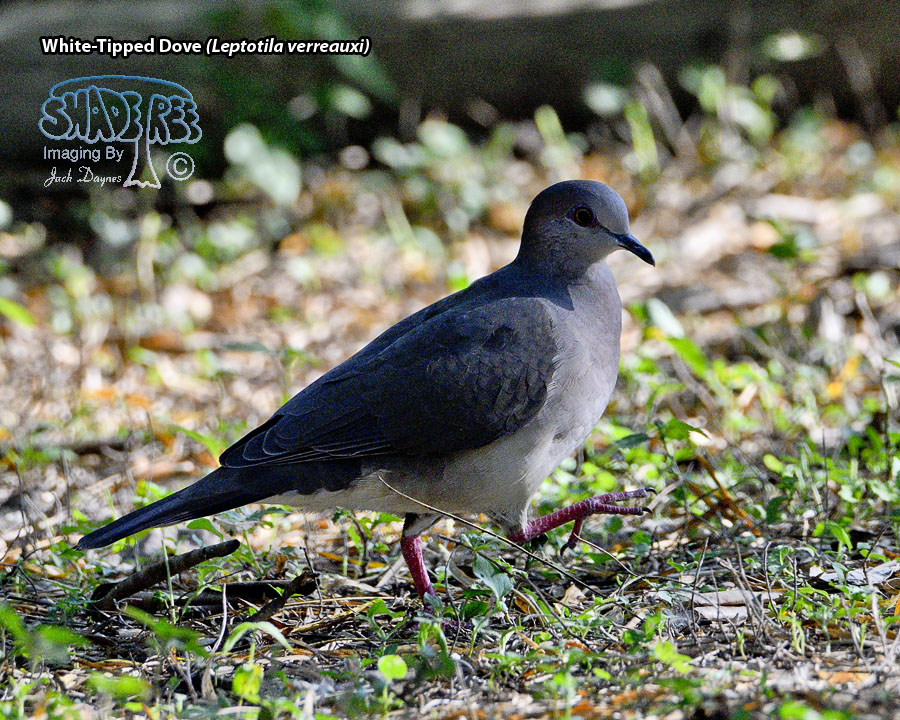
White-Tipped Dove(Leptotila verreauxi) |
|
Description: White-Tipped Doves are ground-loving birds that sometimes wander from the thickets at the National Butterfly Center, to let observers get a peek at them. |
Date Taken: 2022:09:24 17:43 |
|
Location:
National Butterfly Center |
|
Camera Information: NIKON D850, 800 mm, f/8.0, 1/1600 |
File Name: WhiteTippedDove_8505947-NationalButterflyCenter |
| © 2022 Jack Daynes, shadeTreeImaging.com |
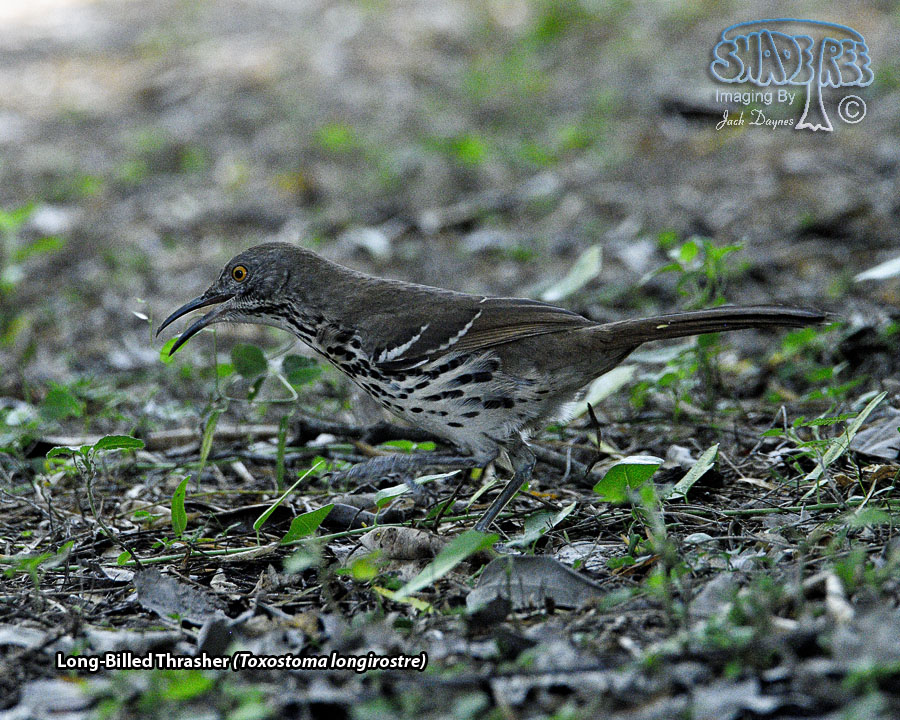
Long-Billed Thrasher(Toxostoma longirostre) |
|
Description: Perhaps the only thing preventing the Long-Billed Thrasher from status as a south Texas icon, is its shy nature, like this bird at the National Butterfly Center. |
Date Taken: 2022:09:24 17:43 |
|
Location:
National Butterfly Center |
|
Camera Information: NIKON D850, 800 mm, f/8.0, 1/500 |
File Name: LongBilledThrasher_8505933-NationalButterflyCenter |
| © 2022 Jack Daynes, shadeTreeImaging.com |
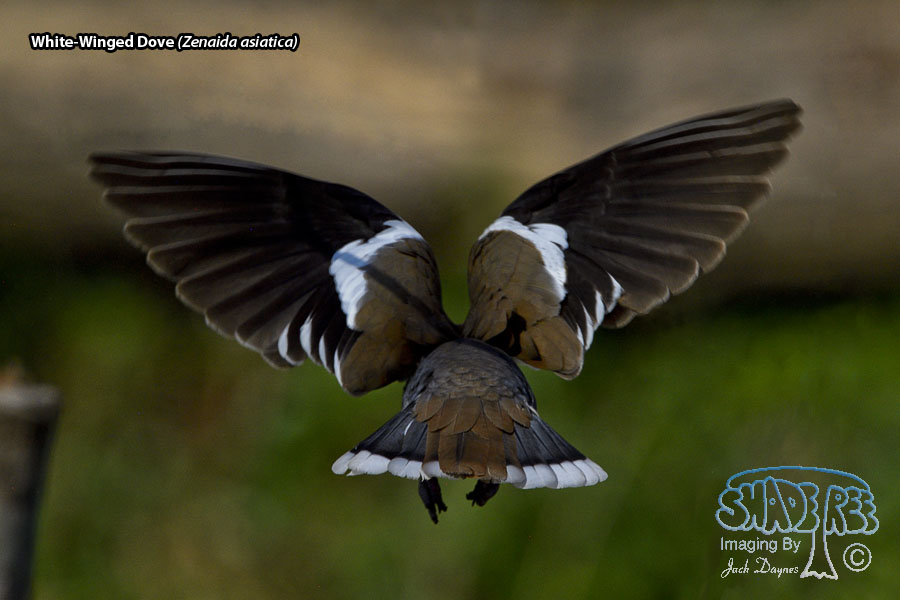
White-Winged Dove(Zenaida asiatica) |
|
Description: White-Winged Doves are a favorite of mine. The National Butterfly Center held a “Big Sit” event on Sunday. They invited me to join the team, and in between shifts, I walked the grounds in search of photo opportunities. |
Date Taken: 2021:04:25 18:10 |
|
Location:
National Butterfly Center |
|
Camera Information: NIKON D5, 800 mm, f/8.0, 1/3000 |
File Name: WhiteWingedDove_D5X1923-NationalButterflyCenter |
| © 2021 Jack Daynes, shadeTreeImaging.com |
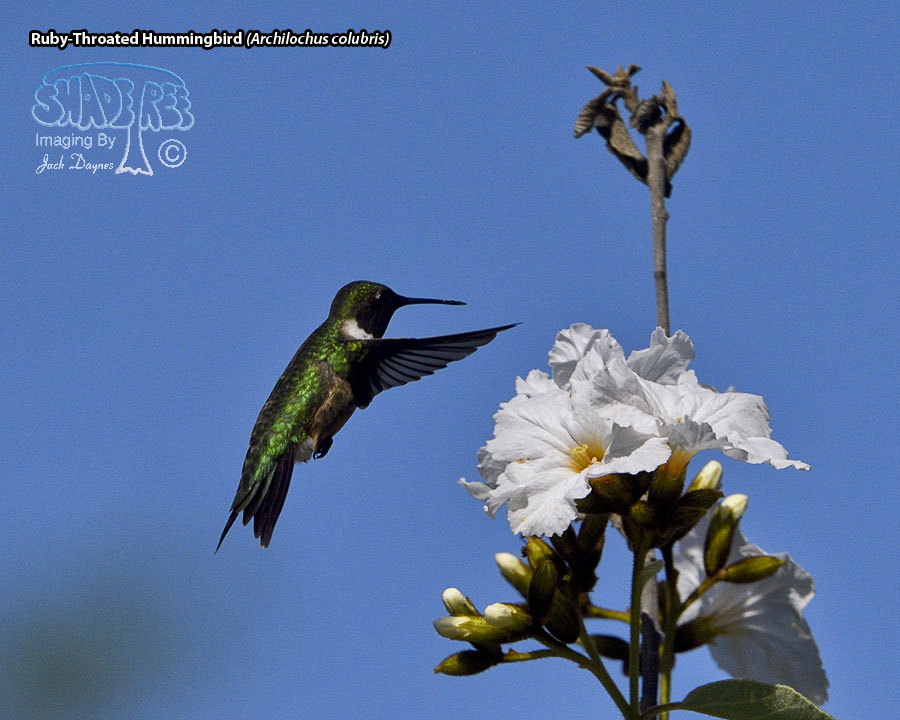
Ruby-Throated Hummingbird(Archilochus colubris) |
|
Description: There were feeders hanging in many places around the grounds, but sometimes a real flower is just the ticket. The National Butterfly Center held a “Big Sit” event on Sunday. They invited me to join the team, and in between shifts, I walked the grounds in search of photo opportunities. |
Date Taken: 2021:04:25 10:27 |
|
Location:
National Butterfly Center |
|
Camera Information: NIKON D5, 800 mm, f/8.0, 1/8000 |
File Name: RubyThroatedHummingbird_D5X1451-NationalButterflyCenter |
| © 2021 Jack Daynes, shadeTreeImaging.com |
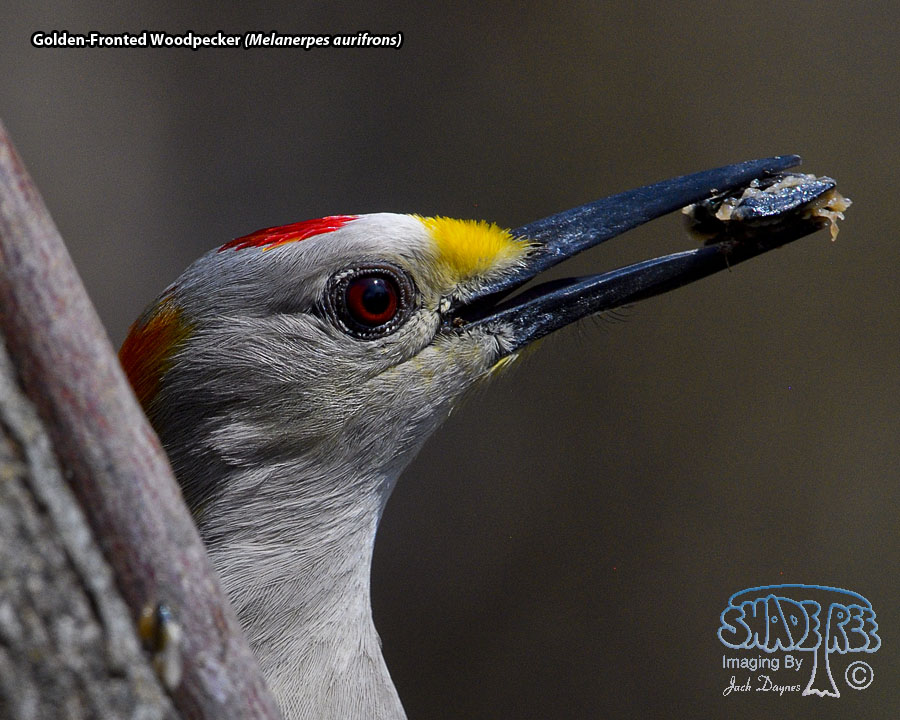
Golden-Fronted Woodpecker(Melanerpes aurifrons) |
|
Description: Woodpeckers seemed to enjoy the fare at the feeding station here. For my last expedition while camped in Palmview (Texas), I drove two miles to explore the National Butterfly Center near Mission. I found it was a lovely place to meet birds and some like-minded nature lovers. |
Date Taken: 2021:02:25 12:26 |
|
Location:
National Butterfly Center |
|
Camera Information: NIKON D5, 800 mm, f/8.0, 1/2000 |
File Name: GoldenFrontedWoodpecker_D5X5951-NationalButterflyCenter |
| © 2021 Jack Daynes, shadeTreeImaging.com |
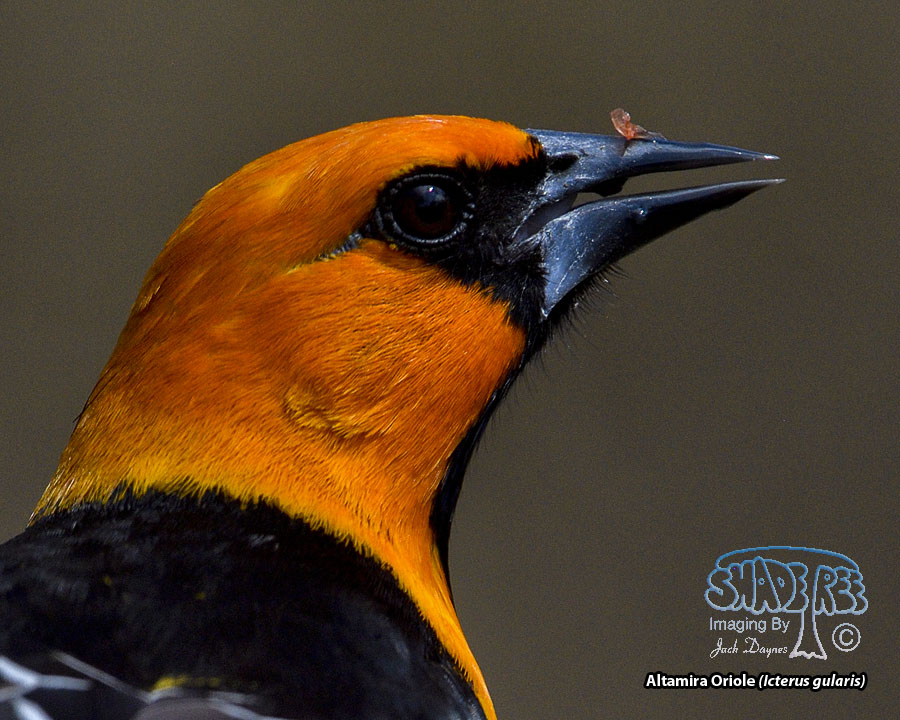
Altamira Oriole(Icterus gularis) |
|
Description: These resident orioles appreciated the food offerings the staff provided. For my last expedition while camped in Palmview (Texas), I drove two miles to explore the National Butterfly Center near Mission. I found it was a lovely place to meet birds and some like-minded nature lovers. |
Date Taken: 2021:02:25 12:35 |
|
Location:
National Butterfly Center |
|
Camera Information: NIKON D5, 800 mm, f/8.0, 1/2000 |
File Name: AltamiraOriole_D5X6124-NationalButterflyCenter |
| © 2021 Jack Daynes, shadeTreeImaging.com |
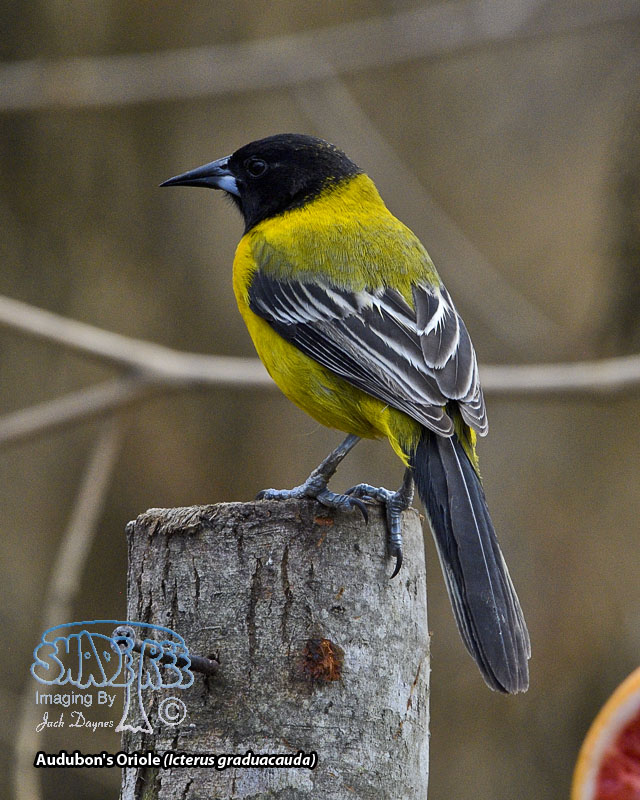
Audubon's Oriole(Icterus graduacauda) |
|
Description: These resident orioles appreciated the food offerings the staff provided. For my last expedition while camped in Palmview (Texas), I drove two miles to explore the National Butterfly Center near Mission. I found it was a lovely place to meet birds and some like-minded nature lovers. |
Date Taken: 2021:02:25 10:56 |
|
Location:
National Butterfly Center |
|
Camera Information: NIKON D5, 800 mm, f/8.0, 1/800 |
File Name: AudubonsOriole_D5X5547-NationalButterflyCenter |
| © 2021 Jack Daynes, shadeTreeImaging.com |
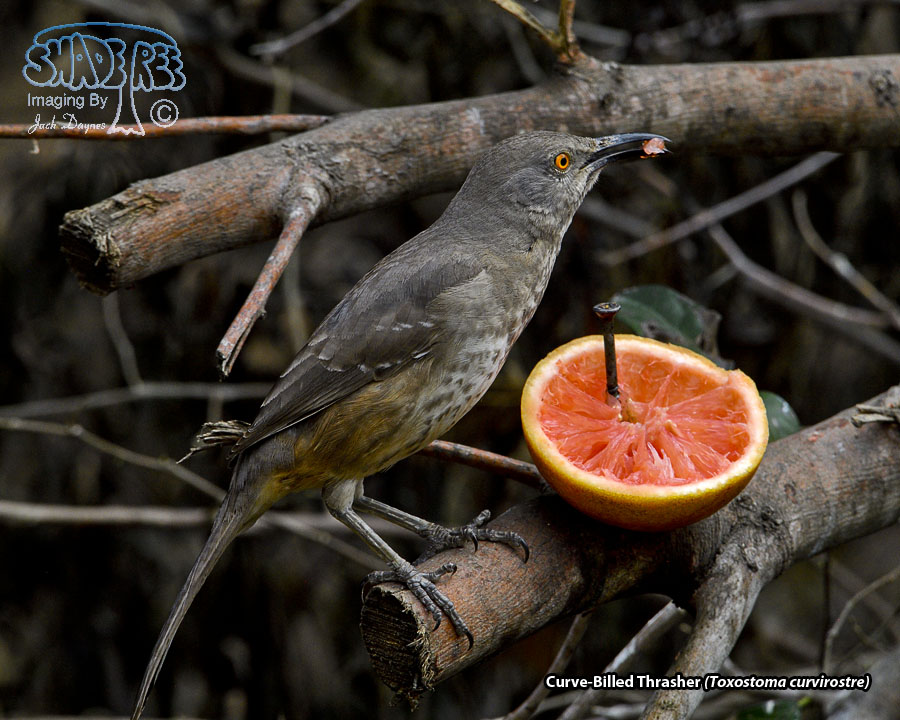
Curve-Billed Thrasher(Toxostoma curvirostre) |
|
Description: Even the local thrashers enjoyed the food offered by staff here after the recent deep freeze in south Texas. For my last expedition while camped in Palmview (Texas), I drove two miles to explore the National Butterfly Center near Mission. I found it was a lovely place to meet birds and some like-minded nature lovers. |
Date Taken: 2021:02:25 10:35 |
|
Location:
National Butterfly Center |
|
Camera Information: NIKON D5, 800 mm, f/8.0, 1/800 |
File Name: CurveBilledThrasher_D5X5430-NationalButterflyCenter |
| © 2021 Jack Daynes, shadeTreeImaging.com |
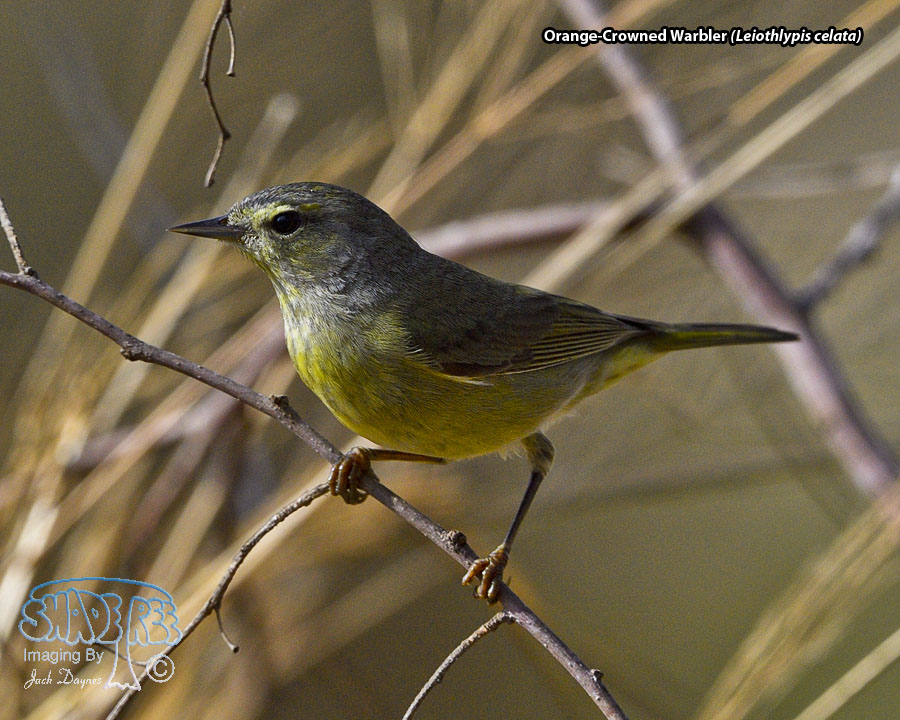
Orange-Crowned Warbler(Leiothlypis celata) |
|
Description: Orange-Crowned and Yellow-Rumps were the only warblers I met here. For my last expedition while camped in Palmview (Texas), I drove two miles to explore the National Butterfly Center near Mission. I found it was a lovely place to meet birds and some like-minded nature lovers. |
Date Taken: 2021:02:25 10:07 |
|
Location:
National Butterfly Center |
|
Camera Information: NIKON D5, 800 mm, f/8.0, 1/2000 |
File Name: OrangeCrownedWarbler_D5X5388-NationalButterflyCenter |
| © 2021 Jack Daynes, shadeTreeImaging.com |
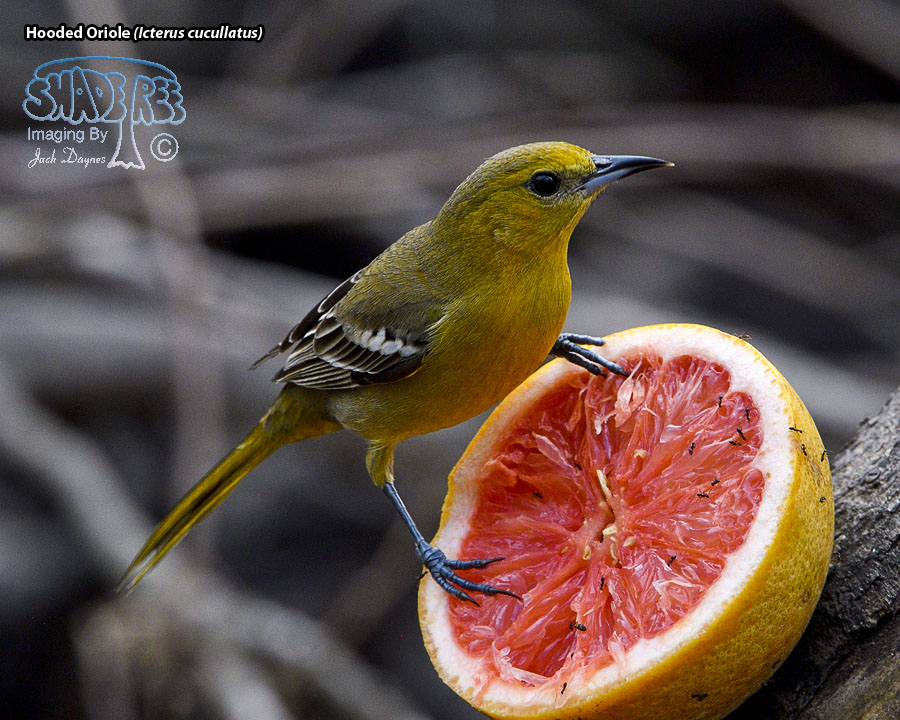
Hooded Oriole(Icterus cucullatus) |
|
Description: Hooded Orioles aren’t known to spend winters in Texas. This young lady may have been lost. For my last expedition while camped in Palmview (Texas), I drove two miles to explore the National Butterfly Center near Mission. I found it was a lovely place to meet birds and some like-minded nature lovers. |
Date Taken: 2021:02:25 10:55 |
|
Location:
National Butterfly Center |
|
Camera Information: NIKON D5, 800 mm, f/8.0, 1/800 |
File Name: HoodedOriole_D5X5523-NationalButterflyCenter |
| © 2021 Jack Daynes, shadeTreeImaging.com |
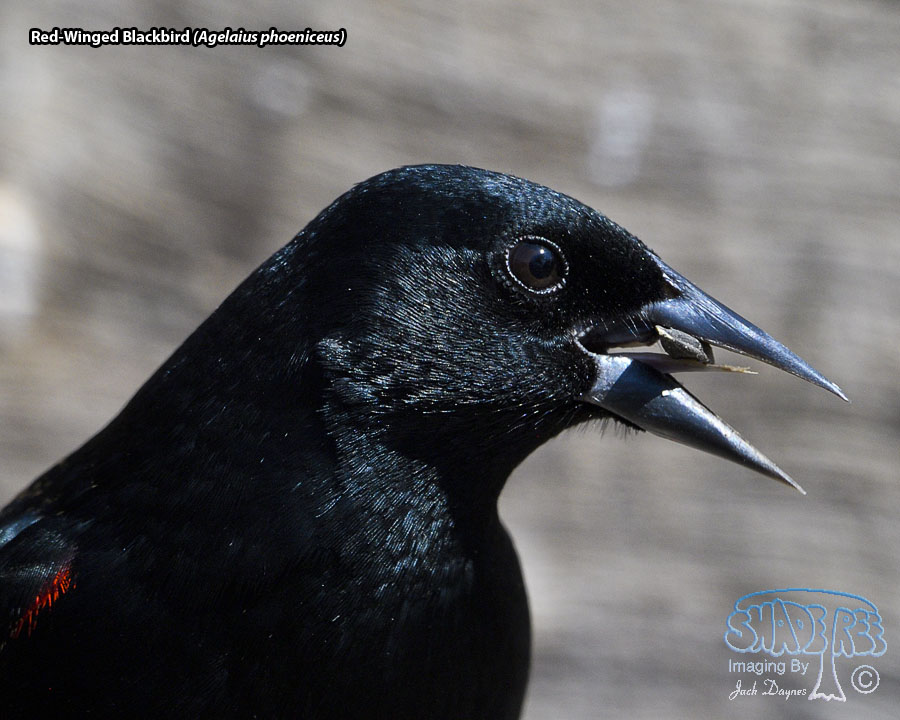
Red-Winged Blackbird(Agelaius phoeniceus) |
|
Description: Bachelor male Red-Wings were present all day here, and never far from the feeding station. For my last expedition while camped in Palmview (Texas), I drove two miles to explore the National Butterfly Center near Mission. I found it was a lovely place to meet birds and some like-minded nature lovers. |
Date Taken: 2021:02:25 12:43 |
|
Location:
National Butterfly Center |
|
Camera Information: NIKON D5, 800 mm, f/8.0, 1/1000 |
File Name: RedWingedBlackbird_D5X6250-NationalButterflyCenter |
| © 2021 Jack Daynes, shadeTreeImaging.com |
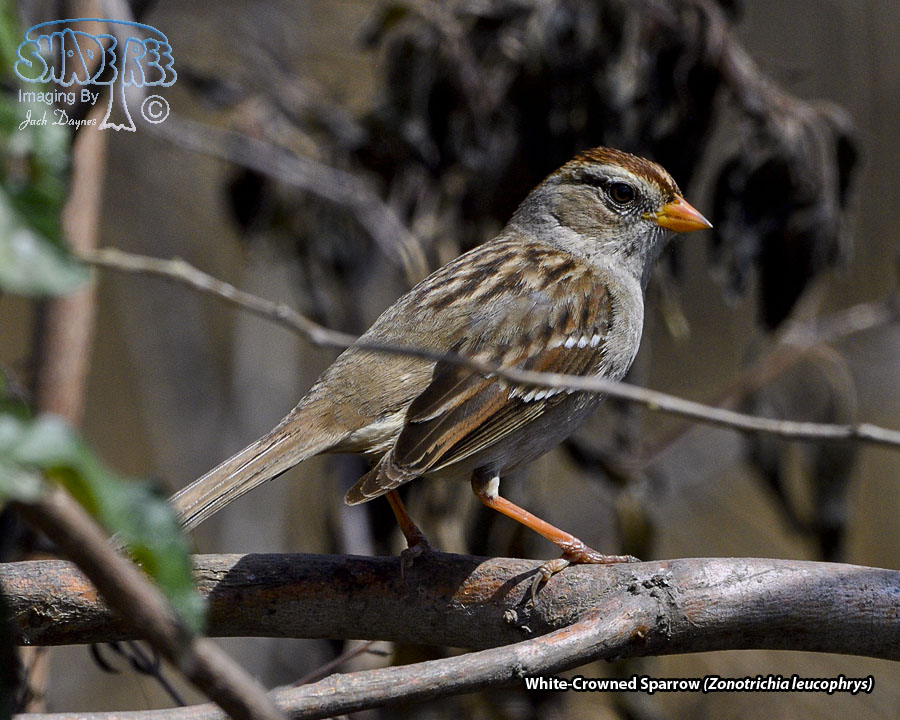
White-Crowned Sparrow(Zonotrichia leucophrys) |
|
Description: This 1st winter sparrow found the food on the ground at the feeding station worthwhile. For my last expedition while camped in Palmview (Texas), I drove two miles to explore the National Butterfly Center near Mission. I found it was a lovely place to meet birds and some like-minded nature lovers. |
Date Taken: 2021:02:25 12:22 |
|
Location:
National Butterfly Center |
|
Camera Information: NIKON D5, 800 mm, f/8.0, 1/2000 |
File Name: WhiteCrownedSparrow_D5X5902-NationalButterflyCenter |
| © 2021 Jack Daynes, shadeTreeImaging.com |
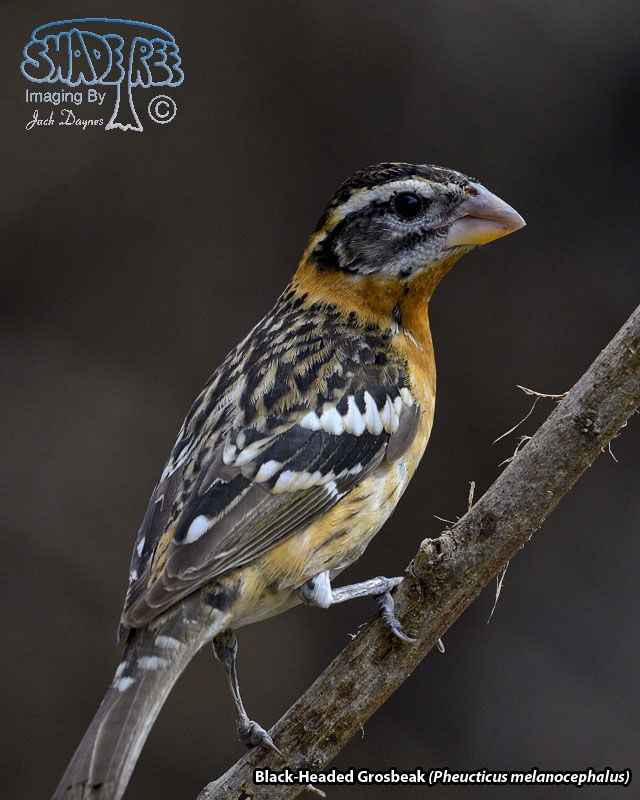
Black-Headed Grosbeak(Pheucticus melanocephalus) |
|
Description: This winter visitor to south Texas survived the recent cold weather, partially because of the kindness of the staff who provided food here. For my last expedition while camped in Palmview (Texas), I drove two miles to explore the National Butterfly Center near Mission. I found it was a lovely place to meet birds and some like-minded nature lovers. |
Date Taken: 2021:02:25 10:44 |
|
Location:
National Butterfly Center |
|
Camera Information: NIKON D5, 800 mm, f/8.0, 1/800 |
File Name: BlackHeadedGrosbeak_D5X5496-NationalButterflyCenter |
| © 2021 Jack Daynes, shadeTreeImaging.com |
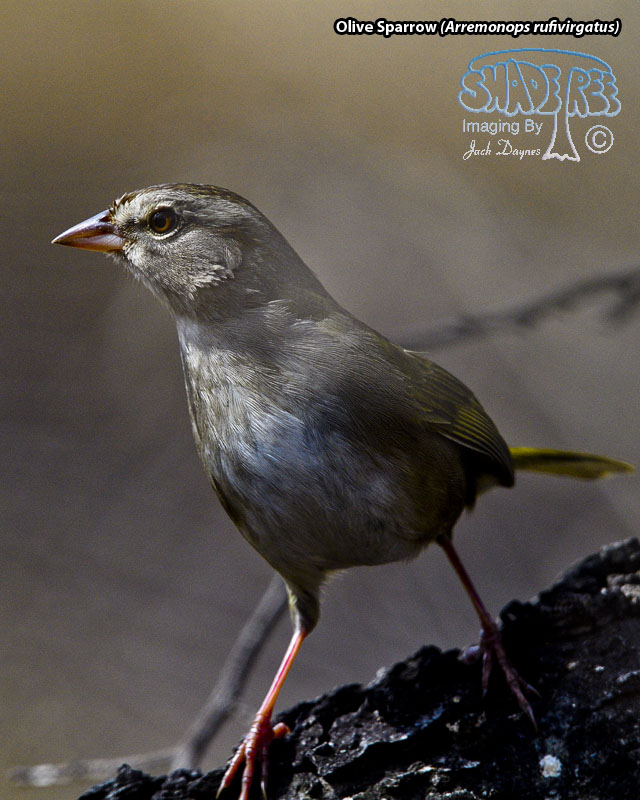
Olive Sparrow(Arremonops rufivirgatus) |
|
Description: Sparrows, such as this Olive Sparrow lurked in the brush and undergrowth on the property. For my last expedition while camped in Palmview (Texas), I drove two miles to explore the National Butterfly Center near Mission. I found it was a lovely place to meet birds and some like-minded nature lovers. |
Date Taken: 2021:02:25 13:28 |
|
Location:
National Butterfly Center |
|
Camera Information: NIKON D5, 800 mm, f/8.0, 1/2000 |
File Name: OliveSparrow_D5X6461-NationalButterflyCenter |
| © 2021 Jack Daynes, shadeTreeImaging.com |
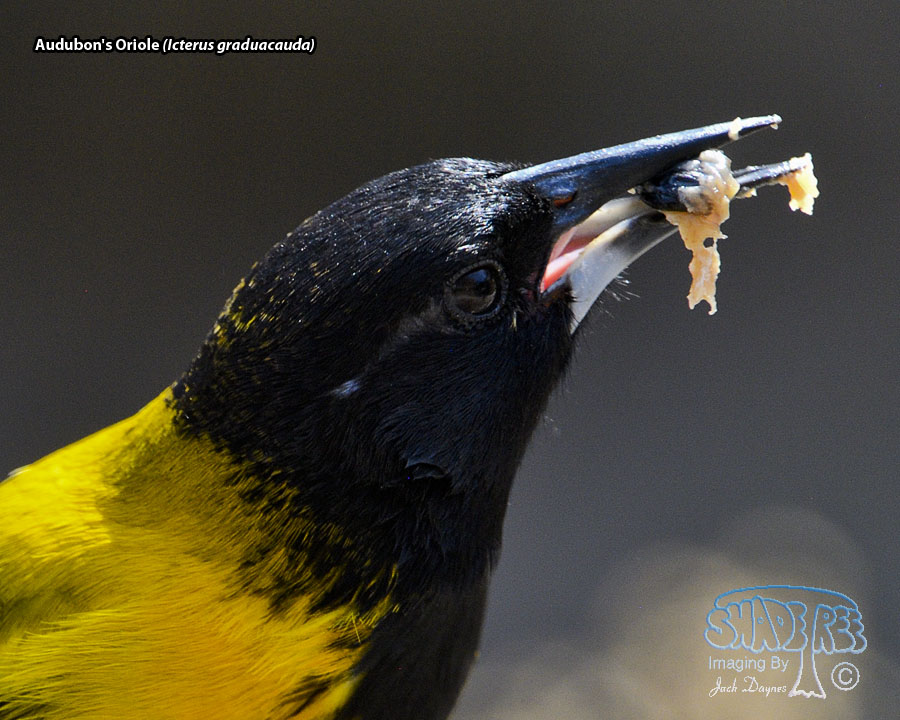
Audubon's Oriole(Icterus graduacauda) |
|
Description: These resident orioles appreciated the food offerings the staff provided. For my last expedition while camped in Palmview (Texas), I drove two miles to explore the National Butterfly Center near Mission. I found it was a lovely place to meet birds and some like-minded nature lovers. |
Date Taken: 2021:02:25 12:21 |
|
Location:
National Butterfly Center |
|
Camera Information: NIKON D5, 800 mm, f/8.0, 1/800 |
File Name: AudubonsOriole_D5X5884-NationalButterflyCenter |
| © 2021 Jack Daynes, shadeTreeImaging.com |
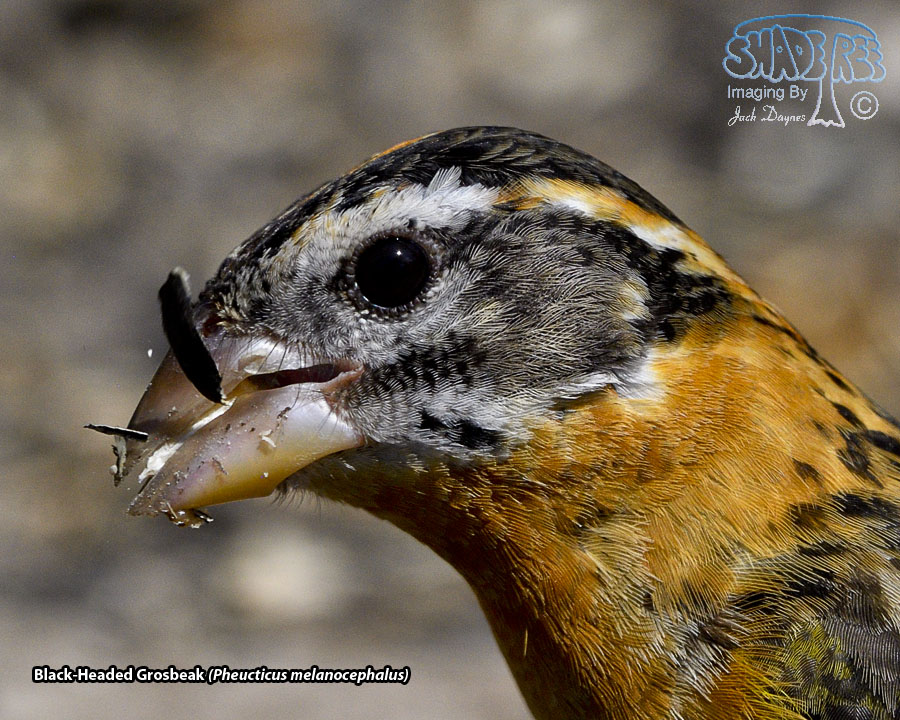
Black-Headed Grosbeak(Pheucticus melanocephalus) |
|
Description: This winter visitor to south Texas survived the recent cold weather, partially because of the kindness of the staff who provided food here. For my last expedition while camped in Palmview (Texas), I drove two miles to explore the National Butterfly Center near Mission. I found it was a lovely place to meet birds and some like-minded nature lovers. |
Date Taken: 2021:02:25 12:45 |
|
Location:
National Butterfly Center |
|
Camera Information: NIKON D5, 800 mm, f/8.0, 1/4000 |
File Name: BlackHeadedGrosbeak_D5X6350-NationalButterflyCenter |
| © 2021 Jack Daynes, shadeTreeImaging.com |
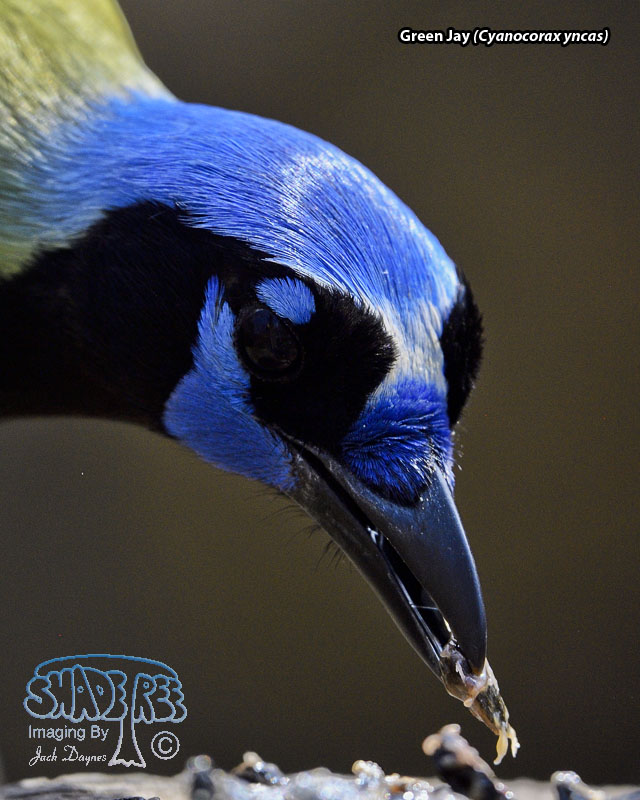
Green Jay(Cyanocorax yncas) |
|
Description: Green Jays visiting the feeding station in waves were always entertaining. For my last expedition while camped in Palmview (Texas), I drove two miles to explore the National Butterfly Center near Mission. I found it was a lovely place to meet birds and some like-minded nature lovers. |
Date Taken: 2021:02:25 11:58 |
|
Location:
National Butterfly Center |
|
Camera Information: NIKON D5, 800 mm, f/8.0, 1/1000 |
File Name: GreenJay_D5X5664-NationalButterflyCenter |
| © 2021 Jack Daynes, shadeTreeImaging.com |
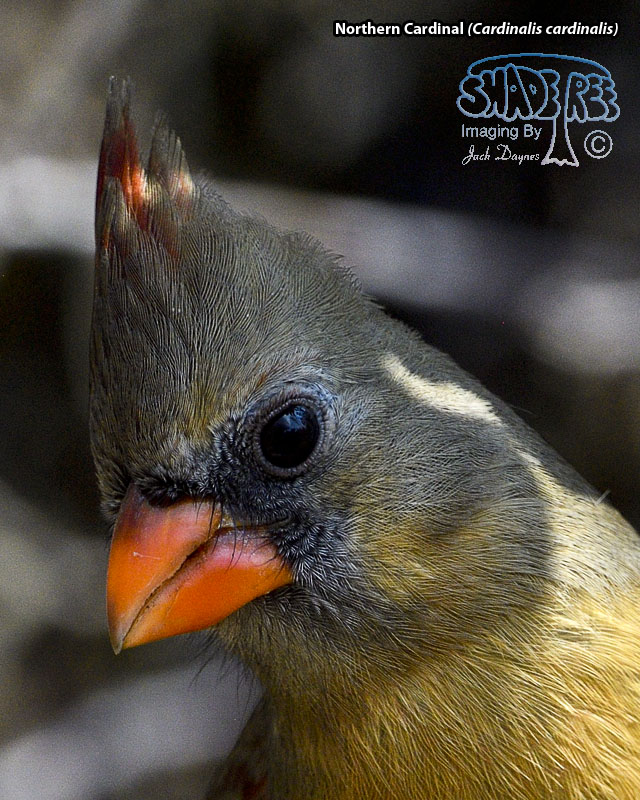
Northern Cardinal(Cardinalis cardinalis) |
|
Description: Cardinals abound in south Texas, and this place was no exception. For my last expedition while camped in Palmview (Texas), I drove two miles to explore the National Butterfly Center near Mission. I found it was a lovely place to meet birds and some like-minded nature lovers. |
Date Taken: 2021:02:25 12:15 |
|
Location:
National Butterfly Center |
|
Camera Information: NIKON D5, 800 mm, f/8.0, 1/1000 |
File Name: NorthernCardinal_D5X5809-NationalButterflyCenter |
| © 2021 Jack Daynes, shadeTreeImaging.com |
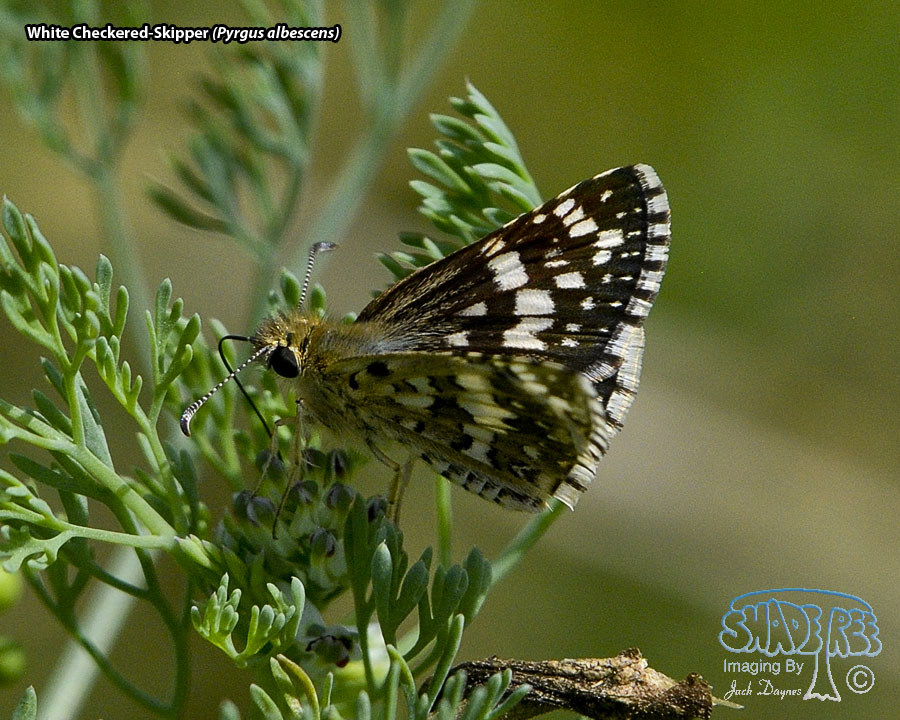
White Checkered-Skipper(Pyrgus albescens) |
|
Description: Presence of these and other small butterflies, following a recent deep-freeze, proved how resilient nature can be. For my last expedition while camped in Palmview (Texas), I drove two miles to explore the National Butterfly Center near Mission. I found it was a lovely place to meet birds and some like-minded nature lovers. |
Date Taken: 2021:02:25 11:25 |
|
Location:
National Butterfly Center |
|
Camera Information: NIKON D5, 800 mm, f/8.0, 1/4000 |
File Name: WhiteCheckeredSkipper-Butterfly_D5X5646-NationalButterflyCenter |
| © 2021 Jack Daynes, shadeTreeImaging.com |
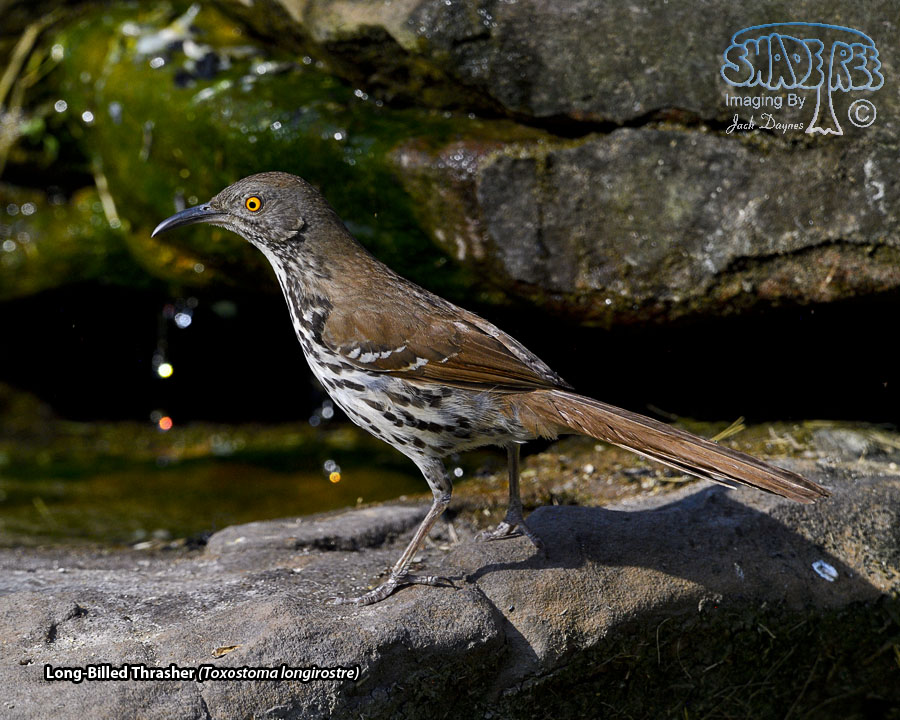
Long-Billed Thrasher(Toxostoma longirostre) |
|
Description: Three thrasher species live in south Texas; mockingbirds, this bird and the Curve-Billed Thrasher. The National Butterfly Center held a “Big Sit” event on Sunday. They invited me to join the team, and in between shifts, I walked the grounds in search of photo opportunities. |
Date Taken: 2021:04:25 17:40 |
|
Location:
National Butterfly Center |
|
Camera Information: NIKON D5, 800 mm, f/8.0, 1/2000 |
File Name: LongBilledThrasher_D5X1717-NationalButterflyCenter |
| © 2021 Jack Daynes, shadeTreeImaging.com |
|
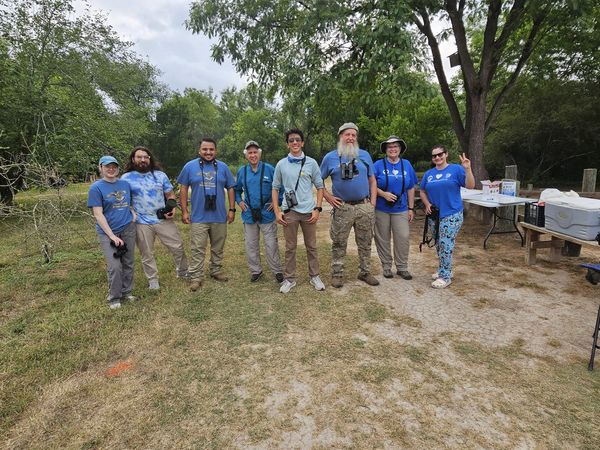
Description: Selene Shores, Roy Rodgers, Nestor Hernandez, Joe Salazar, Ryan Rodriguez, Jack Daynes, Kristy Baker, Amanda Hernandez. Not pictured: Luciano Guerra and Judy Salinas |
Date Taken: 2024:04:28 7:19 |
|
Location:
National Butterfly Center |
|
Camera Information: |
File Name: NBC-Five-to-Nine-Shift |
| © 2024 - Jack Daynes - shadeTree Imaging |
|
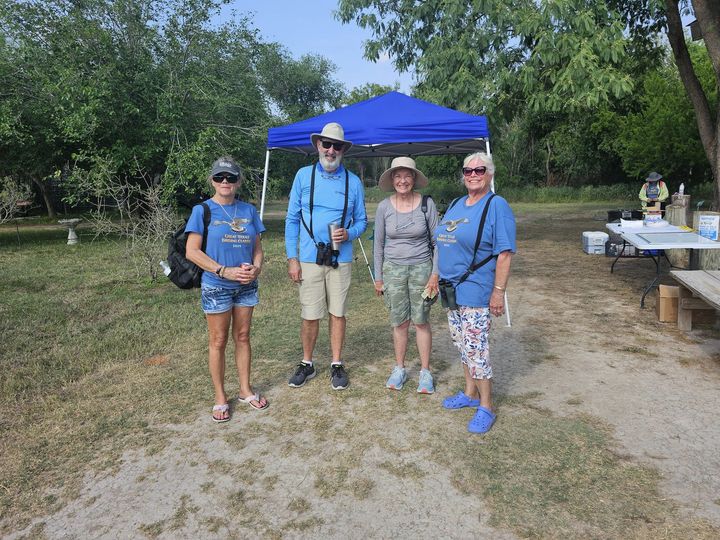
Description: Roberta Allen, Kenneth Wilson, Cindy Harris and Tammie Bulow |
Date Taken: 2024:04:28 13:19 |
|
Location:
National Butterfly Center |
|
Camera Information: |
File Name: NBC-One-to-Five-Shift |
| © 2024 - Jack Daynes - shadeTree Imaging |
Click map markers to reveal further information
