Chuck-Will’s-Widow
Antrostomus carolinensis
The Chuck-Will’s-Widow is the largest member of the nightjar clan. Like other members of this family, they usually spend days on the ground in some shady location, or on a horizontal tree branch. By night, Chuck-Will’s-Widows often forage for beetles, moths, dragonflies or other insects. Their favorite locations for hunting are edges of wooded areas, pastures, and openings in forests. They normally forage on the wing, flying silently a few feet above the ground. Dusk and dawn are their preferred times for hunting, but they sometimes use cloudy or rainy afternoons to dine.
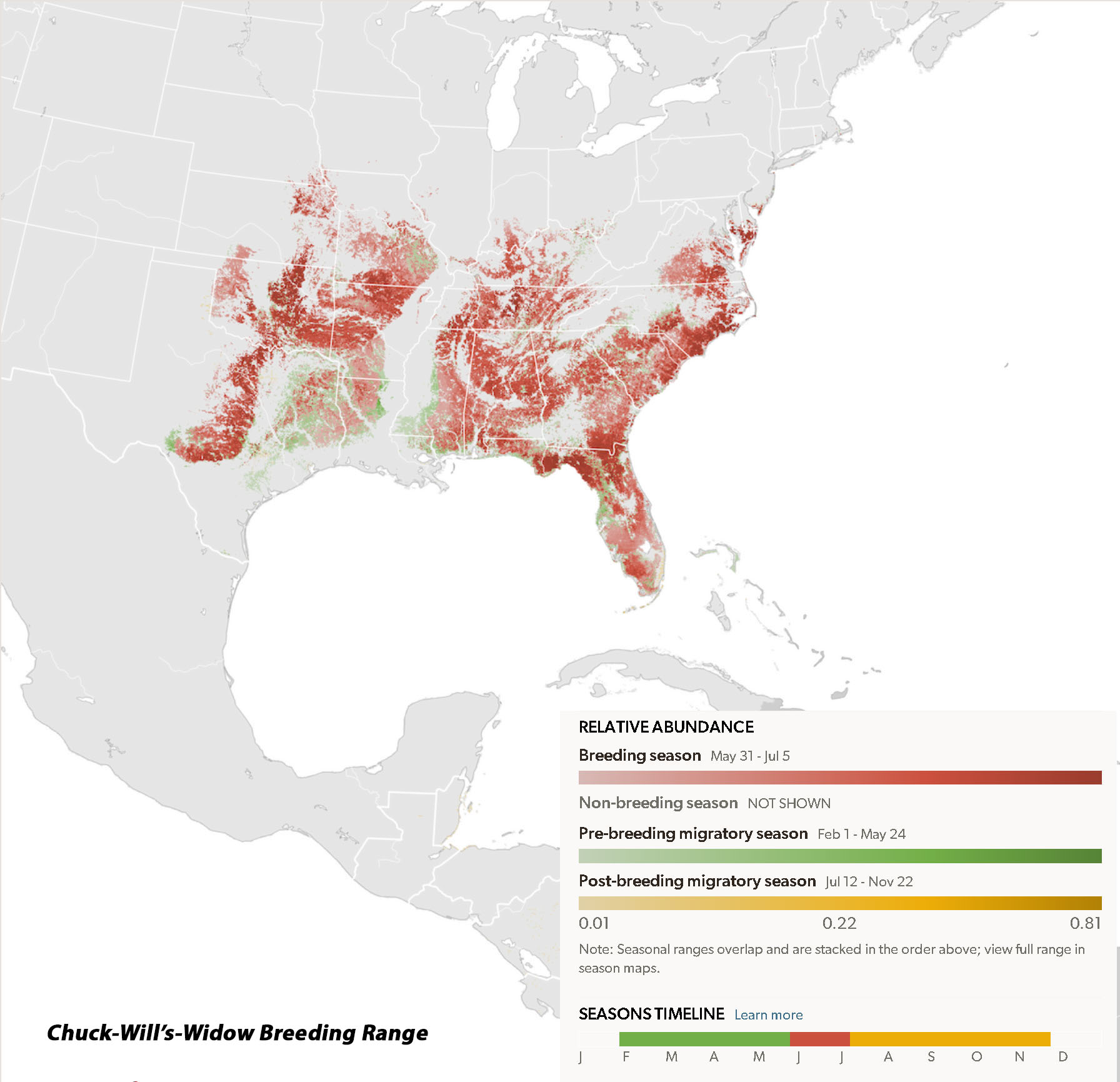
Florida, south Texas, and southern Louisiana may host some of these birds year-round, but most fly south to Mexico, the Caribbean islands, Central America, and northern South America to spend winters.
Chuck-Will’s-Widows get their common name from their song, which begins with a crisp “chuck” followed by a pair of whistled two-syllable notes. The song repeats about every two seconds. During moonlit nights, singing is often continuous for extended periods. They share their songs primarily at dusk, and use them to advertise territory.
Mainstream taxonomists tell us there are no subspecies for the Chuck-Will’s-Widow (i.e. they are monotypic). Researchers believe they are closely related to Rufous Nightjars of southern Central America and northwestern South America.
I’ve met this species twice, and both times were at the South Padre Island Convention Centre. My first meeting was rather unsatisfying. The bird was sitting on the ground under the cover of a tree, and obscured by foliage, so no respectable pictures were possible. During my visit to SPI in 2024-April, I was luckier. Thanks to the kindness of strangers, I found a bird nestled under a thicket of trees, but with a tunnel that provided a clear view of the bird.
1 Photos
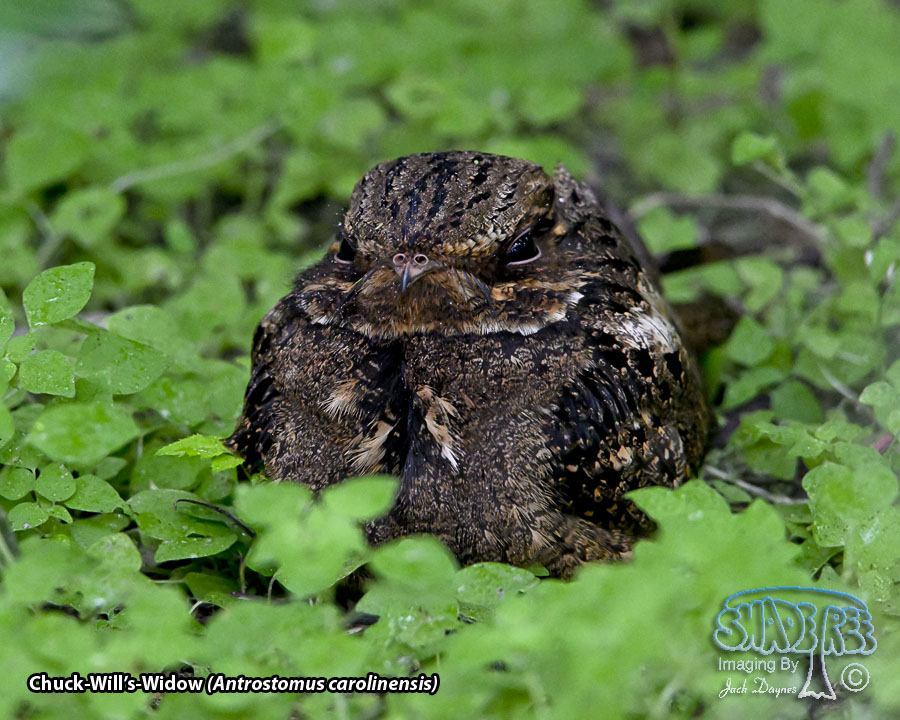
Chuck-Will’s-Widow(Antrostomus carolinensis) |
|
Description: I would not have found this Chuck Will’s Widow had it not been for the kindness of a stranger pointing it out to me. |
Date Taken: 2024:04:22 12:38 |
|
Location:
South Padre Island Covention Cen |
|
Camera Information: NIKON Z 9, 800 mm, f/8.0, 1/30 |
File Name: ChuckWillsWidow_Z9X1964_SPI-ConventionCentre |
| © 2024 Jack Daynes, shadeTreeImaging.com |

Click map markers to reveal further information
