Surf Scoter
Melanitta perspicillata

Surf Scoters winter along the east and west coast of the USA, but breeds in Alaska, Yukon and the Northwest Territory and east to the Atlantic coast. Though known as “sea ducks”, they breed in freshwater lakes in the boreal forests far to the north on the North American Continent.
Surf Scoters nest later than most other duck species. Females alone incubate, and after hatching, the hen leads her young to water where they feed on aquatic invertebrates. Females with broods are not territorial, and on crowded lakes, accidental exchanges of chicks and brood amalgamations occur. Unsuccessful hens leave the breeding grounds before the successful hens, which depart before the hatch-year birds do.
In November 2001, while viewing the sea from the cliffs to the north of the Olympic Peninsula, I witnessed a large dense raft of perhaps a hundred Surf Scoters actively feeding near the mouth of the Puget Sound. The birds all dived repeatedly, all at once, simultaneously resurfacing a minute later. The sea water virtually boiled with each cycle. It was very exciting to watch.
Modern science regards the Surf Scoter as monotypic (i.e. there are no subspecies).
San Diego Bay, especially at the southern end, is a reliable place to meet these birds in the winter. During the breeding season, these sea ducks seek boreal forest lakes in northern Canada and Alaska. In 2022, I met a raft of Surf Scoters in the company of White-Winged Scoters on their breeding grounds in northern British Columbia (Canada). While I was driving north towards Canada on the Pacific Coast, I found many opportunities to photograph them foraging on sheltered coastal waters through California, Oregon, and Washington.
51 Photos
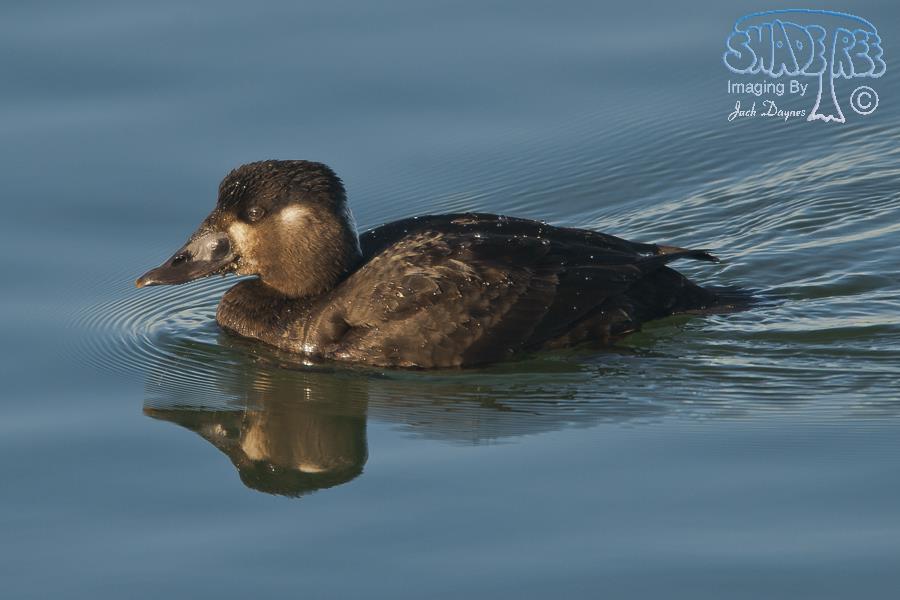
Surf Scoter(Melanitta perspicillata) |
|
Description: Female at Chula Vista Bayfront Park, Chula Vista, California. San Diego County. |
Date Taken: 2013:01:22 8:24 |
|
Location:
Bayfront Park |
|
Camera Information: NIKON D3X, 800 mm, f/5.6, 1/1000 |
File Name: D3X0521-SurfScoter |
| © 2013 Jack Daynes, shadeTreeImaging.com |

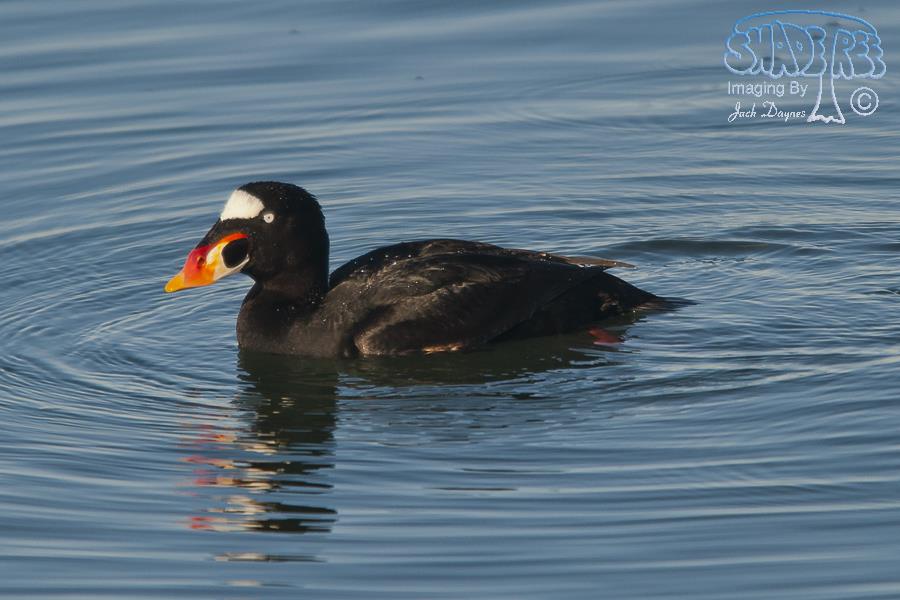
Surf Scoter(Melanitta perspicillata) |
|
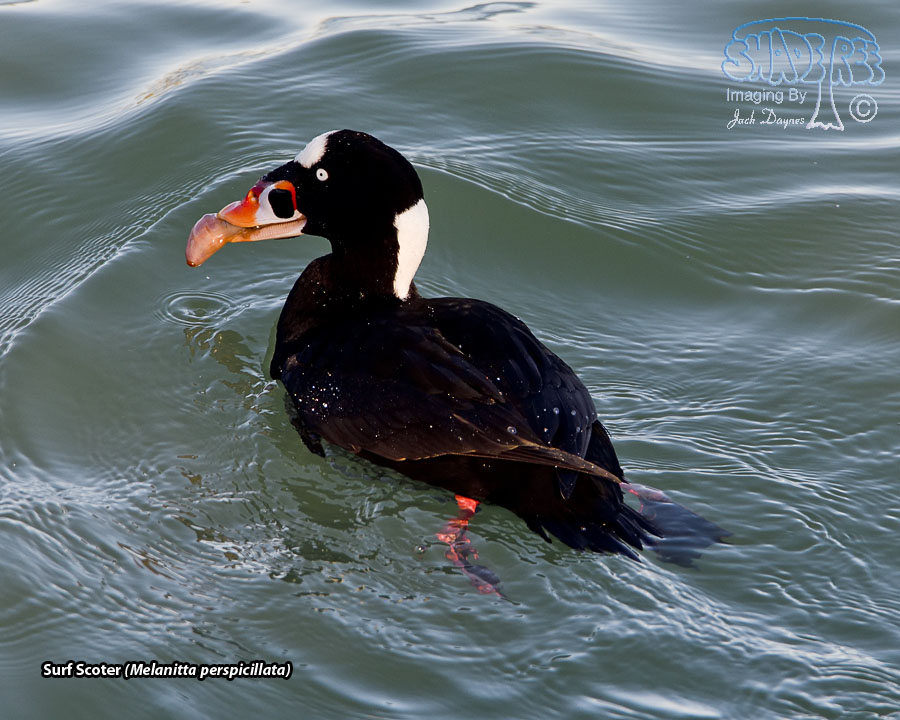
Description: Male at Chula Vista Bayfront Park, Chula Vista, California. San Diego County. |
Date Taken: 2013:01:22 8:28 |
|
Location:
Bayfront Park |
|
Camera Information: NIKON D3X, 800 mm, f/5.6, 1/1600 |
File Name: D3X0526-SurfScoter-Male |
| © 2013 Jack Daynes, shadeTreeImaging.com |
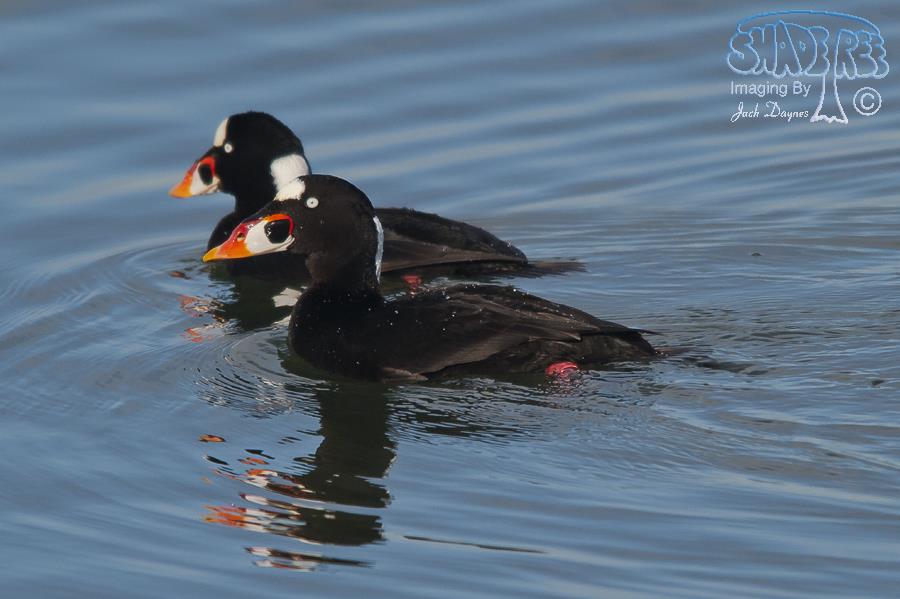
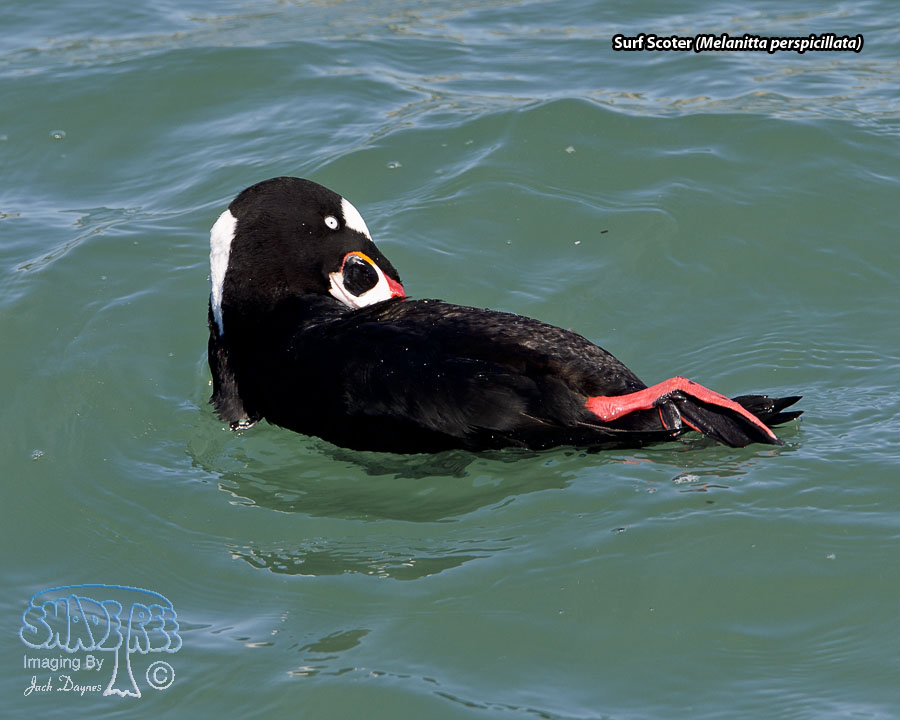
Surf Scoter(Melanitta perspicillata) |
|
Description: Chula Vista Bayfront Park, Chula Vista, California. San Diego County. |
Date Taken: 2012:02:16 9:51 |
|
Location:
Bayfront Park |
|
Camera Information: NIKON D3X, 800 mm, f/5.6, 1/2000 |
File Name: D3X6850-SurfScoter |
| © 2012 Jack Daynes, shadeTreeImaging.com |
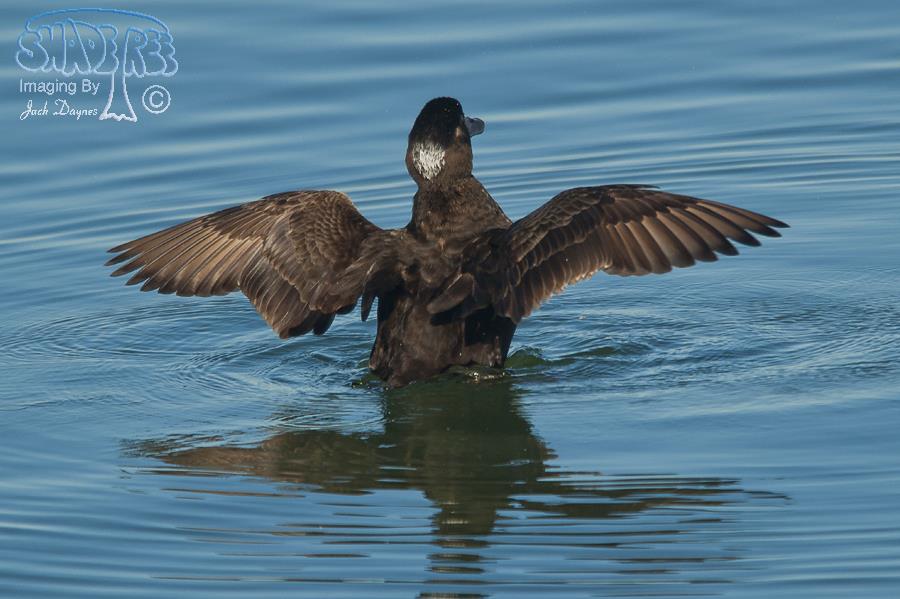
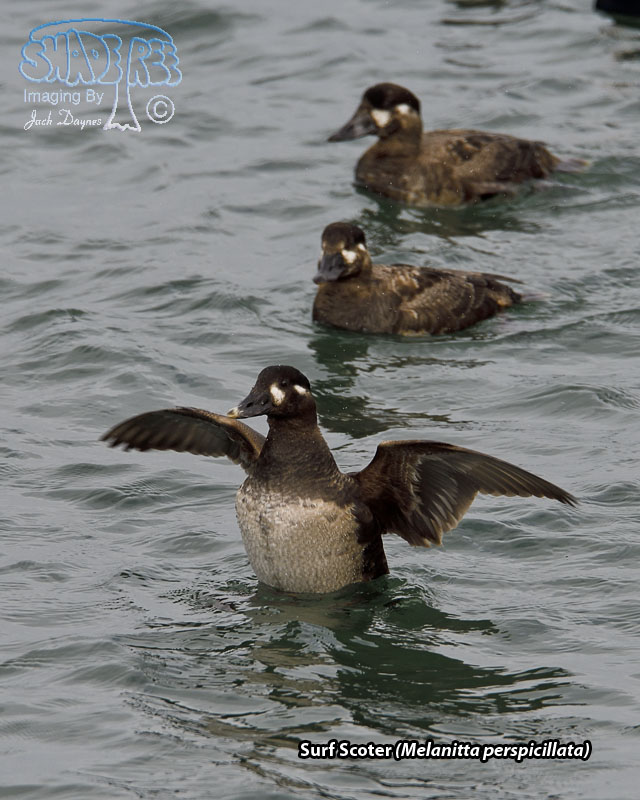
Surf Scoter(Melanitta perspicillata) |
|
Description: Female stretching her wings at Chula Vista Bayfront Park, Chula Vista, California. San Diego County. |
Date Taken: 2012:02:16 10:41 |
|
Location:
Bayfront Park |
|
Camera Information: NIKON D3X, 800 mm, f/5.6, 1/2000 |
File Name: D3X7057-SurfScoter |
| © 2012 Jack Daynes, shadeTreeImaging.com |
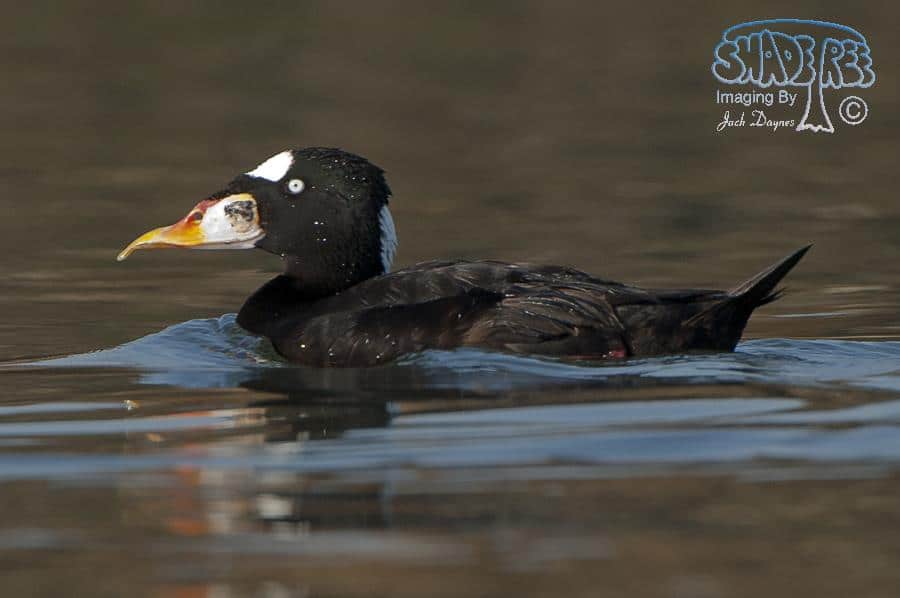
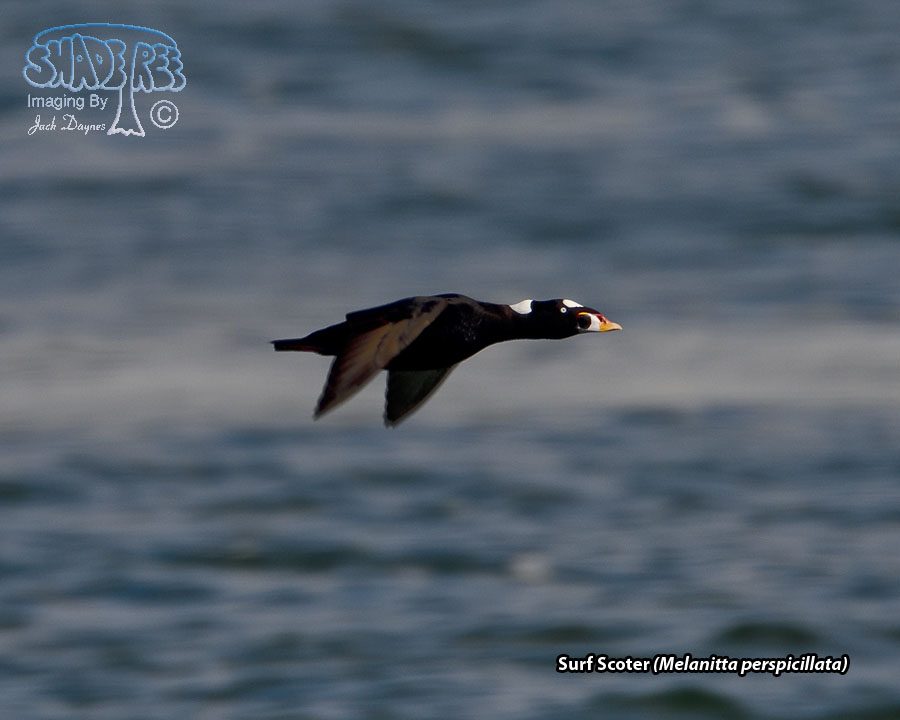
Surf Scoter(Melanitta perspicillata) |
|
Description: South San Diego Bay. San Diego County, California 2005-04-15. |
Date Taken: 2005:04:15 7:07 |
|
Camera Information: NIKON D2X, 550 mm, f/8.5, 1/320 |
File Name: JCD0903SurfScoter |
| © 2005 Jack Daynes, shadeTree-Imaging.com |
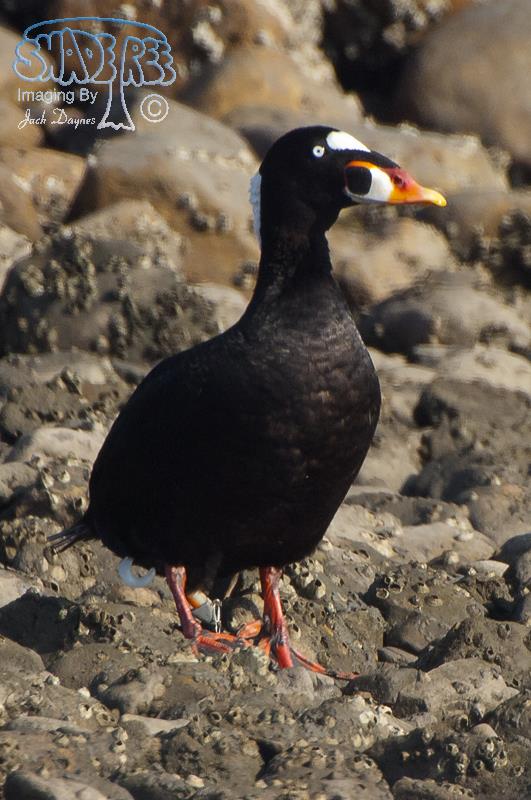
Surf Scoter(Melanitta perspicillata) |
|
Description: South San Diego Bay. San Diego County, California 2005-04-15. |
Date Taken: 2005:04:15 7:33 |
|
Camera Information: NIKON D2X, 550 mm, f/9.0, 1/320 |
File Name: JCD0927SurfScoter |
| © 2005 Jack Daynes, shadeTree-Imaging.com |
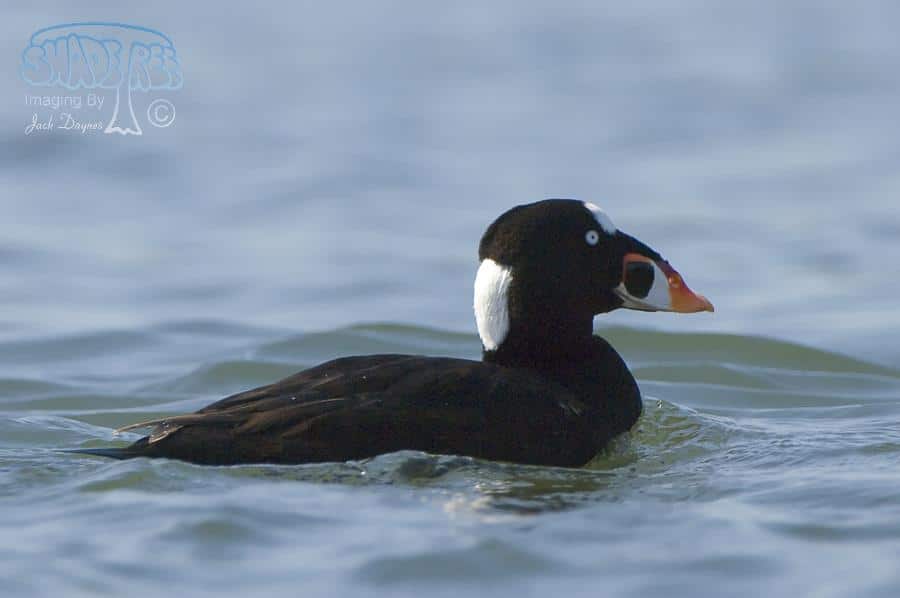
Surf Scoter(Melanitta perspicillata) |
|
Description: South San Diego Bay. San Diego County, California. |
Date Taken: 2006:03:04 10:25 |
|
Camera Information: NIKON D2X, 420 mm, f/5.6, 1/640 |
File Name: JCD2051SurfScoter |
| © 2006 Jack Daynes, shadeTree Imaging |
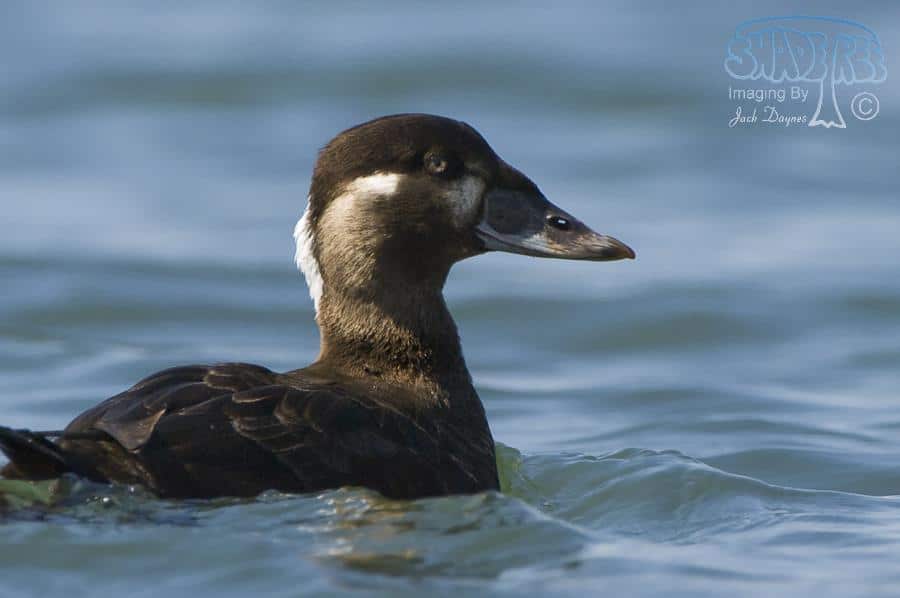
Surf Scoter(Melanitta perspicillata) |
|
Description: Female. South San Diego Bay, California 2016-05-28. |
Date Taken: 2006:03:04 10:26 |
|
Camera Information: NIKON D2X, 420 mm, f/5.6, 1/350 |
File Name: JCD2069SurfScoter |
| © 2006 Jack Daynes, shadeTree Imaging |
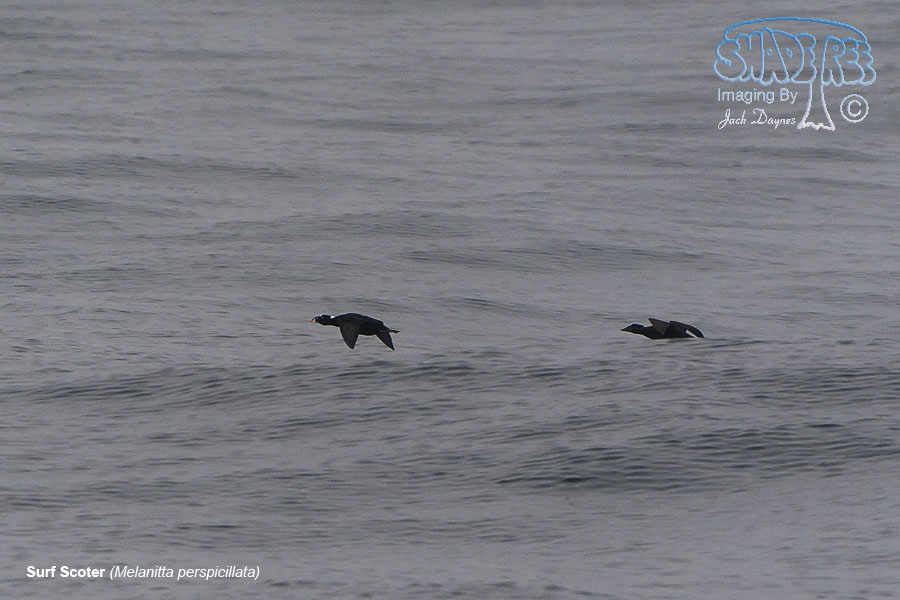
Surf Scoter(Melanitta perspicillata) |
|
Description: Seen on the first and second days of the expedition to Archipiélago de Revillagigedo on board the Shogun. Between Ensenada, San Roque and Acencion, Mexico. |
Date Taken: 2017:02:10 9:32 |
|
Location:
Off Shore |
|
Camera Information: NIKON D5, 550 mm, f/6.3, 1/5000 |
File Name: SurfScoter_D5X4038 |
| © 2017 Jack Daynes, shadeTreeImaging.com |
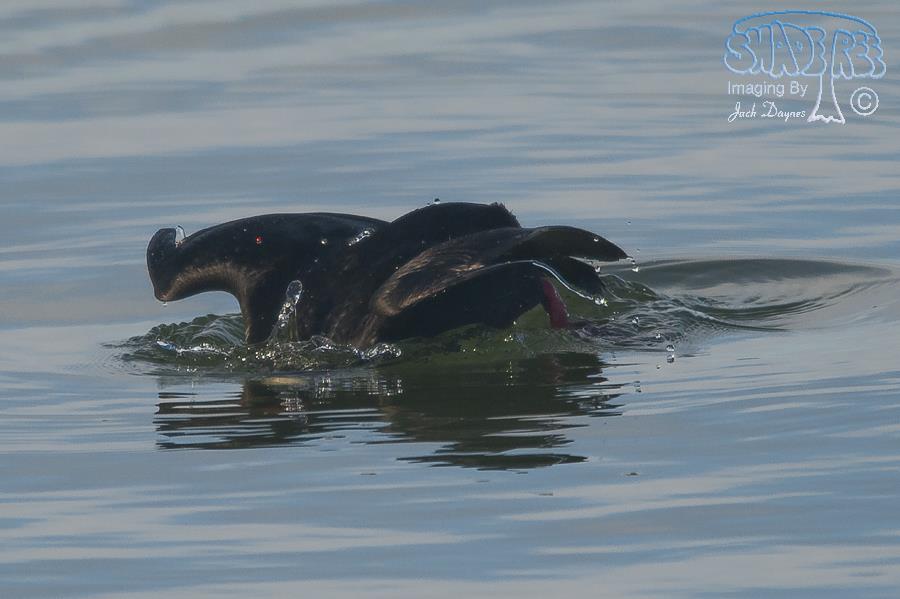
Surf Scoter(Melanitta perspicillata) |
|
Description: Chula Vista Bayfront Park, Chula Vista, California. San Diego County. |
Date Taken: 2012:02:16 9:57 |
|
Location:
Chula Vista Bayfront Park |
|
Camera Information: NIKON D3X, 800 mm, f/5.6, 1/2500 |
File Name: D3X6853-SurfScoter |
| © 2012 Jack Daynes, shadeTree-Imaging |
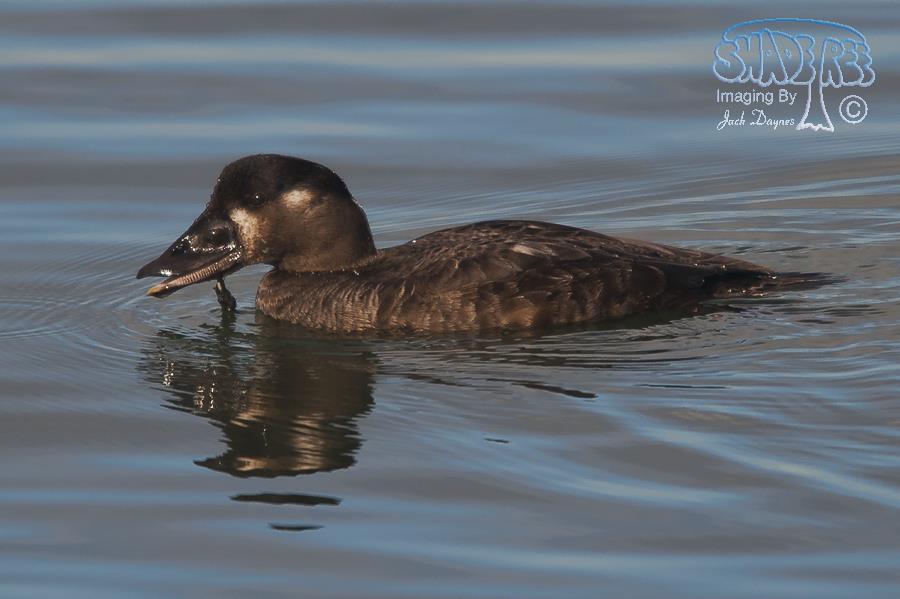
Surf Scoter(Melanitta perspicillata) |
|
Description: Foraging at Chula Vista Bayfront Park, Chula Vista, California. San Diego County. |
Date Taken: 2012:02:16 9:46 |
|
Location:
Bayfront Park |
|
Camera Information: NIKON D3X, 800 mm, f/5.6, 1/1600 |
File Name: D3X6823-SurfScoter |
| © 2012 Jack Daynes, shadeTreeImaging.com |
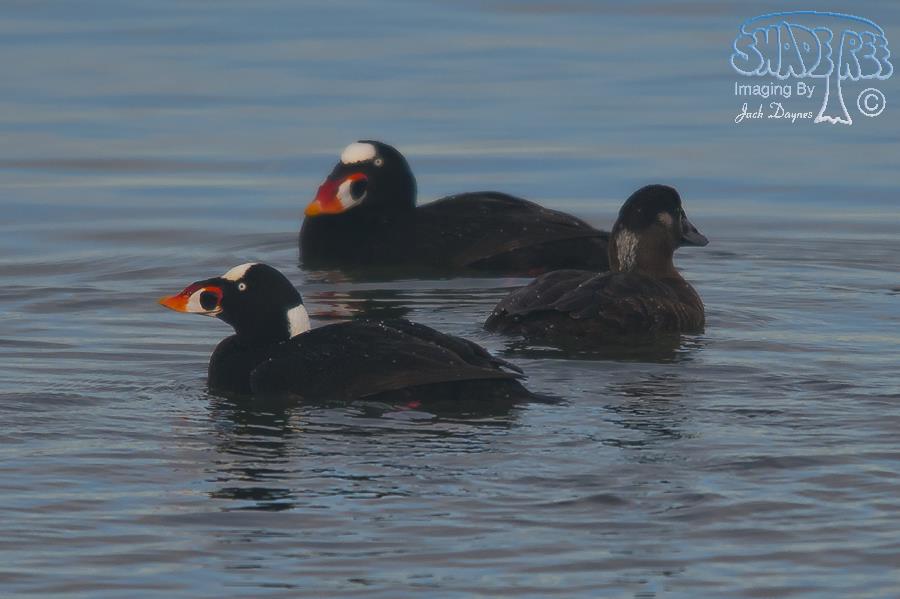
Surf Scoter(Melanitta perspicillata) |
|
Description: Chula Vista Bayfront Park, Chula Vista, California. San Diego County. |
Date Taken: 2012:02:16 9:40 |
|
Location:
Chula Vista Bayfront Park |
|
Camera Information: NIKON D3X, 800 mm, f/5.6, 1/2000 |
File Name: D3X6812-SurfScoter |
| © 2012 Jack Daynes, shadeTree-Imaging |
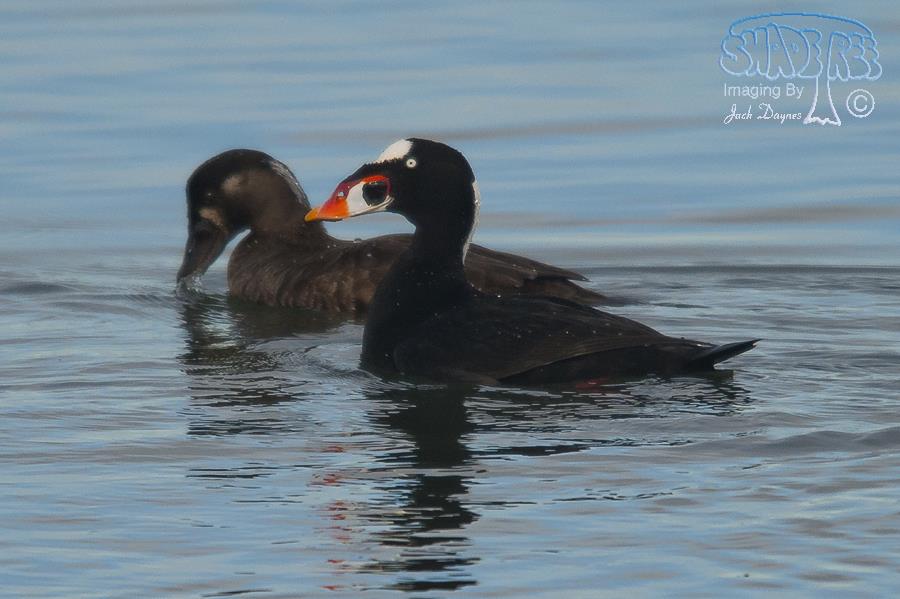
Surf Scoter(Melanitta perspicillata) |
|
Description: Pair at Chula Vista Bayfront Park, Chula Vista, California. San Diego County. |
Date Taken: 2012:02:16 9:40 |
|
Location:
Bayfront Park |
|
Camera Information: NIKON D3X, 800 mm, f/5.6, 1/2000 |
File Name: D3X6804-SurfScoter |
| © 2012 Jack Daynes, shadeTreeImaging.com |
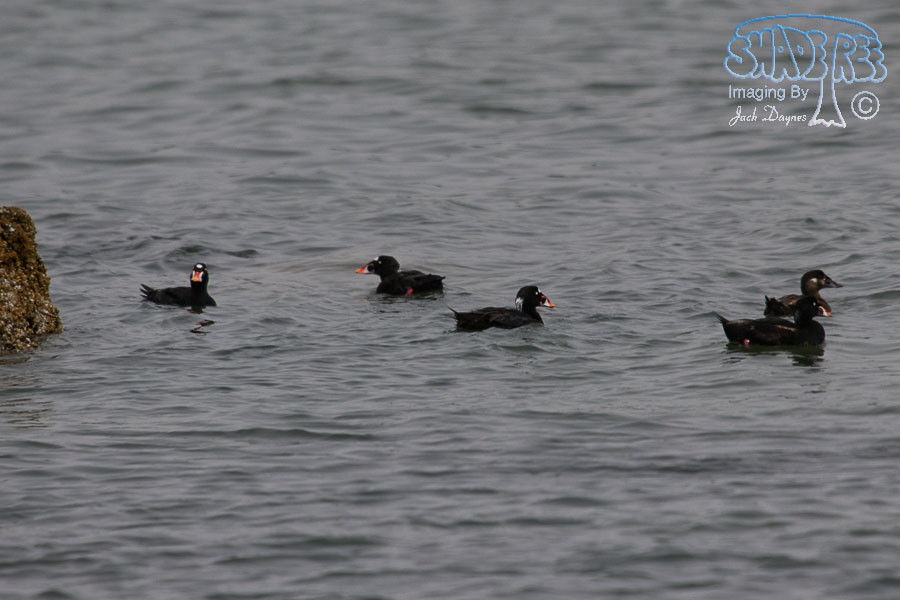
Surf Scoter(Melanitta perspicillata) |
|
Description: In the harbor at Crescent City in northern California. |
Date Taken: 2015:06:14 13:50 |
|
Location:
Crescent Harbor |
|
Camera Information: NIKON D3X, 800 mm, f/8.0, 1/4000 |
File Name: D3X0424-SurfScoter |
| © 2015 Jack Daynes, shadeTreeImaging.com |
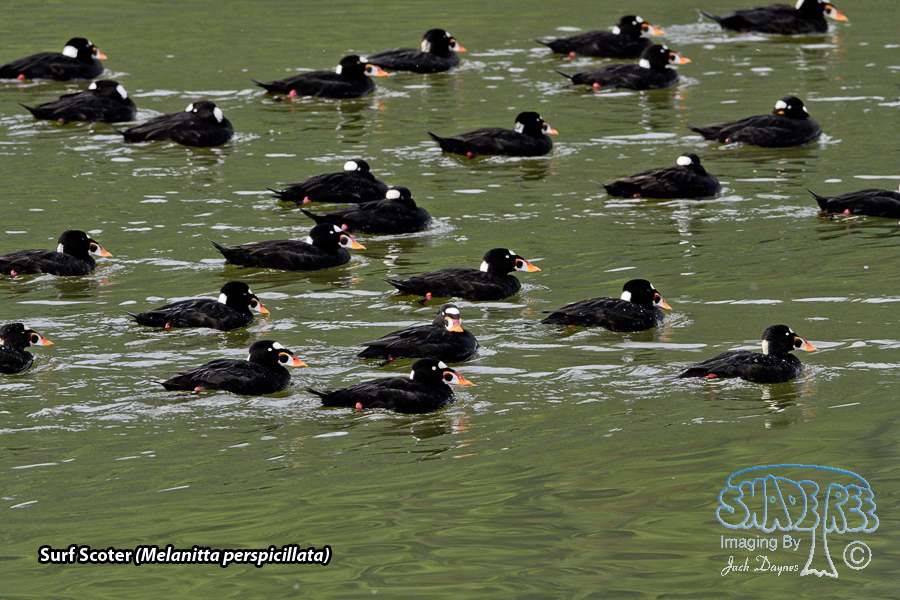
Surf Scoter(Melanitta perspicillata) |
|
Description: Prior to this meeting with these rafting Surf Scoters on the lake at the Toad River Lodge, All my encounters were in saltwater environs. But here, in the Northern Canadian Rockies is where they come to breed. |
Date Taken: 2022:06:23 10:10 |
|
Location:
Toad River |
|
Camera Information: NIKON D850, 800 mm, f/18.0, 1/400 |
File Name: SurfScoter_8503605-ToadRiver.BC_ |
| © 2022 Jack Daynes, shadeTreeImaging.com |
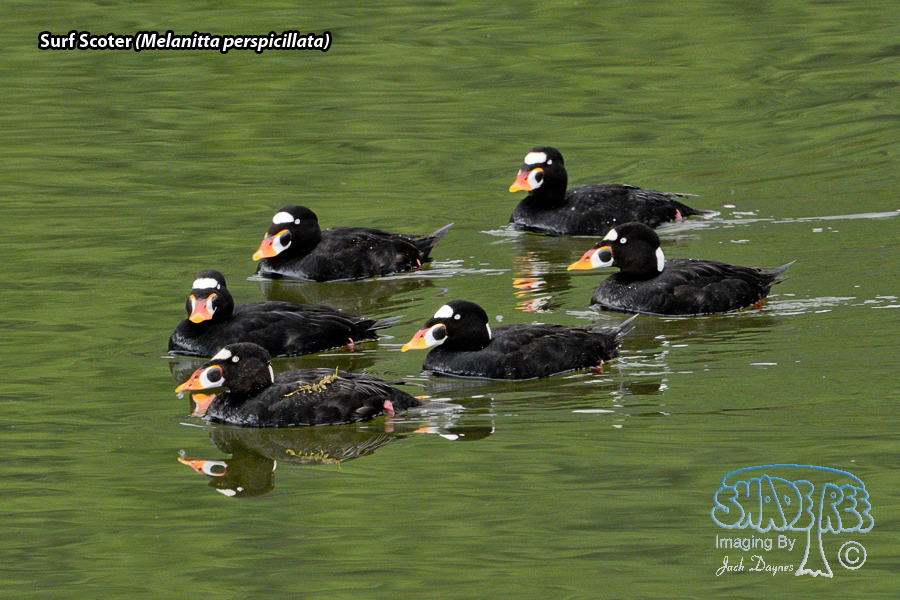
Surf Scoter(Melanitta perspicillata) |
|
Description: Prior to this meeting with these rafting Surf Scoters on the lake at the Toad River Lodge, All my encounters were in saltwater environs. But here, in the Northern Canadian Rockies is where they come to breed. |
Date Taken: 2022:06:23 9:52 |
|
Location:
Toad River |
|
Camera Information: NIKON D850, 800 mm, f/18.0, 1/320 |
File Name: SurfScoter_8503300-ToadRiver.BC_ |
| © 2022 Jack Daynes, shadeTreeImaging.com |
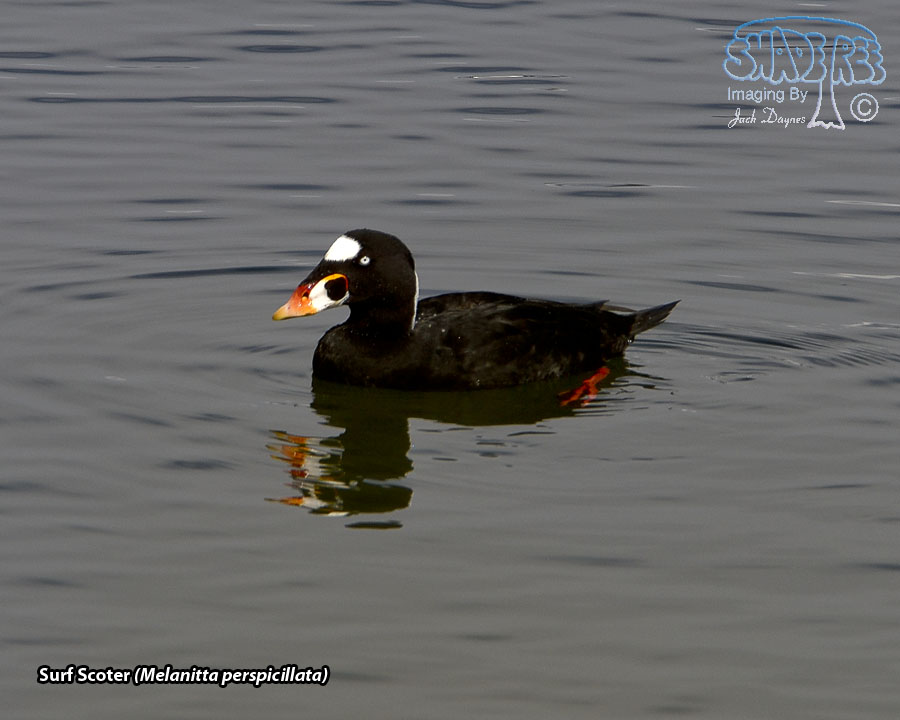
Surf Scoter(Melanitta perspicillata) |
|
Description: When I spotted Barrow’s Goldeneyes at the Quartermaster Marina, we stopped to take a few pictures of the grebes, scoters and buffleheads that share the water with them. |
Date Taken: 2022:04:14 14:41 |
|
Location:
Burton |
|
Camera Information: NIKON D850, 800 mm, f/8.0, 1/800 |
File Name: SurfScoter_8502565-VashonIsland |
| © 2022 Jack Daynes, shadeTreeImaging.com |
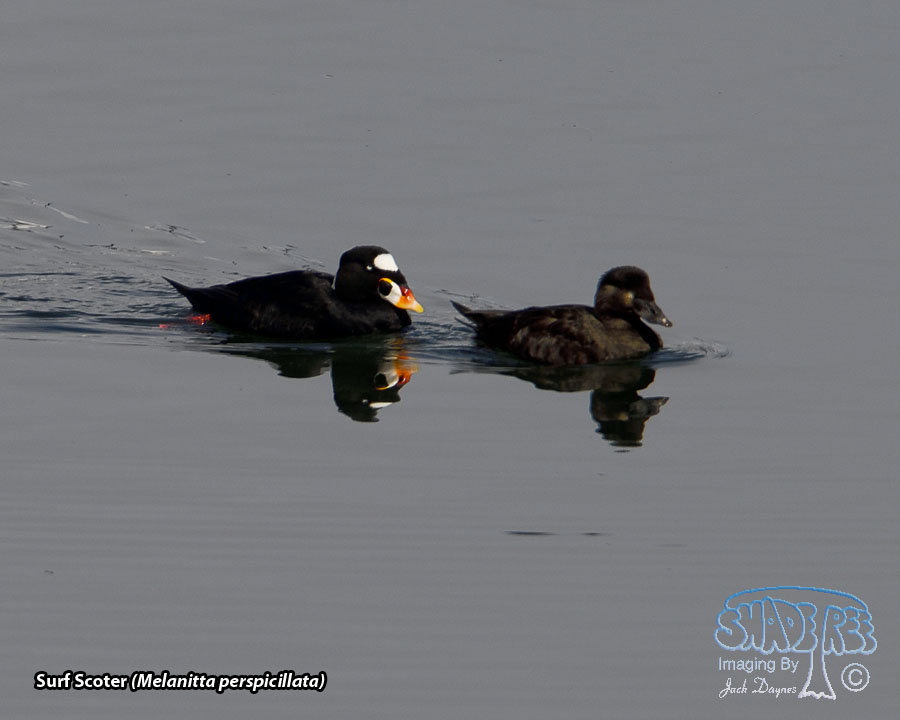
Surf Scoter(Melanitta perspicillata) |
|
Description: When I spotted Barrow’s Goldeneyes at the Quartermaster Marina, we stopped to take a few pictures of the grebes, scoters and buffleheads that share the water with them. |
Date Taken: 2022:04:14 14:38 |
|
Location:
Burton |
|
Camera Information: NIKON D850, 800 mm, f/8.0, 1/800 |
File Name: SurfScoter_8502552-VashonIsland |
| © 2022 Jack Daynes, shadeTreeImaging.com |
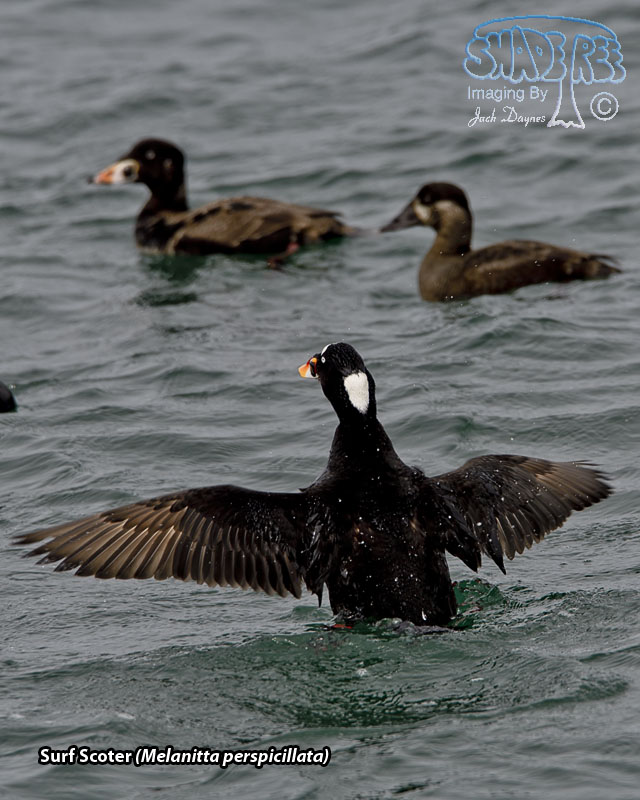
Surf Scoter(Melanitta perspicillata) |
|
Description: Surf Scoters were the main characters in the feeding-frenzy play that took place before me at Yaquina Bay. There were both mature and immature birds in the mob. |
Date Taken: 2022:04:03 12:21 |
|
Location:
South Yaquina Bay Jetty |
|
Camera Information: NIKON D850, 800 mm, f/8.0, 1/800 |
File Name: SurfScoter_8501134-SouthYaquinaBayJetty |
| © 2022 Jack Daynes, shadeTreeImaging.com |
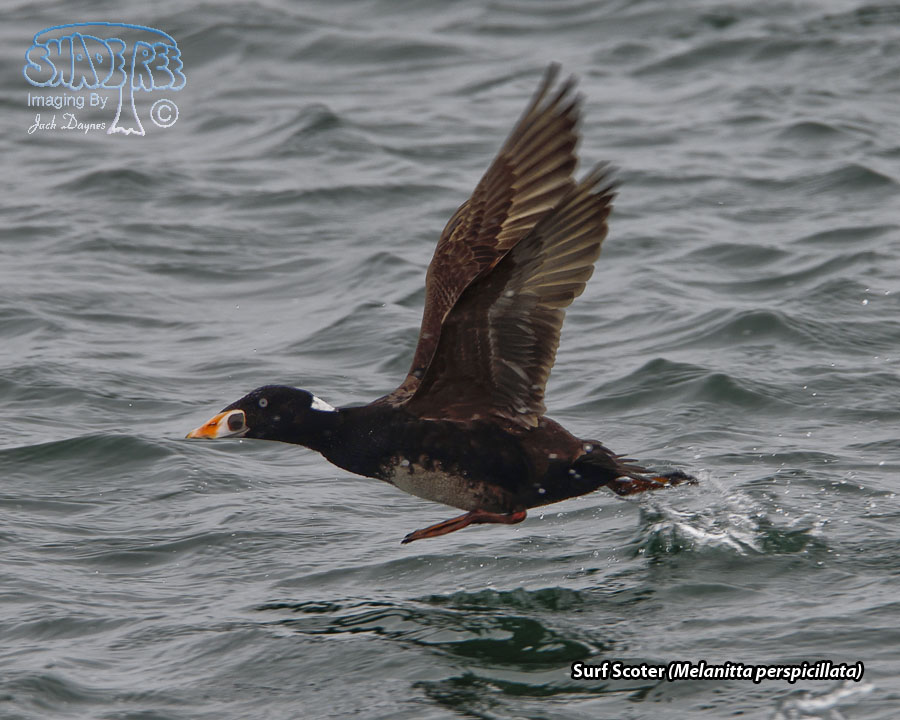
Surf Scoter(Melanitta perspicillata) |
|
Description: Surf Scoters were the main characters in the feeding-frenzy play that took place before me at Yaquina Bay. There were both mature and immature birds in the mob. |
Date Taken: 2022:04:03 12:04 |
|
Location:
South Yaquina Bay Jetty |
|
Camera Information: NIKON D850, 800 mm, f/8.0, 1/800 |
File Name: SurfScoter_8500992-SouthYaquinaBayJetty |
| © 2022 Jack Daynes, shadeTreeImaging.com |
Surf Scoter(Melanitta perspicillata) |
|
Description: Surf Scoters were the main characters in the feeding-frenzy play that took place before me at Yaquina Bay. There were both mature and immature birds in the mob. |
Date Taken: 2022:04:03 10:44 |
|
Location:
South Yaquina Bay Jetty |
|
Camera Information: NIKON D850, 800 mm, f/8.0, 1/800 |
File Name: SurfScoter_8500419-SouthYaquinaBayJetty |
| © 2022 Jack Daynes, shadeTreeImaging.com |
Surf Scoter(Melanitta perspicillata) |
|
Description: On my trip north along the Pacific coast, I spent several hours beside the river channel at the South Jetty of the Siuslaw River Mouth, near Florence (Oregon). During my visit, I met Harbor Seals, Pelagic Cormorants, Red-Necked Grebes, Surf Scoters, and Western Grebes. |
Date Taken: 2022:04:02 12:51 |
|
Location:
South Jetty |
|
Camera Information: NIKON D850, 800 mm, f/8.0, 1/800 |
File Name: SurfScoter_8500035-Florence-SouthJetty |
| © 2022 Jack Daynes, shadeTreeImaging.com |
Surf Scoter(Melanitta perspicillata) |
|
Description: Surf Scoters were the highlight of my visit, but only the boys ventured close enough for the camera. The hens kept their distance. This visit to San Luis Harbor was only my second since 2019-July. Again, it proved to be a worthwhile stop on my trip along California’s central coast. |
Date Taken: 2022:02:28 16:12 |
|
Location:
Port San Luis |
|
Camera Information: NIKON D850, 800 mm, f/8.0, 1/800 |
File Name: SurfScoter_8500719-SanLuisHarbor |
| © 2022 Jack Daynes, shadeTreeImaging.com |
Surf Scoter(Melanitta perspicillata) |
|
Description: Surf Scoters were the highlight of my visit, but only the boys ventured close enough for the camera. The hens kept their distance. This visit to San Luis Harbor was only my second since 2019-July. Again, it proved to be a worthwhile stop on my trip along California’s central coast. |
Date Taken: 2022:02:28 13:26 |
|
Location:
Port San Luis |
|
Camera Information: NIKON D850, 800 mm, f/8.0, 1/800 |
File Name: SurfScoter_8500181-SanLuisHarbor |
| © 2022 Jack Daynes, shadeTreeImaging.com |
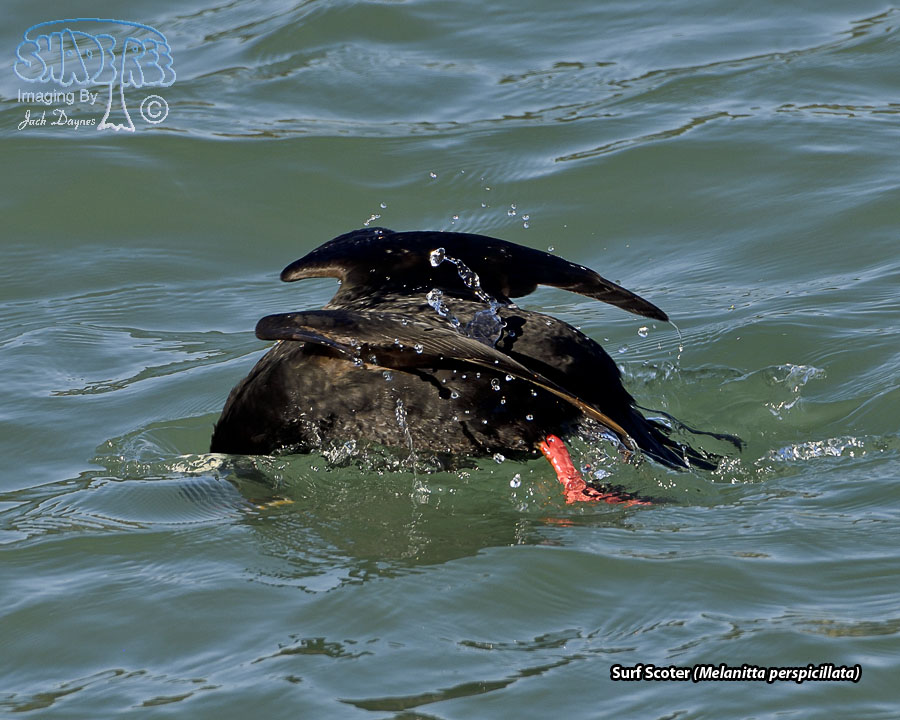
Surf Scoter(Melanitta perspicillata) |
|
Description: Surf Scoters were the highlight of my visit, but only the boys ventured close enough for the camera. The hens kept their distance. This visit to San Luis Harbor was only my second since 2019-July. Again, it proved to be a worthwhile stop on my trip along California’s central coast. |
Date Taken: 2022:02:28 15:40 |
|
Location:
Port San Luis |
|
Camera Information: NIKON D850, 800 mm, f/8.0, 1/800 |
File Name: SurfScoter_8500628-SanLuisHarbor |
| © 2022 Jack Daynes, shadeTreeImaging.com |
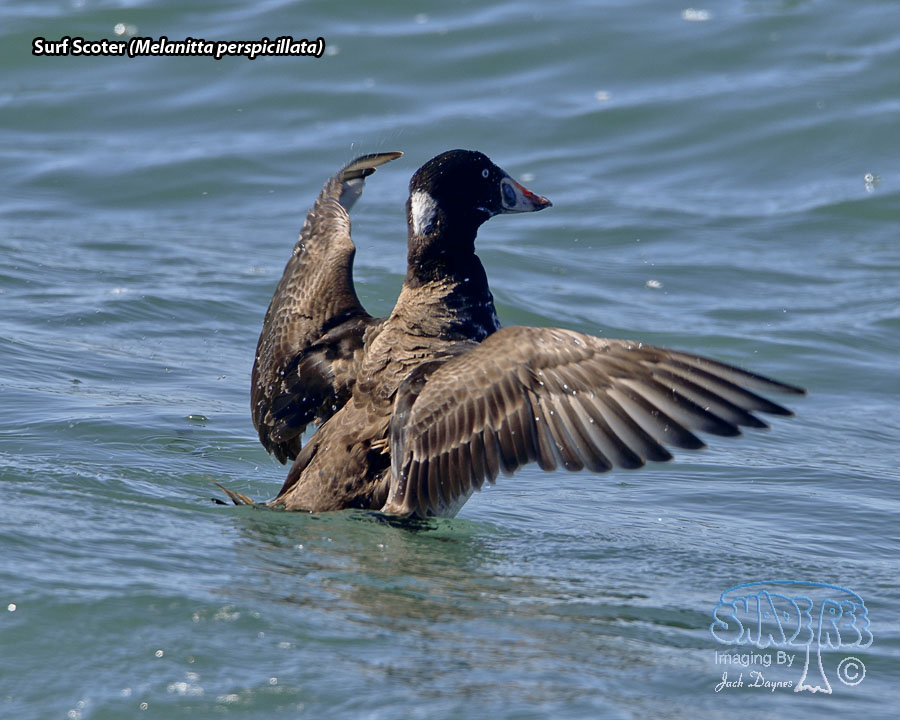
Surf Scoter(Melanitta perspicillata) |
|
Description: Small to medium-sized diving ducks, such as this first year male scoter, ranged over all quadrants of the deeper waters in the harbor. Waterfowl and shorebirds were the objects of my affection during the half-day I spent exploring Bodega Bay. |
Date Taken: 2022:03:06 11:49 |
|
Location:
Bodega Bay |
|
Camera Information: NIKON D850, 800 mm, f/8.0, 1/800 |
File Name: SurfScoter_8503633-BodegaBay |
| © 2022 Jack Daynes, shadeTreeImaging.com |
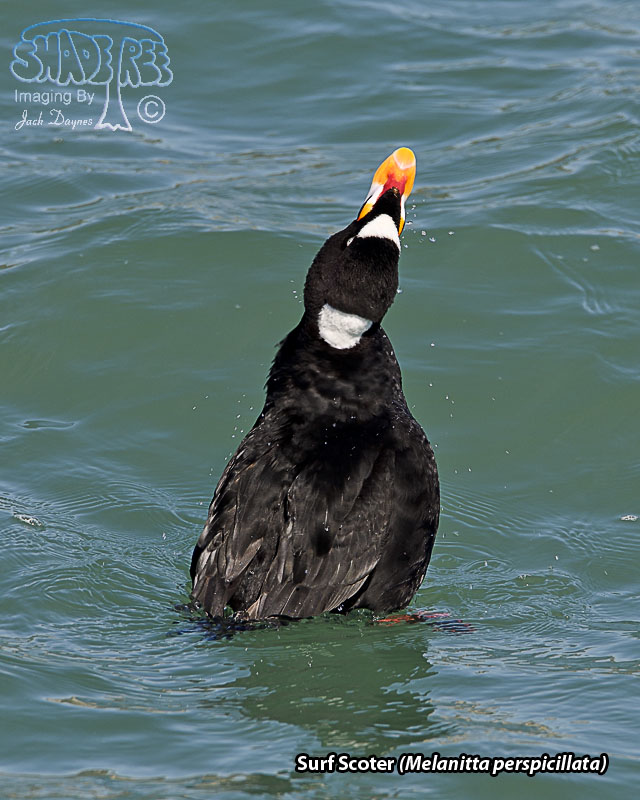
Surf Scoter(Melanitta perspicillata) |
|
Description: Surf Scoters were the highlight of my visit, but only the boys ventured close enough for the camera. The hens kept their distance. This visit to San Luis Harbor was only my second since 2019-July. Again, it proved to be a worthwhile stop on my trip along California’s central coast. |
Date Taken: 2022:02:28 13:26 |
|
Location:
Port San Luis |
|
Camera Information: NIKON D850, 800 mm, f/8.0, 1/800 |
File Name: SurfScoter_8500190-SanLuisHarbor |
| © 2022 Jack Daynes, shadeTreeImaging.com |
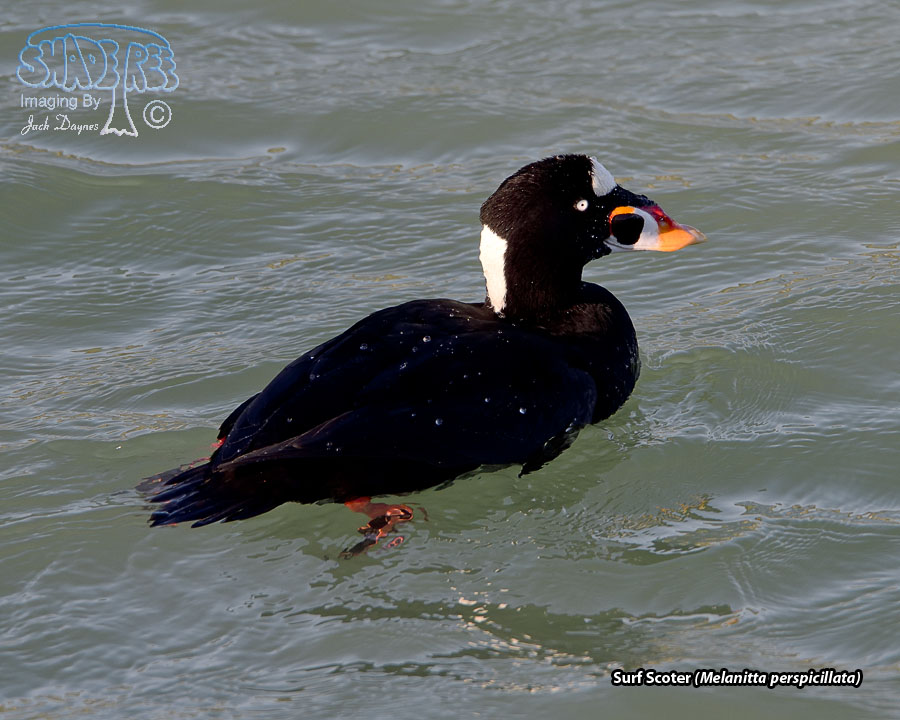
Surf Scoter(Melanitta perspicillata) |
|
Description: Surf Scoters were the highlight of my visit, but only the boys ventured close enough for the camera. The hens kept their distance. This visit to San Luis Harbor was only my second since 2019-July. Again, it proved to be a worthwhile stop on my trip along California’s central coast. |
Date Taken: 2022:02:28 15:38 |
|
Location:
Port San Luis |
|
Camera Information: NIKON D850, 800 mm, f/8.0, 1/800 |
File Name: SurfScoter_8500586-SanLuisHarbor |
| © 2022 Jack Daynes, shadeTreeImaging.com |
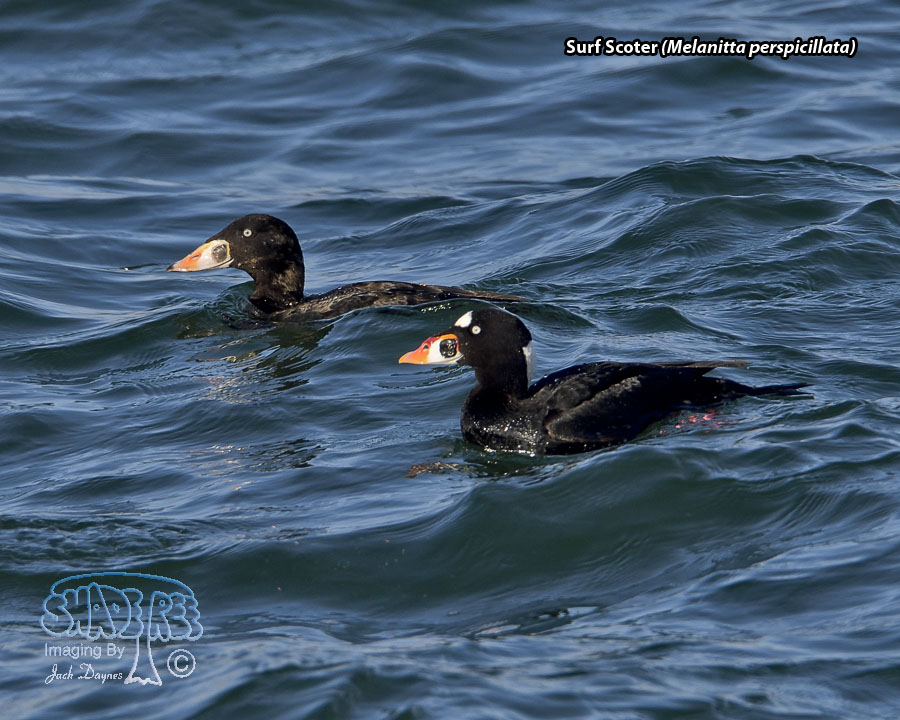
Surf Scoter(Melanitta perspicillata) |
|
Description: Surf Scoters foraged in the close company of White-Winged Scoters and Horned Grebes just off Coos Bay’s South Jetty. |
Date Taken: 2022:03:30 17:39 |
|
Location:
South Jetty |
|
Camera Information: NIKON D850, 800 mm, f/8.0, 1/800 |
File Name: SurfScoter_8508959-CoosBay-SouthJetty |
| © 2022 Jack Daynes, shadeTreeImaging.com |
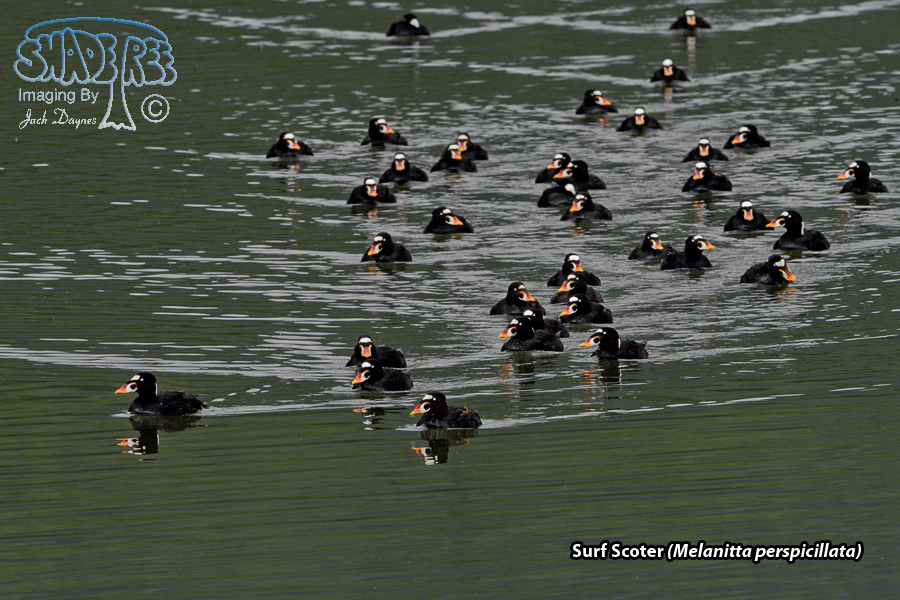
Surf Scoter(Melanitta perspicillata) |
|
Description: Prior to this meeting with these rafting Surf Scoters on the lake at the Toad River Lodge, All my encounters were in saltwater environs. But here, in the Northern Canadian Rockies is where they come to breed. |
Date Taken: 2022:06:23 9:51 |
|
Location:
Toad River |
|
Camera Information: NIKON D850, 800 mm, f/18.0, 1/640 |
File Name: SurfScoter_8503275-ToadRiver.BC_ |
| © 2022 Jack Daynes, shadeTreeImaging.com |
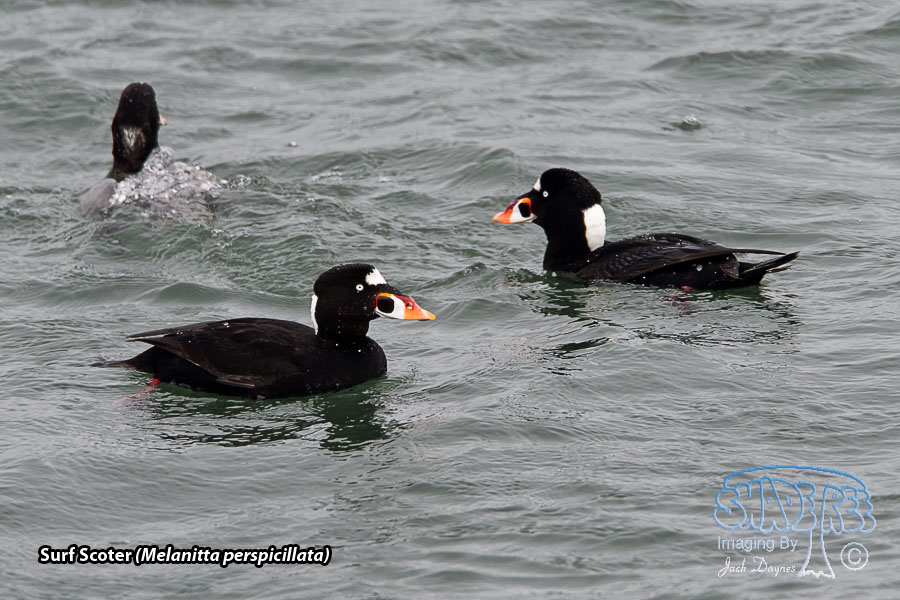
Surf Scoter(Melanitta perspicillata) |
|
Description: Surf Scoters were the main characters in the feeding-frenzy play that took place before me at Yaquina Bay. There were both mature and immature birds in the mob. |
Date Taken: 2022:04:03 10:41 |
|
Location:
South Yaquina Bay Jetty |
|
Camera Information: NIKON D850, 800 mm, f/8.0, 1/800 |
File Name: SurfScoter_8500348-SouthYaquinaBayJetty |
| © 2022 Jack Daynes, shadeTreeImaging.com |
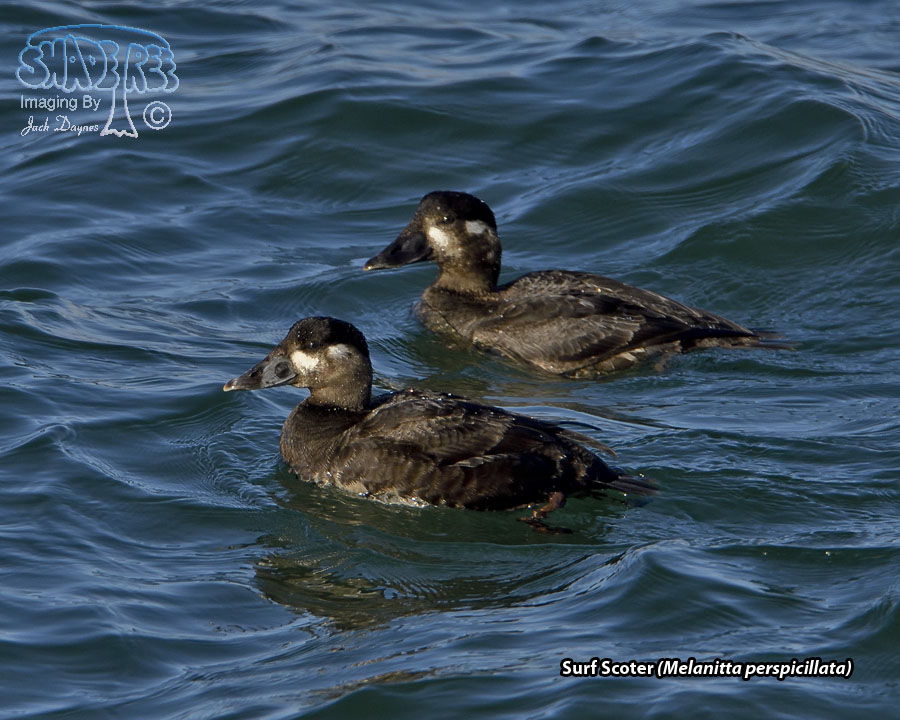
Surf Scoter(Melanitta perspicillata) |
|
Description: I thought I’d met my first White-Winged Scoters as they foraged in the close company of Surf Scoters and Horned Grebes just off Coos Bay’s South Jetty. I’ve since learned these were female Surf Scoters. |
Date Taken: 2022:03:30 17:37 |
|
Location:
South Jetty |
|
Camera Information: NIKON D850, 800 mm, f/8.0, 1/800 |
File Name: SurfScoterScoter_8508902-CoosBay-SouthJetty |
| © 2022 Jack Daynes, shadeTreeImaging.com |
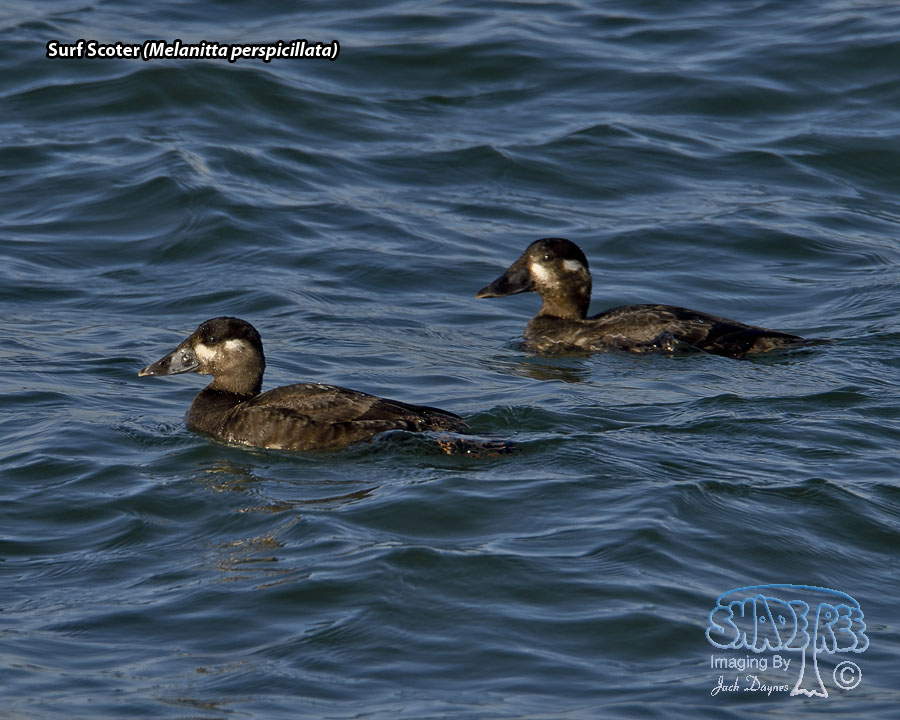
Surf Scoter(Melanitta perspicillata) |
|
Description: I thought I’d met my first White-Winged Scoters as they foraged in the close company of Surf Scoters and Horned Grebes just off Coos Bay’s South Jetty. I’ve since learned these were female Surf Scoters. |
Date Taken: 2022:03:30 17:37 |
|
Location:
South Jetty |
|
Camera Information: NIKON D850, 800 mm, f/8.0, 1/800 |
File Name: SurfScoterScoter_8508906-CoosBay-SouthJetty |
| © 2022 Jack Daynes, shadeTreeImaging.com |
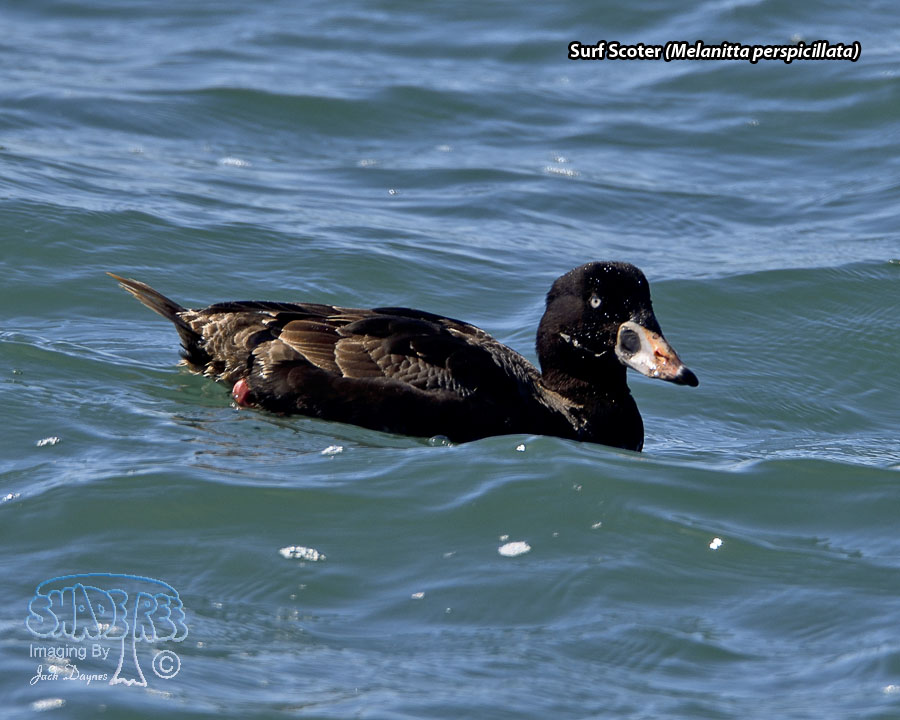
Surf Scoter(Melanitta perspicillata) |
|
Description: Small to medium-sized diving ducks, such as this first year male scoter, ranged over all quadrants of the deeper waters in the harbor. Waterfowl and shorebirds were the objects of my affection during the half-day I spent exploring Bodega Bay. |
Date Taken: 2022:03:06 11:50 |
|
Location:
Bodega Bay |
|
Camera Information: NIKON D850, 800 mm, f/8.0, 1/800 |
File Name: SurfScoter_8503641-BodegaBay |
| © 2022 Jack Daynes, shadeTreeImaging.com |
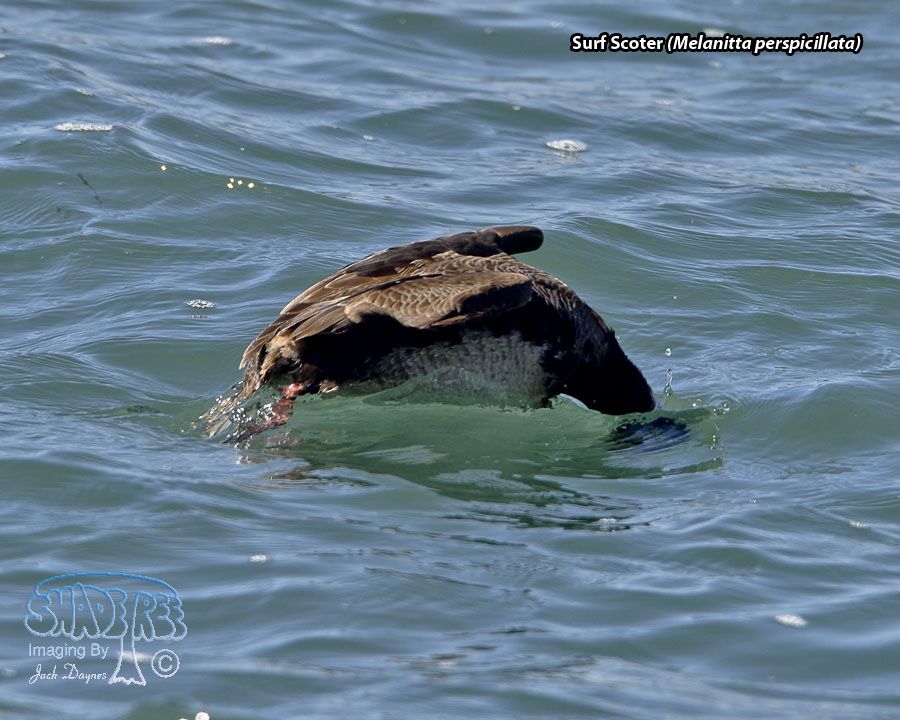
Surf Scoter(Melanitta perspicillata) |
|
Description: Small to medium-sized diving ducks, such as this first year male scoter, ranged over all quadrants of the deeper waters in the harbor. Waterfowl and shorebirds were the objects of my affection during the half-day I spent exploring Bodega Bay. |
Date Taken: 2022:03:06 11:50 |
|
Location:
Bodega Bay |
|
Camera Information: NIKON D850, 800 mm, f/8.0, 1/800 |
File Name: SurfScoter_8503660-BodegaBay |
| © 2022 Jack Daynes, shadeTreeImaging.com |
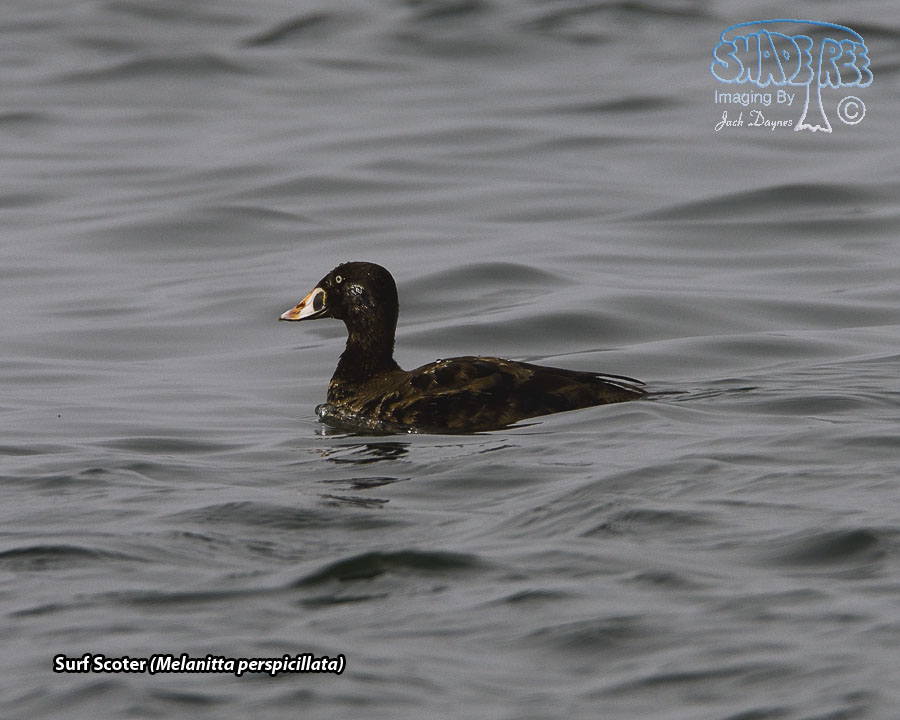
Surf Scoter(Melanitta perspicillata) |
|
Description: My visit was attended by gloomy fog and light rain, which degraded image captures across the water. Scaup, Common Mergansers, and Bufflehead shared these waters, but stayed far away in the fog. This first-year Surf Scoter came in a bit closer. I’d visited the mouth of the Klamath River, south of Crescent City in the past. |
Date Taken: 2022:03:11 14:11 |
|
Location:
Klamath River Mouth |
|
Camera Information: NIKON D850, 800 mm, f/8.0, 1/800 |
File Name: SurfScoter_8505420-KlamathRiverMouth |
| © 2022 Jack Daynes, shadeTreeImaging.com |
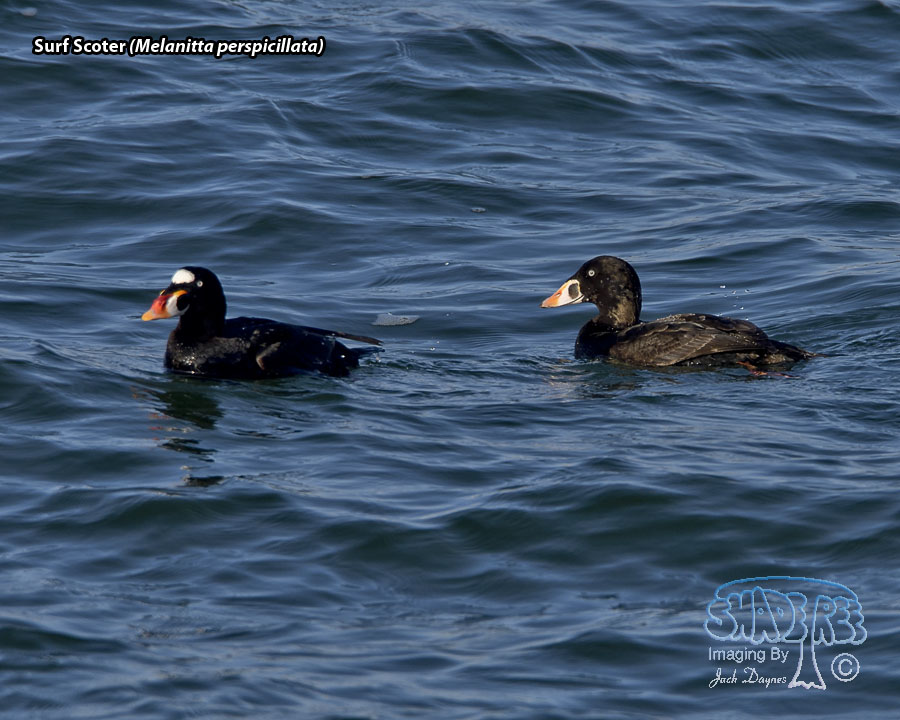
Surf Scoter(Melanitta perspicillata) |
|
Description: Surf Scoters foraged in the close company of White-Winged Scoters and Horned Grebes just off Coos Bay’s South Jetty. |
Date Taken: 2022:03:30 17:39 |
|
Location:
South Jetty |
|
Camera Information: NIKON D850, 800 mm, f/8.0, 1/800 |
File Name: SurfScoter_8508955-CoosBay-SouthJetty |
| © 2022 Jack Daynes, shadeTreeImaging.com |
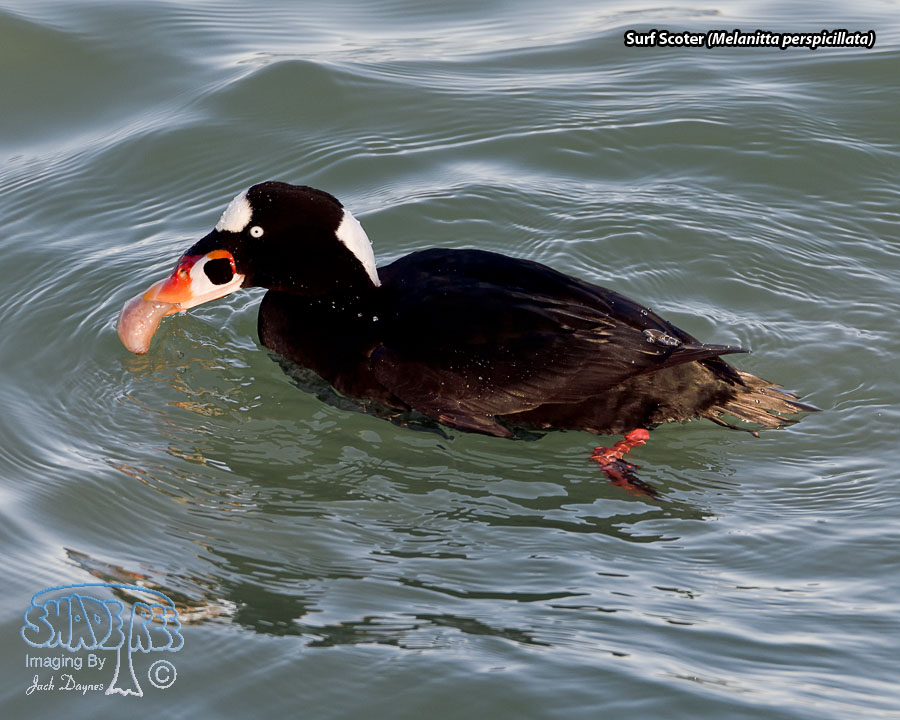
Surf Scoter(Melanitta perspicillata) |
|
Description: Surf Scoters were the highlight of my visit, but only the boys ventured close enough for the camera. The hens kept their distance. This visit to San Luis Harbor was only my second since 2019-July. Again, it proved to be a worthwhile stop on my trip along California’s central coast. |
Date Taken: 2022:02:28 16:12 |
|
Location:
Port San Luis |
|
Camera Information: NIKON D850, 800 mm, f/8.0, 1/800 |
File Name: SurfScoter_8500707-SanLuisHarbor |
| © 2022 Jack Daynes, shadeTreeImaging.com |
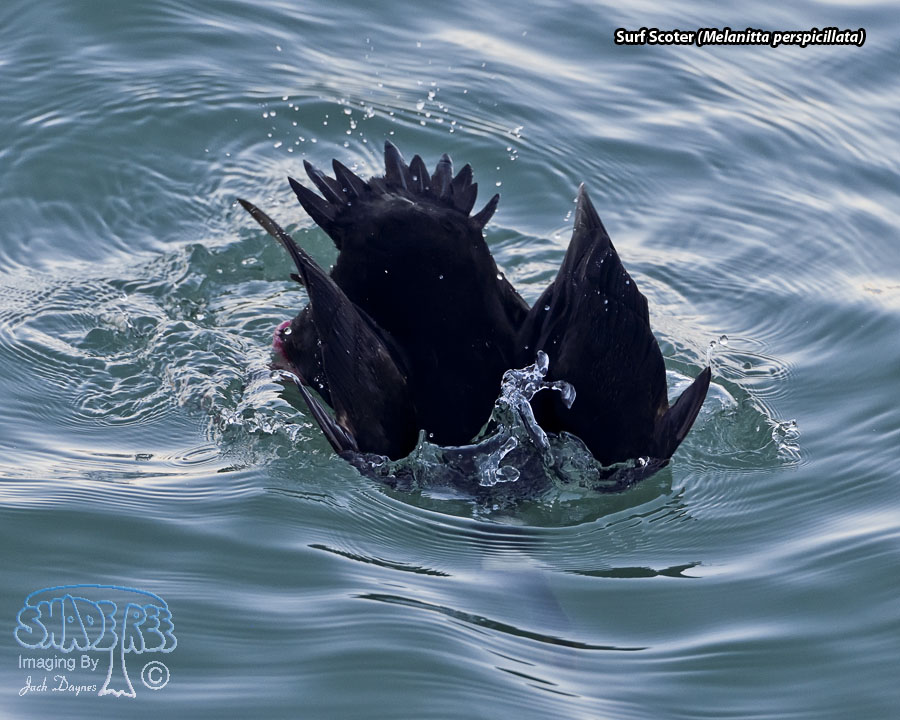
Surf Scoter(Melanitta perspicillata) |
|
Description: Surf Scoters were the highlight of my visit, but only the boys ventured close enough for the camera. The hens kept their distance. This visit to San Luis Harbor was only my second since 2019-July. Again, it proved to be a worthwhile stop on my trip along California’s central coast. |
Date Taken: 2022:02:28 16:11 |
|
Location:
Port San Luis |
|
Camera Information: NIKON D850, 800 mm, f/8.0, 1/800 |
File Name: SurfScoter_8500689-SanLuisHarbor |
| © 2022 Jack Daynes, shadeTreeImaging.com |
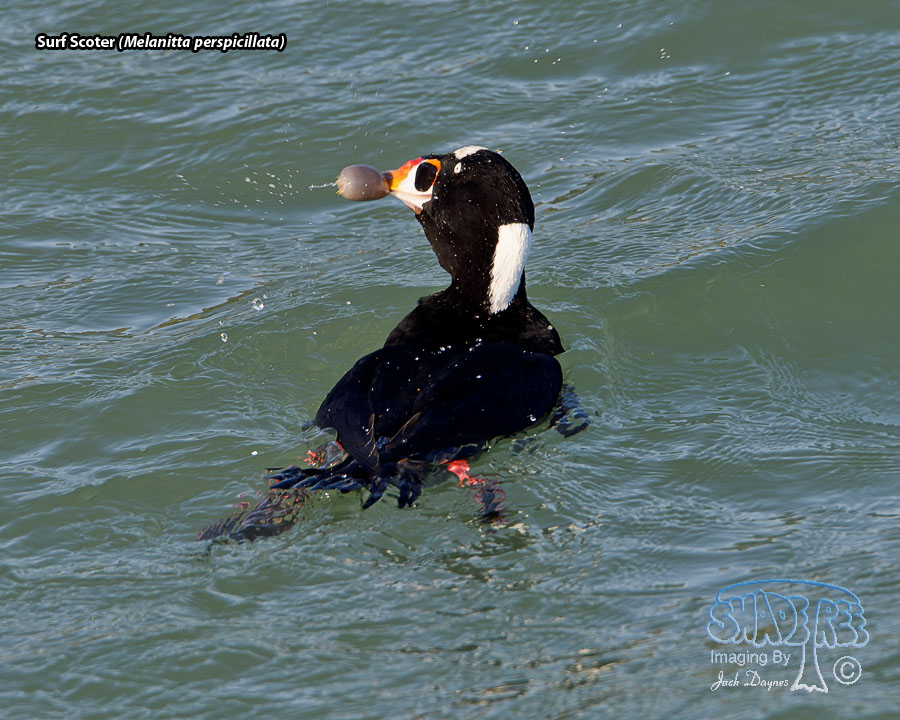
Surf Scoter(Melanitta perspicillata) |
|
Description: Surf Scoters were the highlight of my visit, but only the boys ventured close enough for the camera. The hens kept their distance. This visit to San Luis Harbor was only my second since 2019-July. Again, it proved to be a worthwhile stop on my trip along California’s central coast. |
Date Taken: 2022:02:28 15:40 |
|
Location:
Port San Luis |
|
Camera Information: NIKON D850, 800 mm, f/8.0, 1/800 |
File Name: SurfScoter_8500632-SanLuisHarbor |
| © 2022 Jack Daynes, shadeTreeImaging.com |
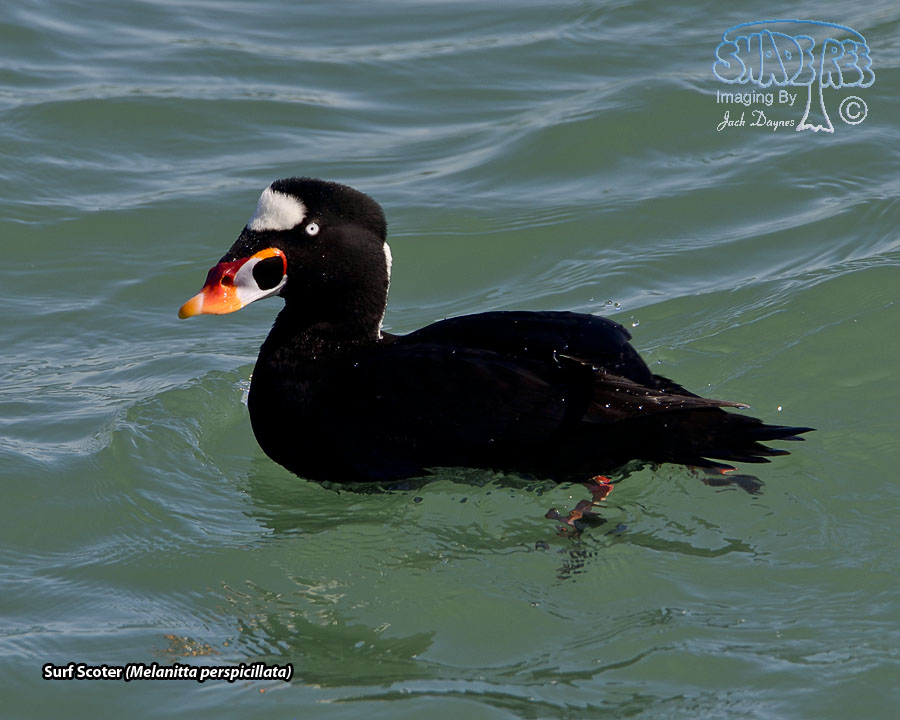
Surf Scoter(Melanitta perspicillata) |
|
Description: Surf Scoters were the highlight of my visit, but only the boys ventured close enough for the camera. The hens kept their distance. This visit to San Luis Harbor was only my second since 2019-July. Again, it proved to be a worthwhile stop on my trip along California’s central coast. |
Date Taken: 2022:02:28 13:21 |
|
Location:
Port San Luis |
|
Camera Information: NIKON D850, 800 mm, f/8.0, 1/800 |
File Name: SurfScoter_8500114-SanLuisHarbor |
| © 2022 Jack Daynes, shadeTreeImaging.com |
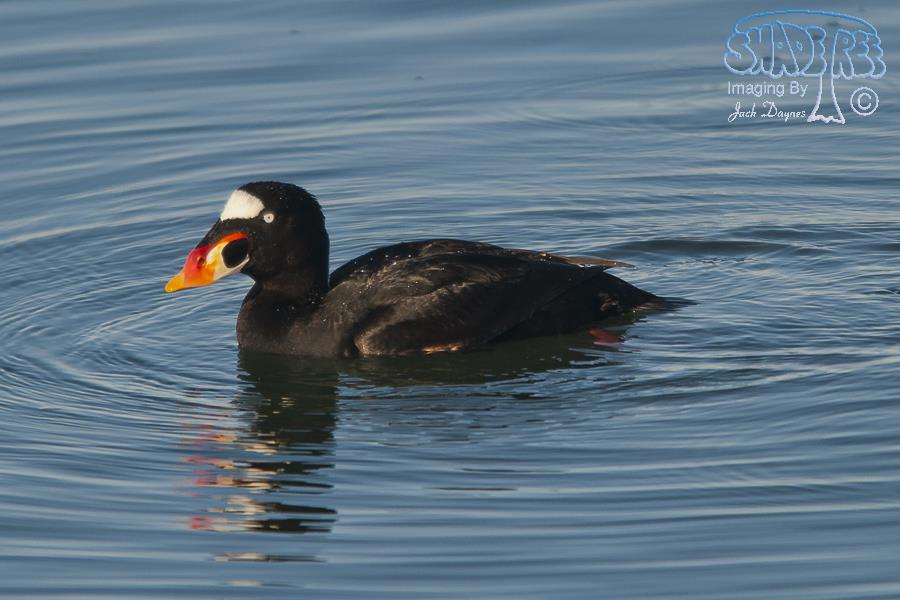
Surf Scoter(Melanitta perspicillata) |
|
Description: Male at Chula Vista Bayfront Park, Chula Vista, California. San Diego County. |
Date Taken: 2013:01:22 8:28 |
|
Location:
Bayfront Park |
|
Camera Information: NIKON D3X, 800 mm, f/5.6, 1/1600 |
File Name: D3X0526-SurfScoter-Male |
| © 2013 Jack Daynes, shadeTreeImaging.com |
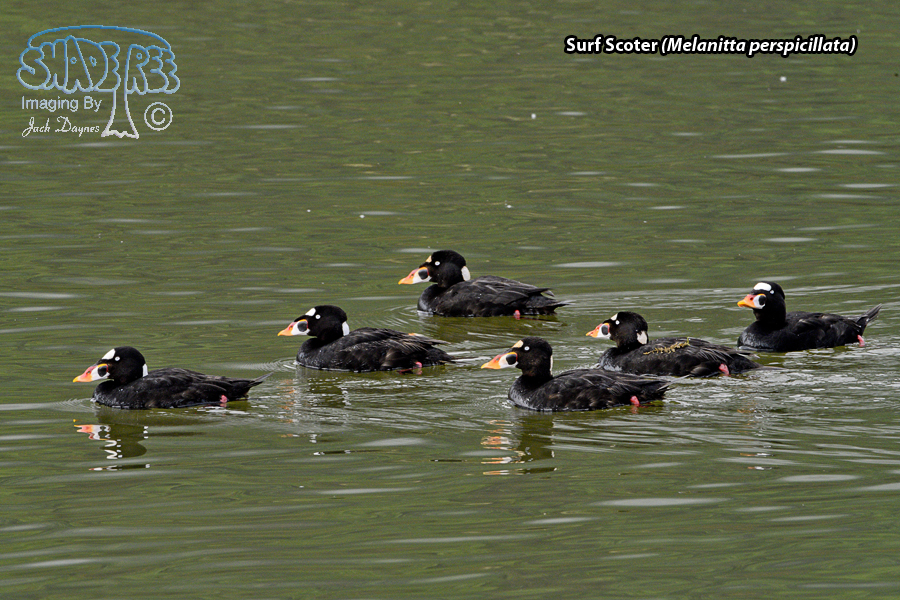
Surf Scoter(Melanitta perspicillata) |
|
Description: Prior to this meeting with these rafting Surf Scoters on the lake at the Toad River Lodge, All my encounters were in saltwater environs. But here, in the Northern Canadian Rockies is where they come to breed. |
Date Taken: 2022:06:23 10:02 |
|
Location:
Toad River |
|
Camera Information: NIKON D850, 800 mm, f/18.0, 1/400 |
File Name: SurfScoter_8503461-ToadRiver.BC_ |
| © 2022 Jack Daynes, shadeTreeImaging.com |
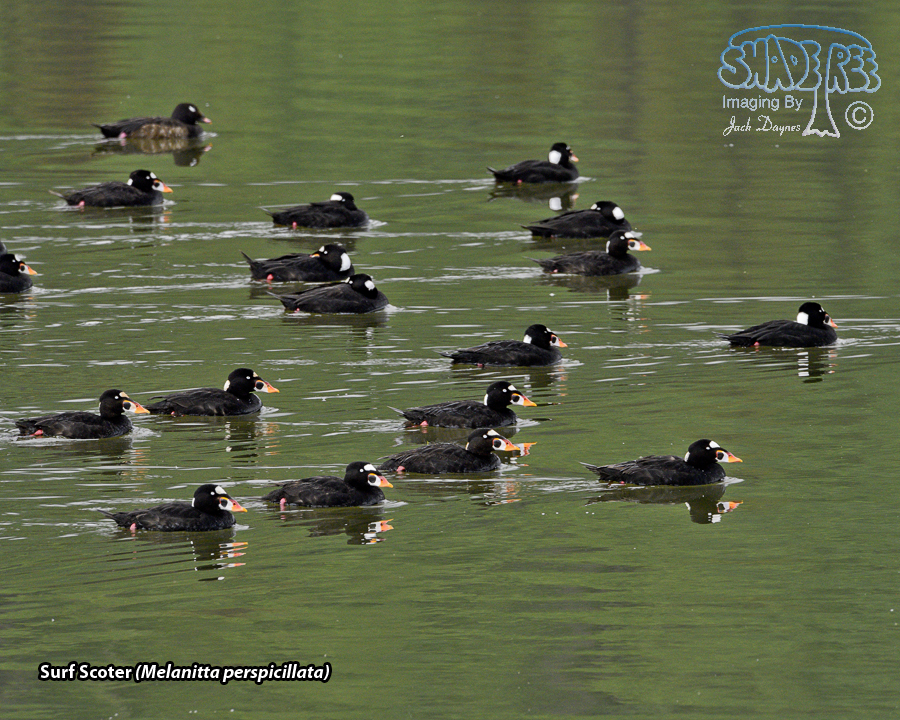
Surf Scoter(Melanitta perspicillata) |
|
Description: Prior to this meeting with these rafting Surf Scoters on the lake at the Toad River Lodge, All my encounters were in saltwater environs. But here, in the Northern Canadian Rockies is where they come to breed. |
Date Taken: 2022:06:23 10:01 |
|
Location:
Toad River |
|
Camera Information: NIKON D850, 800 mm, f/18.0, 1/400 |
File Name: SurfScoter_8503433-ToadRiver.BC_ |
| © 2022 Jack Daynes, shadeTreeImaging.com |
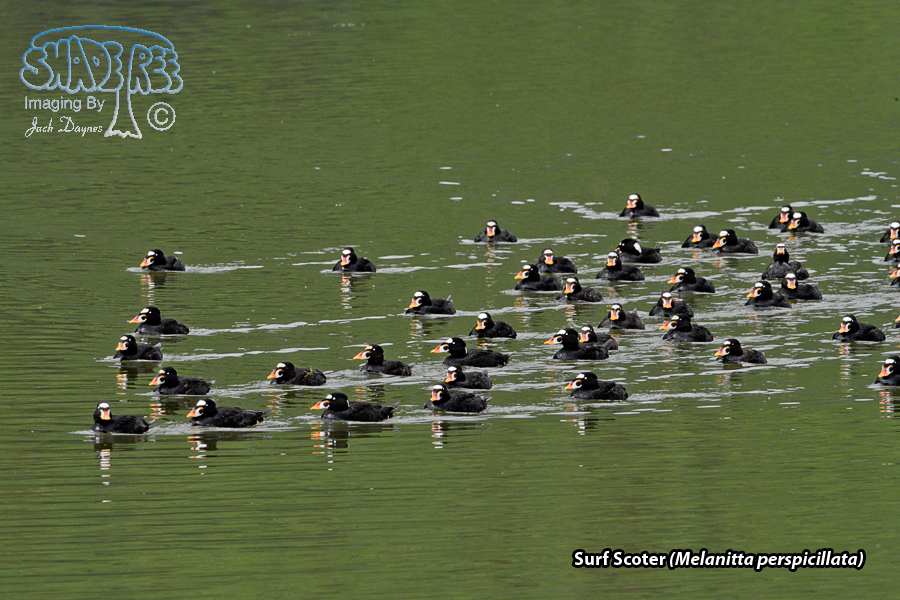
Surf Scoter(Melanitta perspicillata) |
|
Description: Prior to this meeting with these rafting Surf Scoters on the lake at the Toad River Lodge, All my encounters were in saltwater environs. But here, in the Northern Canadian Rockies is where they come to breed. |
Date Taken: 2022:06:23 9:56 |
|
Location:
Toad River |
|
Camera Information: NIKON D850, 800 mm, f/18.0, 1/500 |
File Name: SurfScoter_8503358-ToadRiver.BC_ |
| © 2022 Jack Daynes, shadeTreeImaging.com |
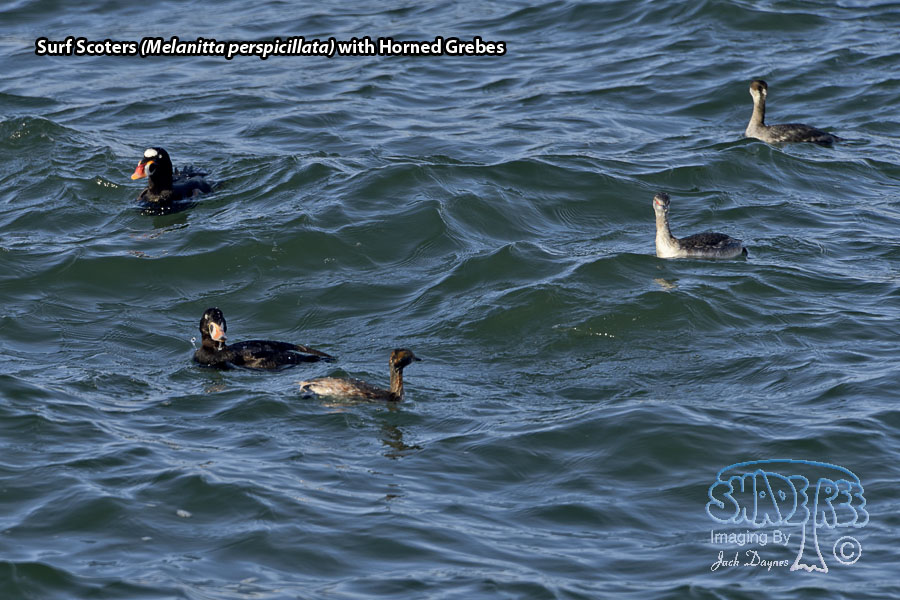
Surf Scoter(Melanitta perspicillata) |
|
Description: Surf Scoters foraged in the close company of White-Winged Scoters and Horned Grebes just off Coos Bay’s South Jetty. |
Date Taken: 2022:03:30 17:40 |
|
Location:
South Jetty |
|
Camera Information: NIKON D850, 800 mm, f/8.0, 1/800 |
File Name: SurfScoter_8508968-CoosBay-SouthJetty |
| © 2022 Jack Daynes, shadeTreeImaging.com |
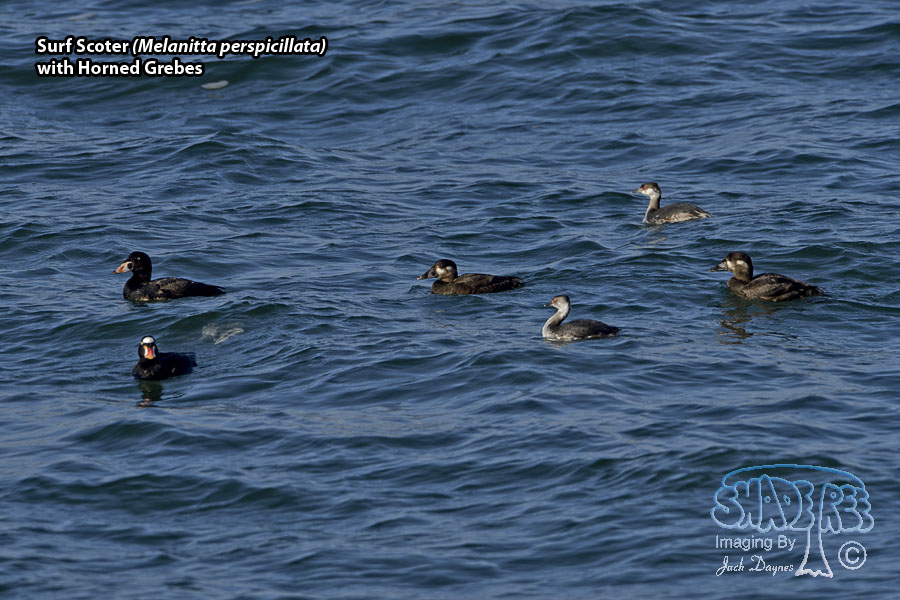
Surf Scoter(Melanitta perspicillata) |
|
Description: I thought I’d met my first White-Winged Scoters as they foraged in the close company of Surf Scoters and Horned Grebes just off Coos Bay’s South Jetty. I’ve since learned these were female Surf Scoters. |
Date Taken: 2022:03:30 17:38 |
|
Location:
South Jetty |
|
Camera Information: NIKON D850, 800 mm, f/8.0, 1/800 |
File Name: SurfScoterScoter_8508938-CoosBay-SouthJetty |
| © 2022 Jack Daynes, shadeTreeImaging.com |
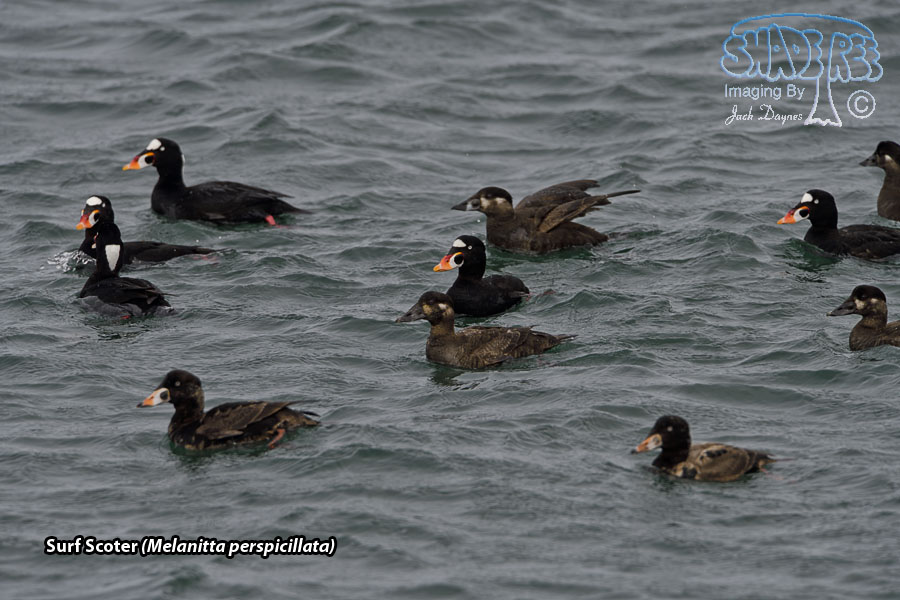
Surf Scoter(Melanitta perspicillata) |
|
Description: Surf Scoters were the main characters in the feeding-frenzy play that took place before me at Yaquina Bay. There were both mature and immature birds in the mob. |
Date Taken: 2022:04:03 12:20 |
|
Location:
South Yaquina Bay Jetty |
|
Camera Information: NIKON D850, 800 mm, f/8.0, 1/800 |
File Name: SurfScoter_8501110-SouthYaquinaBayJetty |
| © 2022 Jack Daynes, shadeTreeImaging.com |
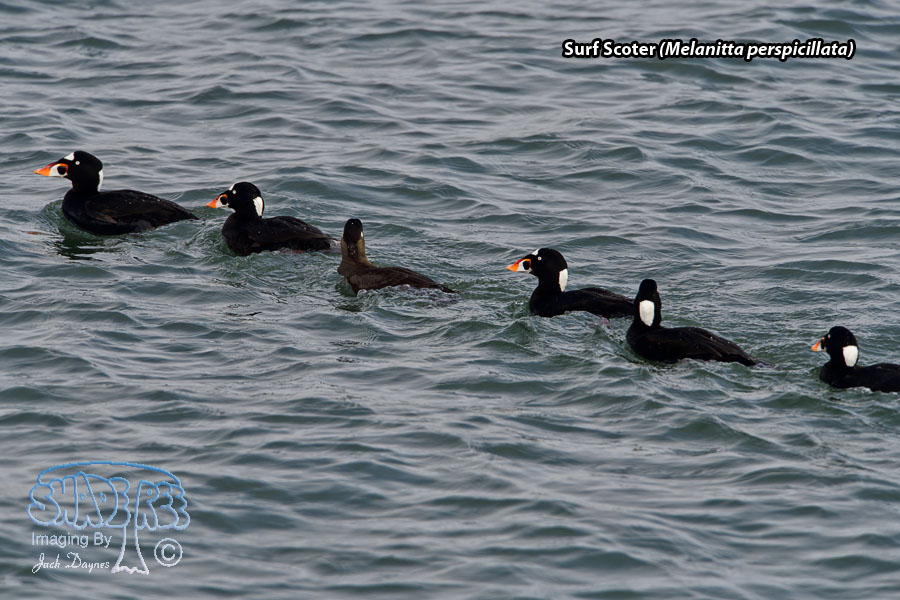
Surf Scoter(Melanitta perspicillata) |
|
Description: Surf Scoters were the main characters in the feeding-frenzy play that took place before me at Yaquina Bay. There were both mature and immature birds in the mob. |
Date Taken: 2022:04:03 11:03 |
|
Location:
South Yaquina Bay Jetty |
|
Camera Information: NIKON D850, 800 mm, f/8.0, 1/800 |
File Name: SurfScoter_8500755-SouthYaquinaBayJetty |
| © 2022 Jack Daynes, shadeTreeImaging.com |
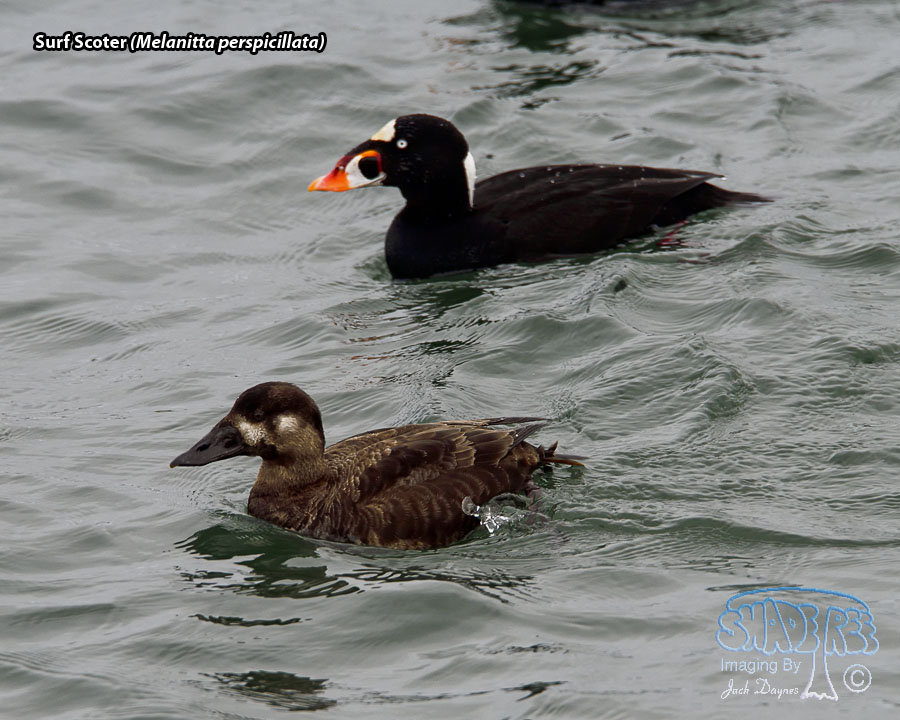
Surf Scoter(Melanitta perspicillata) |
|
Description: Surf Scoters were the main characters in the feeding-frenzy play that took place before me at Yaquina Bay. There were both mature and immature birds in the mob. |
Date Taken: 2022:04:03 10:53 |
|
Location:
South Yaquina Bay Jetty |
|
Camera Information: NIKON D850, 800 mm, f/8.0, 1/800 |
File Name: SurfScoter_8500604-SouthYaquinaBayJetty |
| © 2022 Jack Daynes, shadeTreeImaging.com |
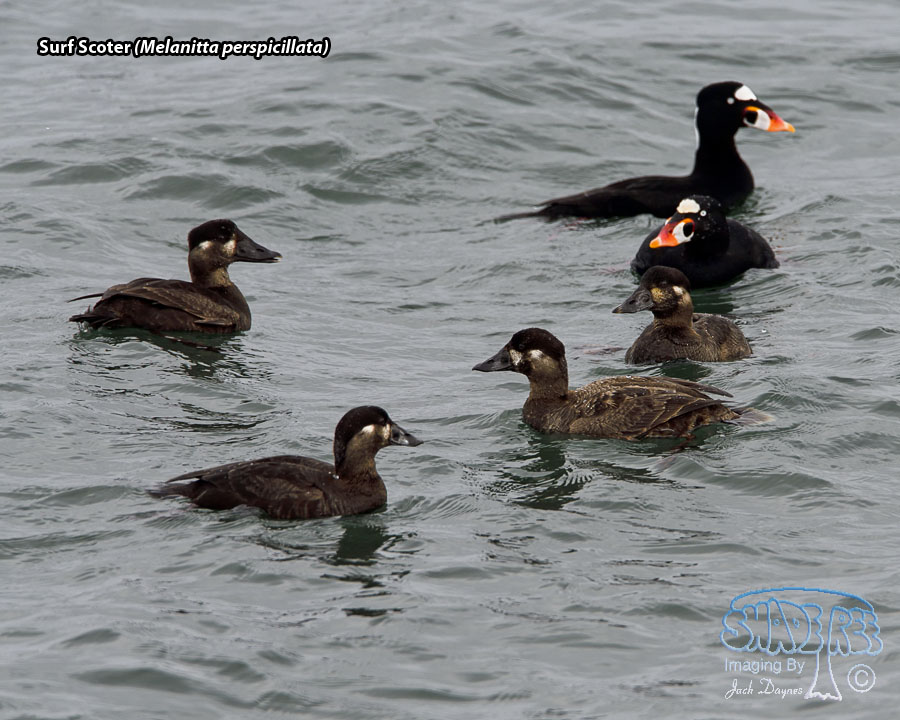
Surf Scoter(Melanitta perspicillata) |
|
Description: Surf Scoters were the main characters in the feeding-frenzy play that took place before me at Yaquina Bay. There were both mature and immature birds in the mob. |
Date Taken: 2022:04:03 10:48 |
|
Location:
South Yaquina Bay Jetty |
|
Camera Information: NIKON D850, 800 mm, f/8.0, 1/800 |
File Name: SurfScoter_8500506-SouthYaquinaBayJetty |
| © 2022 Jack Daynes, shadeTreeImaging.com |
Click map markers to reveal further information
