Williamson’s Sapsucker
Sphyrapicus thyroideus

The Williamson’s Sapsucker breeds in open forested areas with conifers, mainly ponderosa pine and fir. The males and females look so much different; Scientists believed them to be different species when first discovered by John Cassin in 1852. A generation later, in 1873, Henry Wetherby Henshaw was the first to recognize that the two ‘species’ were one when he observed both birds attending the same nest hole.
The rapid disappearance of mature forests in British Columbia has taken a toll on these birds. Authorities declared them “endangered” for the region in 2005.
Historically, science recognized two subspecies of Williamson’s Sapsucker. The two members were S. t. nataliae and S. t. thyroideus. Prominent ornithologists named them so in the mid-1850s. In the late 1990s, researchers began discovering clues that started them questioning the validity of subspecies for these birds. In 2002 and 2003, Micheal Patton and Phillip Unitt completed a study that helped establish the view that the Williamson’s Sapsucker is monotypic (i.e. no subspecies).
I’ve enjoyed several encounters with these birds. I first met a juvenile on Santa Rosa Mountain in 2010. Later, in 2014, spent some time with a male and female near Mono Lake (California). My favorite encounter was with an adult pair near Jackson (Wyoming in 2015. My last meeting was with a distant pair near Mammoth (California) in 2017.
.
18 Photos
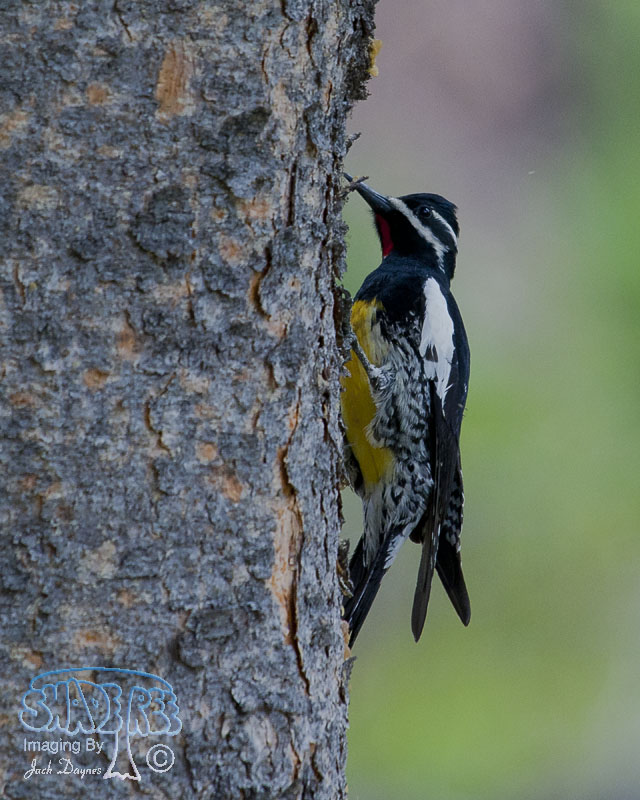
Williamson's Sapsucker(Sphyrapicus thyroideus) |
|
Description: Male bird I met near Whitegrass Ranch Road off the Moose-Wilson Road in Teton National Park north of Jackson Wyoming USA 2015-05-19. |
Date Taken: 2015:05:19 11:51 |
|
Location:
Whitegrass Ranch Road |
|
Camera Information: NIKON D3X, 800 mm, f/8.0, 1/400 |
File Name: D3X3443-WilliamsonSapSucker |
| © 2015 Jack Daynes, shadeTreeImaging.com |

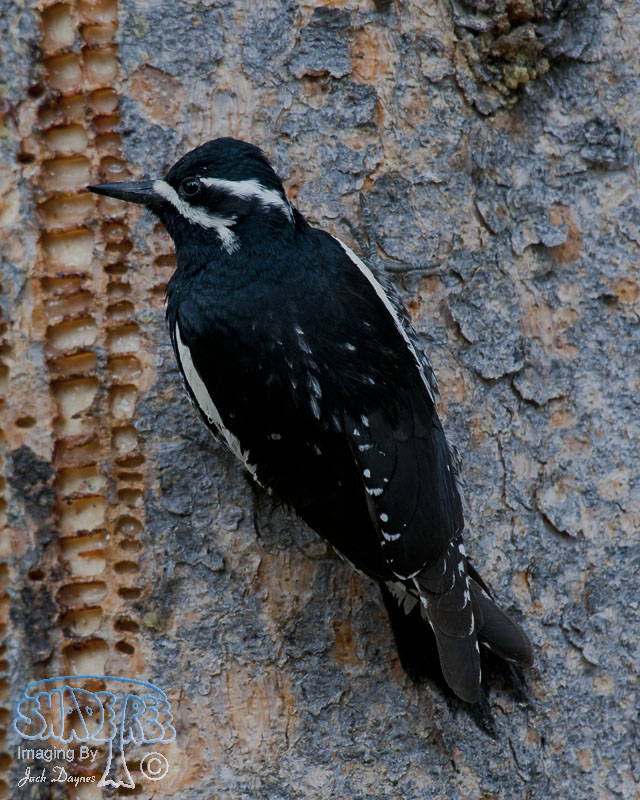
Williamson's Sapsucker(Sphyrapicus thyroideus) |
|
Description: Male bird I met near Whitegrass Ranch Road off the Moose-Wilson Road in Teton National Park north of Jackson Wyoming USA 2015-05-19. |
Date Taken: 2015:05:19 13:13 |
|
Location:
Whitegrass Ranch Road |
|
Camera Information: NIKON D3X, 800 mm, f/8.0, 1/320 |
File Name: D3X3666-WilliamsonSapSucker |
| © 2015 Jack Daynes, shadeTreeImaging.com |
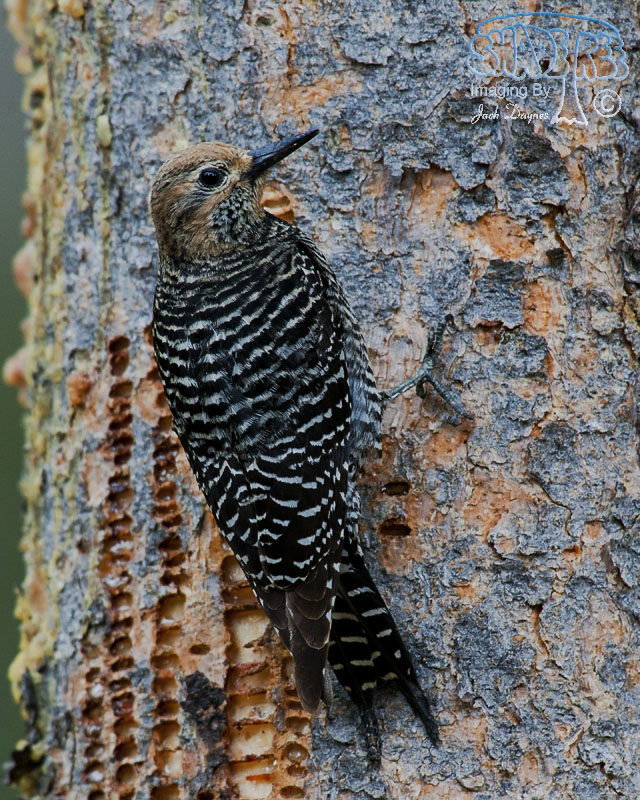
Williamson's Sapsucker(Sphyrapicus thyroideus) |
|
Description: Female bird I met near Whitegrass Ranch Road off the Moose-Wilson Road in Teton National Park north of Jackson Wyoming USA 2015-05-19. |
Date Taken: 2015:05:19 13:18 |
|
Location:
Whitegrass Ranch Road |
|
Camera Information: NIKON D3X, 800 mm, f/8.0, 1/320 |
File Name: D3X3732-WilliamsonSapSucker |
| © 2015 Jack Daynes, shadeTreeImaging.com |
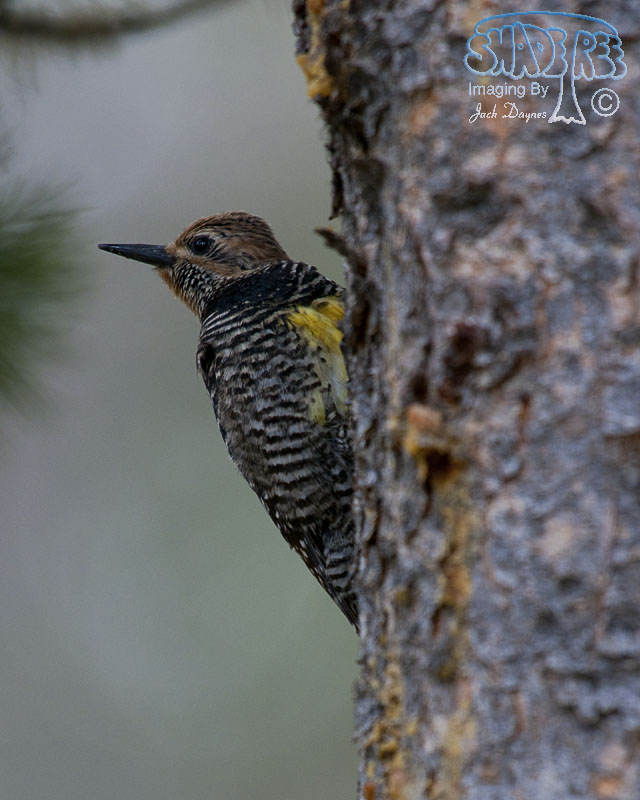
Williamson's Sapsucker(Sphyrapicus thyroideus) |
|
Description: Female bird I met near Whitegrass Ranch Road off the Moose-Wilson Road in Teton National Park north of Jackson Wyoming USA 2015-05-19. |
Date Taken: 2015:05:19 13:21 |
|
Location:
Whitegrass Ranch Road |
|
Camera Information: NIKON D3X, 800 mm, f/8.0, 1/320 |
File Name: D3X3759-WilliamsonSapSucker |
| © 2015 Jack Daynes, shadeTreeImaging.com |
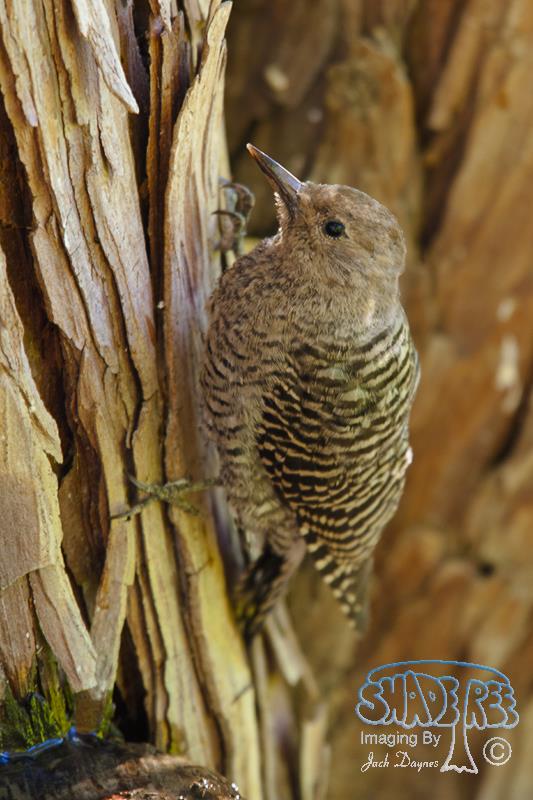
Williamson's Sapsucker(Sphyrapicus thyroideus) |
|
Description: This image of a Juvenile bird at the springs on Santa Rosa Mountain helped document the suspision that these birds breed nearby. Southern Riverside County, California USA 2010-08-12. |
Date Taken: 2010:08:12 19:04 |
|
Location:
Santa Rosa Mountain |
|
Camera Information: NIKON D3X, 800 mm, f/6.3, 1/20 |
File Name: JCD5602.WilliamsonSapSucker.Juvenile |
| © 2010 Jack Daynes, shadeTree Imaging |
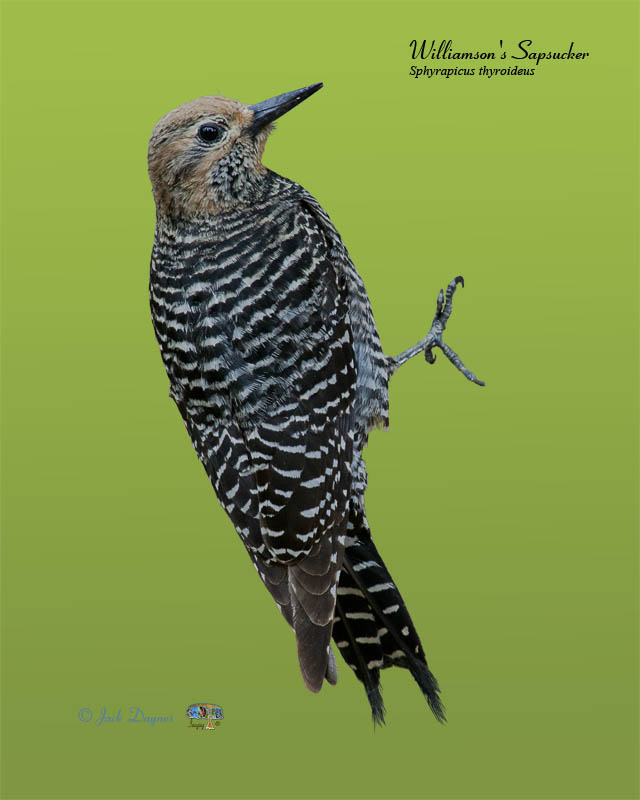
Williamson's Sapsucker(Sphyrapicus thyroideus) |
|
Description: Cut-out image of a female bird I met near Whitegrass Ranch Road off the Moose-Wilson Road in Teton National Park north of Jackson Wyoming USA 2015-05-19. |
Date Taken: 2015:05:19 13:18 |
|
Location:
Moose-Wilson Road |
|
Camera Information: NIKON D3X, 800 mm, f/8.0, 1/320 |
File Name: Cut-Female-WilliamsonSapSucker |
| © 2015 Jack Daynes, shadeTreeImaging.com |
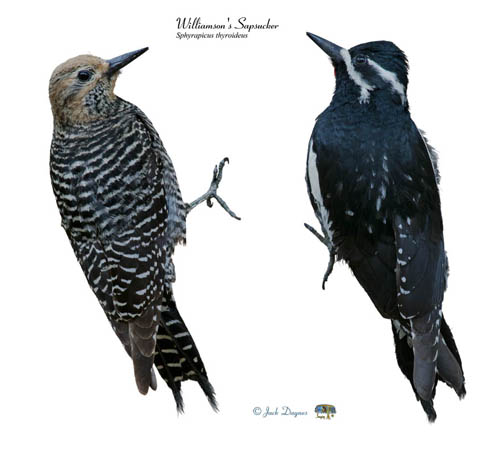
Williamson's Sapsucker(Sphyrapicus thyroideus) |
|
Description: Cut-out composite of a male and a female bird I met near Whitegrass Ranch Road off the Moose-Wilson Road in Teton National Park north of Jackson Wyoming USA 2015-05-19. |
Date Taken: 2015:05:19 13:18 |
|
Location:
Moose-Wilson Road |
|
Camera Information: NIKON D3X, 800 mm, f/8.0, 1/320 |
File Name: Cut-MaleFemale-WilliamsonSapSucker |
| © 2015 Jack Daynes, shadeTreeImaging.com |
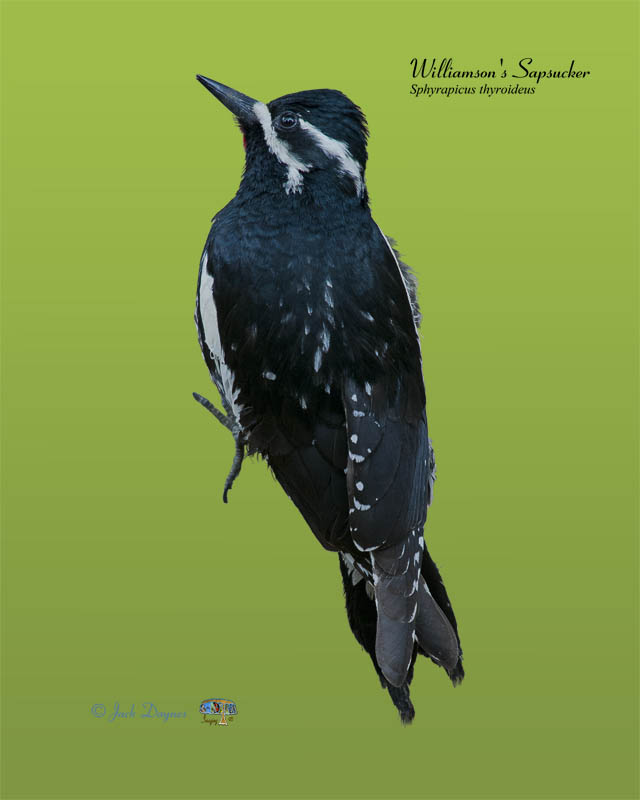
Williamson's Sapsucker(Sphyrapicus thyroideus) |
|
Description: Cut-out image of a male bird I met near Whitegrass Ranch Road off the Moose-Wilson Road in Teton National Park north of Jackson Wyoming USA 2015-05-19. |
Date Taken: 2015:05:19 13:13 |
|
Location:
Moose-Wilson Road |
|
Camera Information: NIKON D3X, 800 mm, f/8.0, 1/320 |
File Name: Cut-Male-WilliamsonSapSucker |
| © 2015 Jack Daynes, shadeTreeImaging.com |
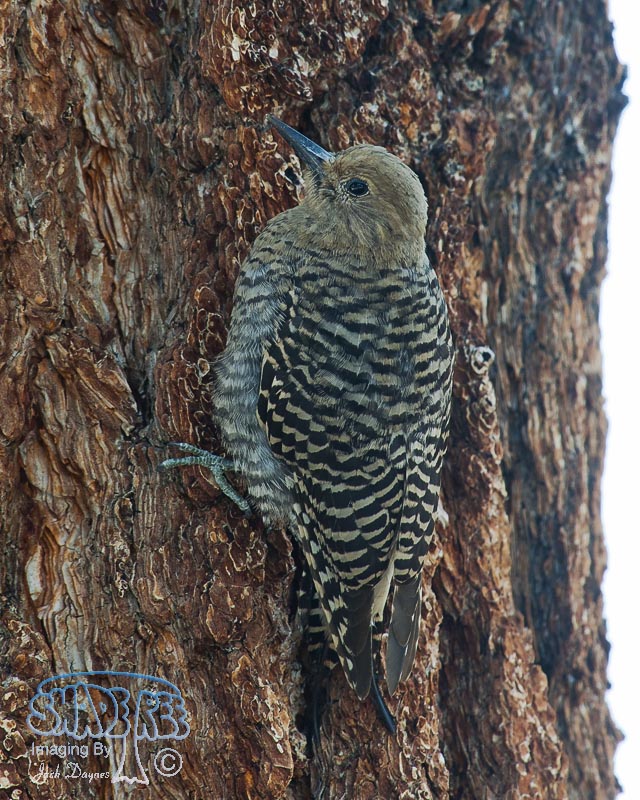
Williamson's Sapsucker(Sphyrapicus thyroideus) |
|
Description: At a roadside monument to the historic Mono Mills, along State Route 120. Mono County, California. |
Date Taken: 2014:08:06 10:48 |
|
Location:
Mono Lake |
|
Camera Information: NIKON D3X, 800 mm, f/9.0, 1/60 |
File Name: D3X6761-WilliamsonsSapsucker |
| © 2014 Jack Daynes, shadeTree-Imaging.com |
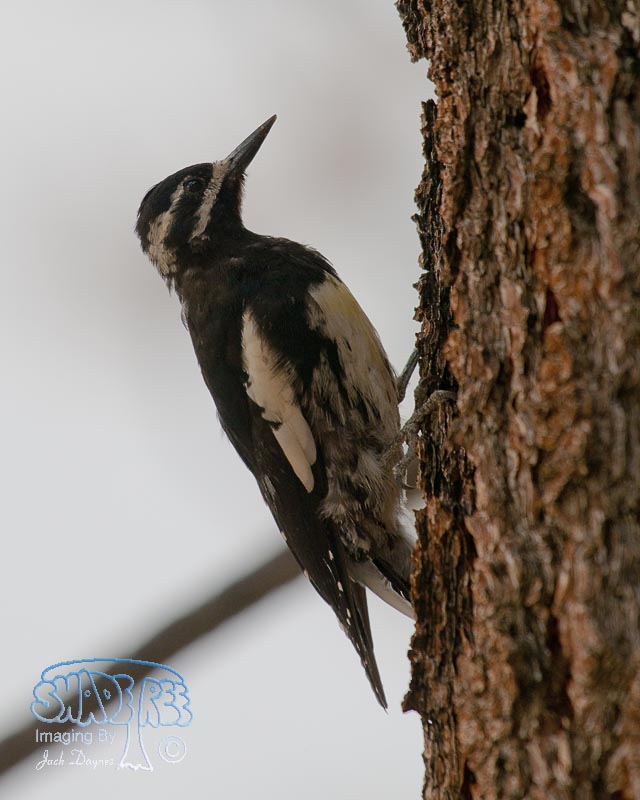
Williamson's Sapsucker(Sphyrapicus thyroideus) |
|
Description: At a roadside monument to the historic Mono Mills, along State Route 120. Mono County, California. |
Date Taken: 2014:08:08 15:09 |
|
Location:
Mono Mills |
|
Camera Information: NIKON D3X, 800 mm, f/8.0, 1/800 |
File Name: D3X7672-WilliamsonsSapSucker |
| © 2014 Jack Daynes, shadeTree-Imaging.com |
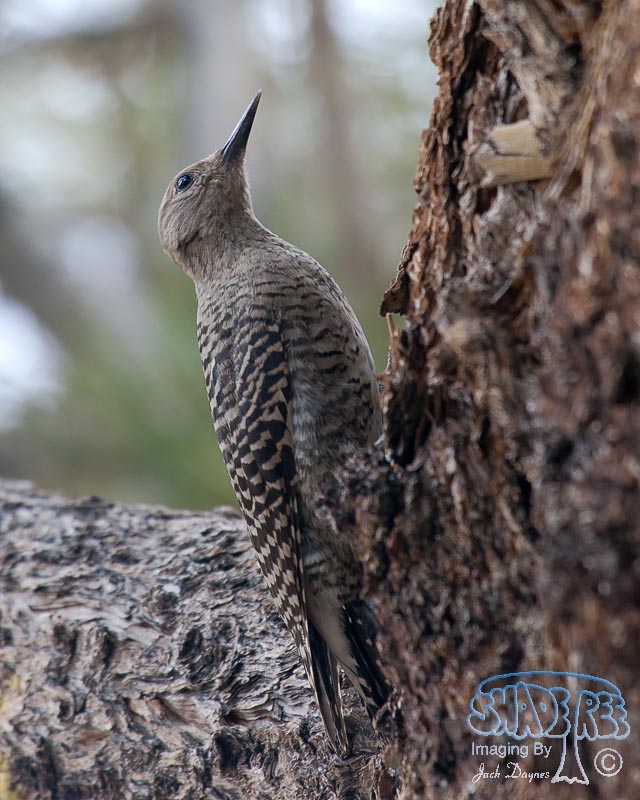
Williamson's Sapsucker(Sphyrapicus thyroideus) |
|
Description: At a roadside monument to the historic Mono Mills, along State Route 120. Mono County, California. |
Date Taken: 2014:08:08 15:17 |
|
Location:
Mono Mills |
|
Camera Information: NIKON D3X, 800 mm, f/8.0, 1/160 |
File Name: D3X7680-WilliamsonsSapSucker-Female |
| © 2014 Jack Daynes, shadeTree-Imaging.com |
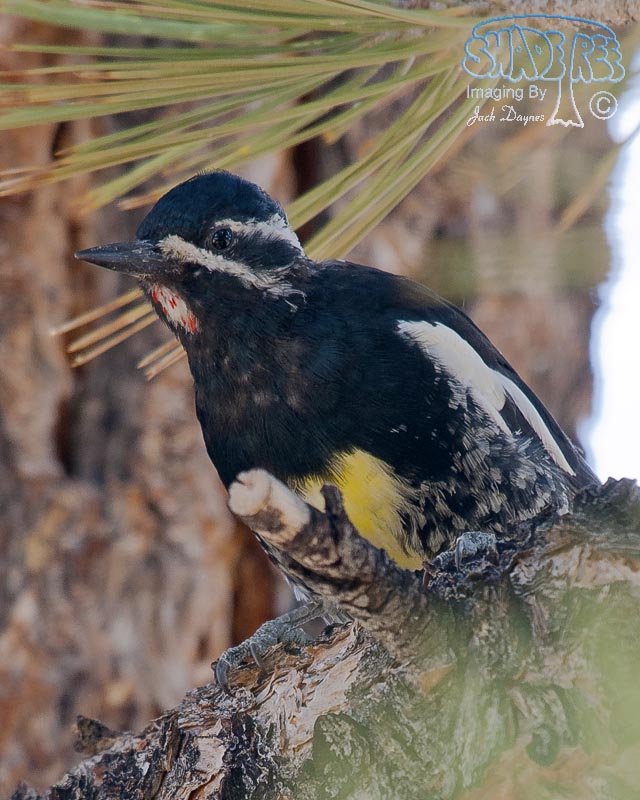
Williamson's Sapsucker(Sphyrapicus thyroideus) |
|
Description: At a roadside monument to the historic Mono Mills, along State Route 120. Mono County, California. |
Date Taken: 2014:08:09 10:42 |
|
Location:
Mono Lake |
|
Camera Information: NIKON D3X, 800 mm, f/8.0, 1/160 |
File Name: D3X7771-WilliamsonsSapsucker |
| © 2014 Jack Daynes, shadeTree-Imaging.com |
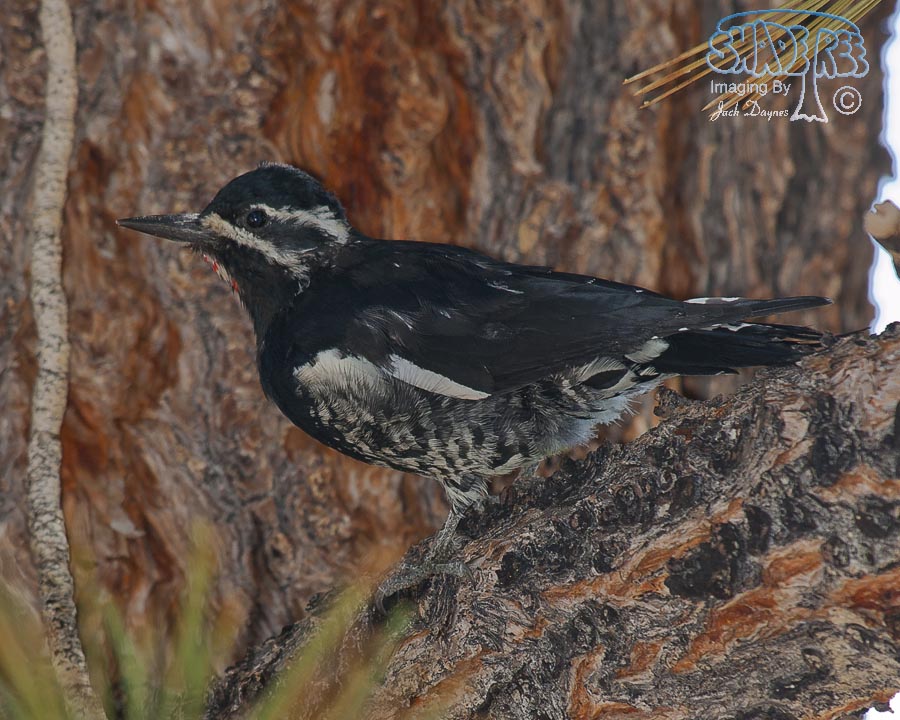
Williamson's Sapsucker(Sphyrapicus thyroideus) |
|
Description: (Sphyrapicus thyroideus) A male bird at a roadside monument to the historic Mono Mills, along State Route 120. Mono County, California USA 2014-08-09. |
Date Taken: 2014:08:09 10:45 |
|
Location:
Mono Lake |
|
Camera Information: NIKON D3X, 800 mm, f/8.0, 1/125 |
File Name: D3X7778-WilliamsonsSapsucker |
| © 2014 Jack Daynes, shadeTree-Imaging.com |
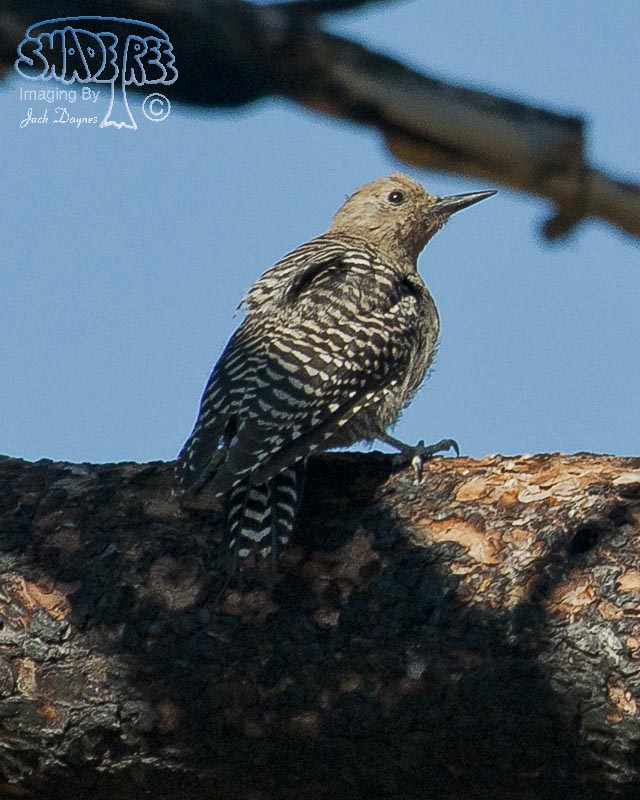
Williamson's Sapsucker(Sphyrapicus thyroideus) |
|
Description: Female west of Highway 395, north of June Lake Junction. Mono County, California. |
Date Taken: 2014:08:08 9:30 |
|
Location:
June Lake |
|
Camera Information: NIKON D3X, 800 mm, f/8.0, 1/1600 |
File Name: D3X7278-WilliamsonsSapSucker-Female |
| © 2014 Jack Daynes, shadeTreeImaging.com |
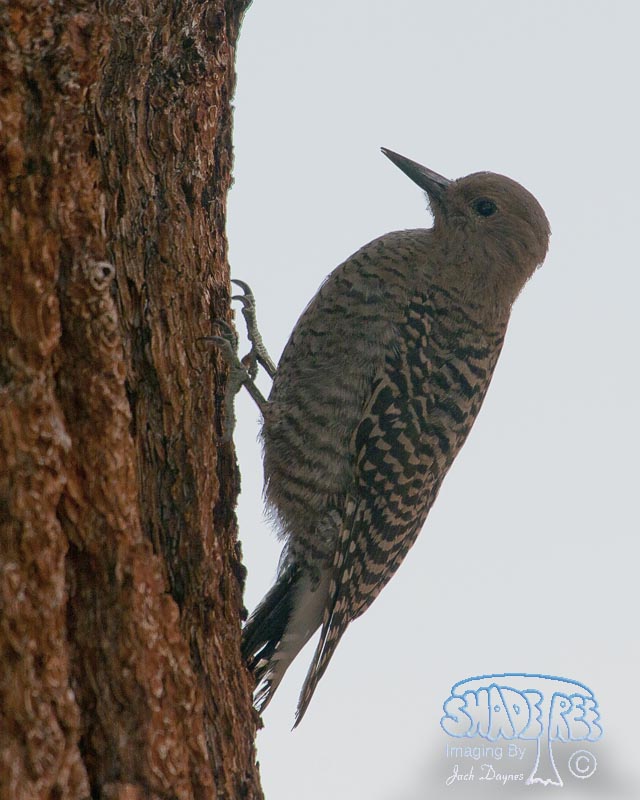
Williamson's Sapsucker(Sphyrapicus thyroideus) |
|
Description: At a roadside monument to the historic Mono Mills, along State Route 120. Mono County, California. |
Date Taken: 2014:08:06 10:48 |
|
Location:
Mono Mills |
|
Camera Information: NIKON D3X, 800 mm, f/9.0, 1/800 |
File Name: D3X6751-WilliamsonsSapsucker |
| © 2014 Jack Daynes, shadeTree-Imaging |
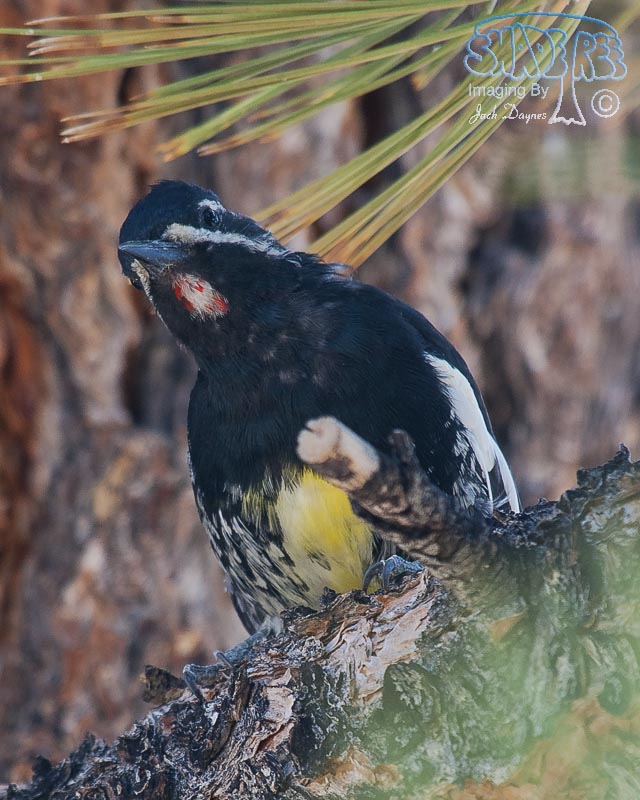
Williamson's Sapsucker(Sphyrapicus thyroideus) |
|
Description: At a roadside monument to the historic Mono Mills, along State Route 120. Mono County, California. |
Date Taken: 2014:08:09 10:42 |
|
Location:
Mono Mills |
|
Camera Information: NIKON D3X, 800 mm, f/8.0, 1/100 |
File Name: D3X7763-WilliamsonsSapsucker |
| © 2014 Jack Daynes, shadeTree-Imaging.com |
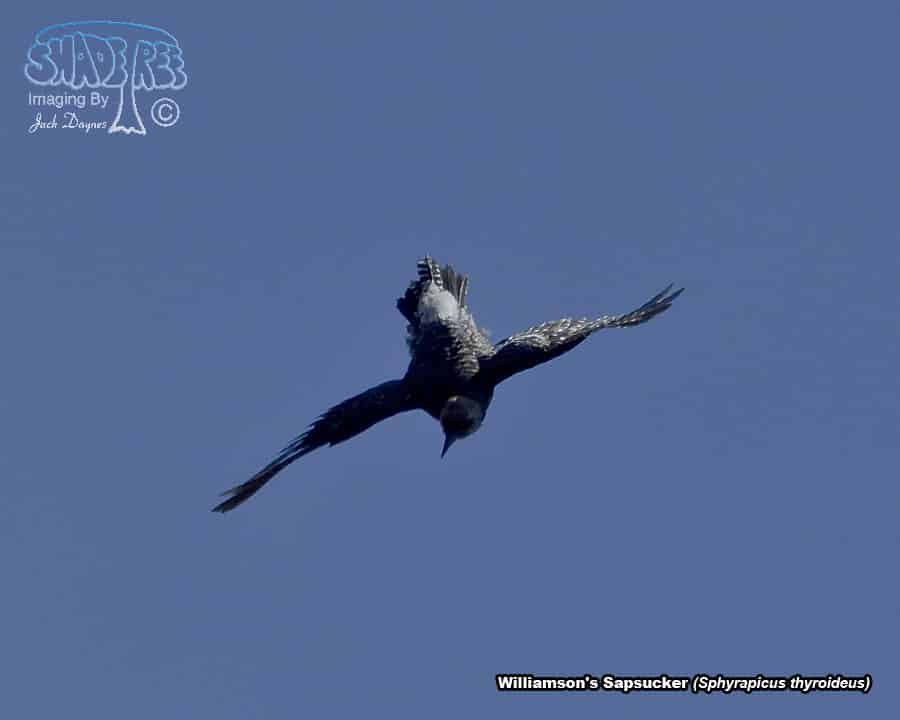
Williamson's Sapsucker(Sphyrapicus thyroideus) |
|
Description: Earthquake Fault landmark in Mammoth California in the eastern Sierra Nevadas. |
Date Taken: 2017:07:08 9:05 |
|
Location:
Earthquake Fault |
|
Camera Information: NIKON D5, 800 mm, f/8.0, 1/6400 |
File Name: WilliamsonsSapSucker_D5X8129 |
| © 2017 Jack Daynes, shadeTree-Imaging.com |
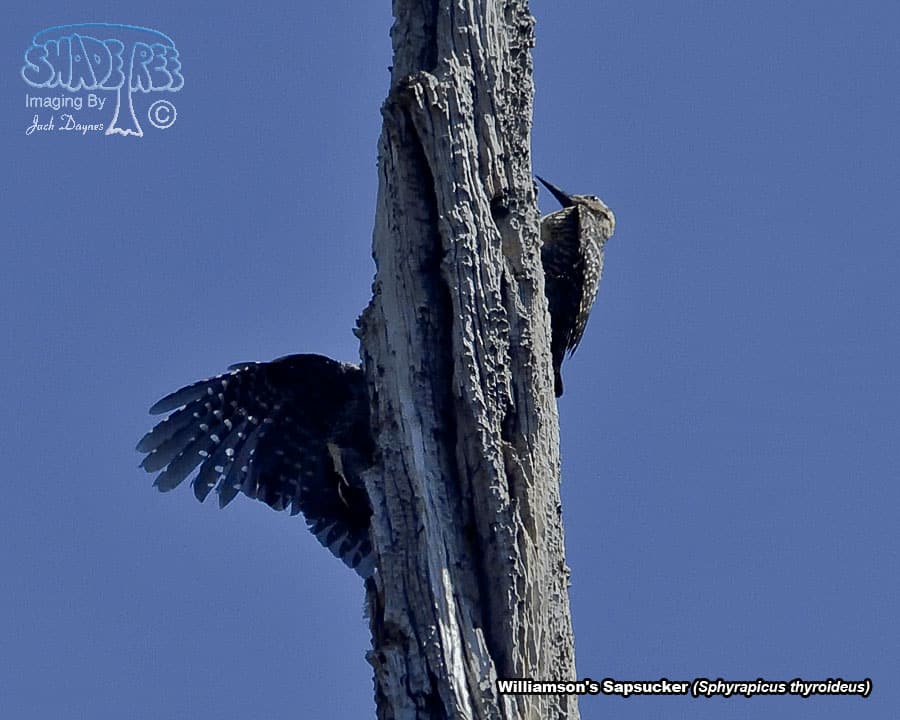
Williamson's Sapsucker(Sphyrapicus thyroideus) |
|
Description: Earthquake Fault landmark in Mammoth California in the eastern Sierra Nevadas. |
Date Taken: 2017:07:08 9:05 |
|
Location:
Earthquake Fault |
|
Camera Information: NIKON D5, 800 mm, f/8.0, 1/6400 |
File Name: WilliamsonsSapSucker_D5X8126 |
| © 2017 Jack Daynes, shadeTree-Imaging.com |
Click map markers to reveal further information
