
It’s time to share the rest of the story about the week I recently spent with the museum’s science team a week ago. Some people choose their route on trips based on the path of least resistance. I try to find the path of most enjoyment. There are three viable paths to Cottonwood Spring. The most used is a freeway dominated route of 174 miles (near Riverside, CA) that is 10 minutes faster than the more scenic roads I like through Borrego Springs, which is about 30 miles shorter. The third route option combines more freeways, but is also scenic and goes through Anza, CA. Though the time and distance data for the third route were slightly better for the route through Anza, I wanted to look for Round-Tailed Ground Squirrels at the Borrego Sink. So I chose the route through Borrego Springs.
I know very little about the Round-Tailed Ground Squirrels, but I’m told they live in Creosote brush dunes at the bottom of Borrego Springs (the Sink). I walked around the area for an hour and a half, but I didn’t see any furry critters. I also photographed all the burrows I could find for the Mammal Atlas, because I wasn’t sure which burrows belonged to the squirrels, as the Desert Kangaroo Rat digs similar burrows. I could let the science team decide what was usable and what was not. I’ve since been told that Round-Tailed Squirrels prefer the hottest weather and may stay in their burrows if the weather is not sufficiently hot.
The next leg of my journey took me along the northwestern shore of the Salton Sea, though not near enough to hunt birds. The sea rests at the juncture of the Coachella and Imperial Valleys and smack dab in the center of the San Andreas Fault. Farmers have well developed both the north end (Coachella) and the south end (Imperial) of the sea agriculturally. A wealth of row crops dominates the Imperial side, but the Coachella side is primarily date palm fields. The town of Mecca sits at the north end of the Salton Sea where the Whitewater River ends its journey from the southern slopes of San Gorgonio Mountain north of Palm Springs. I found a backcountry road from Mecca to Cottonwood Spring called Box Canyon Road, and it provided a path which allowed me to avoid ALL freeways to my destination.
My previous post explained the rhythm of work while doing the scientific chores that the survey required. The first day’s traps brought back to camp had the most subjects of any day’s collection. After we gathered our first images and specimens, we spent the remaining days targeting more specific subjects.
One of the more difficult ID problems with southern California rodents is to distinguish between the Long-Tailed Pocket Mouse and the Desert Pocket Mouse. There is much overlap in the diagnostic characteristics for these two creatures, and dissecting the animal is necessary to reveal the most reliable features. The length and shape of the ears is one outward feature that is used. The Desert PM has shorter, more rounded ears, and the Long-Tailed PM has longer, more pointed ears. Unfortunately, some of the Desert PM’s ears are longer than others, and some of the Long-Tailed PM’s are shorter. We took a few additional subjects to illustrate this point.
I knew we were missing the White-Throated Woodrat images for the Mammal Atlas and would pester Scott each afternoon when he was heading into the field to place traps asking him to bring me this creature (almost in jest). On the last day of our expedition, Scott fulfilled my request. Compared to the small pocket mice and other mice that were brought in during the week, the woodrat was a behemoth, easily 20-30 times the size of its smaller relatives. I photographed these subjects using a fixed focal length macro lens, and I had to position myself much further back from this subject than from any of the others this week. After getting as many full body shots as I felt necessary, Scott held the animal so we could photograph its underside for the diagnostic white fur on the throat. This provided assurance of the correct identification, as the Desert Woodrat is very similar to this species.
The team will head out again next week on another expedition to Joshua Tree NP. This trip will center near Pinyon Wells. Below are some images I captured during the trip to Cottonwood Spring:
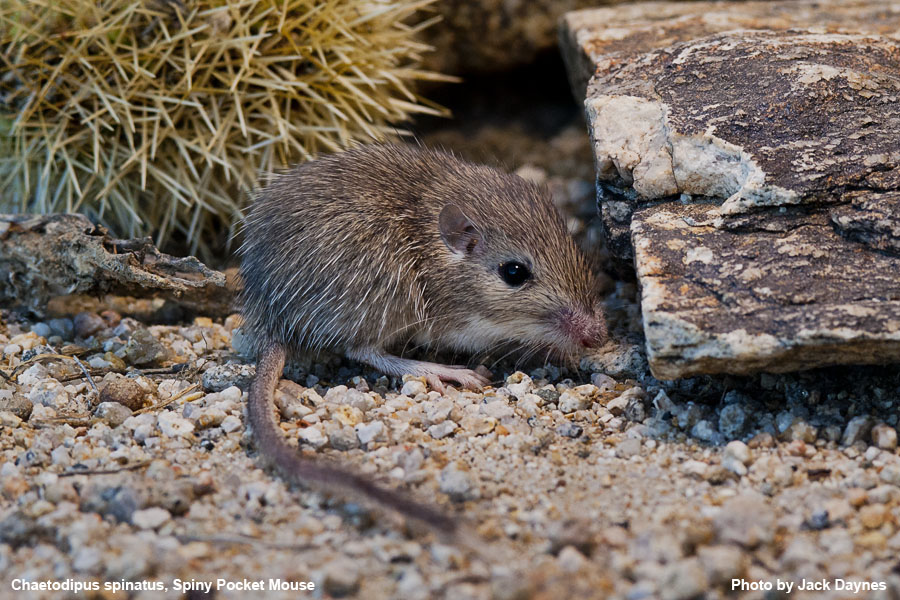
Spiney Pocket Mouse(Chaetodipus spinatus) |
|
Description: Called "Spiny" because of the long stiff spiny hairs, this mouse loves rockey tallus slopes. Found near Cottonwood Spring in southern Joshua Tree National Park. Riverside County California. |
Date Taken: 2016:09:27 17:01 |
|
Location:
Cottonwood Spring |
|
Camera Information: NIKON D3X, 105 mm, f/11.0, 1/500 |
File Name: SpineyPocketMouse_D3X7997-JackDaynes-Web |
| © 2016 Jack Daynes, shadeTreeImaging.com |

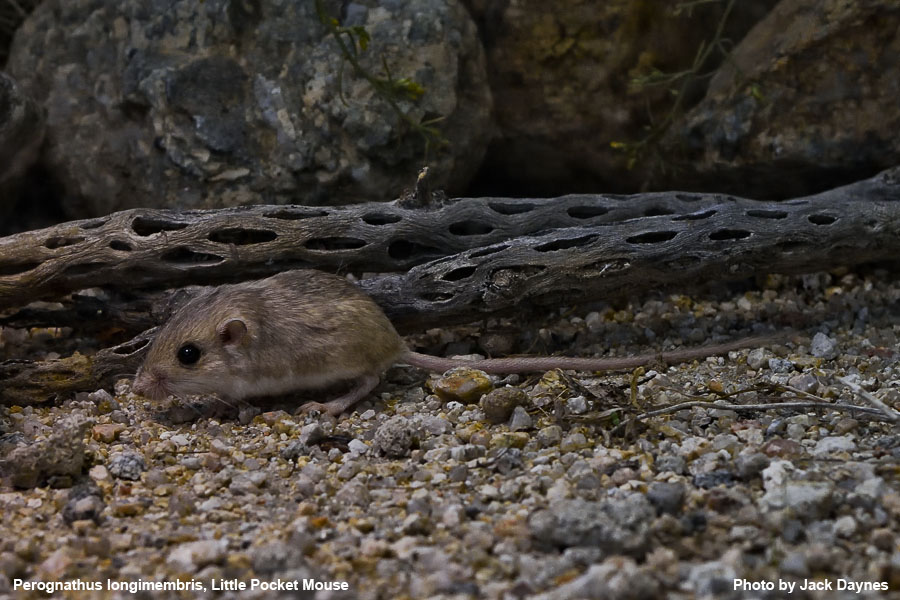
Palm Springs Little Pocket Mouse(Perognathus longimembris) |
|
Description: The Little Pocket Mouse is less than half the size of other pocket mice. Perhaps that is why NASA sent them on space missions in 1973 and 1973. The Pacific Pocket Mouse (Perognathus longimembris pacificus) , a close cousin if the Palm Springs Pocket Mouse and native to coastal Southern California, is listed as endangered. Near Cottonwood Spring in southern Joshua Tree National Park. Riverside County California. |
Date Taken: 2016:09:27 8:20 |
|
Location:
Cottonwood Spring |
|
Camera Information: NIKON D7200, 70 mm, f/8.0, 1/1600 |
File Name: LittlePocketMouse_D726607-JackDaynes-Web |
| © 2016 Jack Daynes, shadeTreeImaging.com |
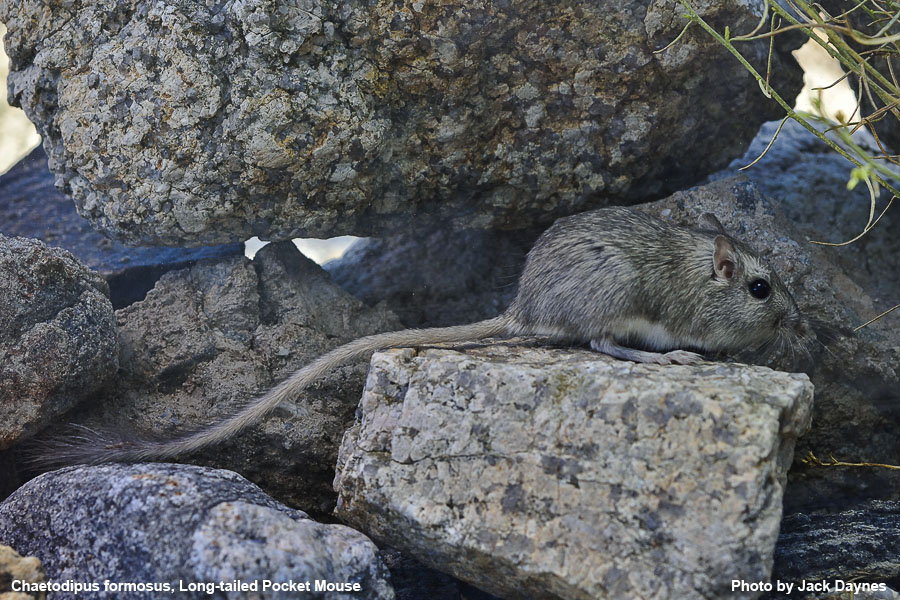
Long-Tailed Pocket Mouse(Chaetodipus formosus) |
|
Description: This mouse is very similar to the Desert Pocket Mouse. Subtle ear shape and size are one of the keys to distinquishing the two species. Near Cottonwood Spring in southern Joshua Tree National Park. Riverside County California. |
Date Taken: 2016:09:26 7:57 |
|
Location:
Cottonwood Spring |
|
Camera Information: NIKON D7200, 70 mm, f/8.0, 1/160 |
File Name: LongTailedPocketMouse_D724985-JackDaynes-Web |
| © 2016 Jack Daynes, shadeTreeImaging.com |
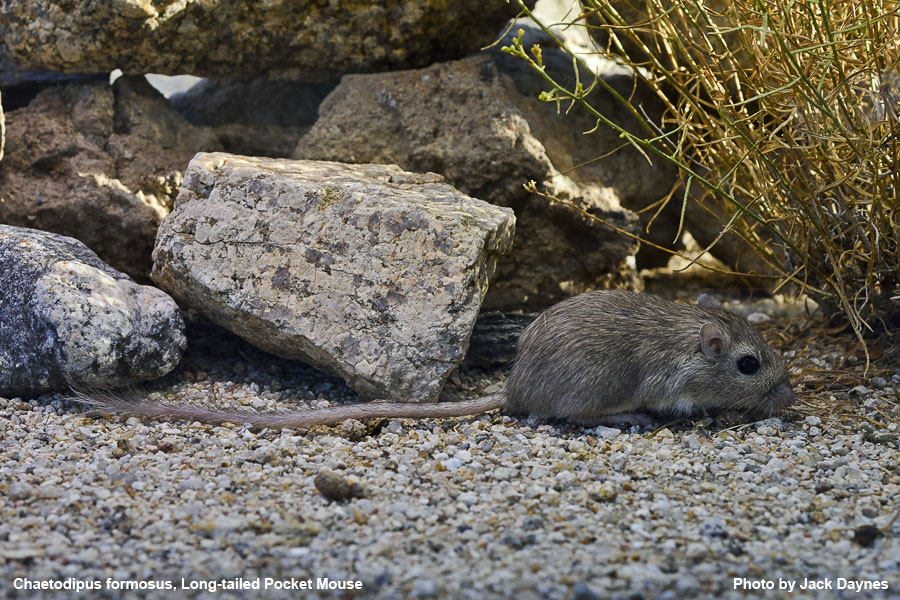
Long-Tailed Pocket Mouse(Chaetodipus formosus) |
|
Description: This mouse is very similar to the Desert Pocket Mouse. Subtle ear shape and size are one of the keys to distinquishing the two species. Near Cottonwood Spring in southern Joshua Tree National Park. Riverside County California. |
Date Taken: 2016:09:26 8:12 |
|
Location:
Cottonwood Spring |
|
Camera Information: NIKON D7200, 50 mm, f/8.0, 1/400 |
File Name: LongTailedPocketMouse_D725063-JackDaynes-Web |
| © 2016 Jack Daynes, shadeTreeImaging.com |
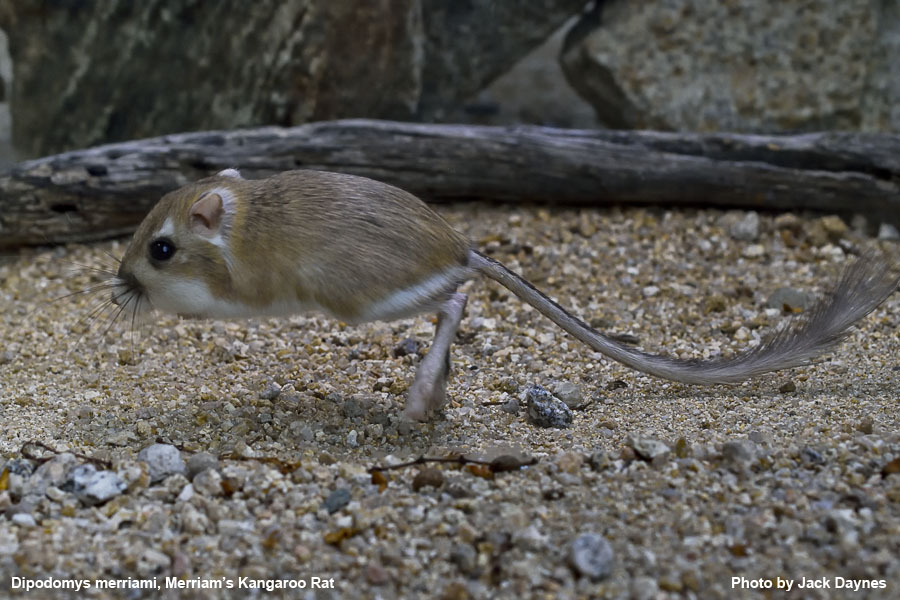
Merriam's Kangaroo Rat(Dipodomys merriami) |
|
Description: Near Cottonwood Spring in southern Joshua Tree National Park. Riverside County California. |
Date Taken: 2016:09:26 16:08 |
|
Location:
Cottonwood Spring |
|
Camera Information: NIKON D7200, 50 mm, f/8.0, 1/1600 |
File Name: MerriamsKangarooRat_D726133-JackDaynes-Web |
| © 2016 Jack Daynes, shadeTreeImaging.com |
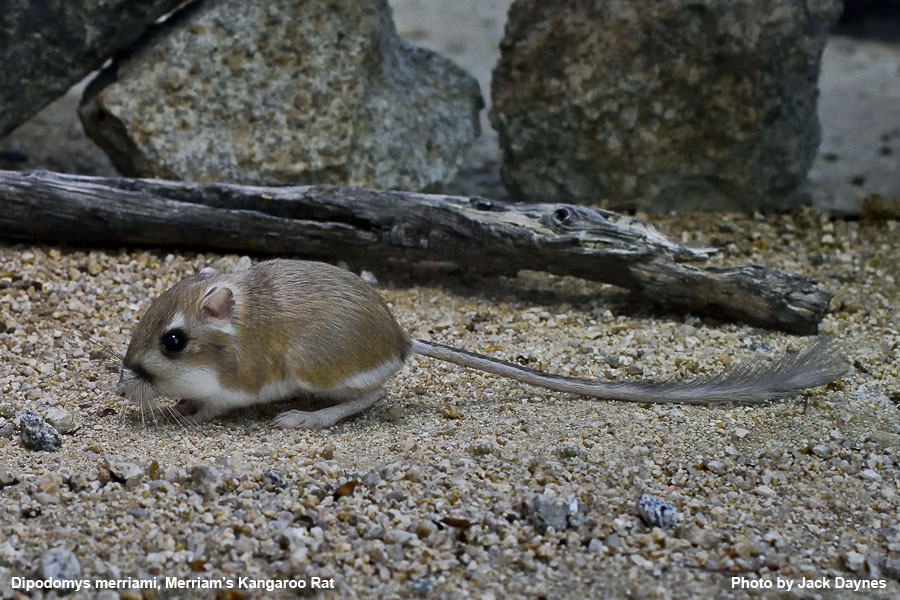
Merriam's Kangaroo Rat(Dipodomys merriami) |
|
Description: Near Cottonwood Spring in southern Joshua Tree National Park. Riverside County California. |
Date Taken: 2016:09:26 16:08 |
|
Location:
Cottonwood Spring |
|
Camera Information: NIKON D7200, 34 mm, f/8.0, 1/1600 |
File Name: MerriamsKangarooRat_D726144-JackDaynes-Web |
| © 2016 Jack Daynes, shadeTreeImaging.com |
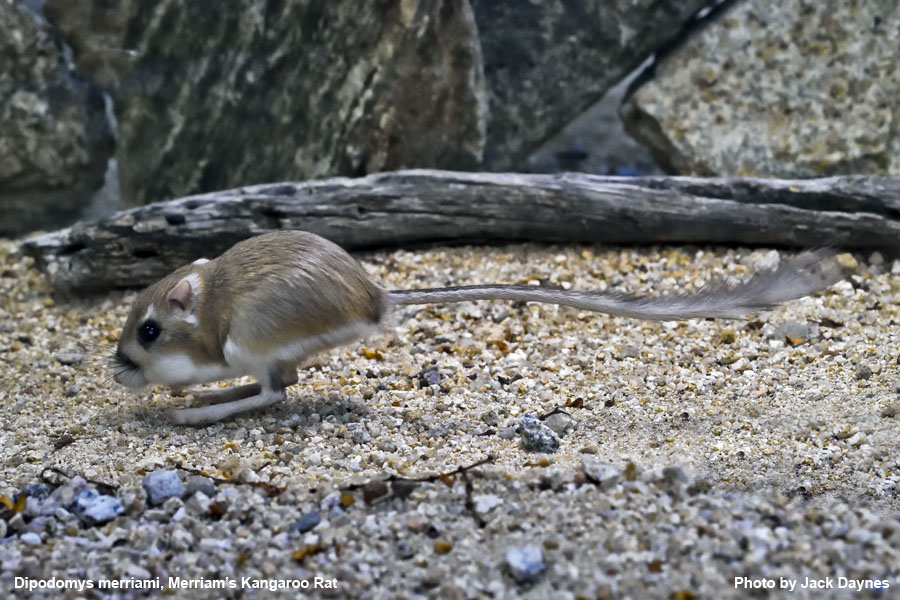
Merriam's Kangaroo Rat(Dipodomys merriami) |
|
Description: Near Cottonwood Spring in southern Joshua Tree National Park. Riverside County California. |
Date Taken: 2016:09:26 16:24 |
|
Location:
Cottonwood Spring |
|
Camera Information: NIKON D7200, 44 mm, f/8.0, 1/1600 |
File Name: MerriamsKangarooRat_D726236-JackDaynes-Web |
| © 2016 Jack Daynes, shadeTreeImaging.com |
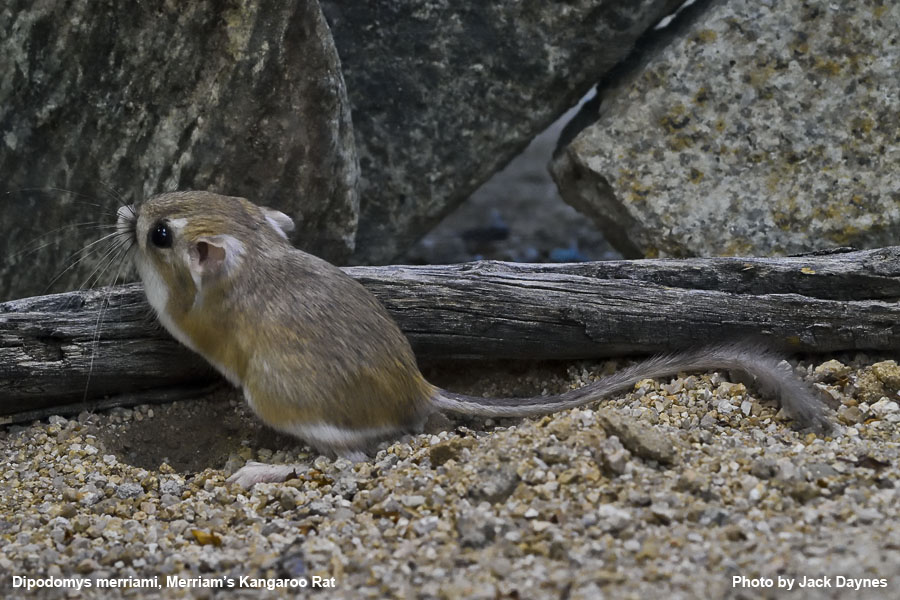
Merriam's Kangaroo Rat(Dipodomys merriami) |
|
Description: Near Cottonwood Spring in southern Joshua Tree National Park. Riverside County California. |
Date Taken: 2016:09:26 16:25 |
|
Location:
Cottonwood Spring |
|
Camera Information: NIKON D7200, 58 mm, f/8.0, 1/1250 |
File Name: MerriamsKangarooRat_D726263-JackDaynes-Web |
| © 2016 Jack Daynes, shadeTreeImaging.com |
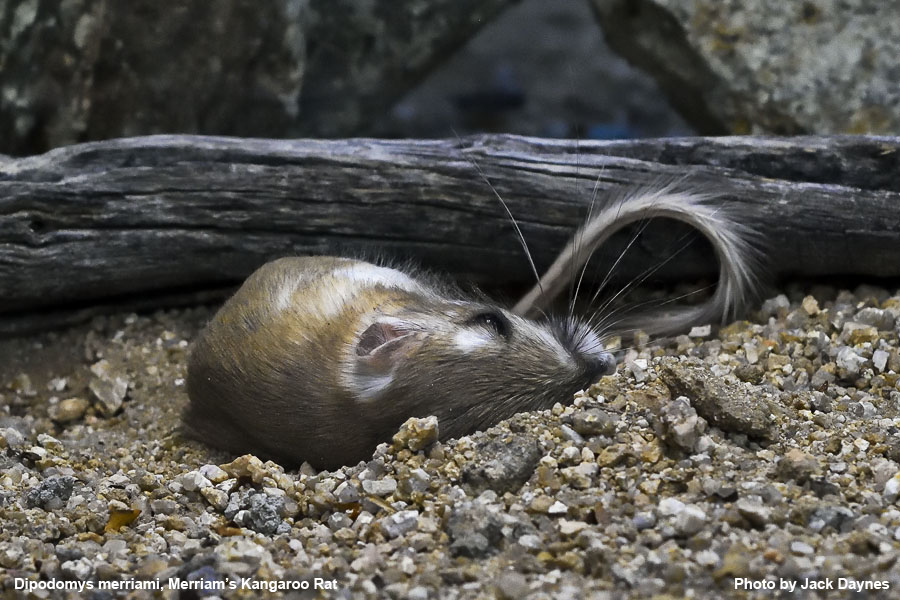
Merriam's Kangaroo Rat(Dipodomys merriami) |
|
Description: Near Cottonwood Spring in southern Joshua Tree National Park. Riverside County California. |
Date Taken: 2016:09:26 16:26 |
|
Location:
Cottonwood Spring |
|
Camera Information: NIKON D7200, 58 mm, f/8.0, 1/1600 |
File Name: MerriamsKangarooRat_D726288-JackDaynes-Web |
| © 2016 Jack Daynes, shadeTreeImaging.com |
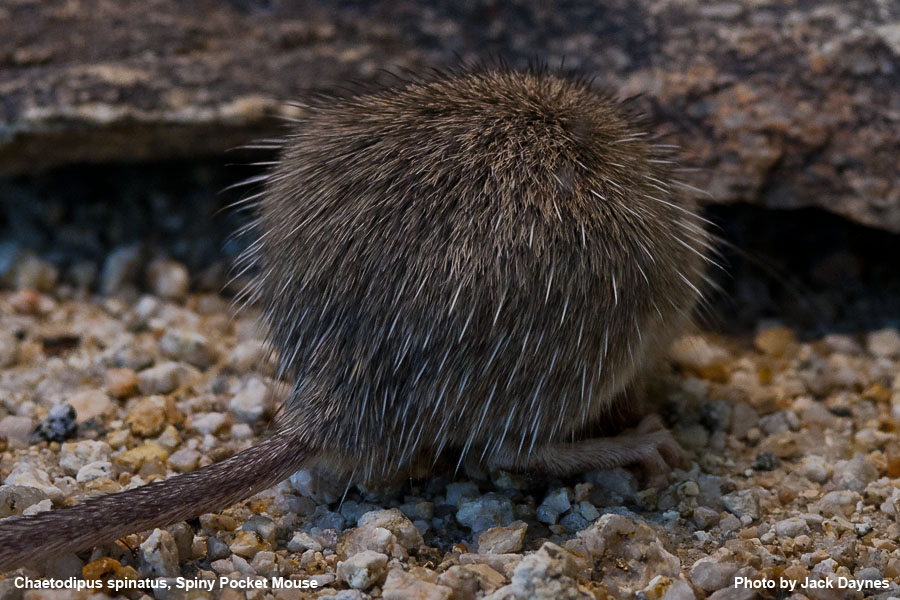
Spiney Pocket Mouse(Chaetodipus spinatus) |
|
Description: Called "Spiny" because of the long stiff spiny hairs, this mouse loves rockey tallus slopes. Found near Cottonwood Spring in southern Joshua Tree National Park. Riverside County California. |
Date Taken: 2016:09:27 17:00 |
|
Location:
Cottonwood Spring |
|
Camera Information: NIKON D3X, 105 mm, f/11.0, 1/500 |
File Name: SpineyPocketMouse_D3X7979-JackDaynes-Web |
| © 2016 Jack Daynes, shadeTreeImaging.com |
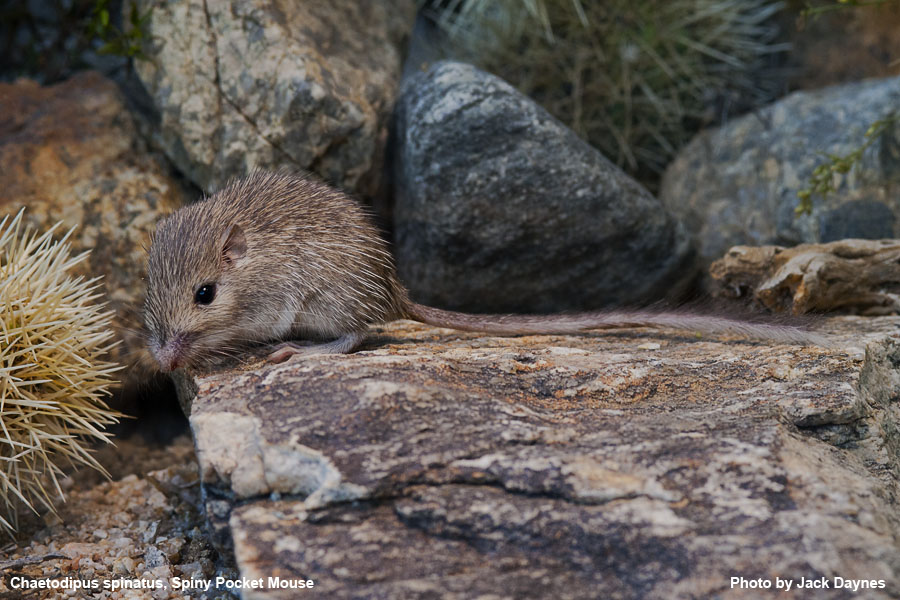
Spiney Pocket Mouse(Chaetodipus spinatus) |
|
Description: Called 'Spiney' because of the long stiff spiney hairs, this mouse loves rockey tallus slopes. Found near Cottonwood Spring in southern Joshua Tree National Park. Riverside County California. |
Date Taken: 2016:09:27 17:01 |
|
Location:
Cottonwood Spring |
|
Camera Information: NIKON D3X, 105 mm, f/11.0, 1/400 |
File Name: SpineyPocketMouse_D3X7988-JackDaynes-Web |
| © 2016 Jack Daynes, shadeTreeImaging.com |
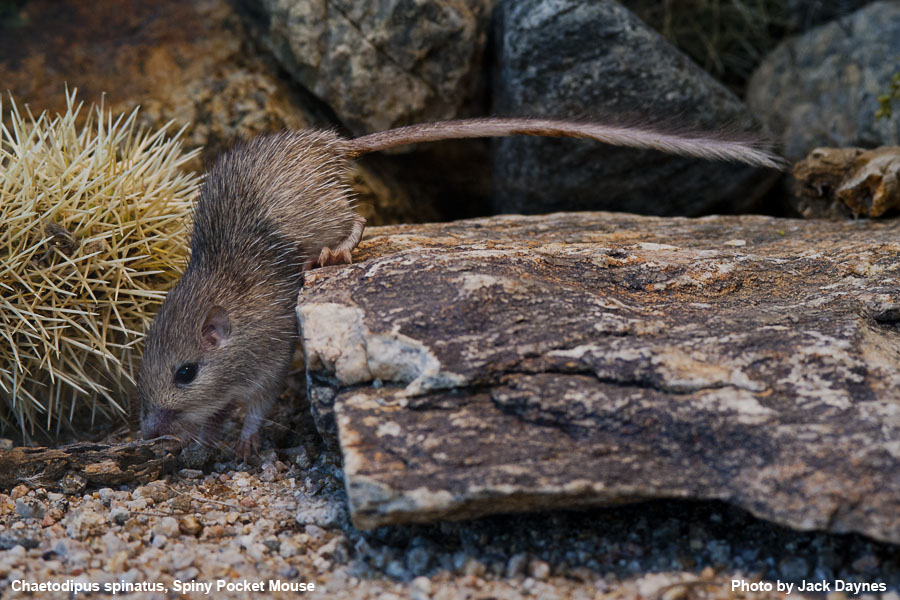
Spiney Pocket Mouse(Chaetodipus spinatus) |
|
Description: Called "Spiny" because of the long stiff spiny hairs, this mouse loves rockey tallus slopes. Found near Cottonwood Spring in southern Joshua Tree National Park. Riverside County California. |
Date Taken: 2016:09:27 17:01 |
|
Location:
Cottonwood Spring |
|
Camera Information: NIKON D3X, 105 mm, f/11.0, 1/400 |
File Name: SpineyPocketMouse_D3X7991-JackDaynes-Web |
| © 2016 Jack Daynes, shadeTreeImaging.com |
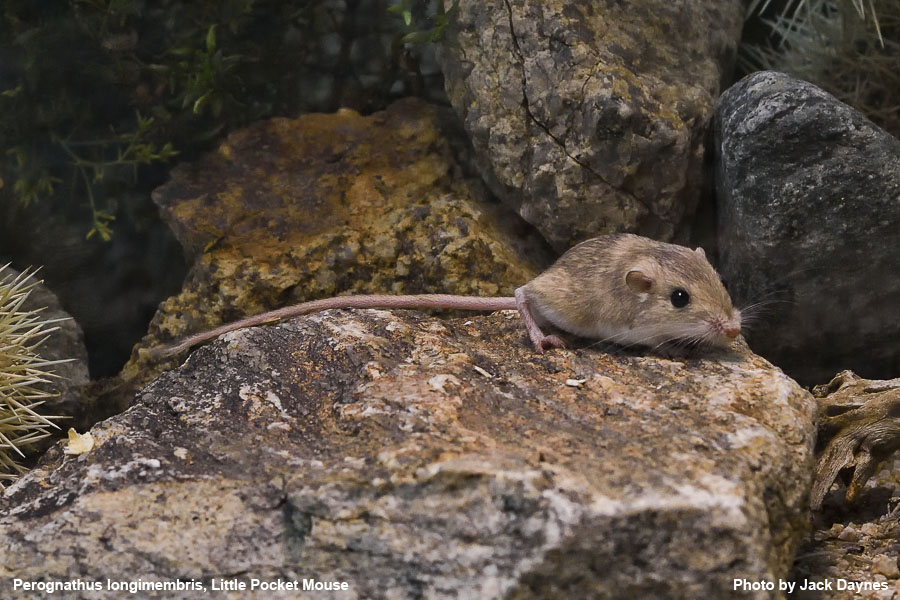
Palm Springs Little Pocket Mouse(Perognathus longimembris) |
|
Description: The Little Pocket Mouse is less than half the size of other pocket mice. Perhaps that is why NASA sent them on space missions in 1973 and 1973. The Pacific Pocket Mouse (Perognathus longimembris pacificus) , a close cousin if the Palm Springs Pocket Mouse and native to coastal Southern California, is listed as endangered. Near Cottonwood Spring in southern Joshua Tree National Park. Riverside County California. |
Date Taken: 2016:09:27 8:05 |
|
Location:
Cottonwood Spring |
|
Camera Information: NIKON D7200, 70 mm, f/8.0, 1/1600 |
File Name: LittlePocketMouse_D726502-JackDaynes-Web |
| © 2016 Jack Daynes, shadeTreeImaging.com |
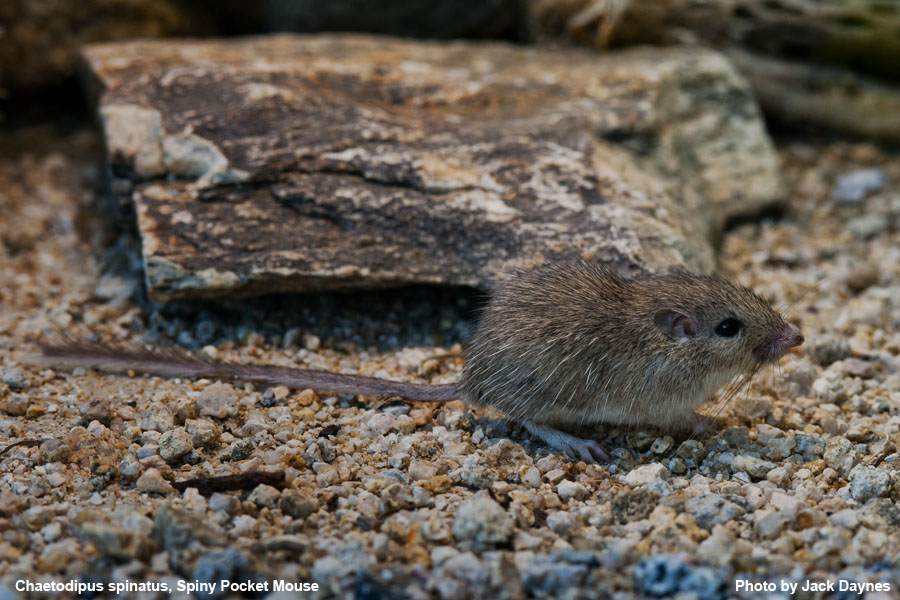
Spiney Pocket Mouse(Chaetodipus spinatus) |
|
Description: Called 'Spiney' because of the long stiff spiney hairs, this mouse loves rockey tallus slopes. Found near Cottonwood Spring in southern Joshua Tree National Park. Riverside County California. |
Date Taken: 2016:09:27 17:02 |
|
Location:
Cottonwood Spring |
|
Camera Information: NIKON D3X, 105 mm, f/11.0, 1/500 |
File Name: SpineyPocketMouse_D3X8006-JackDaynes-Web |
| © 2016 Jack Daynes, shadeTreeImaging.com |
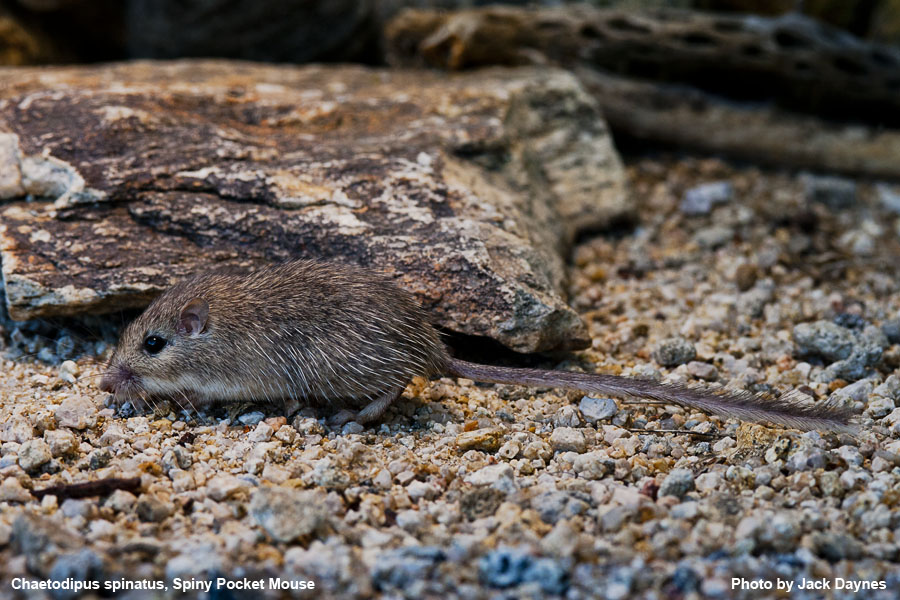
Spiney Pocket Mouse(Chaetodipus spinatus) |
|
Description: Called 'Spiney' because of the long stiff spiney hairs, this mouse loves rockey tallus slopes. Found near Cottonwood Spring in southern Joshua Tree National Park. Riverside County California. |
Date Taken: 2016:09:27 17:04 |
|
Location:
Cottonwood Spring |
|
Camera Information: NIKON D3X, 105 mm, f/11.0, 1/640 |
File Name: SpineyPocketMouse_D3X8023-JackDaynes-Web |
| © 2016 Jack Daynes, shadeTreeImaging.com |
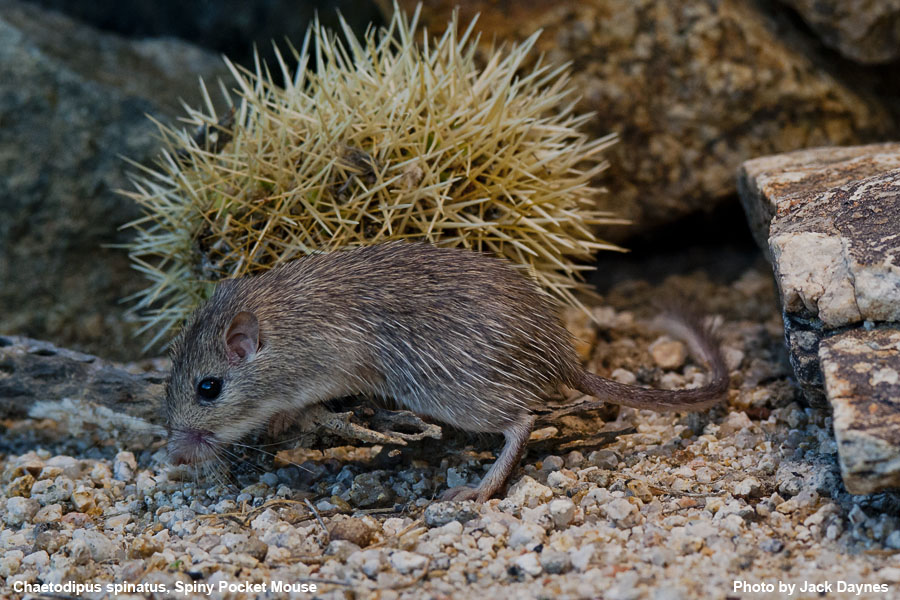
Spiney Pocket Mouse(Chaetodipus spinatus) |
|
Description: Called "Spiny" because of the long stiff spiny hairs, this mouse loves rockey tallus slopes. Found near Cottonwood Spring in southern Joshua Tree National Park. Riverside County California. |
Date Taken: 2016:09:27 17:04 |
|
Location:
Cottonwood Spring |
|
Camera Information: NIKON D3X, 105 mm, f/11.0, 1/500 |
File Name: SpineyPocketMouse_D3X8030-JackDaynes-Web |
| © 2016 Jack Daynes, shadeTreeImaging.com |
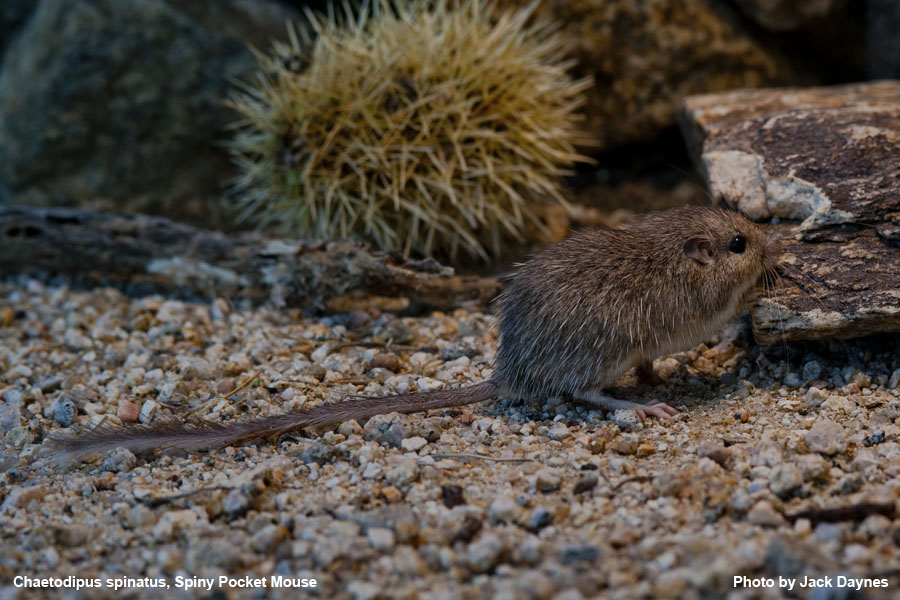
Spiney Pocket Mouse(Chaetodipus spinatus) |
|
Description: Called 'Spiney' because of the long stiff spiney hairs, this mouse loves rockey tallus slopes. Found near Cottonwood Spring in southern Joshua Tree National Park. Riverside County California. |
Date Taken: 2016:09:27 17:04 |
|
Location:
Cottonwood Spring |
|
Camera Information: NIKON D3X, 105 mm, f/11.0, 1/640 |
File Name: SpineyPocketMouse_D3X8035-JackDaynes-Web |
| © 2016 Jack Daynes, shadeTreeImaging.com |
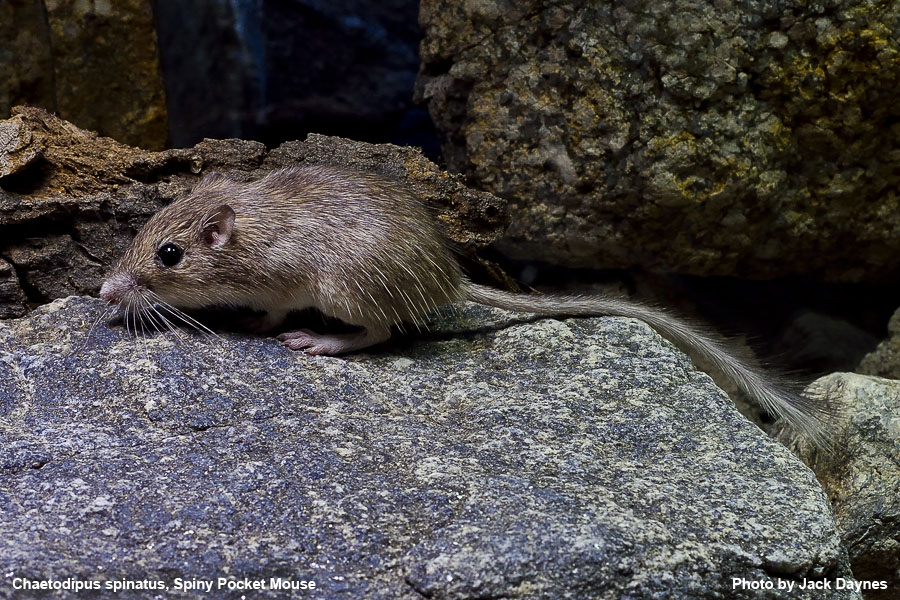
Spiney Pocket Mouse(Chaetodipus spinatus) |
|
Description: Called "Spiny" because of the long stiff spiny hairs, this mouse loves rockey tallus slopes. Found near Cottonwood Spring in southern Joshua Tree National Park. Riverside County California. |
Date Taken: 2016:09:26 9:59 |
|
Location:
Cottonwood Spring |
|
Camera Information: NIKON D7200, 35 mm, f/8.0, 1/160 |
File Name: SpineyPocketMouse_D725779-JackDaynes-Web |
| © 2016 Jack Daynes, shadeTreeImaging.com |
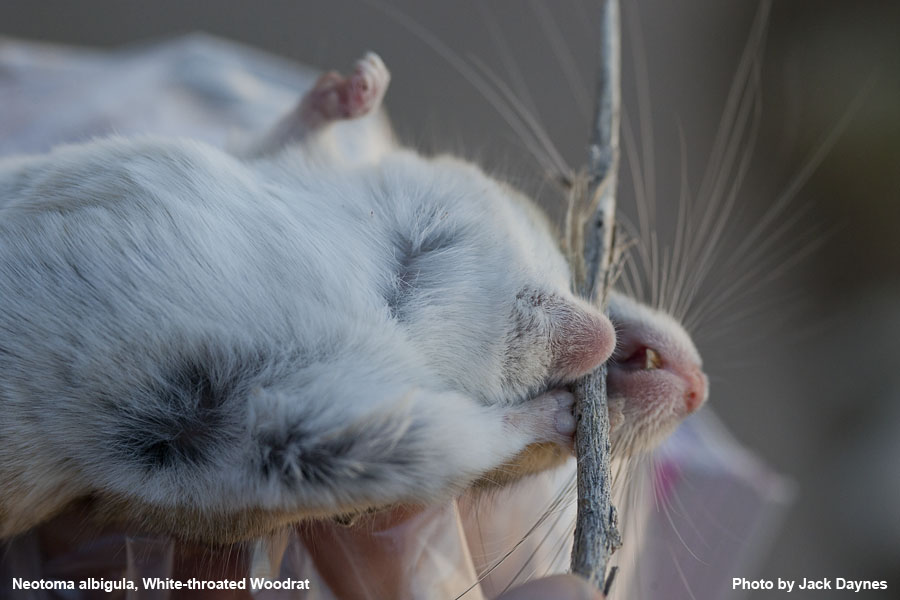
White-Throated Woodrat(Neotoma albigula) |
|
Description: Near Cottonwood Spring in southern Joshua Tree National Park. Riverside County California. |
Date Taken: 2016:09:29 11:11 |
|
Location:
Cottonwood Spring |
|
Camera Information: NIKON D3X, 105 mm, f/8.0, 1/1250 |
File Name: WhiteThroatedWoodratBelly_D3X8744-JackDaynes-Web |
| © 2016 Jack Daynes, shadeTreeImaging.com |
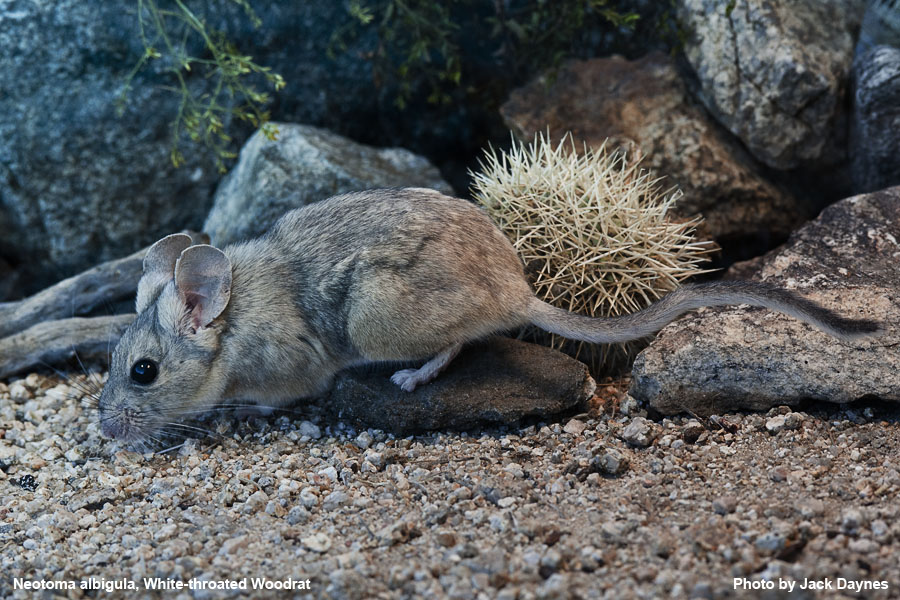
White-Throated Woodrat(Neotoma albigula) |
|
Description: These creatures tend to live in burrows along cut-banks in desert washes. Near Cottonwood Spring in southern Joshua Tree National Park. Riverside County California. |
Date Taken: 2016:09:29 10:24 |
|
Location:
Cottonwood Spring |
|
Camera Information: NIKON D3X, 105 mm, f/11.0, 1/160 |
File Name: WhiteThroatedWoodrat_D3X8557-JackDaynes-Web |
| © 2016 Jack Daynes, shadeTreeImaging.com |
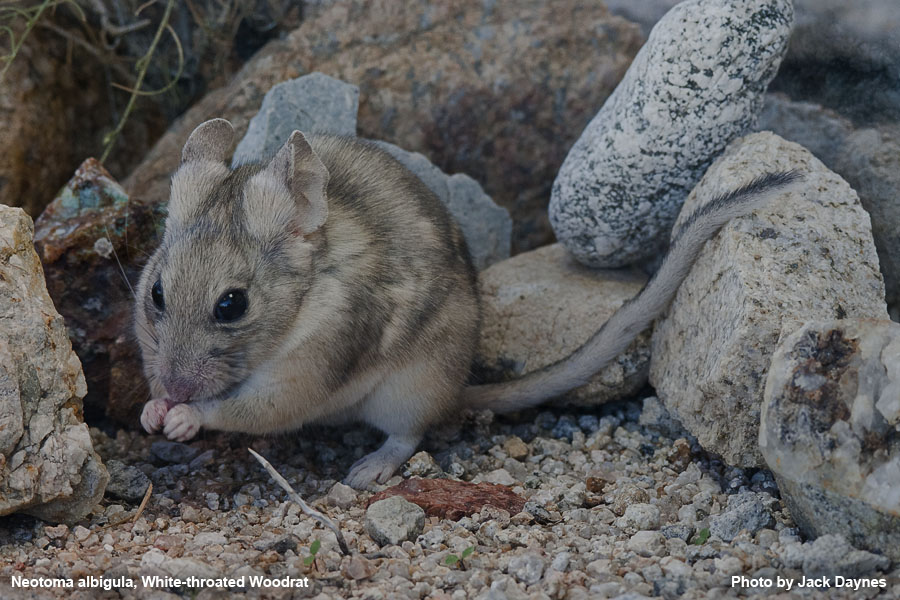
White-Throated Woodrat(Neotoma albigula) |
|
Description: Near Cottonwood Spring in southern Joshua Tree National Park. Riverside County California. |
Date Taken: 2016:09:29 10:25 |
|
Location:
Cottonwood Spring |
|
Camera Information: NIKON D3X, 105 mm, f/11.0, 1/160 |
File Name: WhiteThroatedWoodrat_D3X8570-JackDaynes-Web |
| © 2016 Jack Daynes, shadeTreeImaging.com |
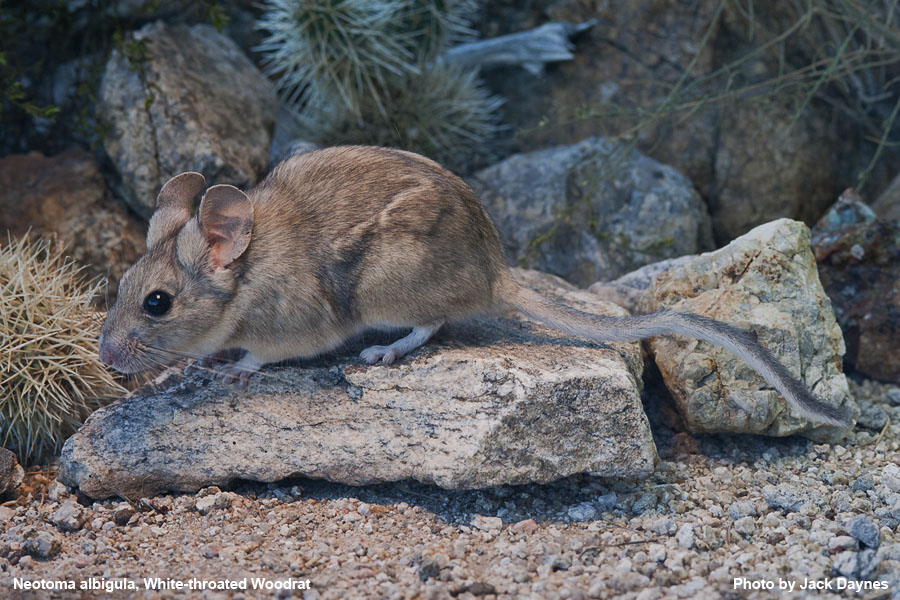
White-Throated Woodrat(Neotoma albigula) |
|
Description: Near Cottonwood Spring in southern Joshua Tree National Park. Riverside County California. |
Date Taken: 2016:09:29 10:25 |
|
Location:
Cottonwood Spring |
|
Camera Information: NIKON D3X, 105 mm, f/11.0, 1/200 |
File Name: WhiteThroatedWoodrat_D3X8578-JackDaynes-Web |
| © 2016 Jack Daynes, shadeTreeImaging.com |
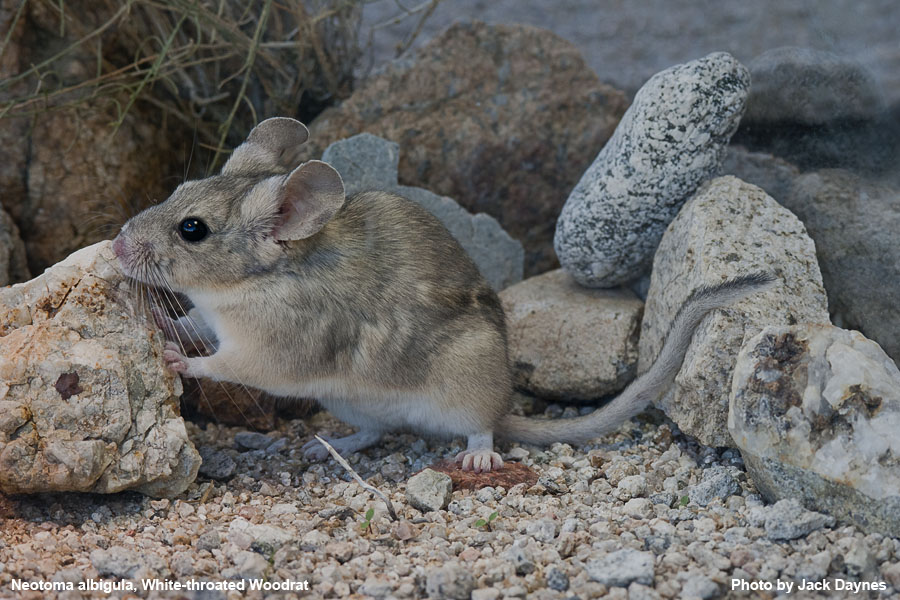
White-Throated Woodrat(Neotoma albigula) |
|
Description: Near Cottonwood Spring in southern Joshua Tree National Park. Riverside County California. |
Date Taken: 2016:09:29 10:26 |
|
Location:
Cottonwood Spring |
|
Camera Information: NIKON D3X, 105 mm, f/11.0, 1/160 |
File Name: WhiteThroatedWoodrat_D3X8585-JackDaynes-Web |
| © 2016 Jack Daynes, shadeTreeImaging.com |
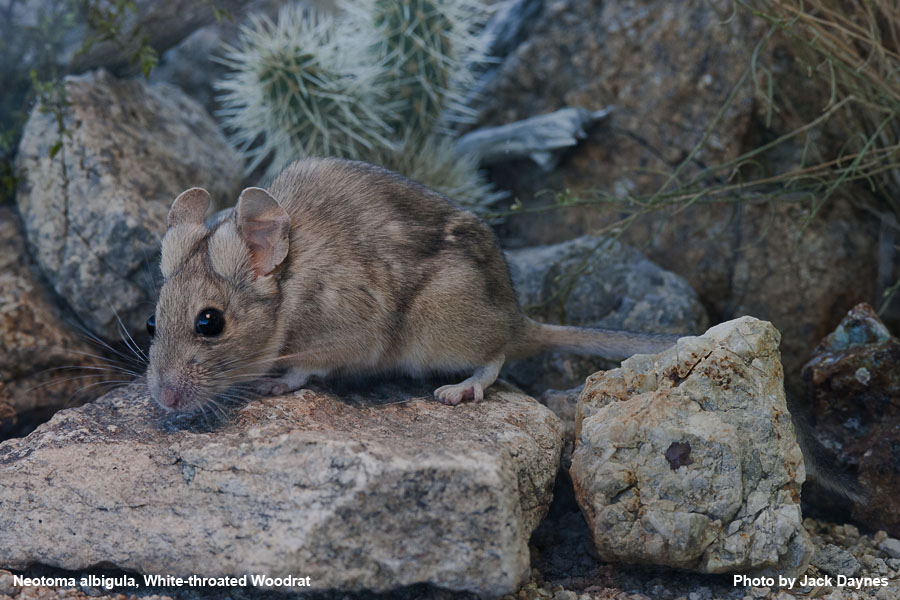
White-Throated Woodrat(Neotoma albigula) |
|
Description: Near Cottonwood Spring in southern Joshua Tree National Park. Riverside County California. |
Date Taken: 2016:09:29 10:32 |
|
Location:
Cottonwood Spring |
|
Camera Information: NIKON D3X, 105 mm, f/11.0, 1/160 |
File Name: WhiteThroatedWoodrat_D3X8653-JackDaynes-Web |
| © 2016 Jack Daynes, shadeTreeImaging.com |
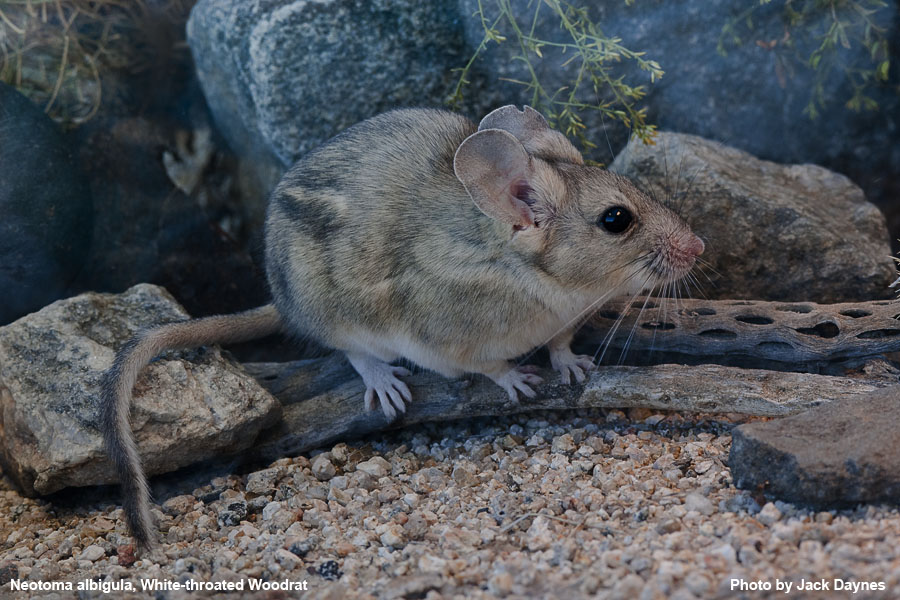
White-Throated Woodrat(Neotoma albigula) |
|
Description: Near Cottonwood Spring in southern Joshua Tree National Park. Riverside County California. |
Date Taken: 2016:09:29 10:41 |
|
Location:
Cottonwood Spring |
|
Camera Information: NIKON D3X, 105 mm, f/11.0, 1/125 |
File Name: WhiteThroatedWoodrat_D3X8714-JackDaynes-Web |
| © 2016 Jack Daynes, shadeTreeImaging.com |
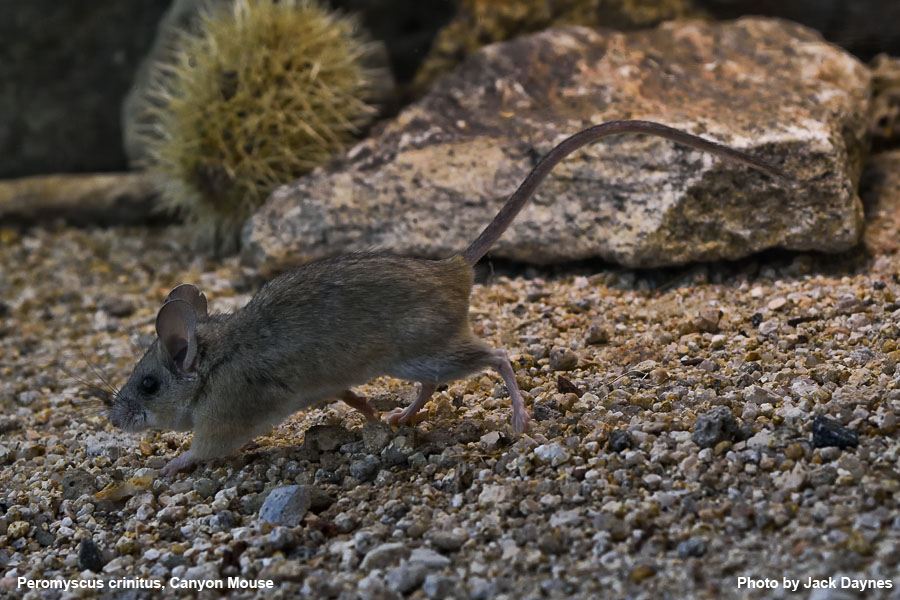
Canyon Mouse(Peromyscus crinitus) |
|
Description: Near Cottonwood Spring in southern Joshua Tree National Park. Riverside County California. |
Date Taken: 2016:09:27 8:00 |
|
Location:
Cottonwood Spring |
|
Camera Information: NIKON D7200, 70 mm, f/8.0, 1/1600 |
File Name: CanyonMouse_D726497-JackDaynes-Web |
| © 2016 Jack Daynes, shadeTreeImaging.com |
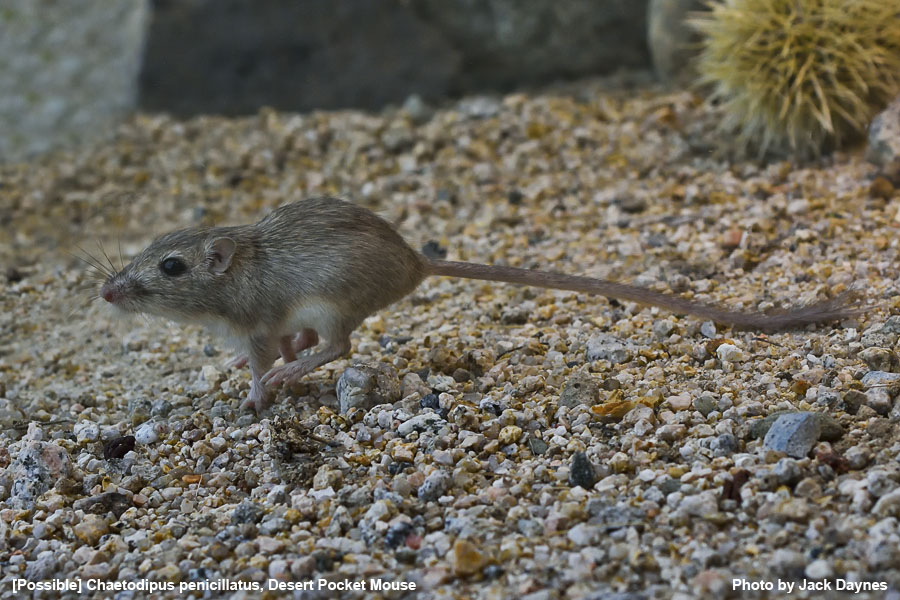
Probable Desert Pocket Mouse(Chaetodipus penicillatus) |
|
Description: Distinguishing the Long-Tailed Pocket Mouse (formosus) from the Desert Pocket Mouse (penicillatus) is very difficult. Ear shape and length are key, but there are intermediate shapes and lengths in either species, creating uncertainty in the identity. m Near Cottonwood Spring in southern Joshua Tree National Park. Riverside County California. |
Date Taken: 2016:09:27 8:27 |
|
Location:
Cottonwood Spring |
|
Camera Information: NIKON D7200, 52 mm, f/8.0, 1/1600 |
File Name: DesertPocketMouse-CS12_D726641-JackDaynes-Web |
| © 2016 Jack Daynes, shadeTreeImaging.com |
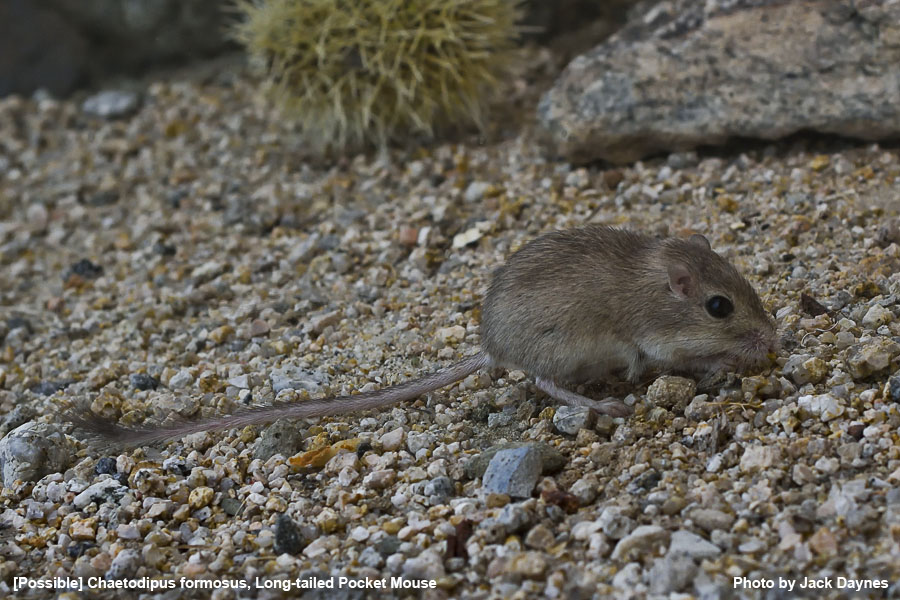
Probable Long-Tailed Pocket Mouse(Chaetodipus formosus) |
|
Description: Distinguishing the Long-Tailed Pocket Mouse (formosus) from the Desert Pocket Mouse (penicillatus) is very difficult. Ear shape and length are key, but there are intermediate shapes and lengths in either species, creating uncertainty in the identity. m Near Cottonwood Spring in southern Joshua Tree National Park. Riverside County California. |
Date Taken: 2016:09:27 8:56 |
|
Location:
Cottonwood Spring |
|
Camera Information: NIKON D7200, 50 mm, f/8.0, 1/1600 |
File Name: LongTailedPocketMouse_D726874-JackDaynes-Web |
| © 2016 Jack Daynes, shadeTreeImaging.com |
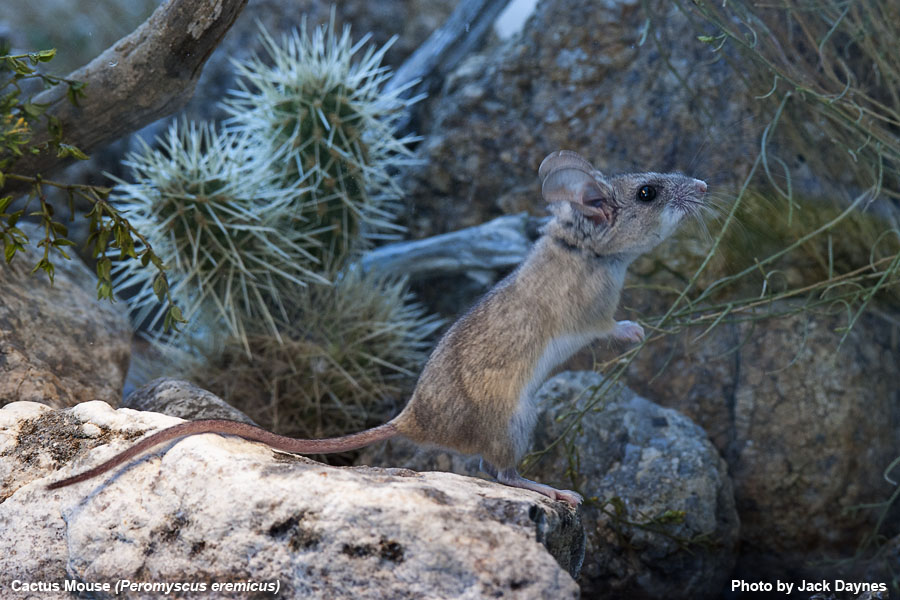
Cactus Mouse(Peromyscus eremicus) |
|
Description: Near Cottonwood Spring in southern Joshua Tree National Park. Riverside County California. |
Date Taken: 2016:09:28 10:22 |
|
Location:
Cottonwood Spring |
|
Camera Information: NIKON D3X, 105 mm, f/11.0, 1/100 |
File Name: CactusMouse_D3X8347-JackDaynes-Web |
| © 2016 Jack Daynes, shadeTreeImaging.com |
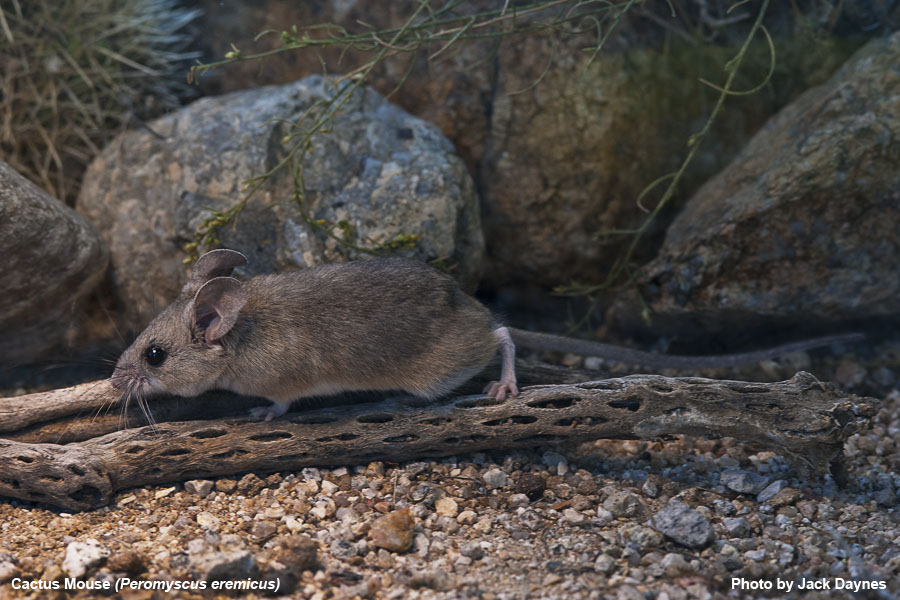
Cactus Mouse(Peromyscus eremicus) |
|
Description: Near Cottonwood Spring in southern Joshua Tree National Park. Riverside County California. |
Date Taken: 2016:09:28 10:54 |
|
Location:
Cottonwood Spring |
|
Camera Information: NIKON D3X, 105 mm, f/11.0, 1/125 |
File Name: CactusMouse_D3X8442-JackDaynes-Web |
| © 2016 Jack Daynes, shadeTreeImaging.com |
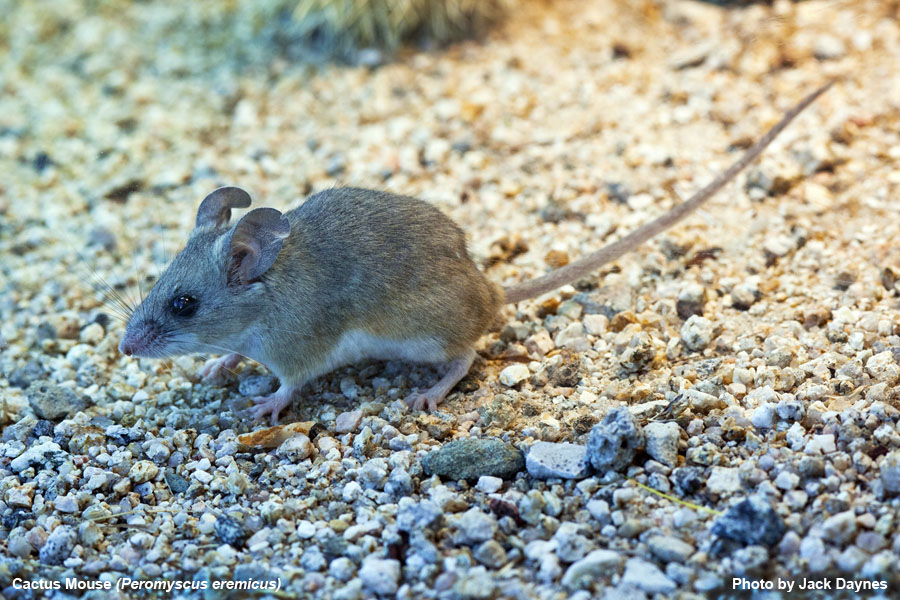
Cactus Mouse(Peromyscus eremicus) |
|
Description: Near Cottonwood Spring in southern Joshua Tree National Park. Riverside County California. |
Date Taken: 2016:09:28 10:55 |
|
Location:
Cottonwood Spring |
|
Camera Information: NIKON D3X, 105 mm, f/11.0, 1/250 |
File Name: CactusMouse_D3X8469-JackDaynes-Web |
| © 2016 Jack Daynes, shadeTreeImaging.com |
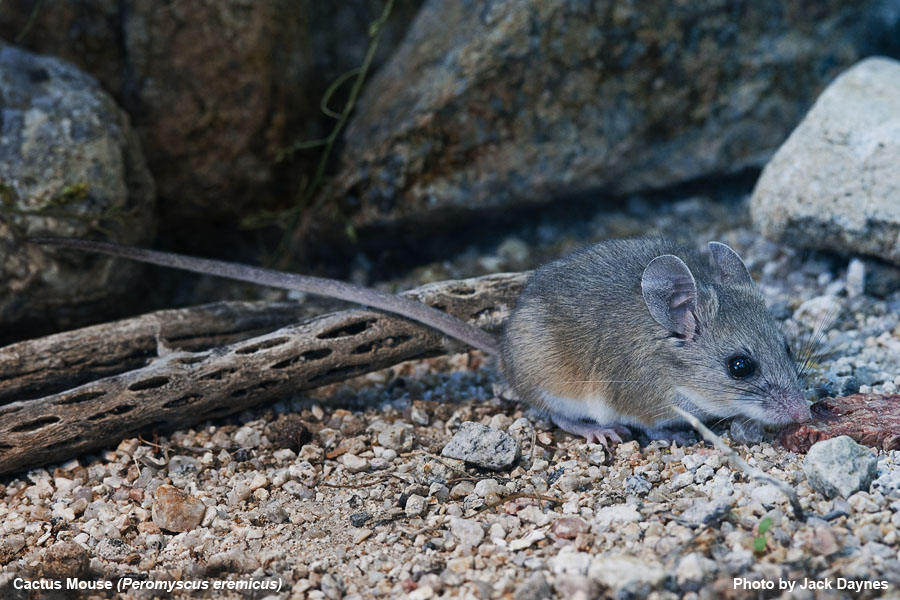
Cactus Mouse(Peromyscus eremicus) |
|
Description: Near Cottonwood Spring in southern Joshua Tree National Park. Riverside County California. |
Date Taken: 2016:09:28 11:20 |
|
Location:
Cottonwood Spring |
|
Camera Information: NIKON D3X, 105 mm, f/11.0, 1/125 |
File Name: CactusMouse_D3X8514-JackDaynes-Web |
| © 2016 Jack Daynes, shadeTreeImaging.com |
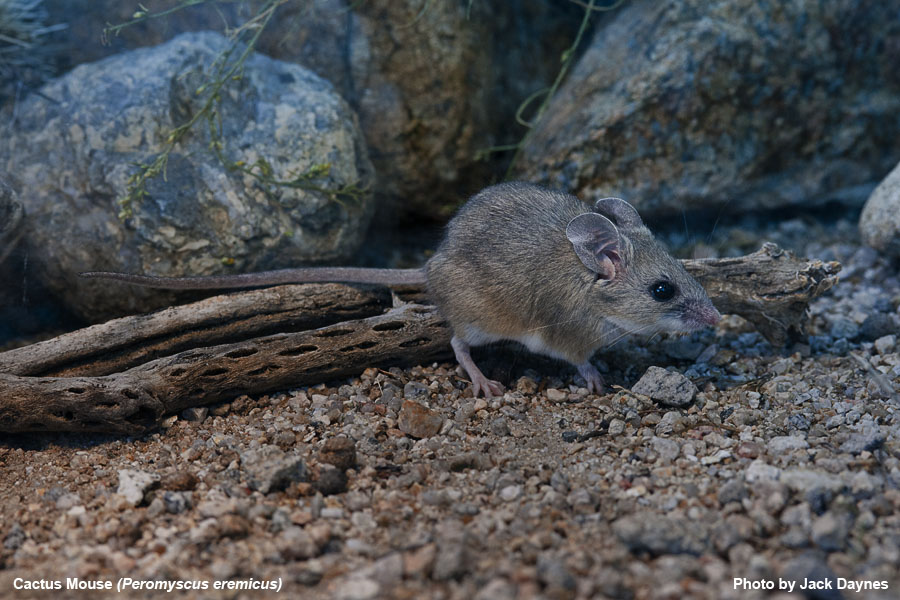
Cactus Mouse(Peromyscus eremicus) |
|
Description: Near Cottonwood Spring in southern Joshua Tree National Park. Riverside County California. |
Date Taken: 2016:09:28 11:27 |
|
Location:
Cottonwood Spring |
|
Camera Information: NIKON D3X, 105 mm, f/11.0, 1/160 |
File Name: CactusMouse_D3X8537-JsckDaynes-Web |
| © 2016 Jack Daynes, shadeTreeImaging.com |
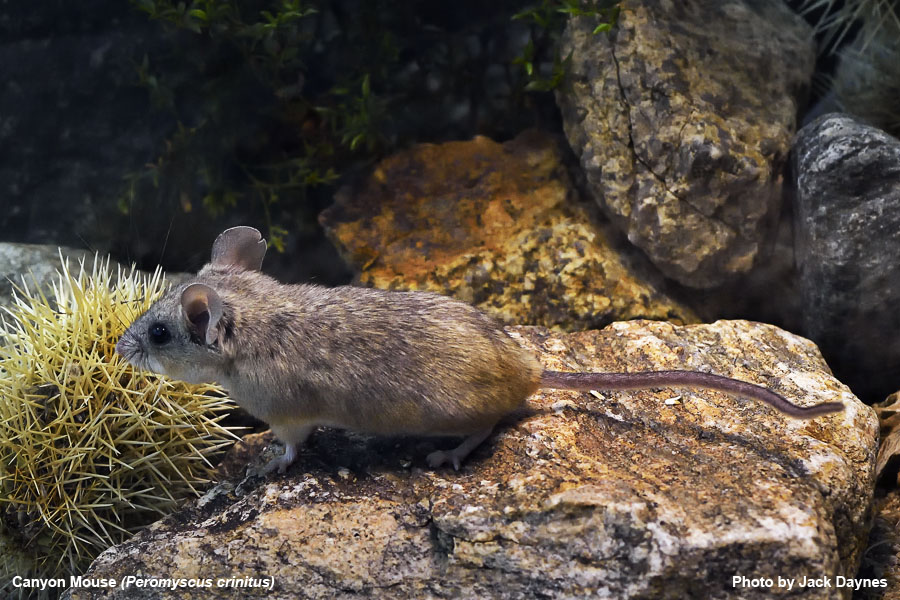
Canyon Mouse(Peromyscus crinitus) |
|
Description: Near Cottonwood Spring in southern Joshua Tree National Park. Riverside County California. |
Date Taken: 2016:09:27 7:50 |
|
Location:
Cottonwood Spring |
|
Camera Information: NIKON D7200, 70 mm, f/8.0, 1/1600 |
File Name: CanyonMouse_D726342-JackDaynes-Web |
| © 2016 Jack Daynes, shadeTreeImaging.com |
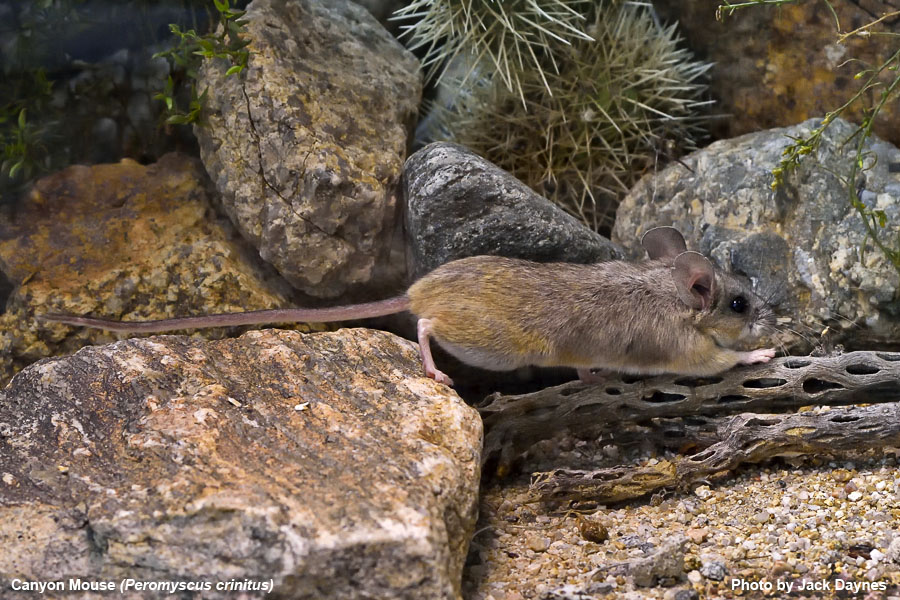
Canyon Mouse(Peromyscus crinitus) |
|
Description: Near Cottonwood Spring in southern Joshua Tree National Park. Riverside County California. |
Date Taken: 2016:09:27 7:52 |
|
Location:
Cottonwood Spring |
|
Camera Information: NIKON D7200, 70 mm, f/8.0, 1/1600 |
File Name: CanyonMouse_D726356-JackDaynes-Web |
| © 2016 Jack Daynes, shadeTreeImaging.com |
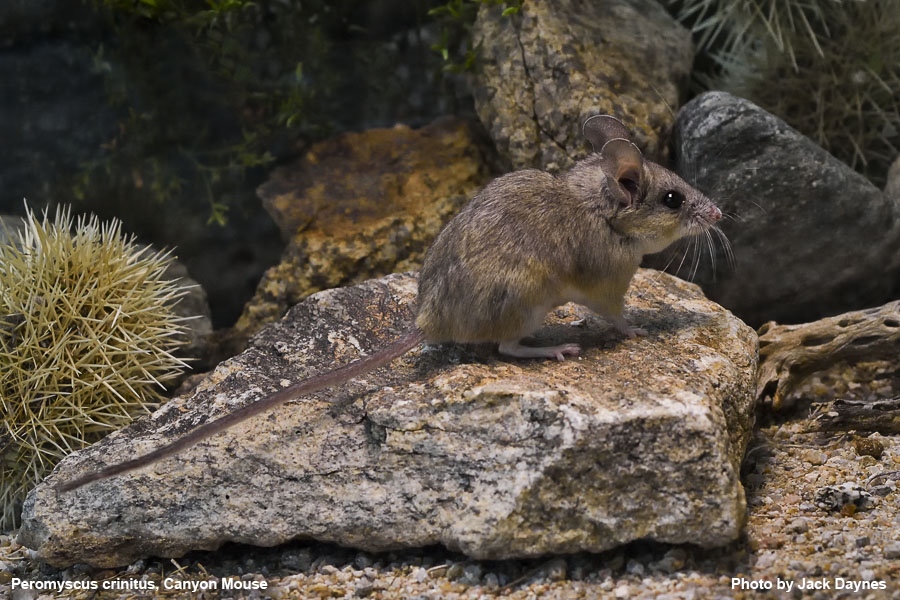
Canyon Mouse(Peromyscus crinitus) |
|
Description: Near Cottonwood Spring in southern Joshua Tree National Park. Riverside County California. |
Date Taken: 2016:09:27 7:55 |
|
Location:
Cottonwood Spring |
|
Camera Information: NIKON D7200, 70 mm, f/8.0, 1/1600 |
File Name: CanyonMouse_D726414-JackDaynes-Web |
| © 2016 Jack Daynes, shadeTreeImaging.com |
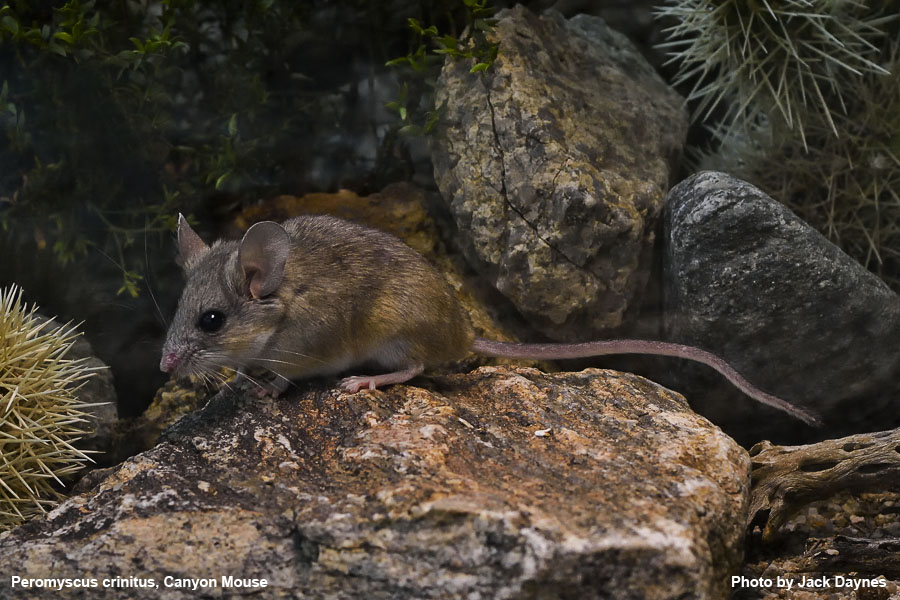
Canyon Mouse(Peromyscus crinitus) |
|
Description: Near Cottonwood Spring in southern Joshua Tree National Park. Riverside County California. |
Date Taken: 2016:09:27 7:58 |
|
Location:
Cottonwood Spring |
|
Camera Information: NIKON D7200, 70 mm, f/8.0, 1/1600 |
File Name: CanyonMouse_D726450-JackDaynes-Web |
| © 2016 Jack Daynes, shadeTreeImaging.com |
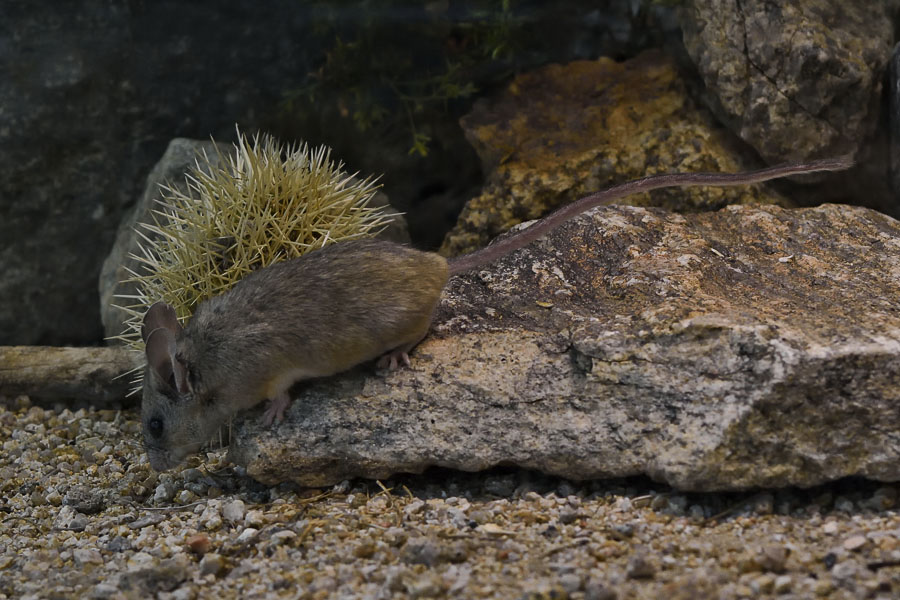
Canyon Mouse(Peromyscus crinitus) |
|
Description: Near Cottonwood Spring in southern Joshua Tree National Park. Riverside County California. |
Date Taken: 2016:09:27 7:59 |
|
Location:
Cottonwood Spring |
|
Camera Information: NIKON D7200, 70 mm, f/8.0, 1/1600 |
File Name: CanyonMouse_D726472-JackDaynes-Web |
| © 2016 Jack Daynes, shadeTreeImaging.com |
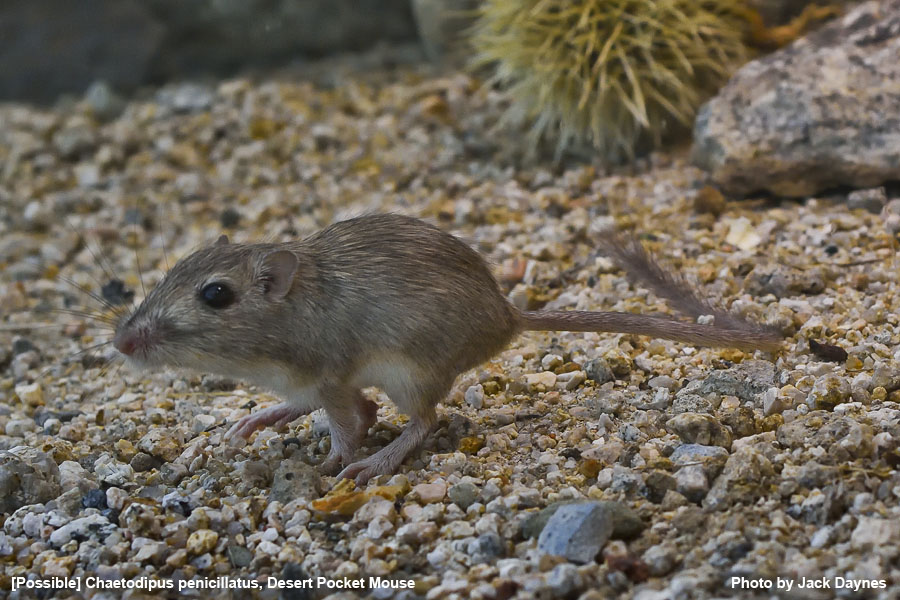
Probable Desert Pocket Mouse(Chaetodipus penicillatus) |
|
Description: Distinguishing the Long-Tailed Pocket Mouse (formosus) from the Desert Pocket Mouse (penicillatus) is very difficult. Ear shape and length are key, but there are intermediate shapes and lengths in either species, creating uncertainty in the identity. m Near Cottonwood Spring in southern Joshua Tree National Park. Riverside County California. |
Date Taken: 2016:09:27 8:27 |
|
Location:
Cottonwood Spring |
|
Camera Information: NIKON D7200, 52 mm, f/8.0, 1/1600 |
File Name: DesertPocketMouse-CS12_D726632-JackDaynes-Web |
| © 2016 Jack Daynes, shadeTreeImaging.com |
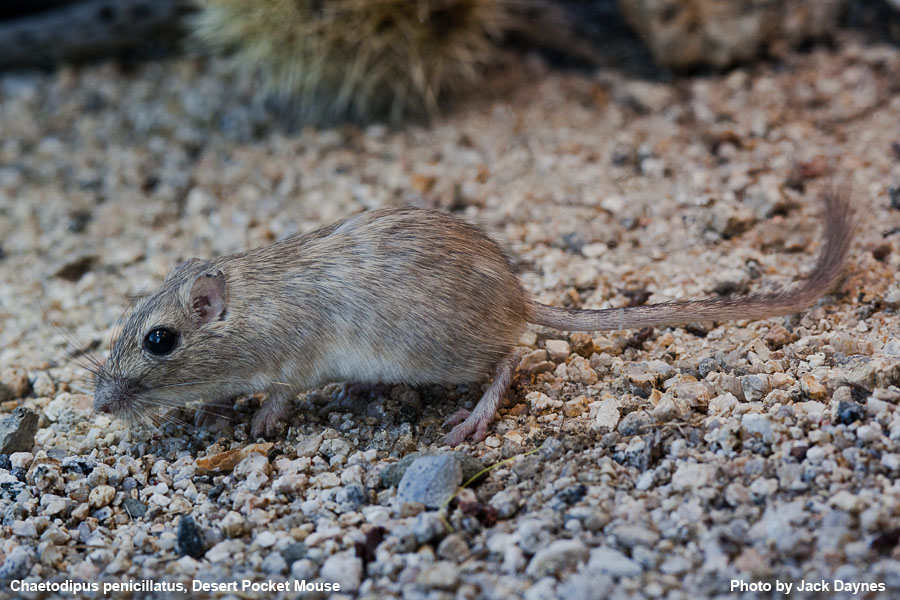
Desert Pocket Mouse(Chaetodipus penicillatus) |
|
Description: This mouse is very similar to the Long-Tailed Pocket Mouse. Subtle ear shape and size are one of the keys to distinquishing the two species. Near Cottonwood Spring in southern Joshua Tree National Park. Riverside County California. |
Date Taken: 2016:09:28 8:52 |
|
Location:
Cottonwood Spring |
|
Camera Information: NIKON D3X, 105 mm, f/11.0, 1/200 |
File Name: DesertPocketMouse_D3X8147-JackDaynes-Web |
| © 2016 Jack Daynes, shadeTreeImaging.com |
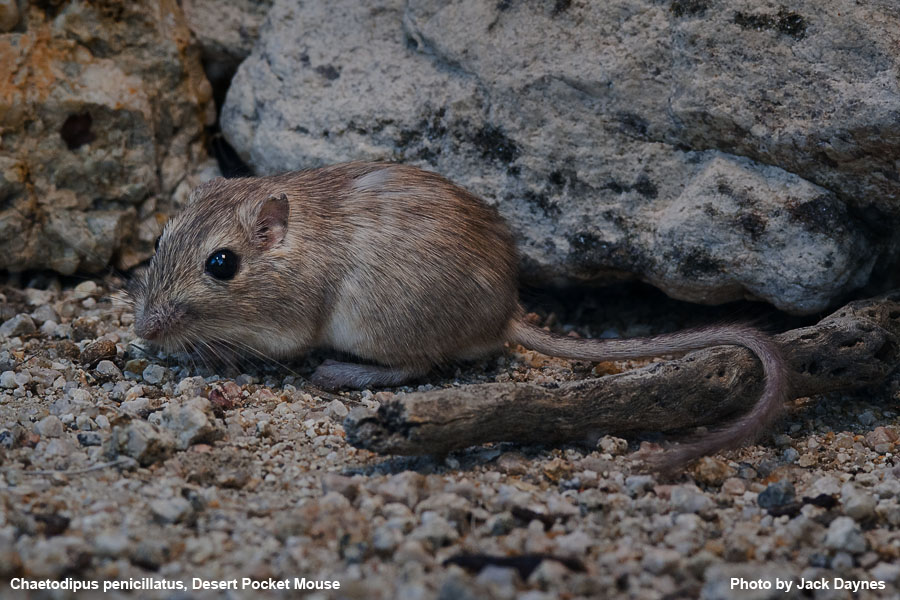
Desert Pocket Mouse(Chaetodipus penicillatus) |
|
Description: This mouse is very similar to the Long-Tailed Pocket Mouse. Subtle ear shape and size are one of the keys to distinquishing the two species. Near Cottonwood Spring in southern Joshua Tree National Park. Riverside County California. |
Date Taken: 2016:09:28 8:55 |
|
Location:
Cottonwood Spring |
|
Camera Information: NIKON D3X, 105 mm, f/11.0, 1/200 |
File Name: DesertPocketMouse_D3X8174-JackDaynes-Web |
| © 2016 Jack Daynes, shadeTreeImaging.com |
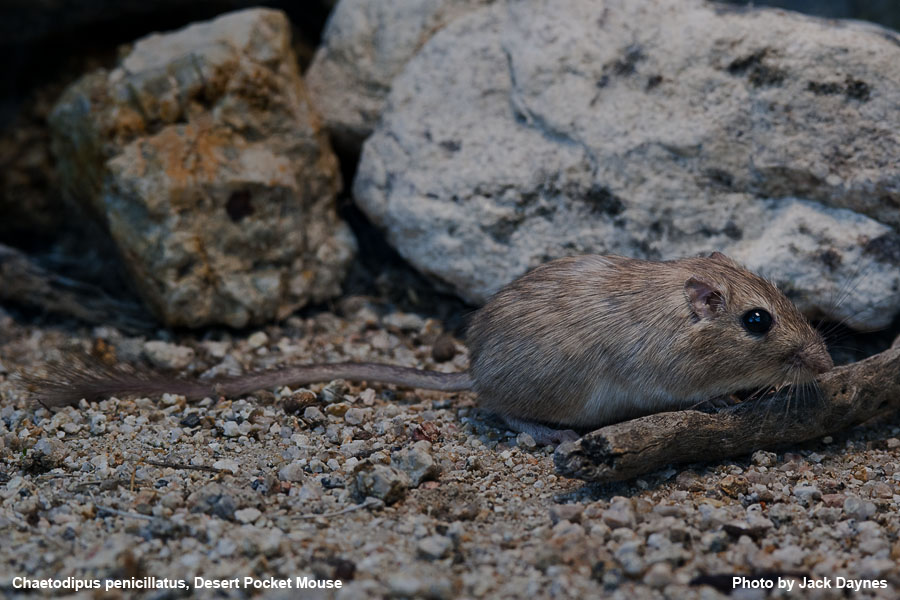
Desert Pocket Mouse(Chaetodipus penicillatus) |
|
Description: This mouse is very similar to the Long-Tailed Pocket Mouse. Subtle ear shape and size are one of the keys to distinquishing the two species. Near Cottonwood Spring in southern Joshua Tree National Park. Riverside County California. |
Date Taken: 2016:09:28 8:57 |
|
Location:
Cottonwood Spring |
|
Camera Information: NIKON D3X, 105 mm, f/11.0, 1/250 |
File Name: DesertPocketMouse_D3X8179-JackDaynes-Web |
| © 2016 Jack Daynes, shadeTreeImaging.com |
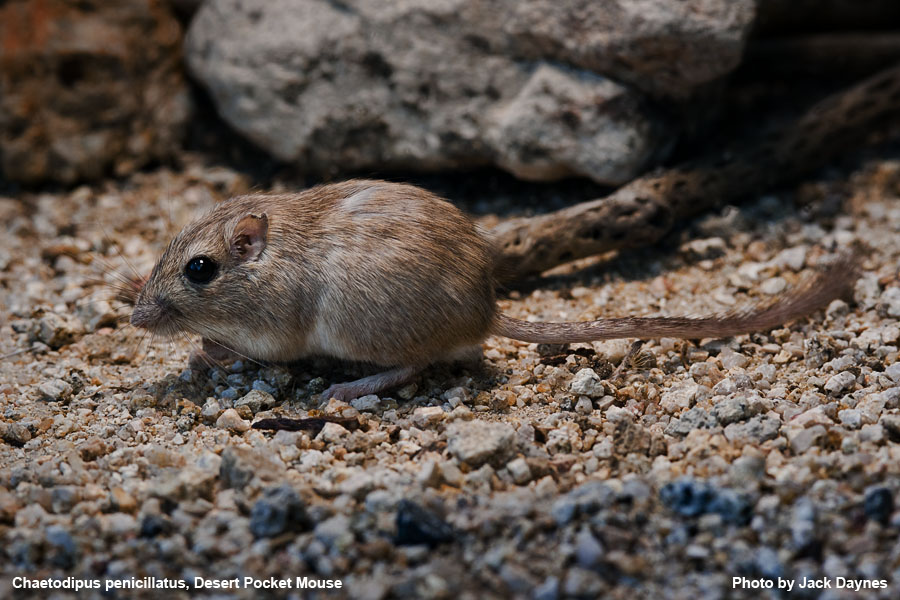
Desert Pocket Mouse(Chaetodipus penicillatus) |
|
Description: This mouse is very similar to the Long-Tailed Pocket Mouse. Subtle ear shape and size are one of the keys to distinquishing the two species. Near Cottonwood Spring in southern Joshua Tree National Park. Riverside County California. |
Date Taken: 2016:09:28 9:01 |
|
Location:
Cottonwood Spring |
|
Camera Information: NIKON D3X, 105 mm, f/11.0, 1/320 |
File Name: DesertPocketMouse_D3X8206-JackDaynes-Web |
| © 2016 Jack Daynes, shadeTreeImaging.com |
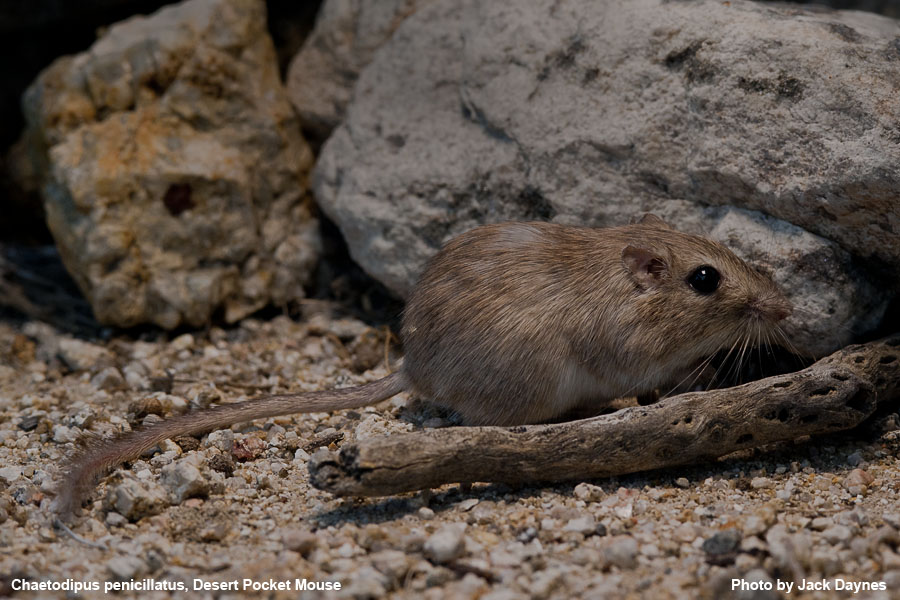
Desert Pocket Mouse(Chaetodipus penicillatus) |
|
Description: This mouse is very similar to the Long-Tailed Pocket Mouse. Subtle ear shape and size are one of the keys to distinquishing the two species. Near Cottonwood Spring in southern Joshua Tree National Park. Riverside County California. |
Date Taken: 2016:09:28 9:02 |
|
Location:
Cottonwood Spring |
|
Camera Information: NIKON D3X, 105 mm, f/11.0, 1/500 |
File Name: DesertPocketMouse_D3X8218-JackDaynes-Web |
| © 2016 Jack Daynes, shadeTreeImaging.com |
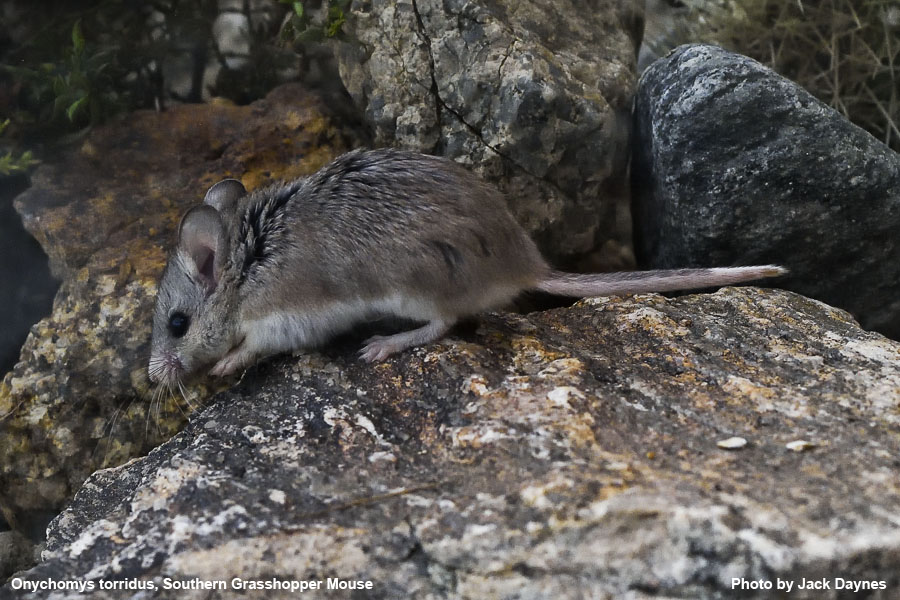
Grasshopper Mouse(Onychomys torridus) |
|
Description: Near Cottonwood Spring in southern Joshua Tree National Park. Riverside County California. |
Date Taken: 2016:09:27 9:48 |
|
Location:
Cottonwood Spring |
|
Camera Information: NIKON D7200, 58 mm, f/8.0, 1/1600 |
File Name: GrassHopperMouse_D727162-JackDaynes-Web |
| © 2016 Jack Daynes, shadeTreeImaging.com |
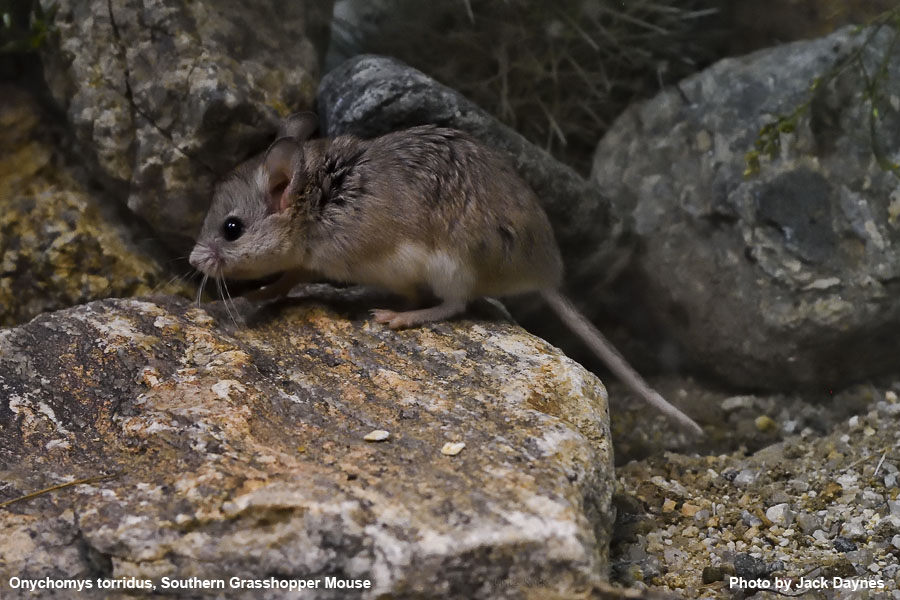
Grasshopper Mouse(Onychomys torridus) |
|
Description: Near Cottonwood Spring in southern Joshua Tree National Park. Riverside County California. |
Date Taken: 2016:09:27 9:57 |
|
Location:
Cottonwood Spring |
|
Camera Information: NIKON D7200, 58 mm, f/8.0, 1/640 |
File Name: GrassHopperMouse_D727272-JackDaynes-Web |
| © 2016 Jack Daynes, shadeTreeImaging.com |
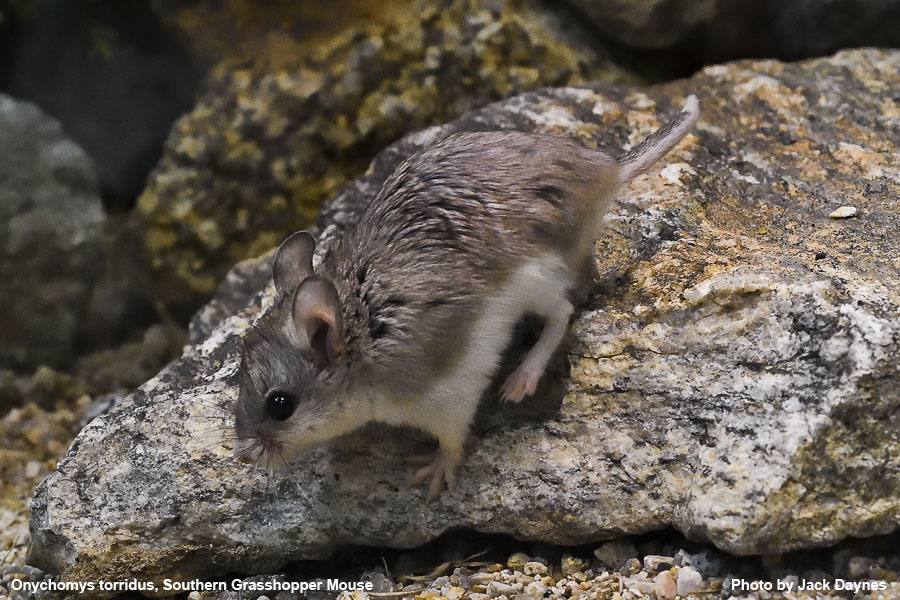
Grasshopper Mouse(Onychomys torridus) |
|
Description: Near Cottonwood Spring in southern Joshua Tree National Park. Riverside County California. |
Date Taken: 2016:09:27 9:58 |
|
Location:
Cottonwood Spring |
|
Camera Information: NIKON D7200, 58 mm, f/8.0, 1/640 |
File Name: GrassHopperMouse_D727290-JackDaynes-Web |
| © 2016 Jack Daynes, shadeTreeImaging.com |
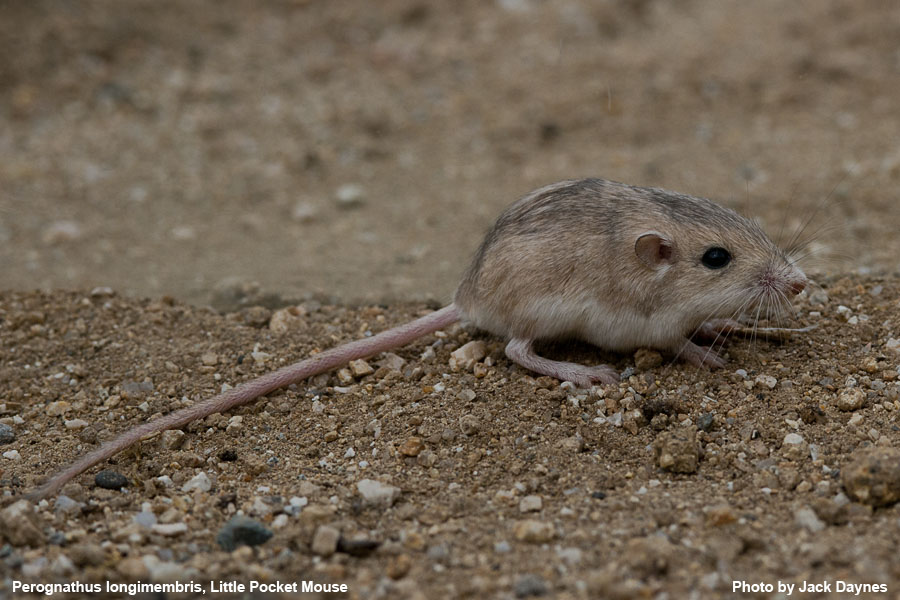
Palm Springs Little Pocket Mouse(Perognathus longimembris) |
|
Description: The Little Pocket Mouse is less than half the size of other pocket mice. Perhaps that is why NASA sent them on space missions in 1973 and 1973. The Pacific Pocket Mouse (Perognathus longimembris pacificus) , a close cousin if the Palm Springs Pocket Mouse and native to coastal Southern California, is listed as endangered. Near Cottonwood Spring in southern Joshua Tree National Park. Riverside County California. |
Date Taken: 2016:09:27 14:59 |
|
Location:
Cottonwood Spring |
|
Camera Information: NIKON D3X, 105 mm, f/11.0, 1/1250 |
File Name: LittlePocketMouse_D3X7816-JackDaynes-Web |
| © 2016 - Jack Daynes - shadeTree Imaging |
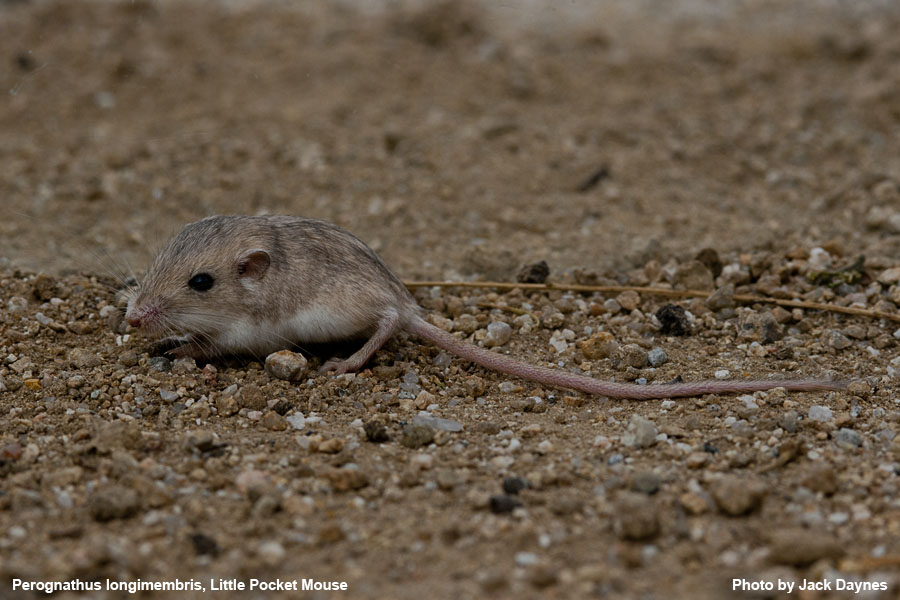
Palm Springs Little Pocket Mouse(Perognathus longimembris) |
|
Description: The Little Pocket Mouse is less than half the size of other pocket mice. Perhaps that is why NASA sent them on space missions in 1973 and 1973. The Pacific Pocket Mouse (Perognathus longimembris pacificus) , a close cousin if the Palm Springs Pocket Mouse and native to coastal Southern California, is listed as endangered. Near Cottonwood Spring in southern Joshua Tree National Park. Riverside County California. |
Date Taken: 2016:09:27 15:00 |
|
Location:
Cottonwood Spring |
|
Camera Information: NIKON D3X, 105 mm, f/11.0, 1/1250 |
File Name: LittlePocketMouse_D3X7844-JackDaynes-Web |
| © 2016 - Jack Daynes - shadeTree Imaging |
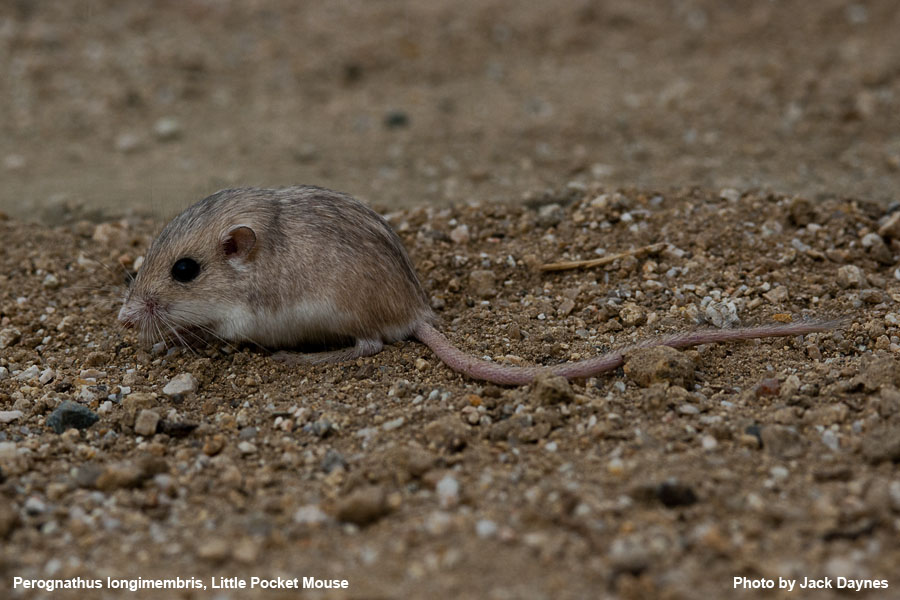
Palm Springs Little Pocket Mouse(Perognathus longimembris) |
|
Description: The Little Pocket Mouse is less than half the size of other pocket mice. Perhaps that is why NASA sent them on space missions in 1973 and 1973. The Pacific Pocket Mouse (Perognathus longimembris pacificus) , a close cousin if the Palm Springs Pocket Mouse and native to coastal Southern California, is listed as endangered. Near Cottonwood Spring in southern Joshua Tree National Park. Riverside County California. |
Date Taken: 2016:09:27 15:01 |
|
Location:
Cottonwood Spring |
|
Camera Information: NIKON D3X, 105 mm, f/11.0, 1/1000 |
File Name: LittlePocketMouse_D3X7865-JackDaynes-Web |
| © 2016 - Jack Daynes - shadeTree Imaging |
Click map markers to reveal further information
 "Pin It")