
After finishing my tour of Canada’s Dempster Highway, I settled in Dawson City, Yukon Territory to rest my road-weary bones. I found the road from Dempster Junction to Dawson City depressing. Traveling west on the Klondike Highway, the road follows the Klondike River. Which is lovely until about eight miles before downtown Dawson City. Shortly after passing the City airport, one can’t help but notice the mountains of cobble piled row after row on the south side of the highway. Were it simply a few piles, these might go unnoticed. But after seeing several miles of these environmental abominations, it began to dawn on me that these resulted from the devastation caused by placer mining. It saddened me to think of the thoughtless and selfish nature of my species. We can be self-centered and sociopathic in our pursuit of the almighty dollar.
When I reached Dawson City, my spirits perked up. One author I enjoyed reading as a young man was Jack London. His classic “Call of the Wild” made an indelible impression on me. London famously spent time here during the Klondike gold rush. And here, the town took pride in its association by naming buildings in his honor. They preserved the cabin where he spent much of his time as a historical landmark. With the heyday of gold-mining long gone, Dawson now seems to rely on tourism for much of its livelihood. After enjoying the charms of this town, I contemplated my exit strategy from the Canadian Yukon, and how I should continue my pursuit of visiting America’s 49th state.

The road to Alaska from Dawson is called “The Top of the World” road. By 11:30am, I was on a ferry crossing the Yukon River to leave Dawson behind. At about 20 miles into this leg of the trip, it became apparent why this road carries its name. From its track one can see in all directions. You ride broad rolling ridges that overlook great valleys and vistas of mountains that fade into the misty haze. From Dawson I could see billowing clouds in the distance. Now on the road, they looked even more threatening. The surface of this road alternated between gravel and pavement. Somehow, the gravel seemed ‘cleaner’ than that on the Dempster and the dust generated seemed different, less offensive to the senses.
I stopped at a couple of places on the road to listen for birds. I encountered Orange-Crowned and Yellow-Rumped (Myrtle) warblers. I also glimpsed a thrush which could have been a Gray-Cheeked. At the 50 Km road mark, it started to become apparent that there were fires burning in this area, too. There was a haze hanging in the valleys, but here it started to irritate my eyes and nose. It was not as bad as it was at Eagle Plains, but the visibility had dropped to a mile or so. Most of the clues point to a fire to the southeast (Fort Yukon fire, I later would learn). At about the 95-100 Km mark, I began to see another fire to the north. Here I could see the actual line of the fire about 2 miles away. I could see no firefighting was being done here. I considered myself lucky to get through this road, considering my other option would take me due south and almost to Whitehorse and add hundreds of miles to my journey.
I could not see any red flames in the fire. It’s my understanding that these ‘peat’ fires smolder through the sphagnum mosses, but they are quite difficult to put out. Most of the spruce trees here would not survive, but I’m unsure if they are that long lived, anyway.

At 2:30pm (Pacific), 1:30 pm Alaska time, I crossed back into the USA at what had to be the loneliest, most remote border check on the continent. Though the settlement of Boundary Alaska was a few short miles away, the crossing station seemed to be a hundred miles from any ‘civilization’. I didn’t ask, but the building must serve both American and Canadian customs operations (I later learned that this assumption was correct). The agent who ‘interviewed’ me informed me that the road ahead consisted of gravel for 45 miles (two miles past Chicken, AK), but was paved for the rest of the way to the Alaska Highway, covering a total distance of about 100 miles to Tetlin Crossing. Then it’s about 12½ miles more to Tok.
The road south from Chicken-Alaska is no longer called the ‘Top of the World’. From there to its terminus at Tetlin Crossing, it is called the “Taylor Highway” and it continues north to Eagle Alaska. About 26 miles from the border crossing, there is a campsite at the Walker Fork (river). At this place I could see up close, the aftermath of the fires. There appears to have been a great fire here as recently as a year ago. All the mosses had turned to blackened carbon charcoal. The tops of these small spruce trees seemed to be hanging on for dear life. I couldn’t say if the trees would survive, or if it would be a mere short extension of their lives.
The birds in this place were quiet. I heard a warbler that sounded like an Orange-Crowned, and there were some swallows … Cliff and possibly some Violet-Greens.
Further down the road I reached ‘Chicken’ Alaska. The story goes that in trying to name the settlement, they wanted to call it Ptarmigan, but nobody knew how to spell that word, so they settled on calling it ‘Chicken’. Two miles further the road turned to pavement as promised. From there I pushed onto Tok and got dinner and a room for the night.
July-1 is the Canadian equivalent of the 4th of July. I got out in the nick of time <grin>. I spent the night in an $85 turned $75 room that most places would have been a $45 to $35 room. It was clean, and it served its purpose.
There was a high ceiling of thin gray clouds this morning. I had the option of two roads leading out of town from here. One road led through Glennallen and on to Anchorage. The other went to Delta Junction where I could go north to Fairbanks or south to Glennallen. After reviewing my bird finding books, I chose to go toward Fairbanks.
Eighteen miles west of Tok, I stopped at Moon Lake. There, I met some interesting birds. When I arrived it was raining and thus limited my photography efforts. On the water I could see ducks (Bufflehead), loons (Pacific), goldeneyes (Barrow’s) and scaups (not sure which one). On the shores I could see blackbirds (Brewers), robins, juncos, and I could hear warblers (Common Yellowthroat), Swainson’s Thrush, and flickers. But by far, the most rewarding was my meeting with the Three-Toed Woodpecker. I’d hoped I’d be able to photograph this bird when I started planning this trip. Here, this wish came true!
I made one more stop at the Delta Agricultural Project on this leg. I was hoping to get to see an Upland Sandpiper there. And I did … and pictures too! I decided to make it to Fairbanks this day, so it would call for a bit of a push.
By 8:30pm I’d made it to Fairbanks. Weather hampered the drive. It rained either on me or ahead of me, and the roads were mostly pretty wet. As I neared the city, the sun was low in the sky and right in my face. The reflections off the wet highway were especially bothersome. I found food at a Denny’s, touted “The Most Northern Denny’s,” and a room at the Super 8 next door.
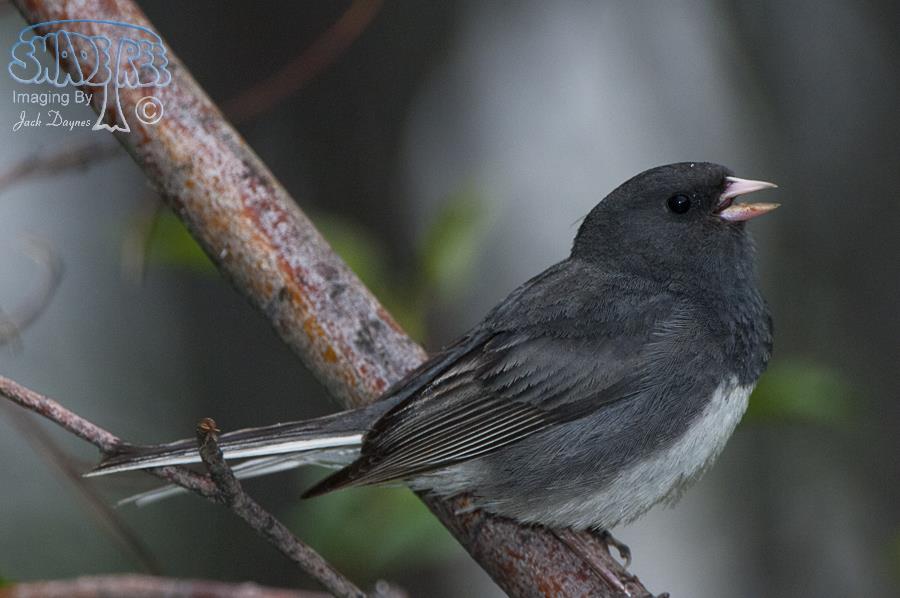
Dark-Eyed Junco(Junco hyemalis) |
|
Description: Top of the World Road, Yukon, Canada. |
Date Taken: 2005:06:30 16:17 |
|
Location:
Chicken |
|
Camera Information: NIKON D2X, 460 mm, f/6.3, 1/60 |
File Name: JCD6954DarkEyedJunco |
| © 2005 Jack Daynes, shadeTreeImaging.com |

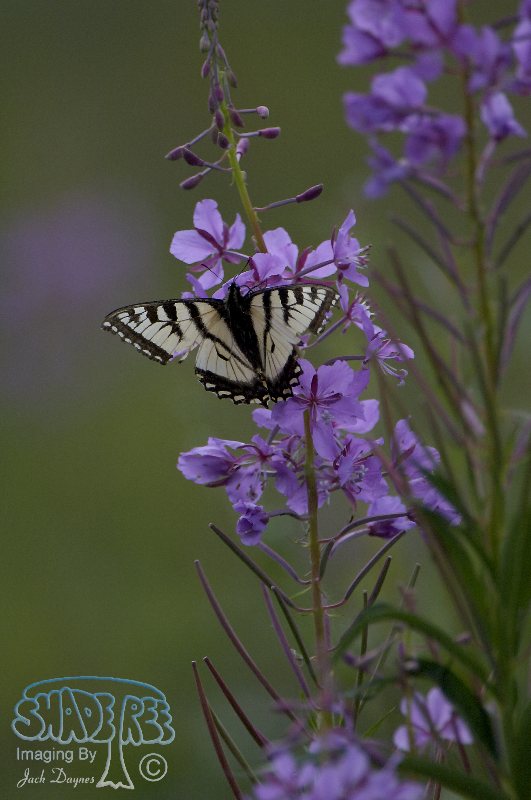
Fireweed(Cineraria Canadensis) |
|
Description: Delta Agricultural Project, Delta Junction, Alaska. |
Date Taken: 2005:07:01 17:13 |
|
Location:
Fort Greely |
|
Camera Information: NIKON D2X, 550 mm, f/5.6, 1/500 |
File Name: JCD7122FireweedSwallowtail |
| © 2005 Jack Daynes, shadeTreeImaging.com |
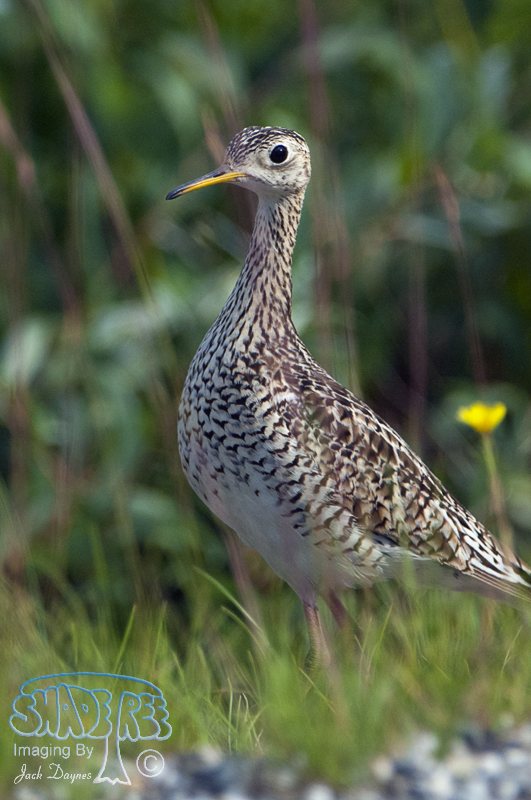
Upland Sandpiper(Bartramia longicauda) |
|
Description: Delta Agricultural Project, Delta Junction, Alaska. |
Date Taken: 2005:07:01 17:42 |
|
Location:
Fort Greely |
|
Camera Information: NIKON D2X, 380 mm, f/5.6, 1/640 |
File Name: JCD7129UplandSandpiper |
| © 2005 Jack Daynes, shadeTreeImaging.com |
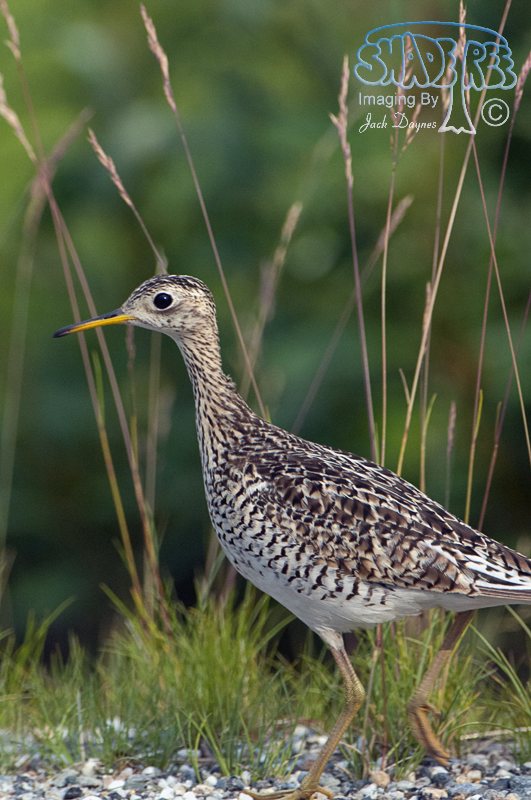
Upland Sandpiper(Bartramia longicauda) |
|
Description: Delta Agricultural Project, Delta Junction, Alaska. |
Date Taken: 2005:07:01 17:42 |
|
Location:
Fort Greely |
|
Camera Information: NIKON D2X, 380 mm, f/5.6, 1/640 |
File Name: JCD7130UplandSandpiper |
| © 2005 Jack Daynes, shadeTreeImaging.com |
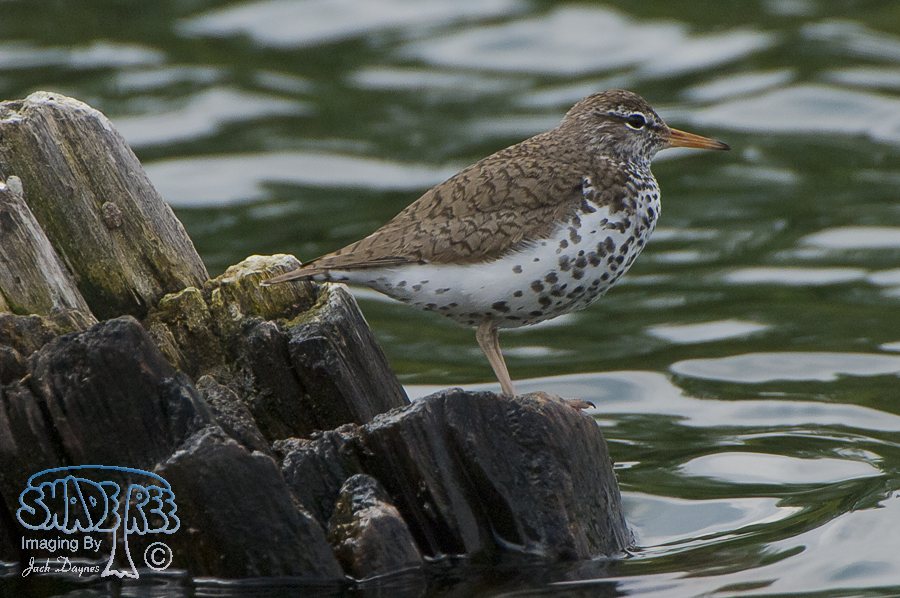
Spotted Sandpiper(Actitis macularius) |
|
Description: Moon Lake, near Tok, Alaska and the Alaska Highway. |
Date Taken: 2005:07:01 11:03 |
|
Location:
Moon Lake |
|
Camera Information: NIKON D2X, 550 mm, f/7.1, 1/200 |
File Name: JCD6975SpottedSandpiper |
| © 2005 Jack Daynes, shadeTreeImaging.com |
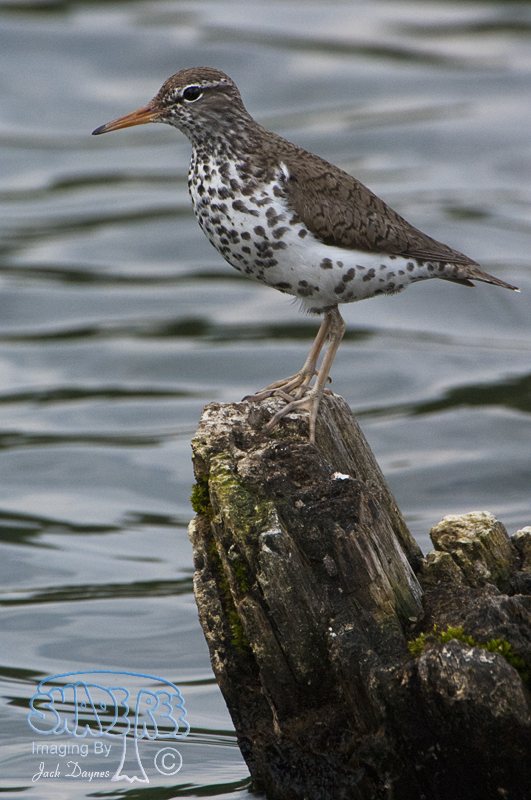
Spotted Sandpiper(Actitis macularius) |
|
Description: Moon Lake, near Tok, Alaska and the Alaska Highway. |
Date Taken: 2005:07:01 11:14 |
|
Location:
Moon Lake |
|
Camera Information: NIKON D2X, 550 mm, f/9.5, 1/250 |
File Name: JCD7002SpottedSandpiper |
| © 2005 Jack Daynes, shadeTreeImaging.com |
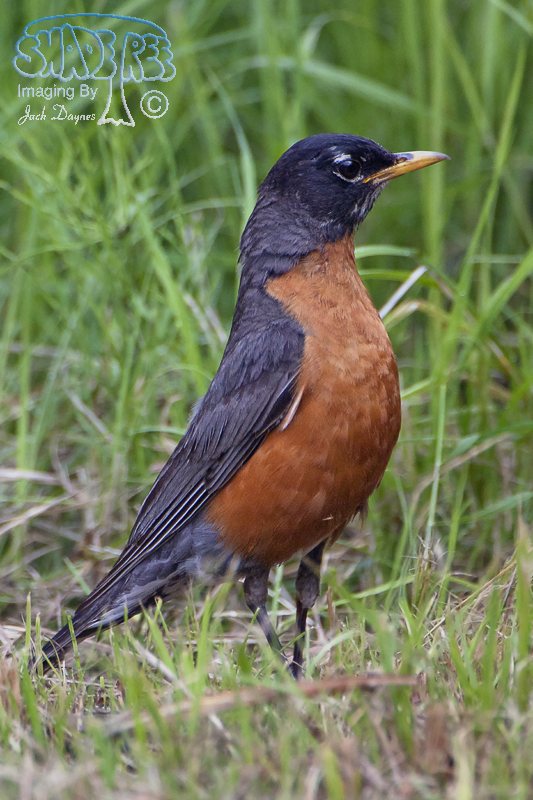
American Robin(Turdus migratorius) |
|
Description: Moon Lake, near Tok, Alaska and the Alaska Highway. |
Date Taken: 2005:07:01 12:51 |
|
Location:
Moon Lake |
|
Camera Information: NIKON D2X, 550 mm, f/5.6, 1/320 |
File Name: JCD7029AmericanRobin |
| © 2005 Jack Daynes, shadeTreeImaging.com |
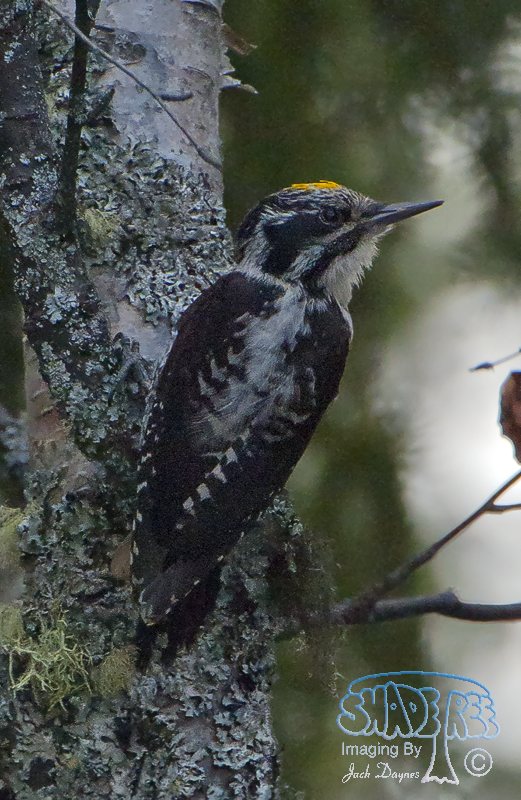
American Three-Toed Woodpecker(Picoides dorsalis) |
|
Description: This meeting (my first) took place at Moon Lake, near Tok, Alaska, and the Alaska Highway USA 2005-07-01. |
Date Taken: 2005:07:01 13:32 |
|
Location:
Moon Lake |
|
Camera Information: NIKON D2X, 550 mm, f/8.0, 1/250 |
File Name: JCD7049ThreeToedWoodpecker |
| © 2005 Jack Daynes, shadeTreeImaging.com |
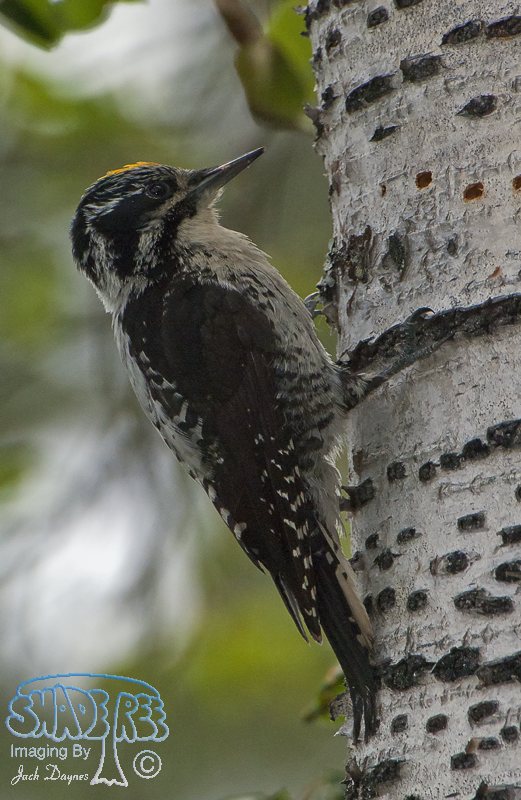
American Three-Toed Woodpecker(Picoides dorsalis) |
|
Description: This meeting (my first) took place at Moon Lake, near Tok, Alaska, and the Alaska Highway USA 2005-07-01. |
Date Taken: 2005:07:01 13:44 |
|
Location:
Moon Lake |
|
Camera Information: NIKON D2X, 550 mm, f/7.1, 1/200 |
File Name: JCD7073ThreeToedWoodpecker |
| © 2005 Jack Daynes, shadeTreeImaging.com |
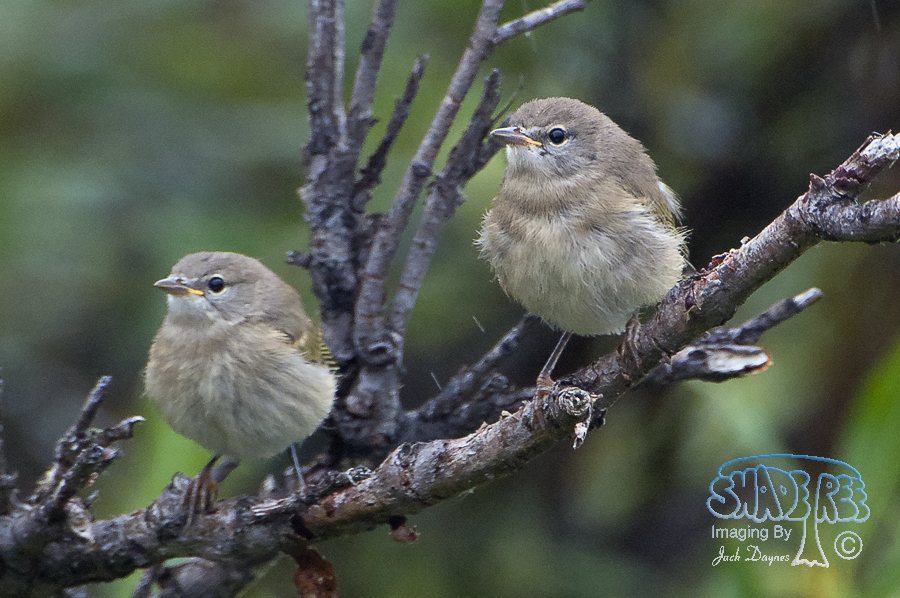
Common Yellow-Throat(Geothlypis trichas) |
|
Description: Juveniles awaiting mom's grocery delivery at Moon Lake, near Tok, Alaska and the Alaska Highway. |
Date Taken: 2005:07:01 14:12 |
|
Location:
Moon Lake |
|
Camera Information: NIKON D2X, 550 mm, f/6.7, 1/180 |
File Name: JCD7100CommonYellowThroat-Juv |
| © 2005 Jack Daynes, shadeTree Imaging |
Click map markers to reveal further information
 "Pin It")