Black-Throated Sparrow
Amphispiza bilineata

Black-Throated Sparrow is a year-round resident in the deserts of the American Southwest and northern Mexico. But some birds will travel to the Great Basin region and the Colorado Plateau to breed. Sparse desert growth, where few other birds frequent, are often attractive areas to these birds.
Populations have declined over 40% since 1970. Science believes the cause is drought and habitat losses from fire-prevention measures. Land development has also contributed to this decline. Unlike some birds, Black-Throated Sparrows have not adapted well to altered and urbanized habitats.
Science recognises ten subspecies of Black-Throated Sparrow:
- A. b. bangsi, A. b. tortugae, A. b. carmenae, A. b. belvederei, and A. b. cana live in Baja California (Mexico) or on islands in the Gulf of California.
- A. b. bilineata lives in central Texas to northeastern Mexico.
- A. b. opuntia southern Colorado and western Oklahoma south through eastern New Mexico, west Texas, and northern Mexico.
- A. b. deserticola breeds from eastern California to southern Wyoming, western Colorado, west Texas, and from Baja California (Mexico), and north-central Mexico. They spend winters from southeastern California east to southwest Utah, west Texas and south to Baja California and Sonora (Mexico).
- A. b. pacifica lives from southern Sonora, south to Sinaloa (Mexico).
- A. b. grisea lives on the Mexican Plateau.
I’ve visited some of the loneliest, most barren desert landscapes imaginable. Places that appear to be devoid of animal life are the preferred home of the Black-Throated Sparrow. Listen carefully for soft tinkling call notes coming from the direction of a nearby bush or thicket. Such sounds serve as a reminder that even in these harsh conditions, life is possible. With a little luck, a small light gray-brown sparrow will appear from cover and display its subdued elegance. Only then can you observe its white-lined face and deep black bib from which it gets its name. If the meeting is in spring, when love is in the air, you’ll probably enjoy the tiny bell-like song of this spirited little bird. Having seen this sparrow on its home turf, I would invite you to look again at its barren homeland and consider whether you still feel the place is lonely.
58 Photos
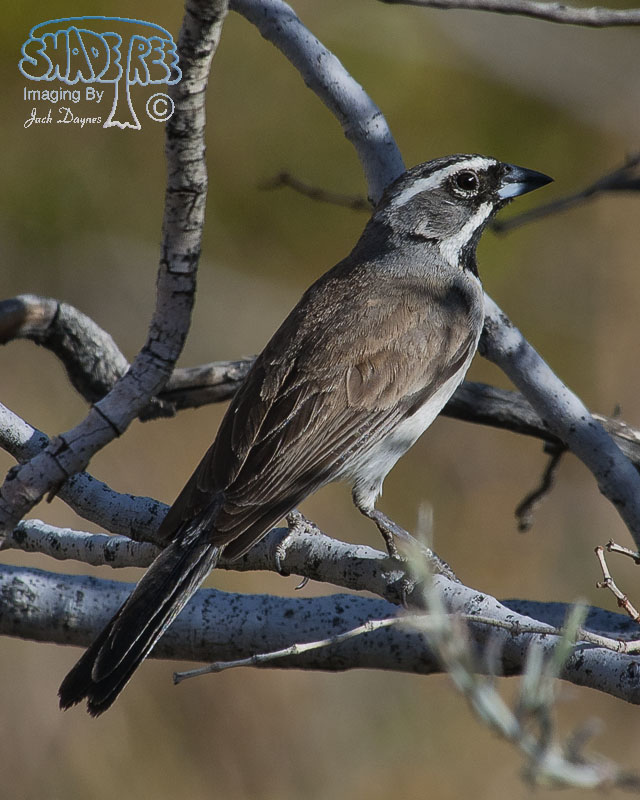
Black-Throated Sparrow(Amphispiza bilineata) |
|
Description: Silver Creek area, east of Bullhead City, near Oatman, Arizona. In Golden Valley. |
Date Taken: 2015:05:03 17:09 |
|
Location:
Oatman |
|
Camera Information: NIKON D3X, 800 mm, f/13.0, 1/320 |
File Name: D3X8757-BlackThroatedSparrow |
| © 2015 Jack Daynes, shadeTreeImaging.com |

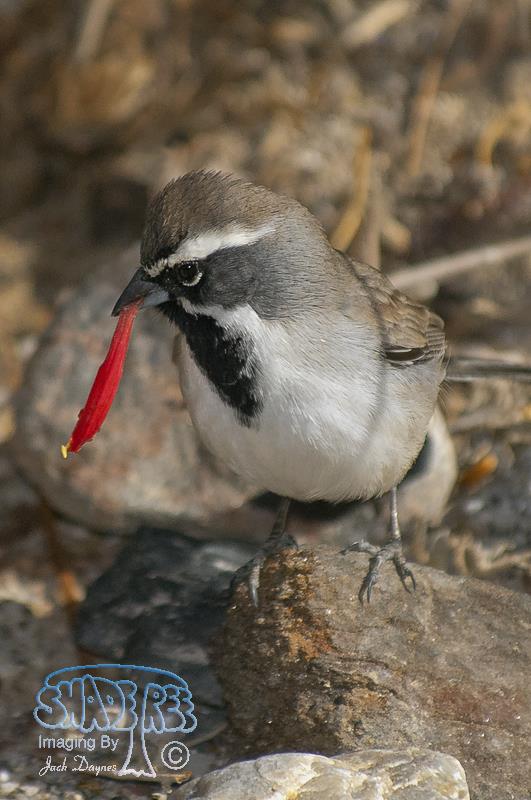
Black-Throated Sparrow(Amphispiza bilineata) |
|
Description: (Amphispiza bilineata) A resident bird in Palm Canyon, by Borrego Springs (Anza-Borrego State Park), California USA 2007-12-15. |
Date Taken: 2007:12:15 12:15 |
|
Location:
Palm Canyon |
|
Camera Information: NIKON D2X, 270 mm, f/4.5, 1/4000 |
File Name: JCD0187BlackThroatedSparrow |
| © 2007 Jack Daynes, shadeTree-Imaging.com |
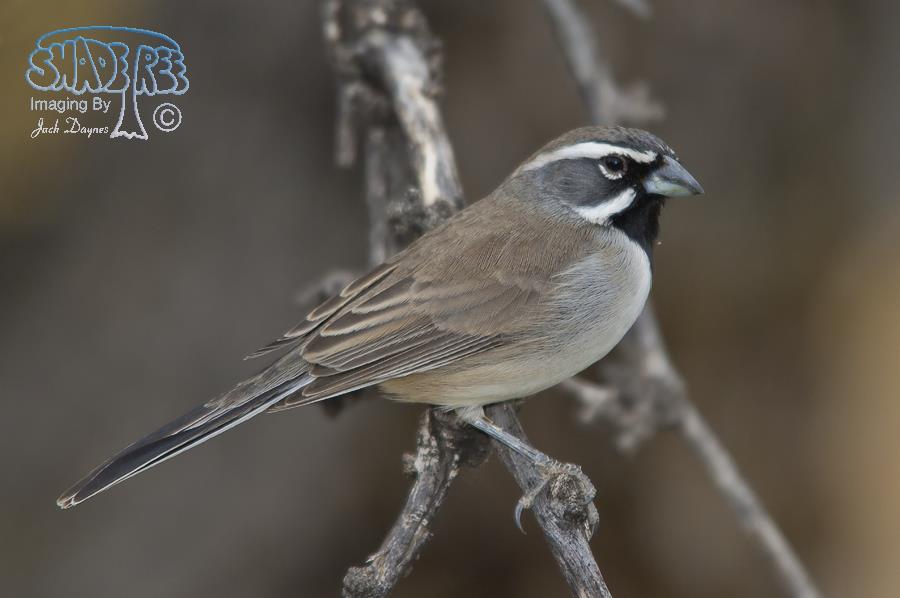
Black-Throated Sparrow(Amphispiza bilineata) |
|
Description: (Amphispiza bilineata) I met this bird in Sabino Canyon Reserve in Tucson Arizona USA 2008-11-25. |
Date Taken: 2008:11:25 14:00 |
|
Location:
Sabino Canyon |
|
Camera Information: NIKON D2X, 800 mm, f/5.6, 1/350 |
File Name: jcd2183BlackThroatedSparrow |
| © 2008 Jack Daynes, www.shadetree-imaging.com |
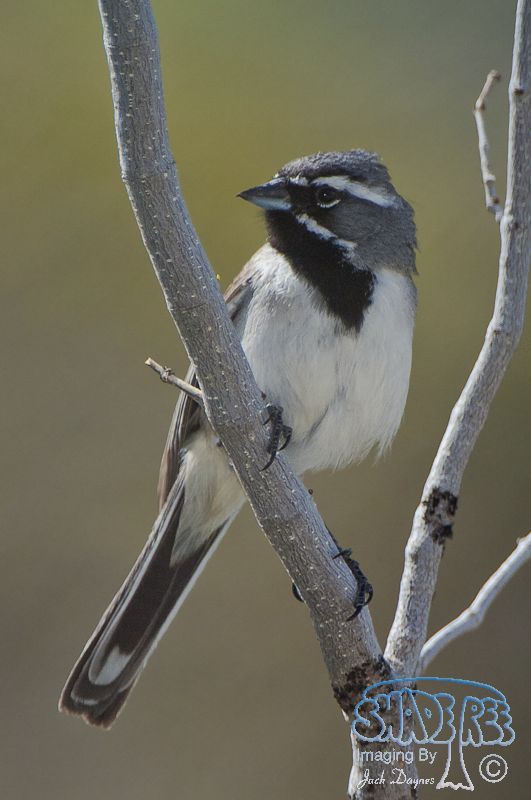
Black-Throated Sparrow(Amphispiza bilineata) |
|
Description: Plum Canyon in the Anza Borrego deasert of eastern San Diego County CAlifornia USA 2008-03-07. |
Date Taken: 2008:03:07 12:33 |
|
Location:
Plum Canyon |
|
Camera Information: NIKON D2X, 550 mm, f/5.6, 1/640 |
File Name: JCD3524BlackThroatedSparrow |
| © 2008 Jack Daynes, shadeTreeImaging.com |
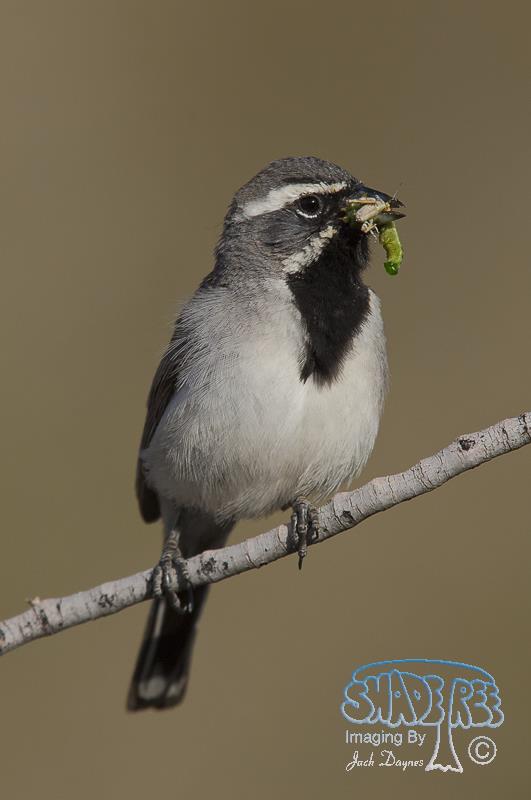
Black-Throated Sparrow(Amphispiza bilineata) |
|
Description: (Amphispiza bilineata) Little Blair Valley Road is another good place to meet these birds. Anza Borrego, Northeast San Diego County, California USA 2009-04-09. |
Date Taken: 2009:04:09 17:32 |
|
Location:
Blair Valley |
|
Camera Information: NIKON D2X, 800 mm, f/8.0, 1/1500 |
File Name: jcd5160.BlackThroatedSparrow |
| © 2009 Jack Daynes, shadetree-imaging.com |
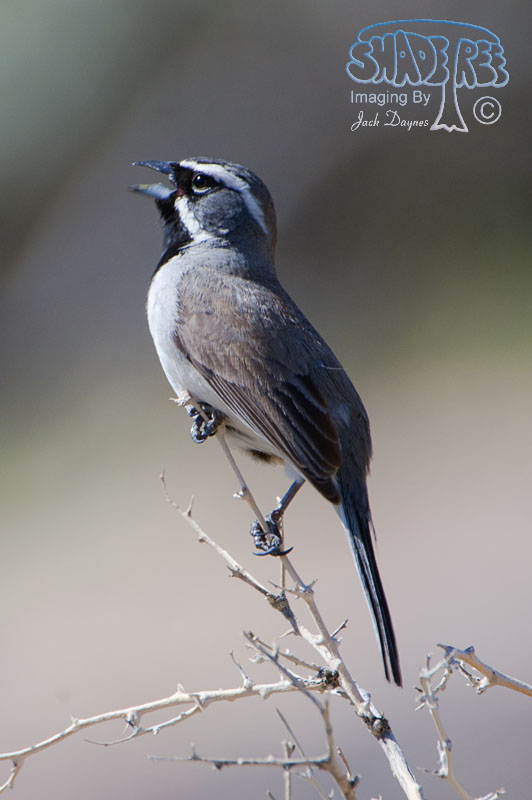
Black-Throated Sparrow(Amphispiza bilineata) |
|
Description: Plum Canyon in the Anza-Borrego State Park. San Diego County, California. |
Date Taken: 2011:03:12 11:29 |
|
Location:
Plum Canyon |
|
Camera Information: NIKON D3X, 550 mm, f/9.0, 1/200 |
File Name: JCD6826-BlackThroatedSparrow |
| © 2011 Jack Daynes, shadeTreeImaging.com |
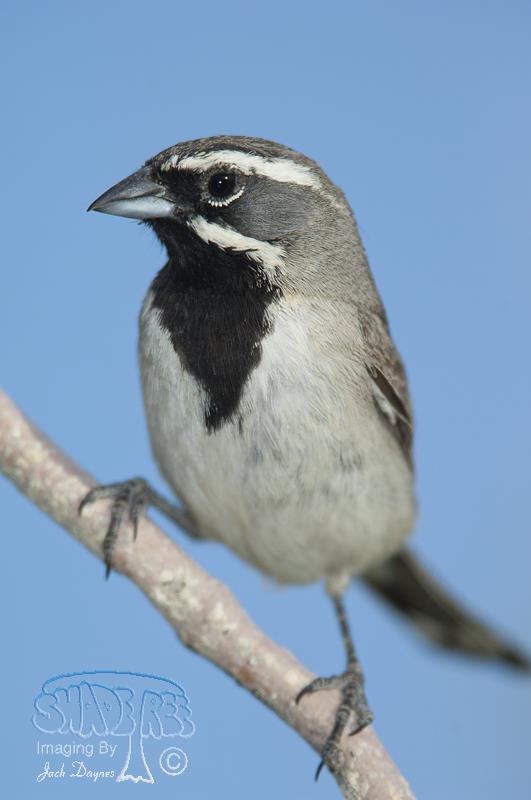
Black-Throated Sparrow(Amphispiza bilineata) |
|
Description: (Amphispiza bilineata) These birds are easily found in Borrego Springs. Anza Borrego, Northeast San (Amphispiza bilineata) Diego County, California USA 2010-05-06. |
Date Taken: 2010:05:05 17:37 |
|
Location:
Visitor Center |
|
Camera Information: NIKON D2X, 800 mm, f/6.3, 1/1000 |
File Name: JCD6978.BlackThroatedSparrow |
| © 2010 Jack Daynes, www.shadetree-imaging.com |
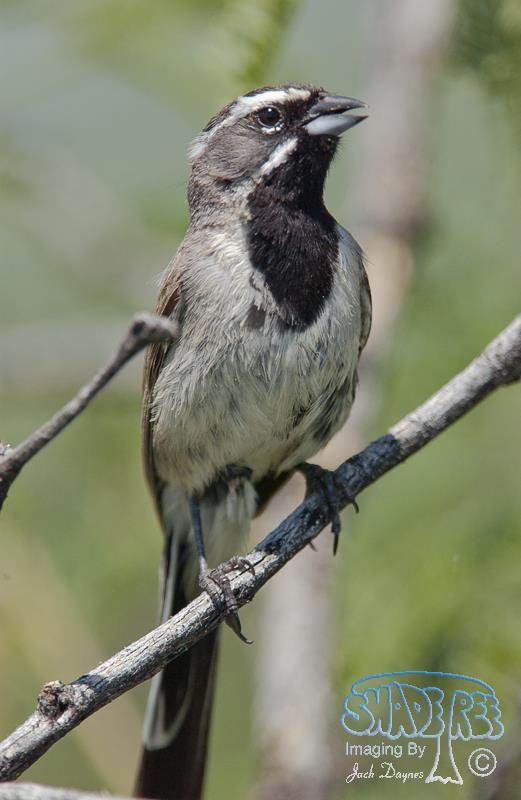
Black-Throated Sparrow(Amphispiza bilineata) |
|
Description: This bird is common near Arivaca in South Central Arizona USA 2003-08-30. |
Date Taken: 2003:08:30 13:45 |
|
Location:
Arivaca |
|
Camera Information: NIKON D1X, 800 mm, f/5.6, 1/2000 |
File Name: JCD_1399BlackThroatSparrow |
| © 2003 Jack Daynes, shadeTree-Imaging.com |
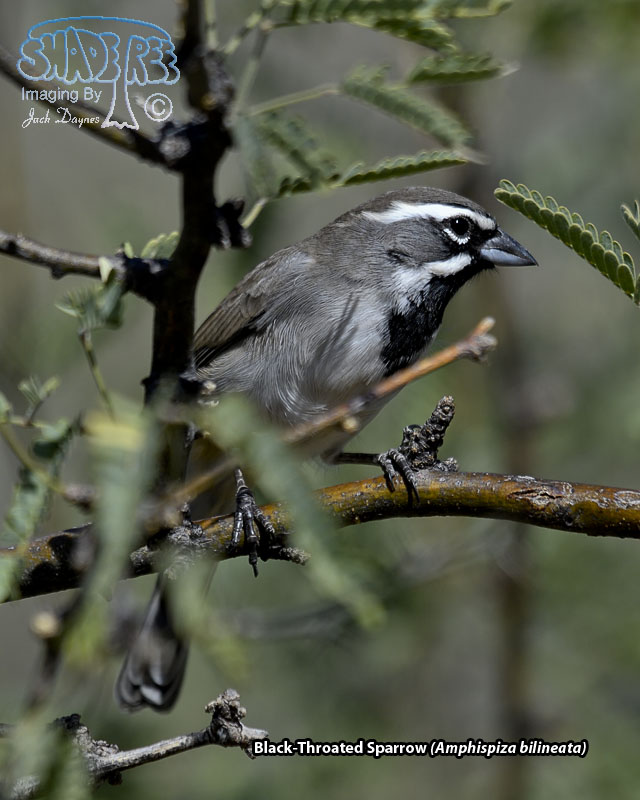
Black-Throated Sparrow(Amphispiza bilineata) |
|
Description: The "Birding Trail Loop" at Catalina State Park, north of Tucson Arizona is favorite destination for bird lovers. Depending on the season, it can yield some nice bird encounters. |
Date Taken: 2019:10:24 12:10 |
|
Location:
Catalina State Park |
|
Camera Information: NIKON D5, 800 mm, f/8.0, 1/2000 |
File Name: BlackThroatedSparrow_D5X5227-CatalinaStatePark |
| © 2019 Jack Daynes, shadeTreeImaging.com |
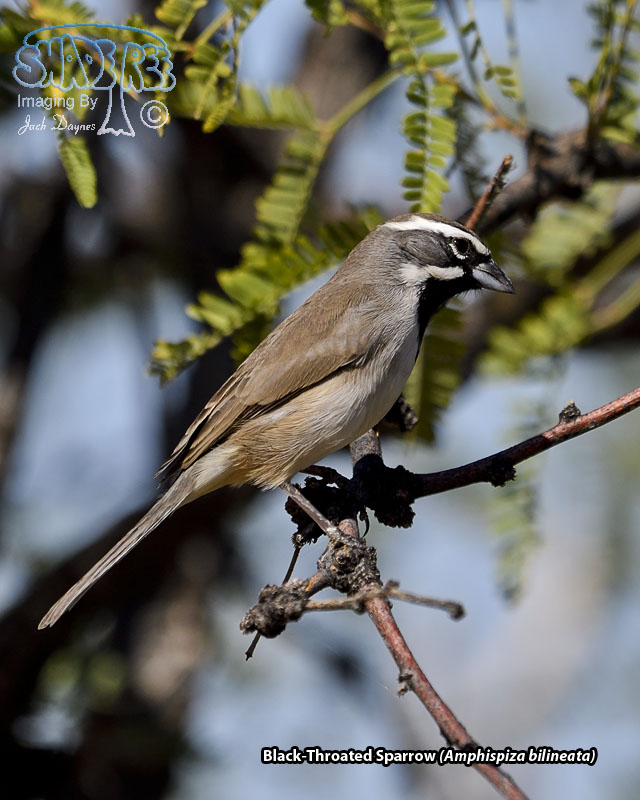
Black-Throated Sparrow(Amphispiza bilineata) |
|
Description: The "Birding Trail Loop" at Catalina State Park, north of Tucson Arizona is favorite destination for bird lovers. Depending on the season, it can yield some nice bird encounters. |
Date Taken: 2019:10:24 12:08 |
|
Location:
Catalina State Park |
|
Camera Information: NIKON D5, 800 mm, f/8.0, 1/2500 |
File Name: BlackThroatedSparrow_D5X5213-CatalinaStatePark |
| © 2019 Jack Daynes, shadeTreeImaging.com |
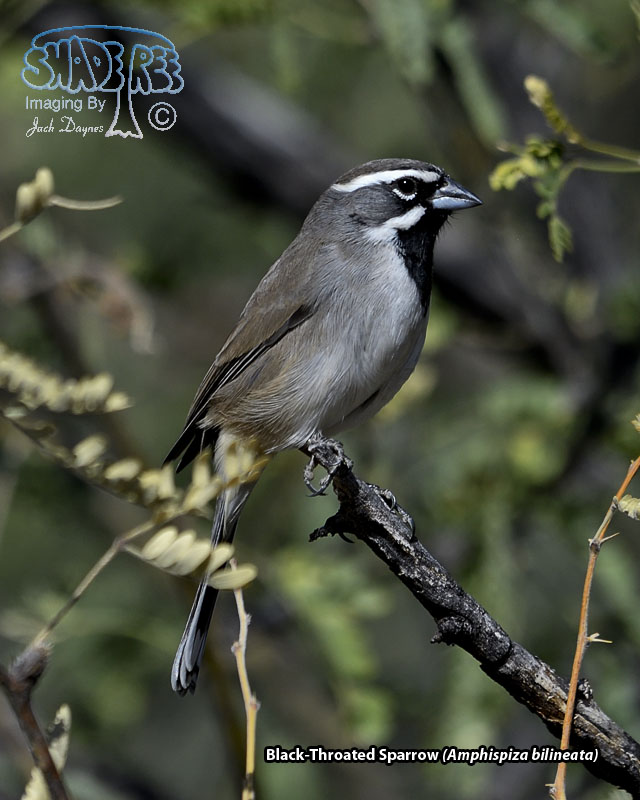
Black-Throated Sparrow(Amphispiza bilineata) |
|
Description: The "Birding Trail Loop" at Catalina State Park, north of Tucson Arizona is favorite destination for bird lovers. Depending on the season, it can yield some nice bird encounters. |
Date Taken: 2019:10:24 11:54 |
|
Location:
Catalina State Park |
|
Camera Information: NIKON D5, 800 mm, f/8.0, 1/2000 |
File Name: BlackThroatedSparrow_D5X5180-CatalinaStatePark |
| © 2019 Jack Daynes, shadeTreeImaging.com |
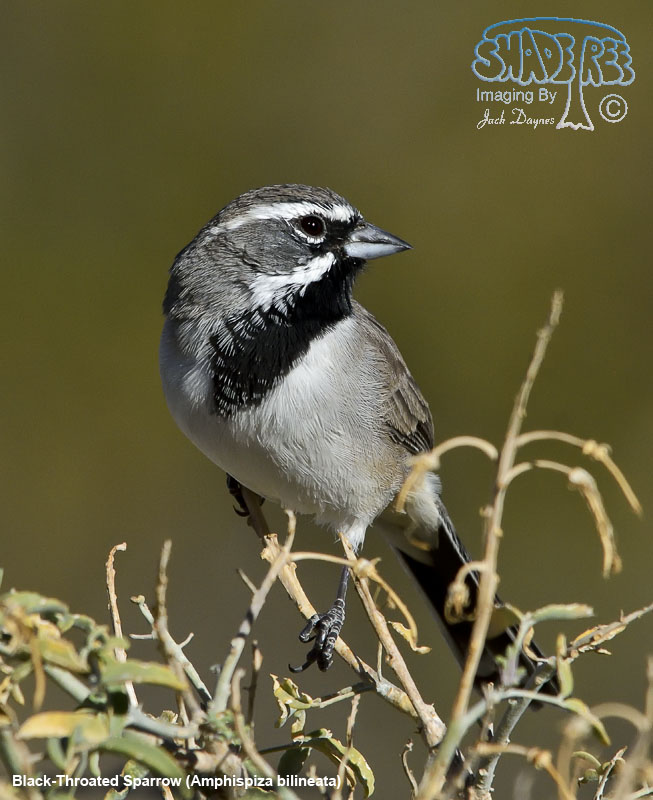
Black-Throated Sparrow(Amphispiza bilineata) |
|
Description: Birds *AND* mammals were the subject of the SDNHM study during this expedition. Though rodents occupied my primary focus, I did not neglect the common birds at this site. Pinyon Wells, Joshua Tree National Park. Riverside County, California. |
Date Taken: 2016:10:13 8:47 |
|
Location:
Pinyon Wells |
|
Camera Information: NIKON D7200, 800 mm, f/8.0, 1/3200 |
File Name: BlackThroatedSparrow_D728419 |
| © 2016 Jack Daynes, shadeTreeImaging.com |
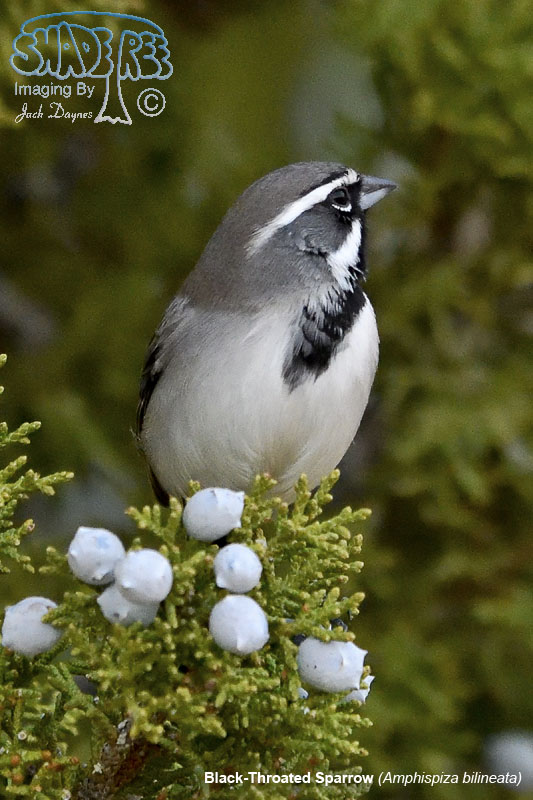
Black-Throated Sparrow(Amphispiza bilineata) |
|
Description: This bird is found year round across many desert environs.Seen while camped with the Science Team from the San Diego Natural History Museum and gathering data as a followup study from previous studies of about 80 years prior. Mojave National Preserve in San Bernardino County, California. |
Date Taken: 2016:11:12 14:07 |
|
Location:
Cedar Canyon Camp |
|
Camera Information: NIKON D5, 800 mm, f/8.0, 1/800 |
File Name: BlackThroatedSparrow_D5X9168 |
| © 2016 Jack Daynes, shadeTreeImaging.com |
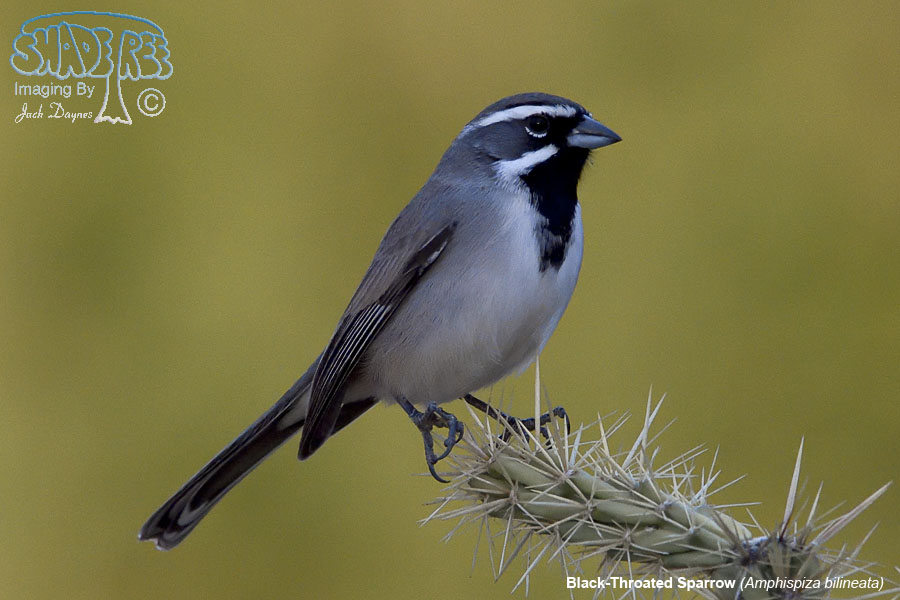
Black-Throated Sparrow(Amphispiza bilineata) |
|
Description: This bird is found year round across many desert environs.Seen while camped with the Science Team from the San Diego Natural History Museum and gathering data as a followup study from previous studies of about 80 years prior. Mojave National Preserve in San Bernardino County, California. |
Date Taken: 2016:11:12 14:04 |
|
Location:
Cedar Canyon Camp |
|
Camera Information: NIKON D5, 800 mm, f/8.0, 1/2000 |
File Name: BlackThroatedSparrow_D5X9160 |
| © 2016 Jack Daynes, shadeTreeImaging.com |
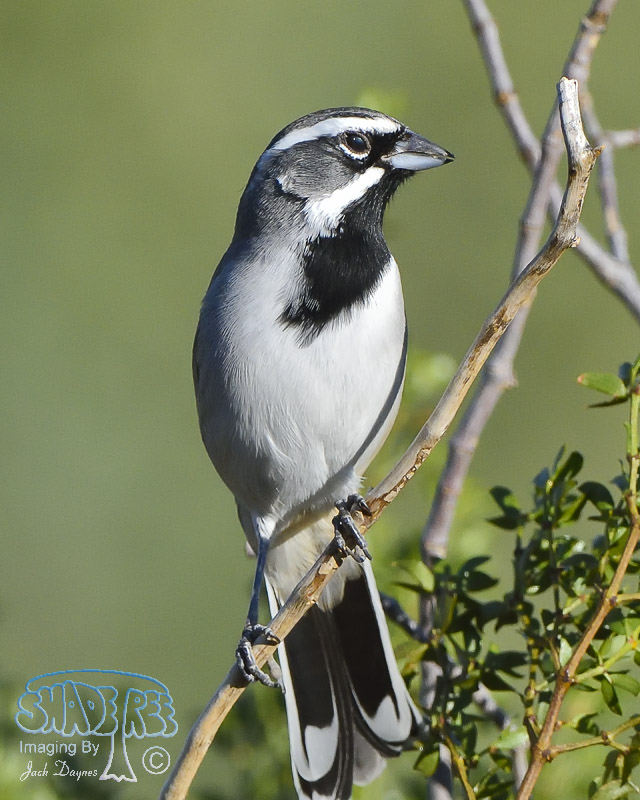
Black-Throated Sparrow(Amphispiza bilineata) |
|
Description: Roadside between Gila Bend and Casa Grande Arizona. |
Date Taken: 2015:10:30 16:04 |
|
Location:
Freeman |
|
Camera Information: NIKON D7200, 360 mm, f/5.0, 1/4000 |
File Name: D722945-BlackThroatedSparrow |
| © 2015 Jack Daynes, shadeTree Imaging |
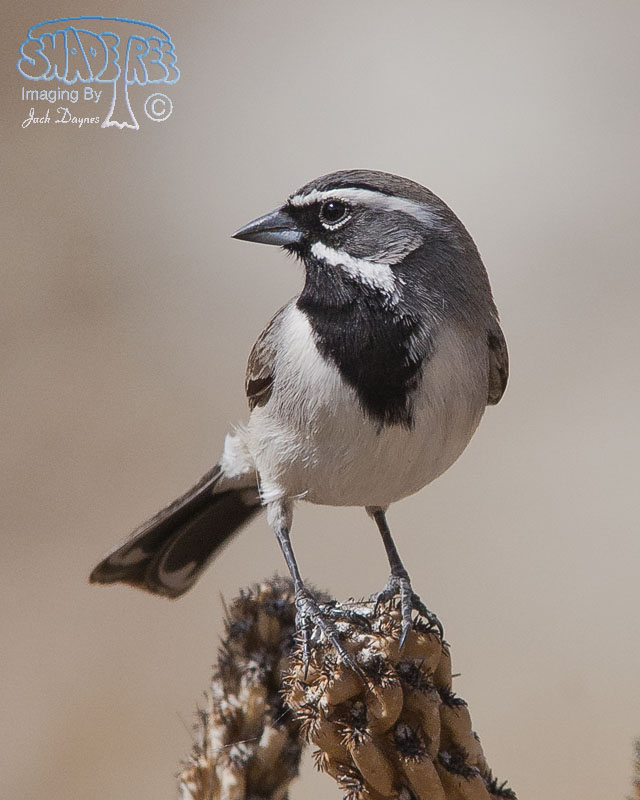
Black-Throated Sparrow(Amphispiza bilineata) |
|
Description: Tubb Canyon Trail in Anza-Borrego State Park, near Culp Valley. San Diego County, California. |
Date Taken: 2014:02:26 10:50 |
|
Location:
Tubb Canyon Trail |
|
Camera Information: NIKON D3X, 800 mm, f/8.0, 1/4000 |
File Name: D3X3242-BlackThroatedSparrow |
| © 2014 Jack Daynes, shadeTree Imaging |
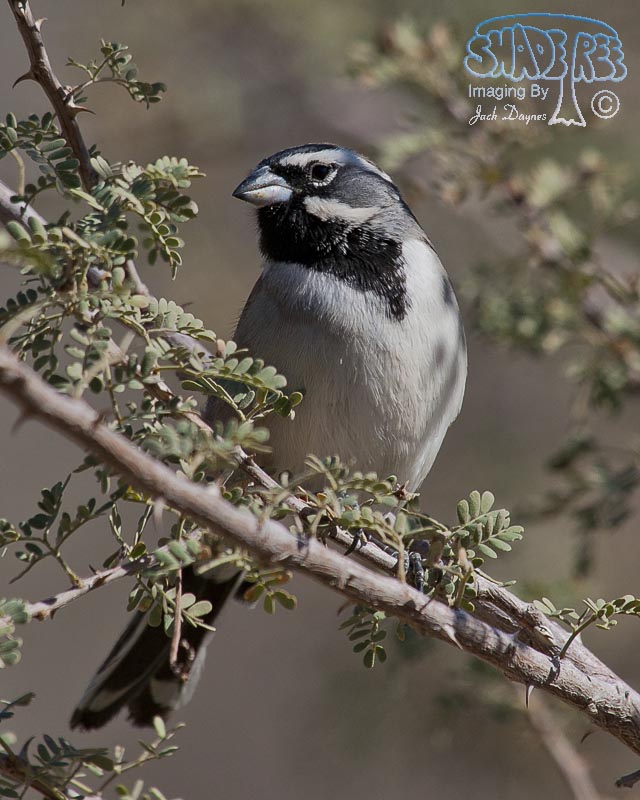
Black-Throated Sparrow(Amphispiza bilineata) |
|
Description: The desert east of Bullhead City, Arizona. Along Silver Creek Road. |
Date Taken: 2014:11:28 10:43 |
|
Location:
Oatman |
|
Camera Information: NIKON D3X, 800 mm, f/9.0, 1/1600 |
File Name: D3X2456-BlackThroatedSparrow |
| © 2014 Jack Daynes, shadeTree-Imaging.com |
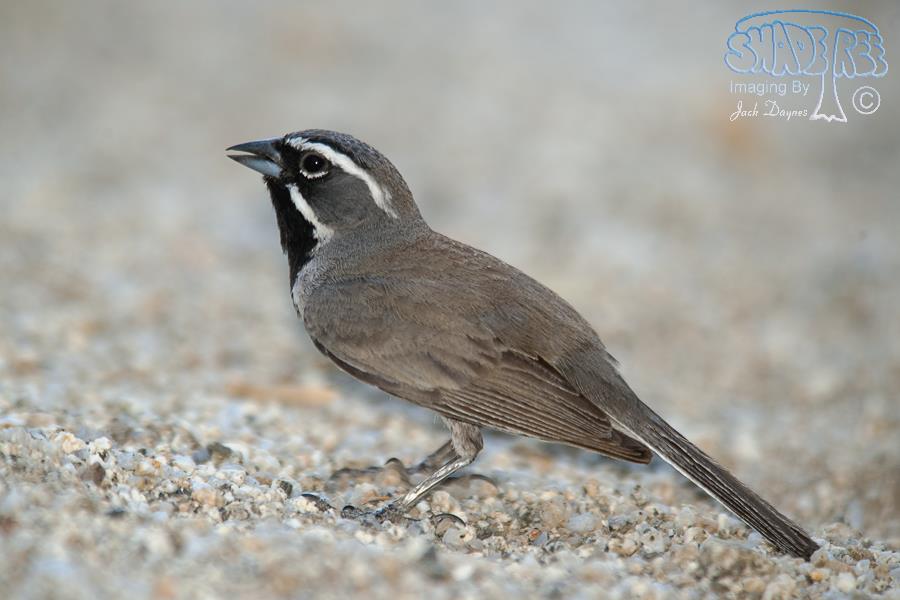
Black-Throated Sparrow(Amphispiza bilineata) |
|
Description: Visitor Center, west of Borrego Springs, California. Anza-Borrego State Park, San Diego County. |
Date Taken: 2013:06:06 10:02 |
|
Location:
Rockhouse Trail |
|
Camera Information: NIKON D3X, 800 mm, f/5.6, 1/400 |
File Name: D3X9121-BlackThroatedSparrow |
| © 2013 Jack Daynes, shadeTreeImaging.com |
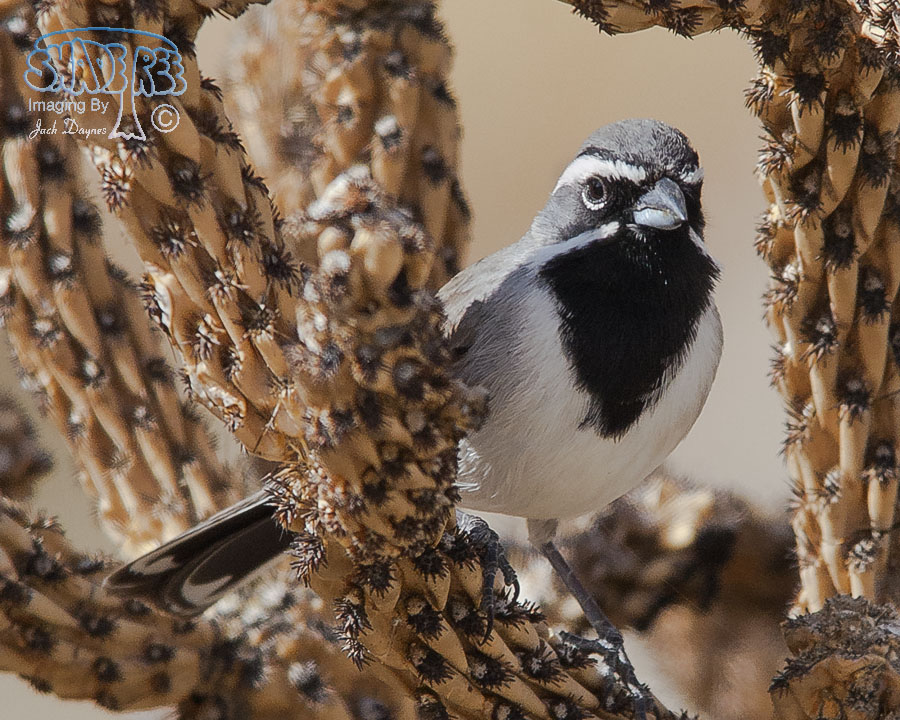
Black-Throated Sparrow(Amphispiza bilineata) |
|
Description: Tubb Canyon Trail in Anza-Borrego State Park, near Culp Valley. San Diego County, California. |
Date Taken: 2014:02:26 10:46 |
|
Location:
Tubb Canyon Trail |
|
Camera Information: NIKON D3X, 800 mm, f/8.0, 1/1600 |
File Name: D3X3236-BlackThroatedSparrow |
| © 2014 Jack Daynes, shadeTree Imaging |
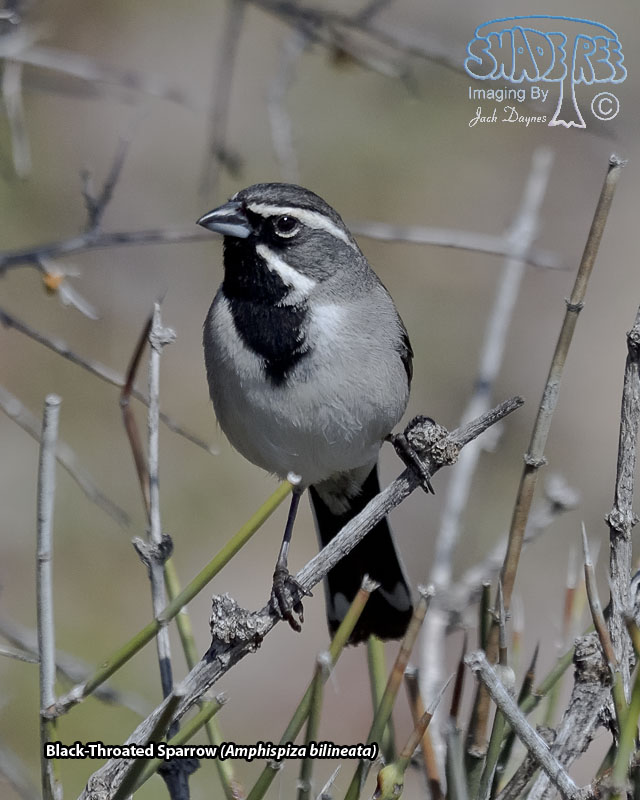
Black-Throated Sparrow(Amphispiza bilineata) |
|
Description: I found this bird on the desert floor below Dripping Springs on a day trip after a late winter storm. Near Las Cruces New Mexico. |
Date Taken: 2020:03:04 13:07 |
|
Location:
Dripping Springs |
|
Camera Information: NIKON D5, 800 mm, f/6.3, 1/5000 |
File Name: BlackThroatedSparrow_D5X2889-DrippingSprings |
| © 2020 Jack Daynes, shadeTreeImaging.com |
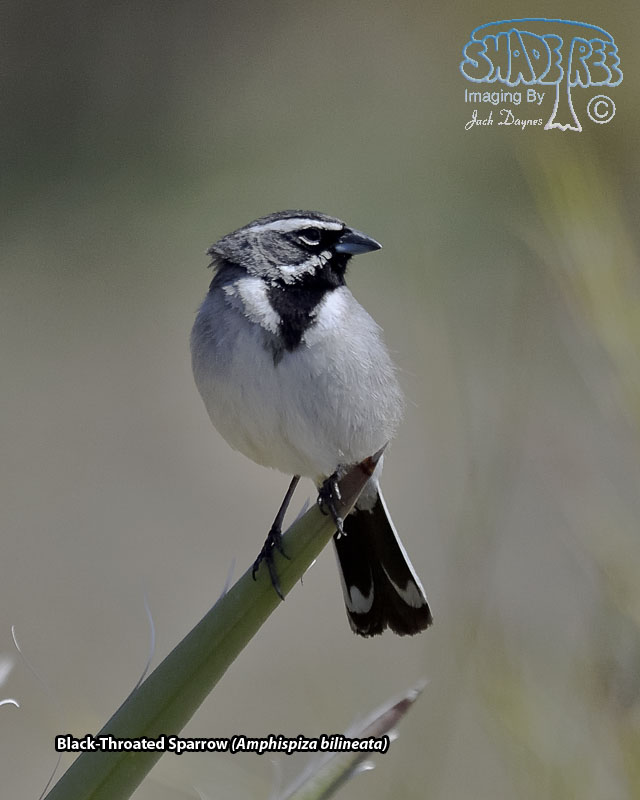
Black-Throated Sparrow(Amphispiza bilineata) |
|
Description: I found this bird on the desert floor below Dripping Springs on a day trip after a late winter storm. Near Las Cruces New Mexico. |
Date Taken: 2020:03:04 13:08 |
|
Location:
Dripping Springs |
|
Camera Information: NIKON D5, 800 mm, f/6.3, 1/3200 |
File Name: BlackThroatedSparrow_D5X2916-DrippingSprings |
| © 2020 Jack Daynes, shadeTreeImaging.com |
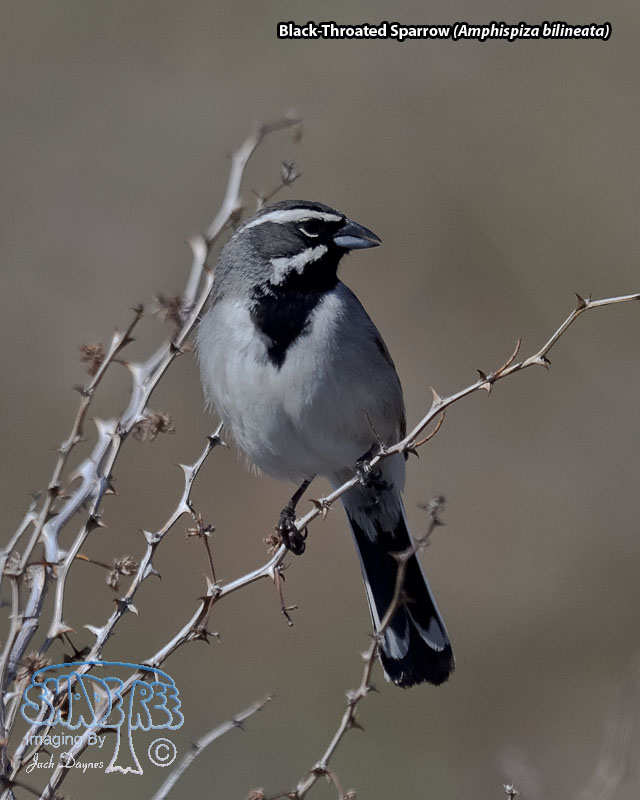
Black-Throated Sparrow(Amphispiza bilineata) |
|
Description: I found this bird on the desert floor below Dripping Springs on a day trip after a late winter storm. Near Las Cruces New Mexico. |
Date Taken: 2020:03:04 13:10 |
|
Location:
Dripping Springs |
|
Camera Information: NIKON D5, 800 mm, f/6.3, 1/5000 |
File Name: BlackThroatedSparrow_D5X2968-DrippingSprings |
| © 2020 Jack Daynes, shadeTreeImaging.com |
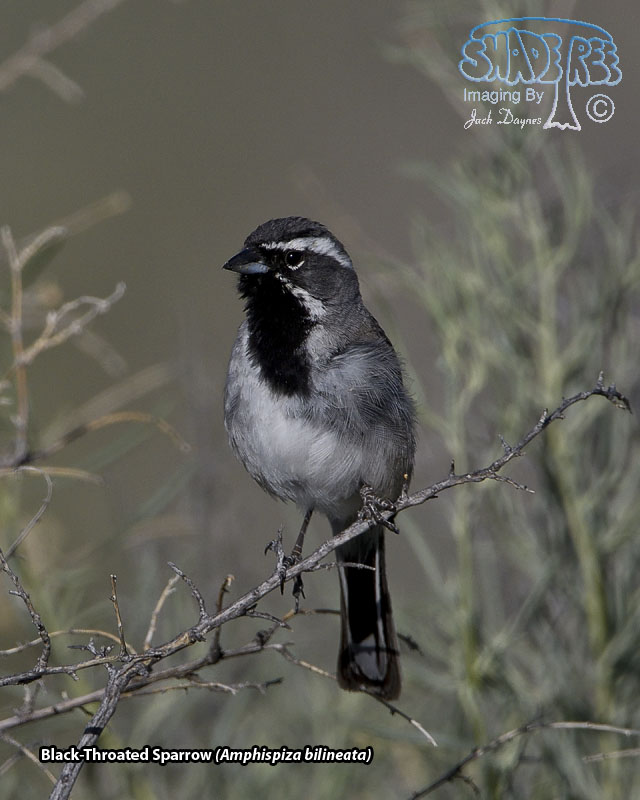
Black-Throated Sparrow(Amphispiza bilineata) |
|
Description: I hiked the Canyon Trail at Bosque del Apache on this Wednesday morning in New Mexico and met birds like these Black-Throated Sparrows. I must admit some regrets about carrying my heavy camera gear on this long dry trail. It wore me out. |
Date Taken: 2020:05:13 7:50 |
|
Location:
Bosque del Apache NWR |
|
Camera Information: NIKON D500, 800 mm, f/7.1, 1/2500 |
File Name: BlackThroatedSparrow_D506980-Bosque-CanyonTrail |
| © 2020 Jack Daynes, shadeTreeImaging.com |
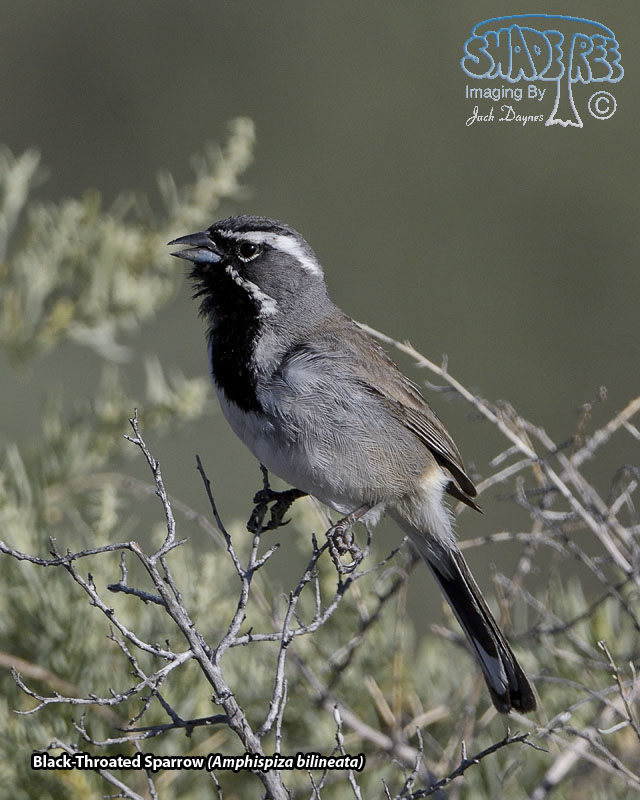
Black-Throated Sparrow(Amphispiza bilineata) |
|
Description: I hiked the Canyon Trail at Bosque del Apache on this Wednesday morning in New Mexico and met birds like these Black-Throated Sparrows. I must admit some regrets about carrying my heavy camera gear on this long dry trail. It wore me out. |
Date Taken: 2020:05:13 7:51 |
|
Location:
Bosque del Apache NWR |
|
Camera Information: NIKON D500, 800 mm, f/7.1, 1/2000 |
File Name: BlackThroatedSparrow_D506988-Bosque-CanyonTrail |
| © 2020 Jack Daynes, shadeTreeImaging.com |
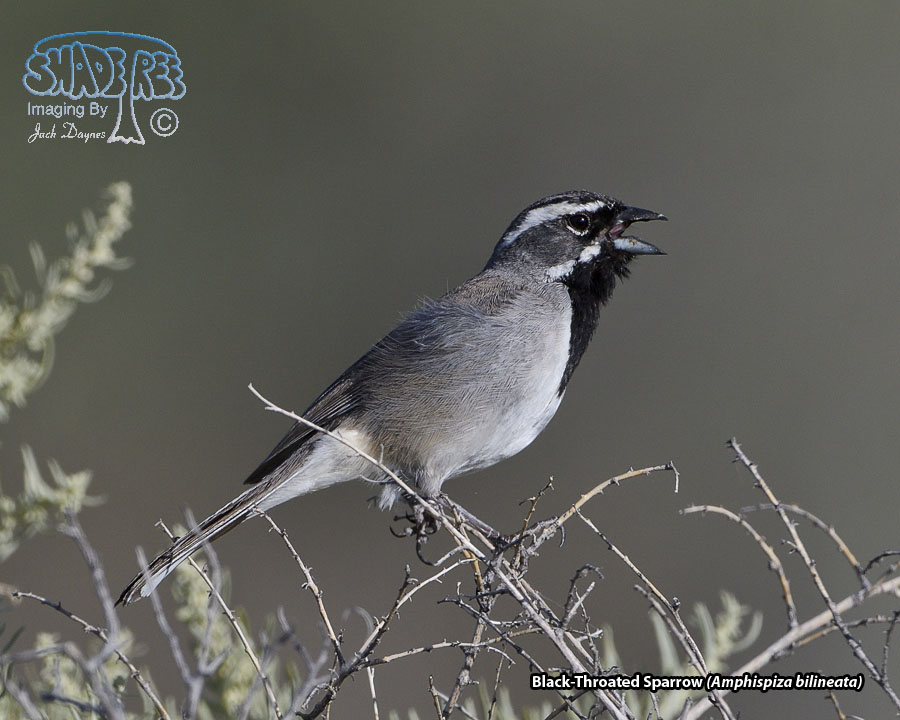
Black-Throated Sparrow(Amphispiza bilineata) |
|
Description: I hiked the Canyon Trail at Bosque del Apache on this Wednesday morning in New Mexico and met birds like these Black-Throated Sparrows. I must admit some regrets about carrying my heavy camera gear on this long dry trail. It wore me out. |
Date Taken: 2020:05:13 7:54 |
|
Location:
Bosque del Apache NWR |
|
Camera Information: NIKON D500, 800 mm, f/7.1, 1/2000 |
File Name: BlackThroatedSparrow_D507048-Bosque-CanyonTrail |
| © 2020 Jack Daynes, shadeTreeImaging.com |
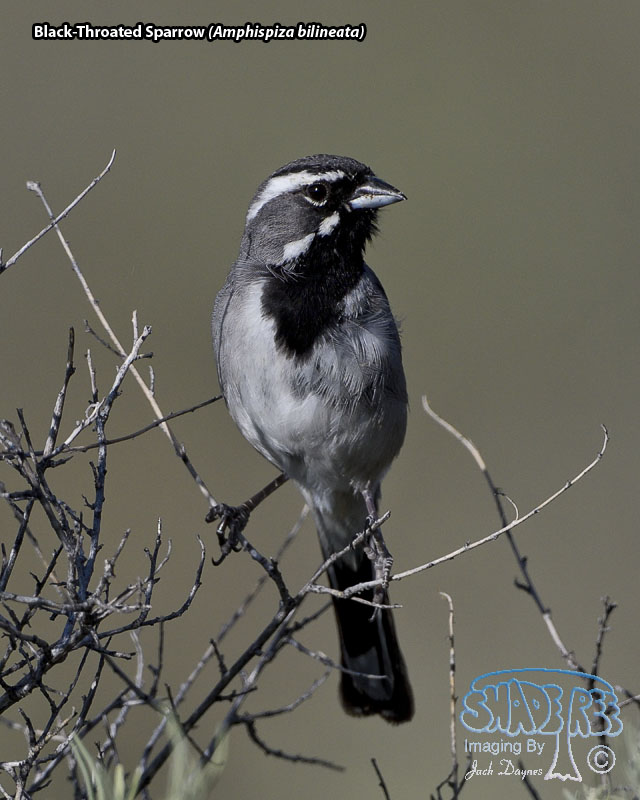
Black-Throated Sparrow(Amphispiza bilineata) |
|
Description: I hiked the Canyon Trail at Bosque del Apache on this Wednesday morning in New Mexico and met birds like these Black-Throated Sparrows. I must admit some regrets about carrying my heavy camera gear on this long dry trail. It wore me out. |
Date Taken: 2020:05:13 7:54 |
|
Location:
Bosque del Apache NWR |
|
Camera Information: NIKON D500, 800 mm, f/7.1, 1/2000 |
File Name: BlackThroatedSparrow_D507062-Bosque-CanyonTrail |
| © 2020 Jack Daynes, shadeTreeImaging.com |
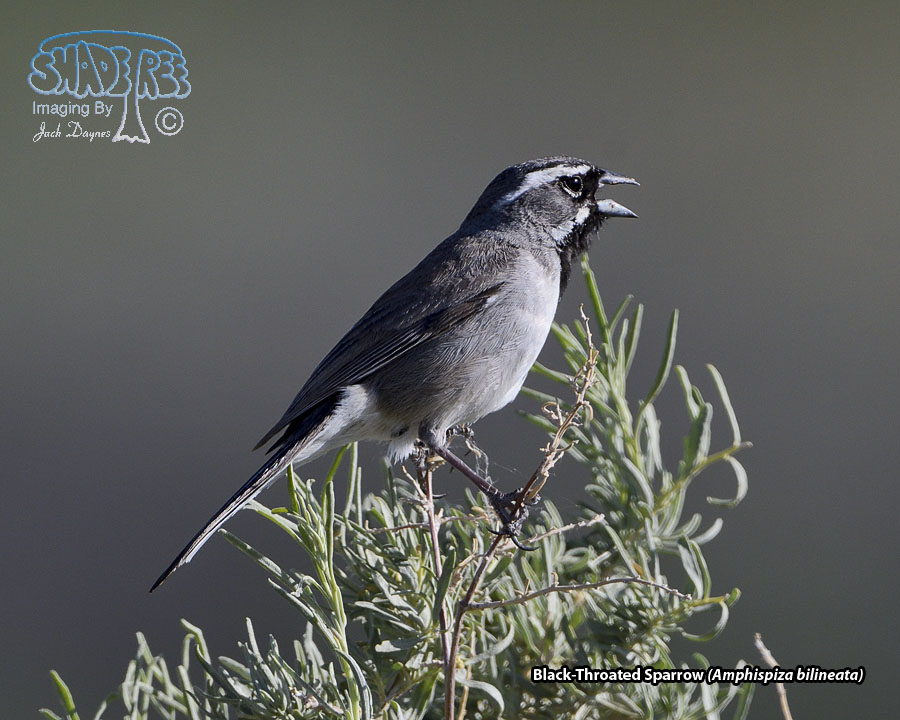
Black-Throated Sparrow(Amphispiza bilineata) |
|
Description: I hiked the Canyon Trail at Bosque del Apache on this Wednesday morning in New Mexico and met birds like these Black-Throated Sparrows. I must admit some regrets about carrying my heavy camera gear on this long dry trail. It wore me out. |
Date Taken: 2020:05:13 7:55 |
|
Location:
Bosque del Apache NWR |
|
Camera Information: NIKON D500, 800 mm, f/7.1, 1/1600 |
File Name: BlackThroatedSparrow_D507099-Bosque-CanyonTrail |
| © 2020 Jack Daynes, shadeTreeImaging.com |
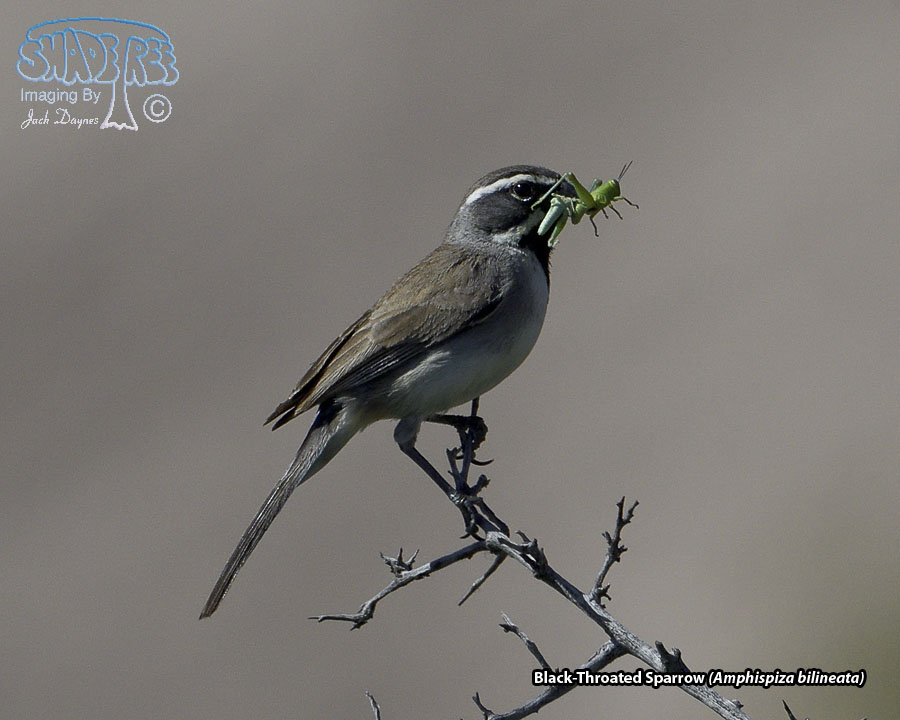
Black-Throated Sparrow(Amphispiza bilineata) |
|
Description: I hiked the Canyon Trail at Bosque del Apache on this Wednesday morning in New Mexico and met birds like these Black-Throated Sparrows. I must admit some regrets about carrying my heavy camera gear on this long dry trail. It wore me out. |
Date Taken: 2020:05:13 9:52 |
|
Location:
Bosque del Apache NWR |
|
Camera Information: NIKON D500, 800 mm, f/8.0, 1/2000 |
File Name: BlackThroatedSparrow_D507144-Bosque-CanyonTrail |
| © 2020 Jack Daynes, shadeTreeImaging.com |
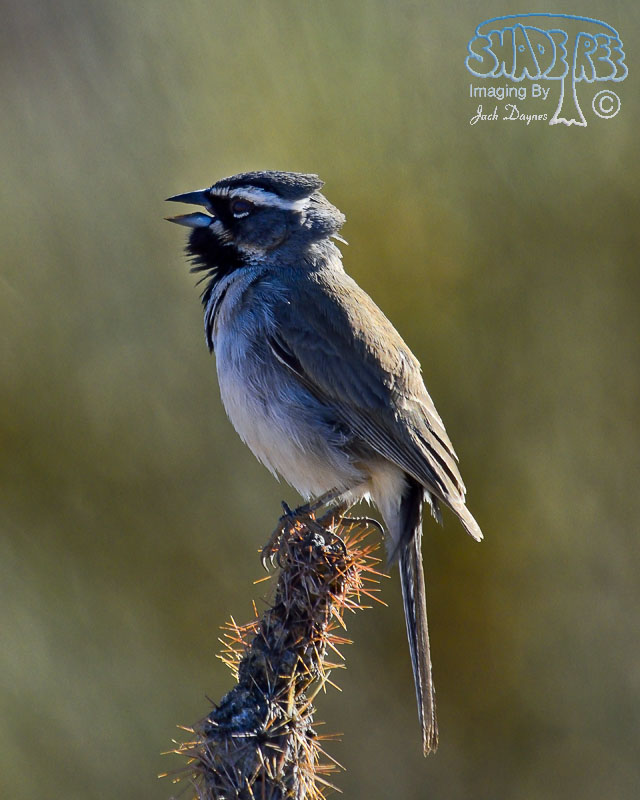
Black-Throated Sparrow(Amphispiza bilineata) |
|
Description: In the deasert roadside along New Mexico Highway 464 and south of Redrock New Mexico. |
Date Taken: 2016:03:24 16:42 |
|
Location:
Redrock |
|
Camera Information: NIKON D7200, 800 mm, f/8.0, 1/1250 |
File Name: D726870-BlackThroatedSparrow |
| © 2016 Jack Daynes, shadeTreeImaging.com |
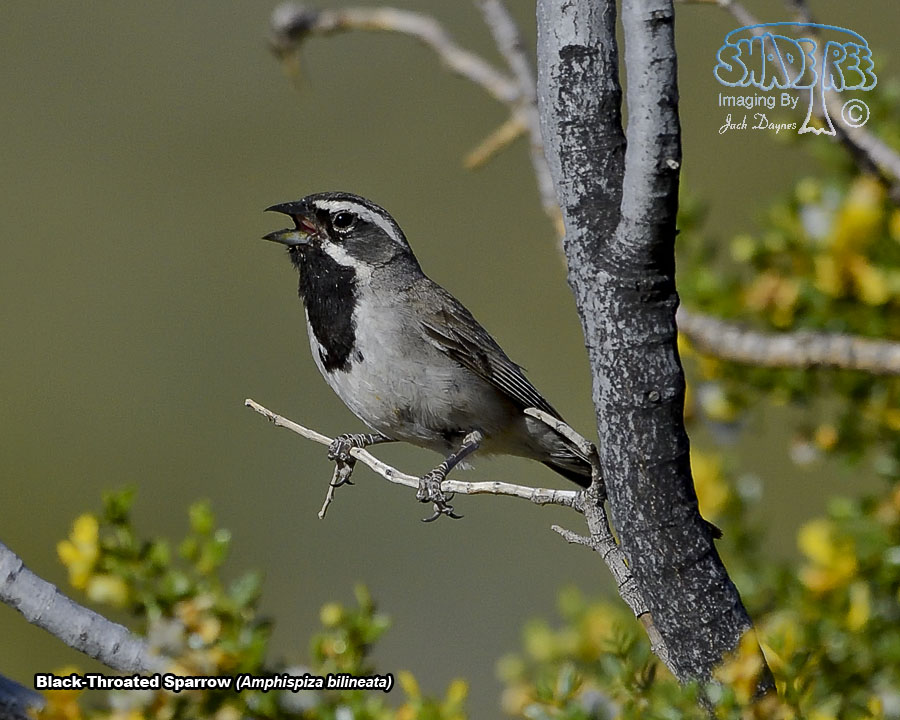
Black-Throated Sparrow(Amphispiza bilineata) |
|
Description: Horse Thief Springs on the northeastern flanks of the Kingston Mountains is one of the Joseph Grinnell restudy locations taken on by the San Diego Natural History Museum. The site is roughly between Death Valley and Las Vegas Nevada. |
Date Taken: 2017:05:24 6:29 |
|
Location:
Mandolin |
|
Camera Information: NIKON D5, 800 mm, f/8.0, 1/4000 |
File Name: BlackThroatedSparrow_D5X1953 |
| © 2017 Jack Daynes, shadeTreeImaging.com |
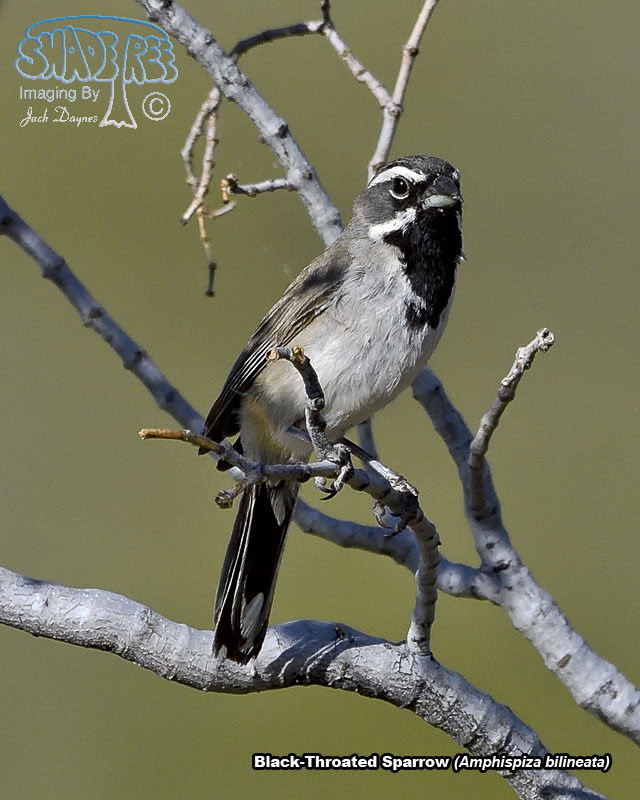
Black-Throated Sparrow(Amphispiza bilineata) |
|
Description: Horse Thief Springs on the northeastern flanks of the Kingston Mountains is one of the Joseph Grinnell restudy locations taken on by the San Diego Natural History Museum. The site is roughly between Death Valley and Las Vegas Nevada. |
Date Taken: 2017:05:24 6:29 |
|
Location:
Mandolin |
|
Camera Information: NIKON D5, 800 mm, f/8.0, 1/4000 |
File Name: BlackThroatedSparrow_D5X1962 |
| © 2017 Jack Daynes, shadeTreeImaging.com |
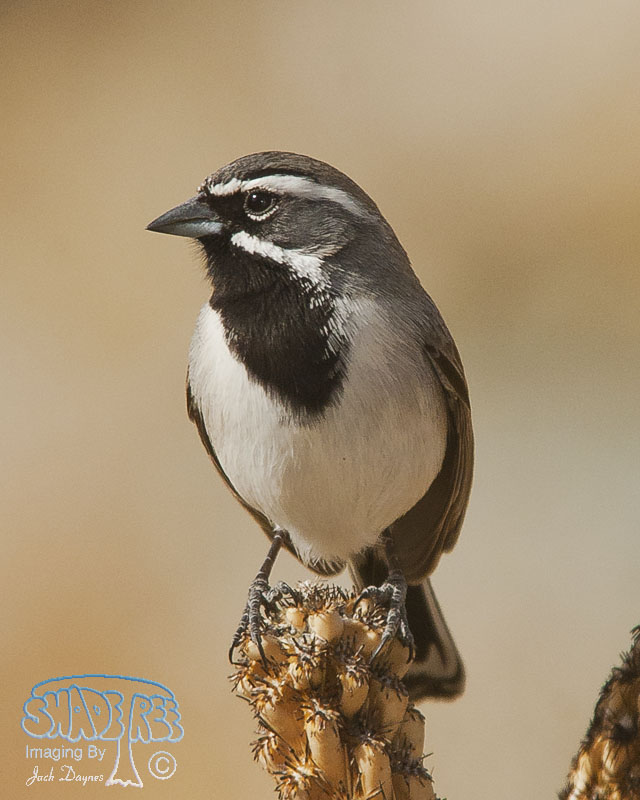
Black-Throated Sparrow(Amphispiza bilineata) |
|
Description: Tubb Canyon Trail in Anza-Borrego State Park, near Culp Valley. San Diego County, California. |
Date Taken: 2014:02:26 10:16 |
|
Location:
Tubb Canyon Trail |
|
Camera Information: NIKON D3X, 800 mm, f/8.0, 1/2500 |
File Name: D3X3224-BlackThroatedSparrow |
| © 2014 Jack Daynes, shadeTreeImaging.com |
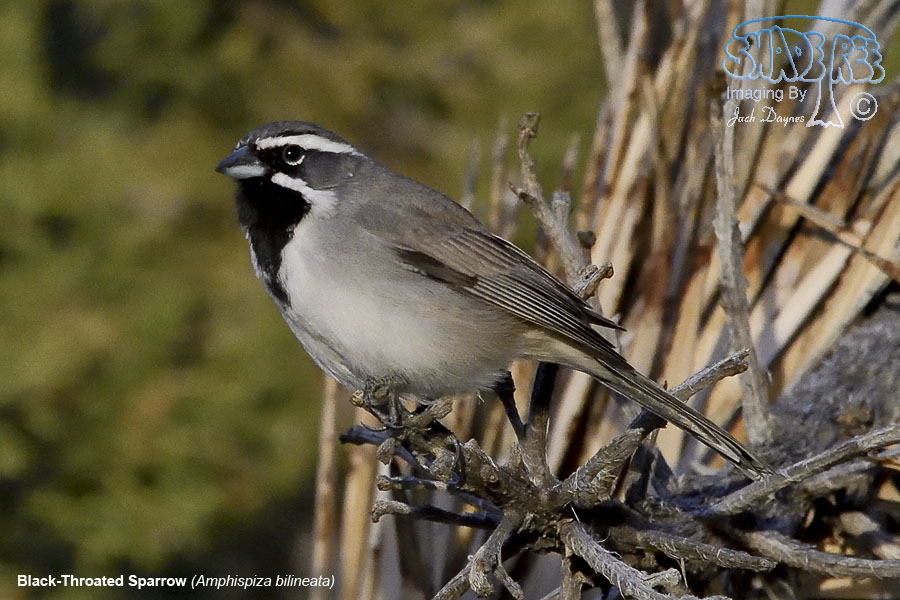
Black-Throated Sparrow(Amphispiza bilineata) |
|
Description: This bird is found year round across many desert environs.Seen while camped with the Science Team from the San Diego Natural History Museum and gathering data as a followup study from previous studies of about 80 years prior. Mojave National Preserve in San Bernardino County, California. |
Date Taken: 2016:11:12 14:03 |
|
Location:
Cedar Canyon Camp |
|
Camera Information: NIKON D5, 800 mm, f/8.0, 1/3200 |
File Name: BlackThroatedSparrow_D5X9157 |
| © 2016 Jack Daynes, shadeTreeImaging.com |
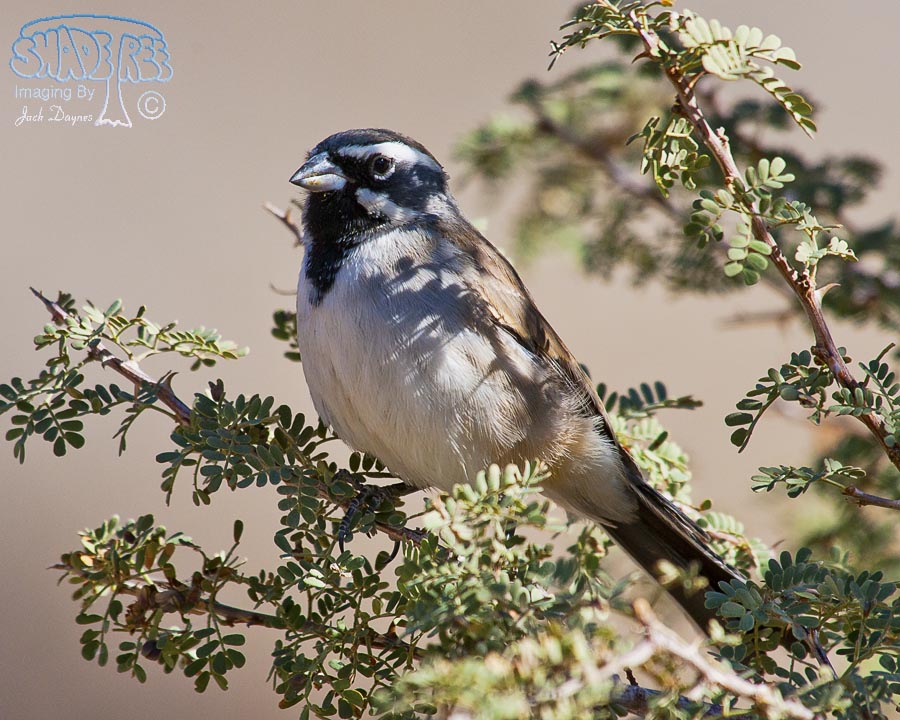
Black-Throated Sparrow(Amphispiza bilineata) |
|
Description: The desert east of Bullhead City, Arizona. Along Silver Creek Road. |
Date Taken: 2014:11:28 10:45 |
|
Location:
Oatman |
|
Camera Information: NIKON D3X, 800 mm, f/9.0, 1/1250 |
File Name: D3X2495-BlackThroatedSparrow |
| © 2014 Jack Daynes, shadeTree-Imaging.com |
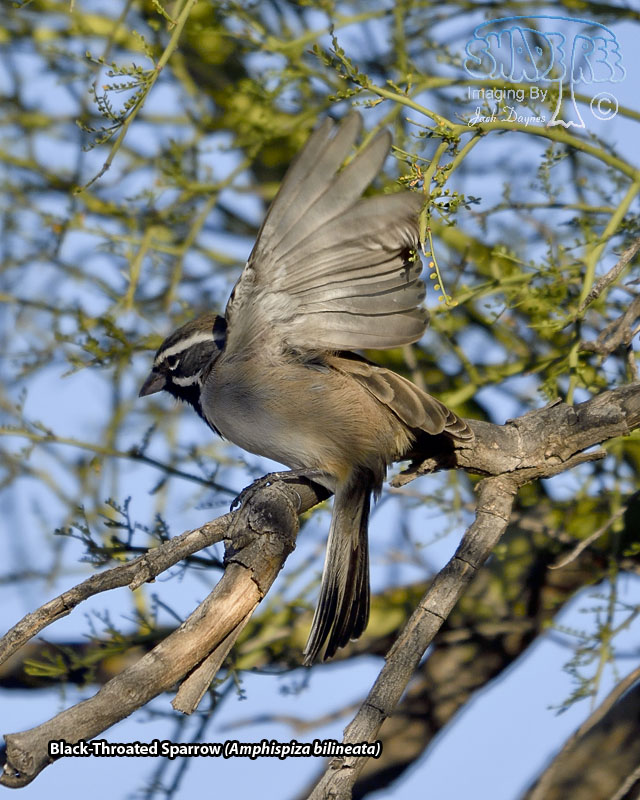
Black-Throated Sparrow(Amphispiza bilineata) |
|
Description: The Boyce-Thompson Arboretum near Superior Arizona is a well known desert oasis and a great place to meet birds. |
Date Taken: 2019:10:23 8:45 |
|
Location:
Boyce-Thompson Arboretum |
|
Camera Information: NIKON D5, 800 mm, f/8.0, 1/4000 |
File Name: BlackThroatedSparrow_D5X2998-Boyce-Thompson-Arboretum |
| © 2019 Jack Daynes, shadeTreeImaging.com |
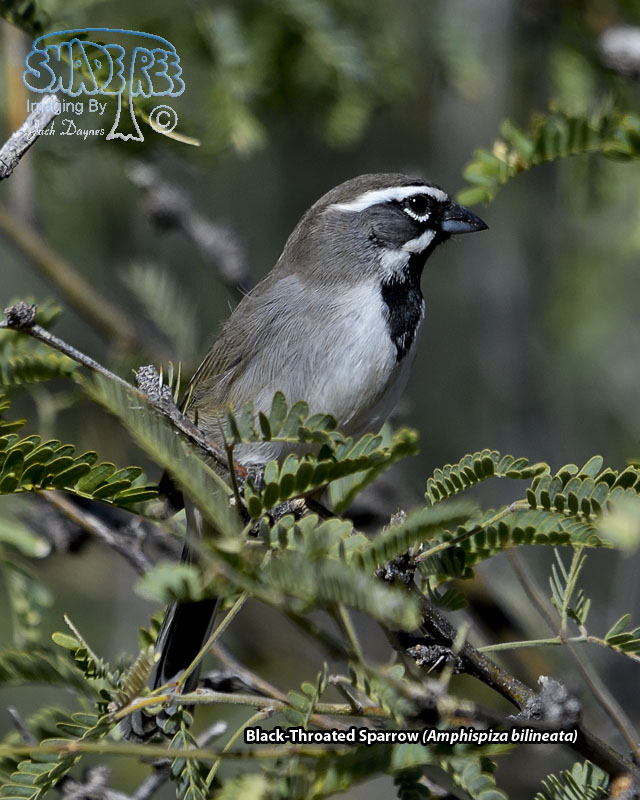
Black-Throated Sparrow(Amphispiza bilineata) |
|
Description: The "Birding Trail Loop" at Catalina State Park, north of Tucson Arizona is favorite destination for bird lovers. Depending on the season, it can yield some nice bird encounters. |
Date Taken: 2019:10:24 11:55 |
|
Location:
Catalina State Park |
|
Camera Information: NIKON D5, 800 mm, f/8.0, 1/2500 |
File Name: BlackThroatedSparrow_D5X5199-CatalinaStatePark |
| © 2019 Jack Daynes, shadeTreeImaging.com |
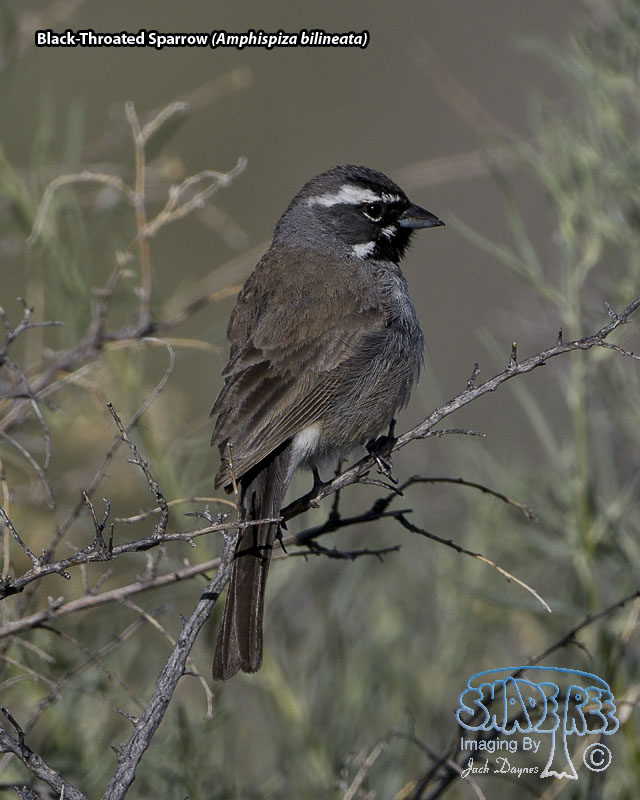
Black-Throated Sparrow(Amphispiza bilineata) |
|
Description: I hiked the Canyon Trail at Bosque del Apache on this Wednesday morning in New Mexico and met birds like these Black-Throated Sparrows. I must admit some regrets about carrying my heavy camera gear on this long dry trail. It wore me out. |
Date Taken: 2020:05:13 7:50 |
|
Location:
Bosque del Apache NWR |
|
Camera Information: NIKON D500, 800 mm, f/7.1, 1/2500 |
File Name: BlackThroatedSparrow_D506967-Bosque-CanyonTrail |
| © 2020 Jack Daynes, shadeTreeImaging.com |
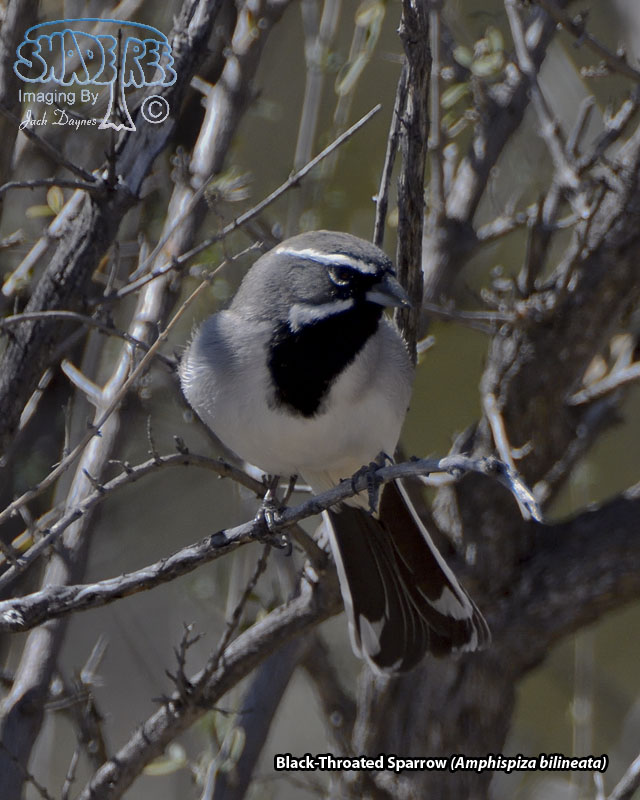
Black-Throated Sparrow(Amphispiza bilineata) |
|
Description: I stopped briefly on my drive from Big Bend to Marathon and found a few roadside birds to entertain me. |
Date Taken: 2020:03:07 13:38 |
|
Location:
Corner Windmill |
|
Camera Information: NIKON D5, 800 mm, f/8.0, 1/1600 |
File Name: BlackThroatedSparrow_D5X3604-BigBendPark |
| (C)2019 Jack Daynes |
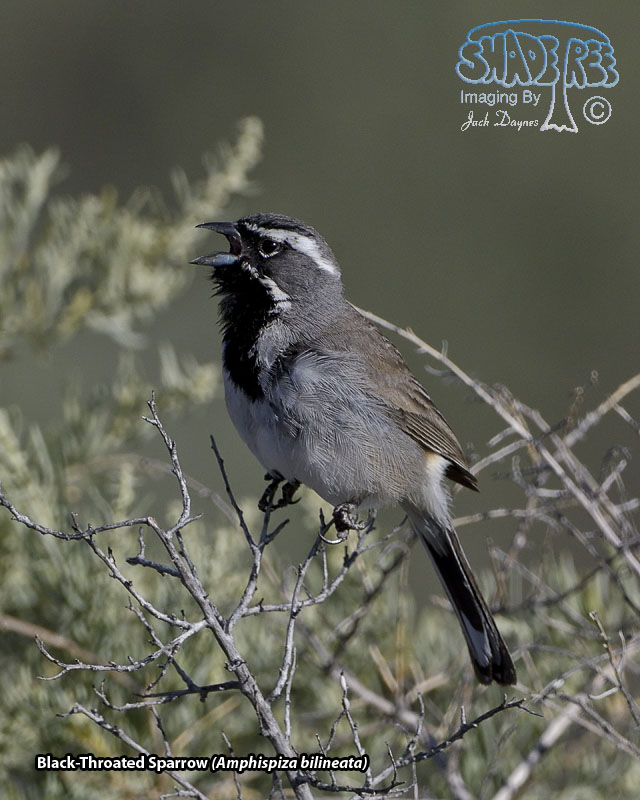
Black-Throated Sparrow(Amphispiza bilineata) |
|
Description: I hiked the Canyon Trail at Bosque del Apache on this Wednesday morning in New Mexico and met birds like these Black-Throated Sparrows. I must admit some regrets about carrying my heavy camera gear on this long dry trail. It wore me out. |
Date Taken: 2020:05:13 7:51 |
|
Location:
Bosque del Apache NWR |
|
Camera Information: NIKON D500, 800 mm, f/7.1, 1/2000 |
File Name: BlackThroatedSparrow_D507001-Bosque-CanyonTrail |
| © 2020 Jack Daynes, shadeTreeImaging.com |
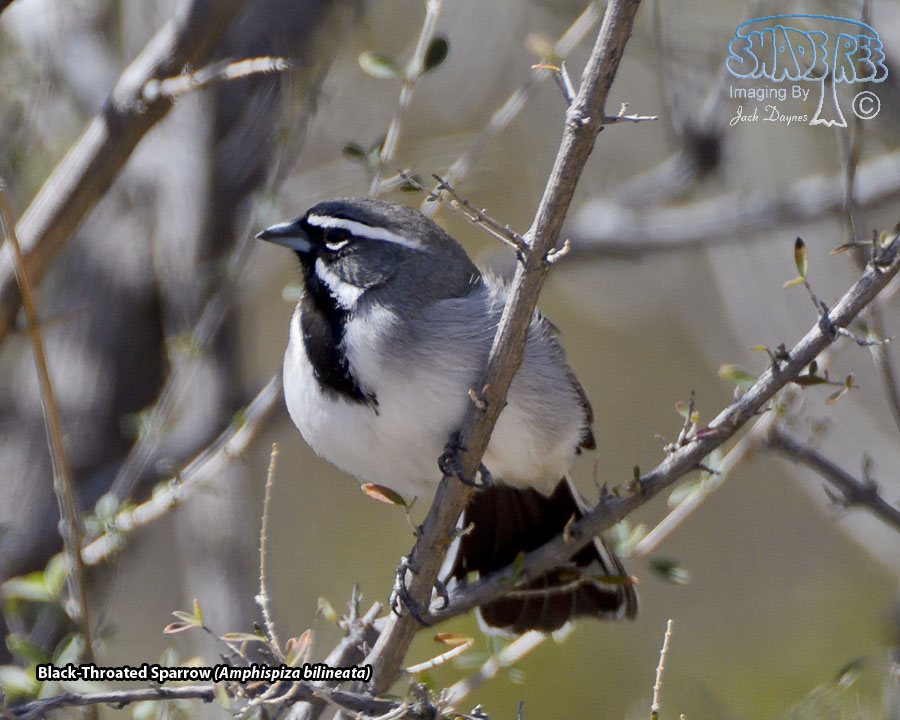
Black-Throated Sparrow(Amphispiza bilineata) |
|
Description: I stopped briefly on my drive from Big Bend to Marathon and found a few roadside birds to entertain me. |
Date Taken: 2020:03:07 13:38 |
|
Location:
Corner Windmill |
|
Camera Information: NIKON D5, 800 mm, f/8.0, 1/1600 |
File Name: BlackThroatedSparrow_D5X3603-BigBendPark |
| © 2020 Jack Daynes, shadeTreeImaging.com |
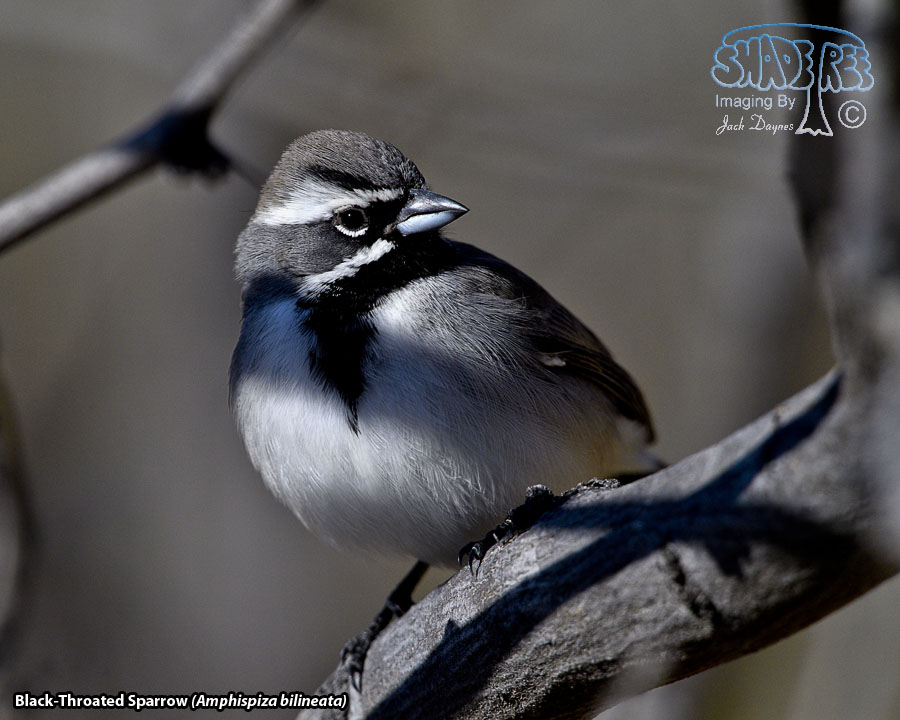
Black-Throated Sparrow(Amphispiza bilineata) |
|
Description: These Black-Throated Sparrows probably stay all year here. A half mile southeast of Langtry Texas flows the Rio Grande. A short drive from the settlment brings the traveler to relatively undisturned Chihuahuan Desert habitat. |
Date Taken: 2021:01:08 11:15 |
|
Location:
Rio Grande Overlook |
|
Camera Information: NIKON D5, 800 mm, f/8.0, 1/4000 |
File Name: BlackThroatedSparrow_D5X9425-Langtry-TX |
| © 2021 Jack Daynes, shadeTreeImaging.com |
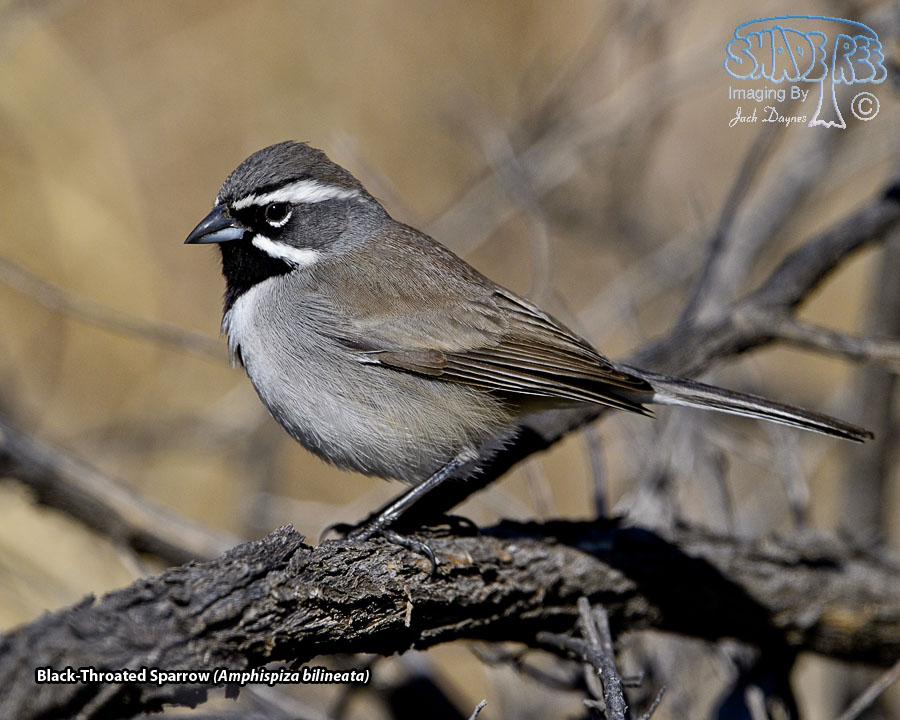
Black-Throated Sparrow(Amphispiza bilineata) |
|
Description: These Black-Throated Sparrows probably stay all year here. A half mile southeast of Langtry Texas flows the Rio Grande. A short drive from the settlment brings the traveler to relatively undisturned Chihuahuan Desert habitat. |
Date Taken: 2021:01:08 11:58 |
|
Location:
Rio Grande Overlook |
|
Camera Information: NIKON D5, 800 mm, f/5.6, 1/8000 |
File Name: BlackThroatedSparrow_D5X9597-Langtry-TX |
| © 2021 Jack Daynes, shadeTreeImaging.com |
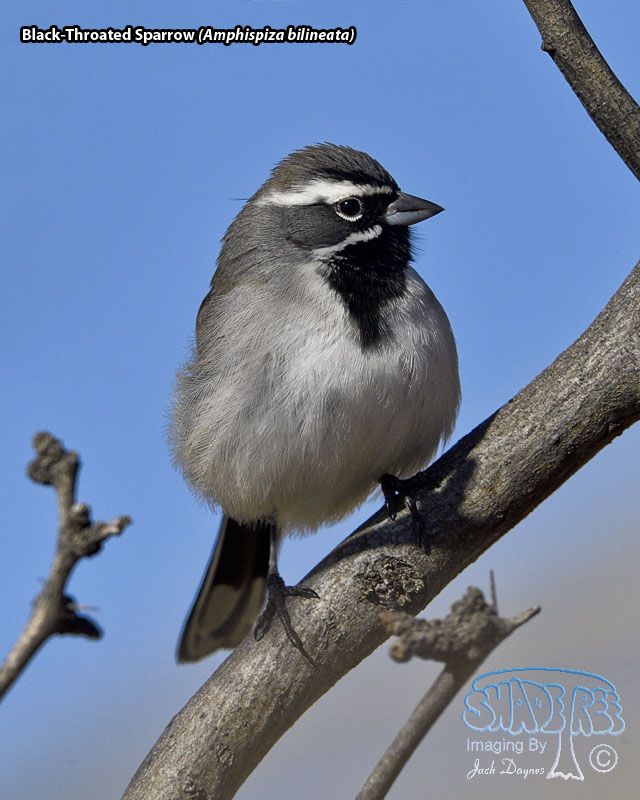
Black-Throated Sparrow(Amphispiza bilineata) |
|
Description: These Black-Throated Sparrows probably stay all year here. A half mile southeast of Langtry Texas flows the Rio Grande. A short drive from the settlment brings the traveler to relatively undisturned Chihuahuan Desert habitat. |
Date Taken: 2021:01:08 11:17 |
|
Location:
Rio Grande Overlook |
|
Camera Information: NIKON D5, 800 mm, f/8.0, 1/4000 |
File Name: BlackThroatedSparrow_D5X9443-Langtry-TX |
| © 2021 Jack Daynes, shadeTreeImaging.com |
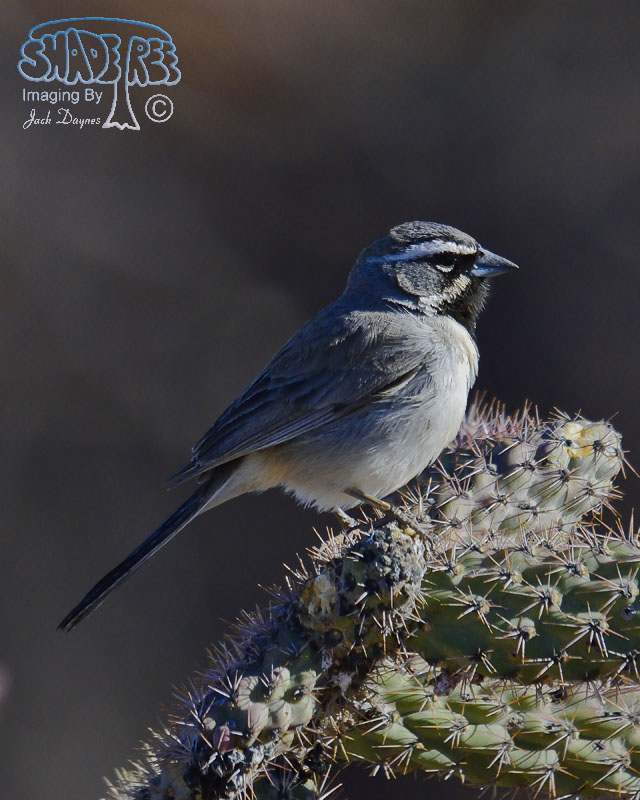
Black-Throated Sparrow(Amphispiza bilineata) |
|
Description: In the deasert roadside along New Mexico Highway 464 and south of Redrock New Mexico. |
Date Taken: 2016:03:24 16:40 |
|
Location:
Redrock |
|
Camera Information: NIKON D7200, 800 mm, f/8.0, 1/1250 |
File Name: D726857-BlackThroatedSparrow |
| © 2016 Jack Daynes, shadeTreeImaging.com |
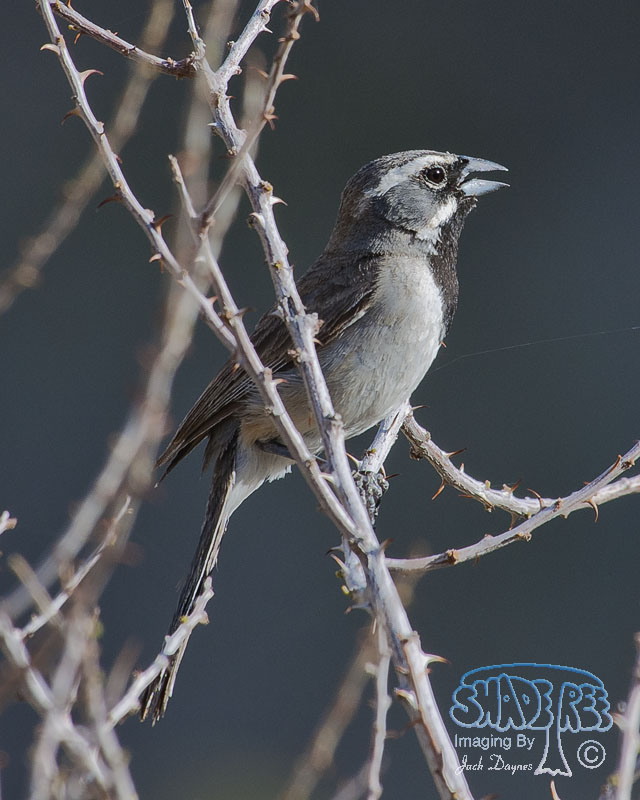
Black-Throated Sparrow(Amphispiza bilineata) |
|
Description: Silver Creek area, east of Bullhead City, near Oatman, Arizona. In Golden Valley. |
Date Taken: 2015:05:03 17:07 |
|
Location:
Oatman |
|
Camera Information: NIKON D3X, 800 mm, f/13.0, 1/160 |
File Name: D3X8754-BlackThroatedSparrow |
| © 2015 Jack Daynes, shadeTreeImaging.com |
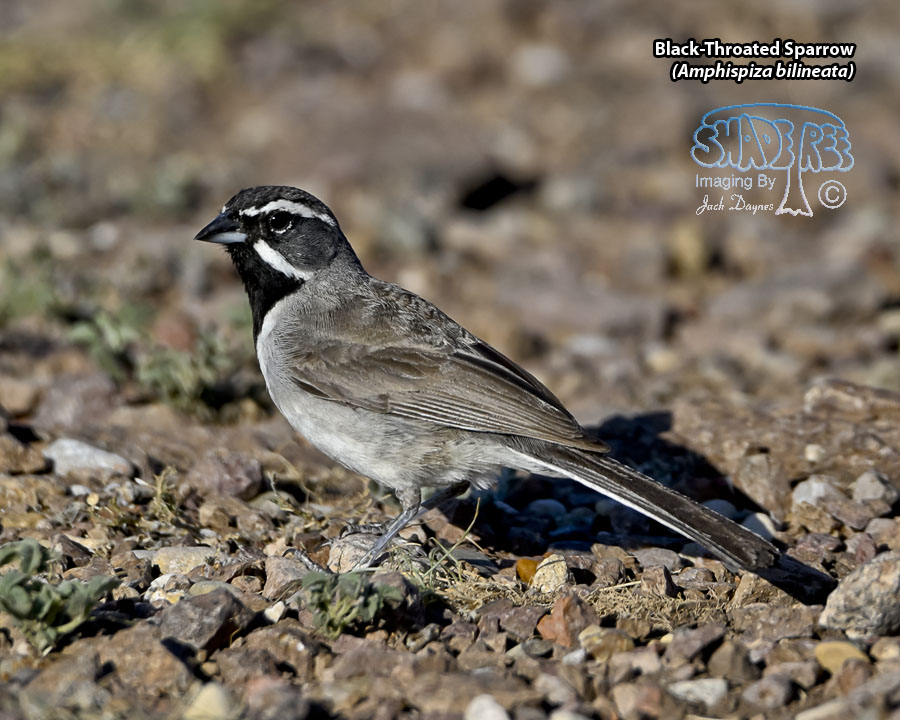
Black-Throated Sparrow(Amphispiza bilineata) |
|
Description: I spent much of my stay at Davis Mountains State Park working on images and stories from earlier episodes from my expedition. But on my third day in the park, I drove up-slope to Skyline Drive and looked for Montezuma Quail. Up on the ridge, sparrows, towhees, flycatchers, and orioles were easy to find. |
Date Taken: 2023:07:06 9:53 |
|
Location:
Davis Mountains State Park |
|
Camera Information: NIKON Z 9, 800 mm, f/6.3, 1/1000 |
File Name: BlackThroatedSparrow_Z9X9737_DavisMountains.SP-TX |
| © 2023 Jack Daynes, shadeTreeImaging.com |
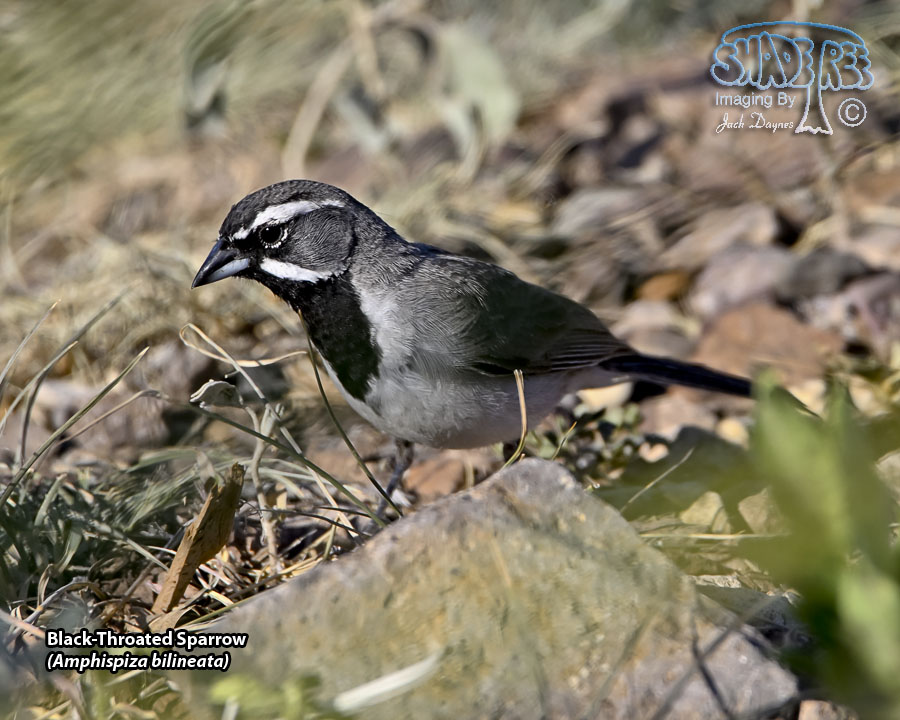
Black-Throated Sparrow(Amphispiza bilineata) |
|
Description: I spent much of my stay at Davis Mountains State Park working on images and stories from earlier episodes from my expedition. But on my third day in the park, I drove up-slope to Skyline Drive and looked for Montezuma Quail. Up on the ridge, sparrows, towhees, flycatchers, and orioles were easy to find. |
Date Taken: 2023:07:06 9:49 |
|
Location:
Davis Mountains State Park |
|
Camera Information: NIKON Z 9, 800 mm, f/6.3, 1/800 |
File Name: BlackThroatedSparrow_Z9X9700_DavisMountains.SP-TX |
| © 2023 Jack Daynes, shadeTreeImaging.com |
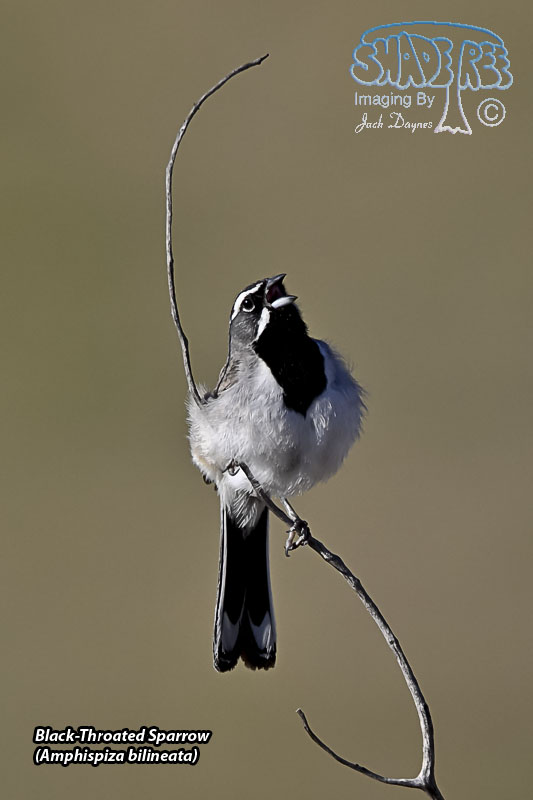
Black-Throated Sparrow(Amphispiza bilineata) |
|
Description: I spent much of my stay at Davis Mountains State Park working on images and stories from earlier episodes from my expedition. But on my third day in the park, I drove up-slope to Skyline Drive and looked for Montezuma Quail. Up on the ridge, sparrows, towhees, flycatchers, and orioles were easy to find. |
Date Taken: 2023:07:06 9:34 |
|
Location:
Davis Mountains State Park |
|
Camera Information: NIKON Z 9, 800 mm, f/6.3, 1/800 |
File Name: BlackThroatedSparrow_Z9X9547_DavisMountains.SP-TX |
| © 2023 Jack Daynes, shadeTreeImaging.com |
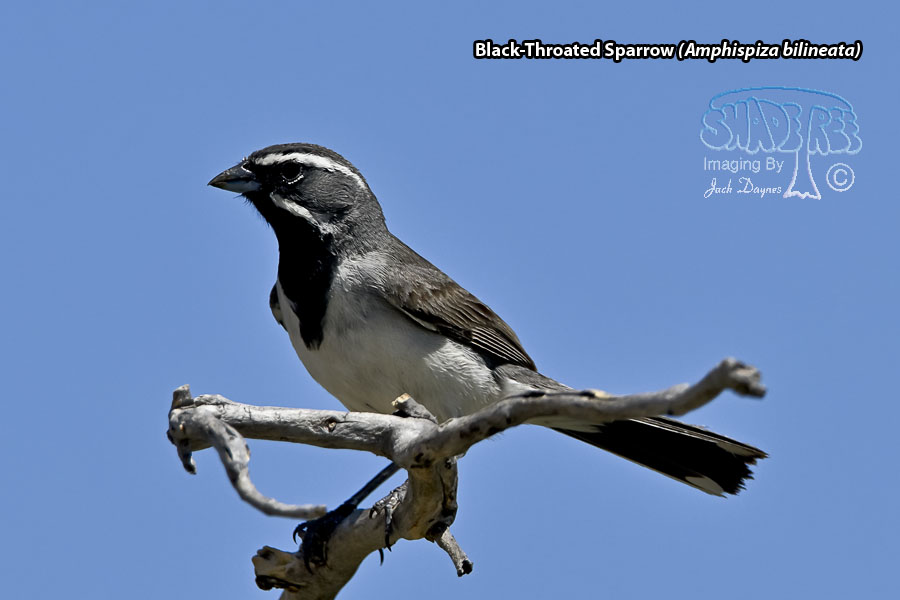
Black-Throated Sparrow(Amphispiza bilineata) |
|
Description: Texas Roadside Rest, sometimes called ‘Picnic Areas’ can be worthwhile places to meet rural birds. I stayed at the Picnic Area 20 miles east of Marathon while traveling to the Davis Mountains. Skylarking Cassin’s Sparrows put on a show for me. |
Date Taken: 2023:07:03 17:00 |
|
Location:
26260 US-90 Rest Area |
|
Camera Information: NIKON Z 9, 800 mm, f/8.0, 1/1250 |
File Name: BlackThroatedSparrow_Z9X8024_MarathonRestArea-TX |
| © 2023 Jack Daynes, shadeTreeImaging.com |
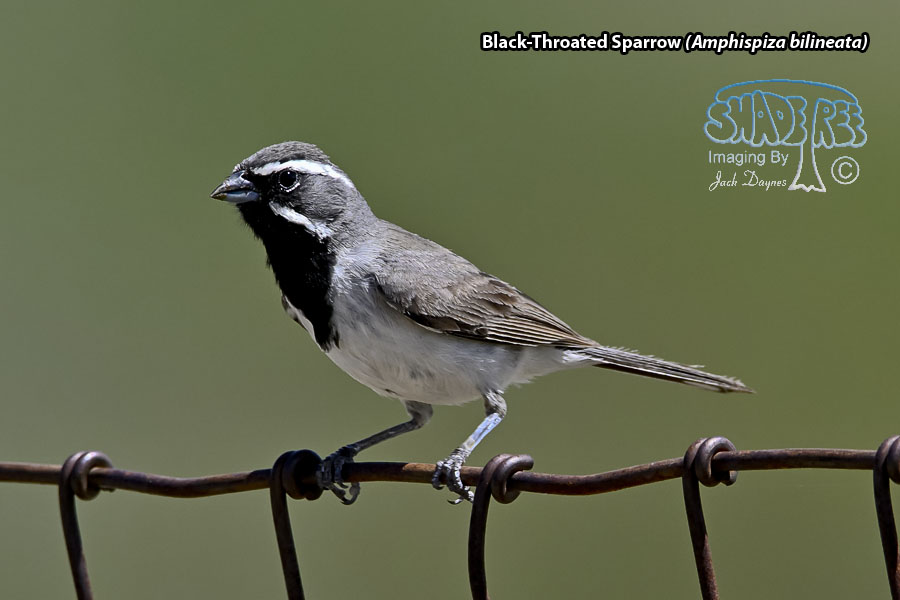
Black-Throated Sparrow(Amphispiza bilineata) |
|
Description: Texas Roadside Rest, sometimes called ‘Picnic Areas’ can be worthwhile places to meet rural birds. I stayed at the Picnic Area 20 miles east of Marathon while traveling to the Davis Mountains. Skylarking Cassin’s Sparrows put on a show for me. |
Date Taken: 2023:07:03 16:59 |
|
Location:
26260 US-90 Rest Area |
|
Camera Information: NIKON Z 9, 800 mm, f/8.0, 1/800 |
File Name: BlackThroatedSparrow_Z9X7985_MarathonRestArea-TX |
| © 2023 Jack Daynes, shadeTreeImaging.com |
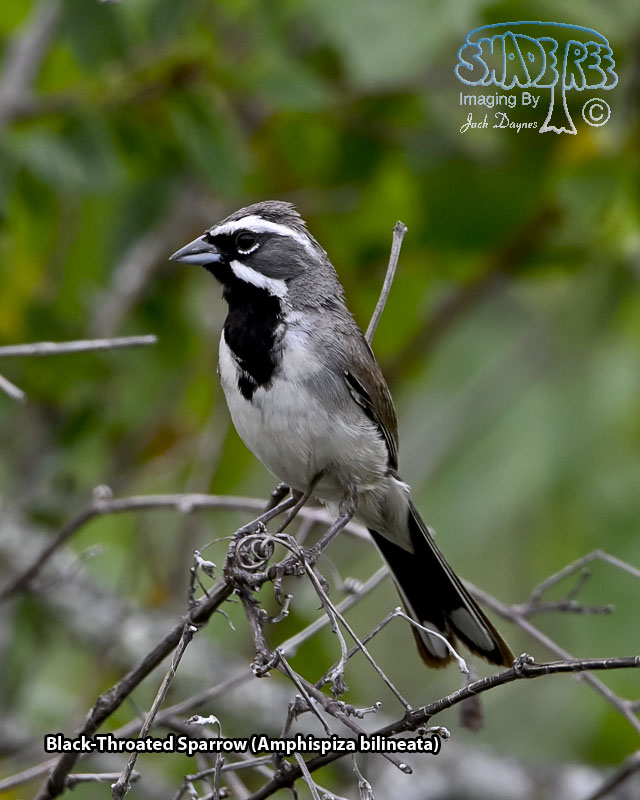
Black-Throated Sparrow(Amphispiza bilineata) |
|
Description: On my 2023 tour of North America, I paid my third visit to Kickapoo Caverns State Park outside of Brackettville Texas. Unlike my first two visits, this time, there were plenty of birds to meet. |
Date Taken: 2023:07:02 16:17 |
|
Location:
Kickapoo Caverns State Park |
|
Camera Information: NIKON Z 9, 800 mm, f/8.0, 1/800 |
File Name: BlackThroatedSparrow_Z9X6949_KickapooCaverns-TX |
| © 2023 Jack Daynes, shadeTreeImaging.com |
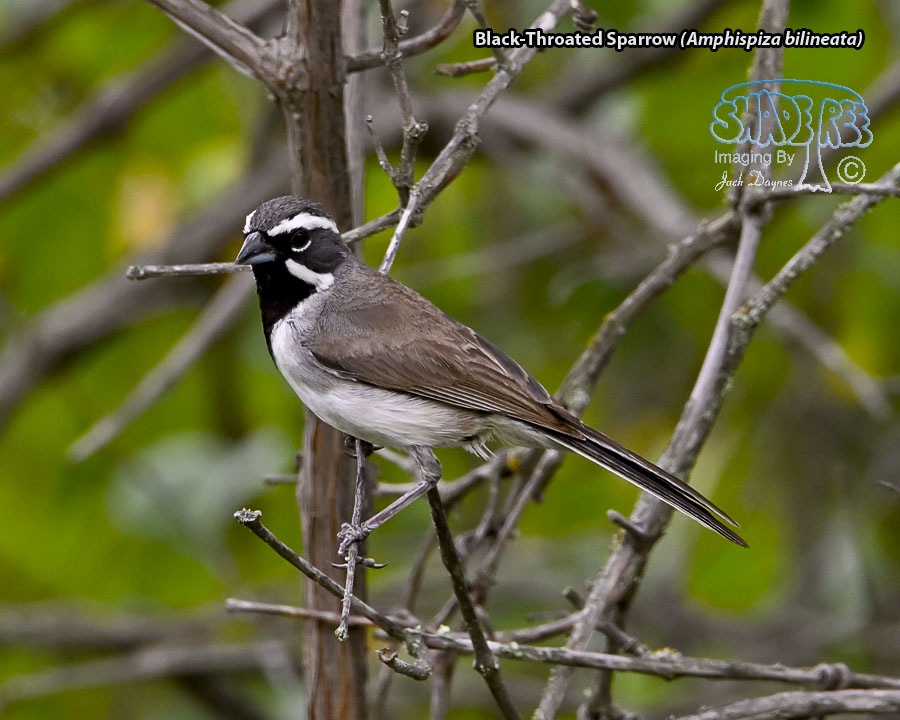
Black-Throated Sparrow(Amphispiza bilineata) |
|
Description: On my 2023 tour of North America, I paid my third visit to Kickapoo Caverns State Park outside of Brackettville Texas. Unlike my first two visits, this time, there were plenty of birds to meet. |
Date Taken: 2023:07:02 16:16 |
|
Location:
Kickapoo Caverns State Park |
|
Camera Information: NIKON Z 9, 800 mm, f/8.0, 1/800 |
File Name: BlackThroatedSparrow_Z9X6935_KickapooCaverns-TX |
| © 2023 Jack Daynes, shadeTreeImaging.com |
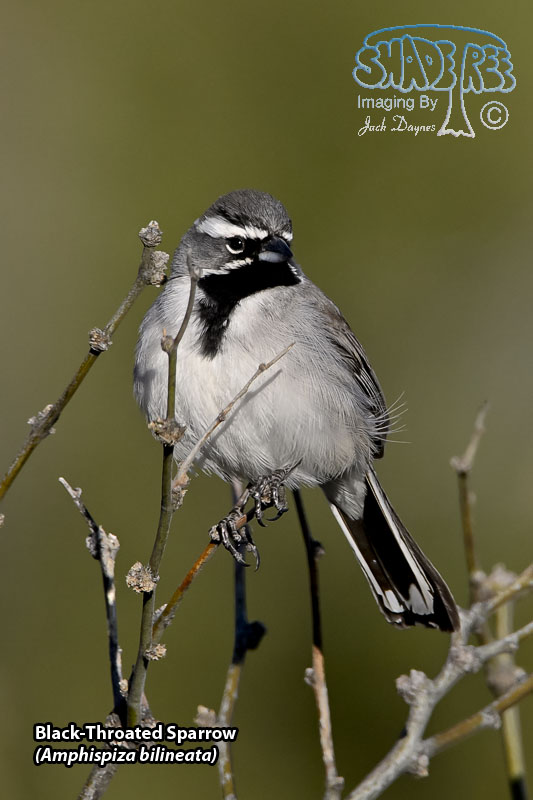
Black-Throated Sparrow(Amphispiza bilineata) |
|
Description: Historic Redington Road runs east out of Tucson through some very rugged country. I stopped on the eastern slopes to spend time with the birds and make camp. |
Date Taken: 2023:04:03 7:06 |
|
Location:
Redington Road |
|
Camera Information: NIKON Z 9, 800 mm, f/8.0, 1/800 |
File Name: BlackThroatedSparrow_ZX97566_RedingtonRoad-Tucson-AZ |
| © 2023 Jack Daynes, shadeTreeImaging.com |
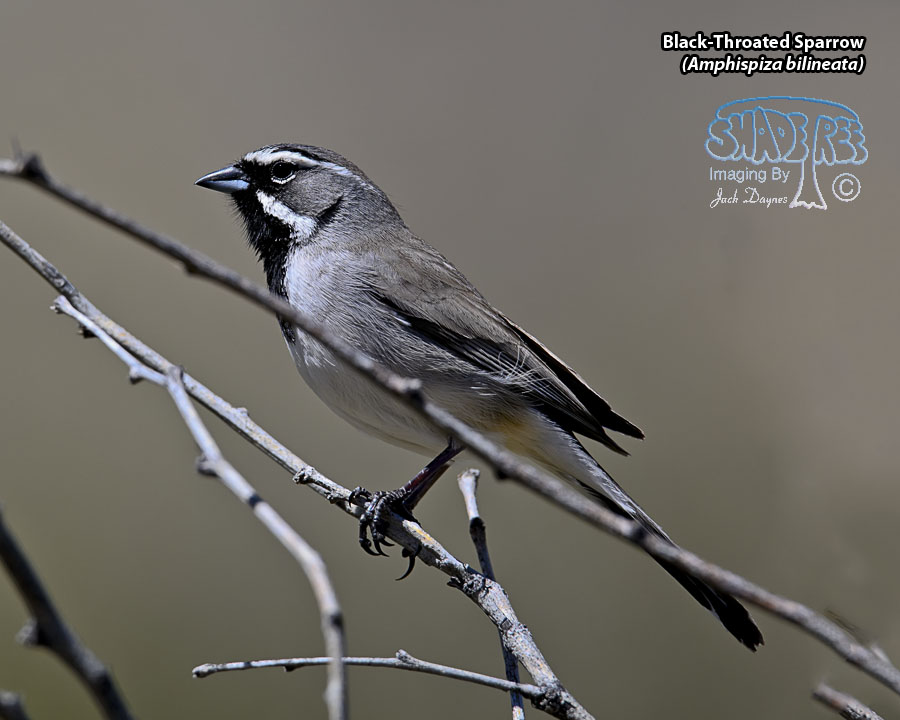
Black-Throated Sparrow(Amphispiza bilineata) |
|
Description: Historic Redington Road runs east out of Tucson through some very rugged country. I stopped on the eastern slopes to spend time with the birds and make camp. |
Date Taken: 2023:04:02 11:53 |
|
Location:
Redington Road |
|
Camera Information: NIKON Z 9, 800 mm, f/8.0, 1/800 |
File Name: BlackThroatedSparrow_ZX96970_RedingtonRoad-Tucson-AZ |
| © 2023 Jack Daynes, shadeTreeImaging.com |
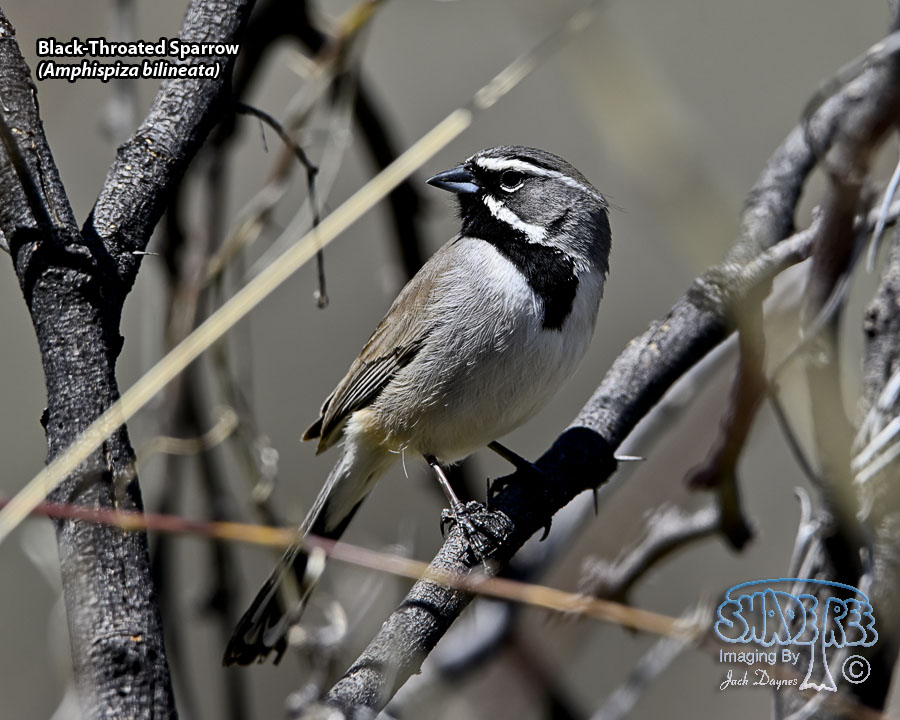
Black-Throated Sparrow(Amphispiza bilineata) |
|
Description: Historic Redington Road runs east out of Tucson through some very rugged country. I stopped on the eastern slopes to spend time with the birds and make camp. |
Date Taken: 2023:04:02 11:48 |
|
Location:
Redington Road |
|
Camera Information: NIKON Z 9, 800 mm, f/8.0, 1/800 |
File Name: BlackThroatedSparrow_ZX96920_RedingtonRoad-Tucson-AZ |
| © 2023 Jack Daynes, shadeTreeImaging.com |
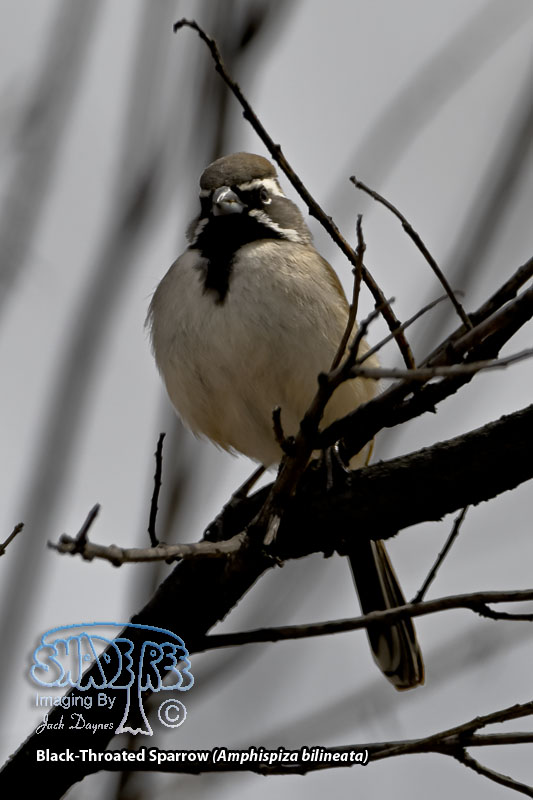
Black-Throated Sparrow(Amphispiza bilineata) |
|
Description: Gardner Canyon Road leaves AZ-83 four miles north of Sonoita and ascends the eastern slopes of the Santa Rita Mountains. I stopped there to spend the night and see what birds I might meet. |
Date Taken: 2023:03:19 12:01 |
|
Location:
Gardner Canyon Road |
|
Camera Information: NIKON Z 9, 800 mm, f/8.0, 1/800 |
File Name: BlackThroatedSparrow_ZX92431_GardnerCanyon_Sonoita-AZ |
| © 2023 Jack Daynes, shadeTreeImaging.com |
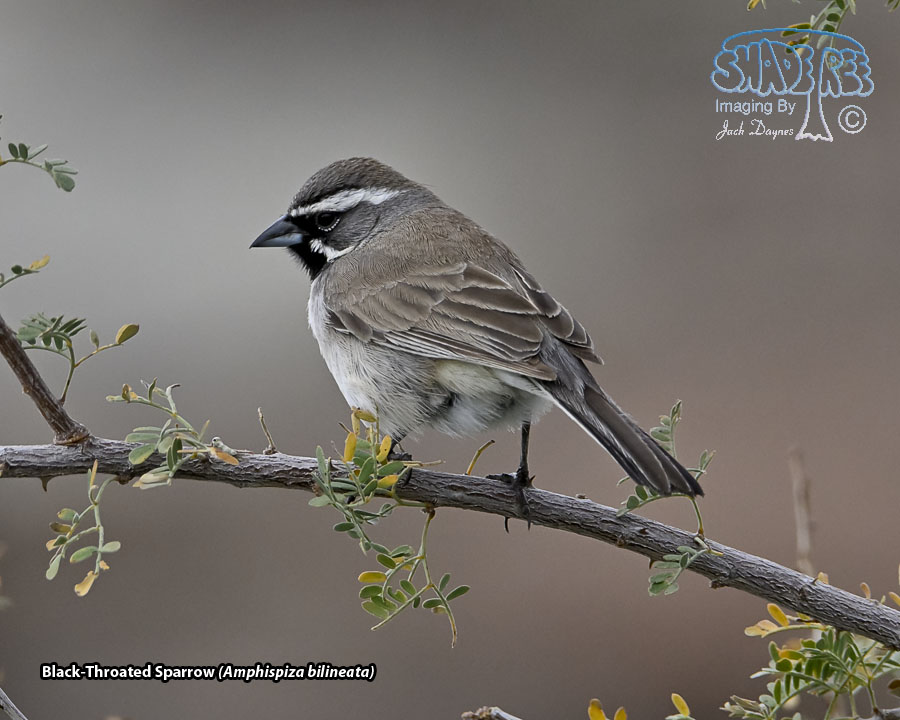
Black-Throated Sparrow(Amphispiza bilineata) |
|
Description: Black-Throated Sparrows find the remoteness of the deserts in the Anza-Borrego ideal habitat year-round. |
Date Taken: 2023:03:14 9:43 |
|
Location:
Anza-Borrego Visitor Center |
|
Camera Information: NIKON Z 9, 800 mm, f/8.0, 1/800 |
File Name: BlackThroatedSparrow_Z9X0385_Anza-Borrego_VisitorCenter |
| © 2023 Jack Daynes, shadeTreeImaging.com |
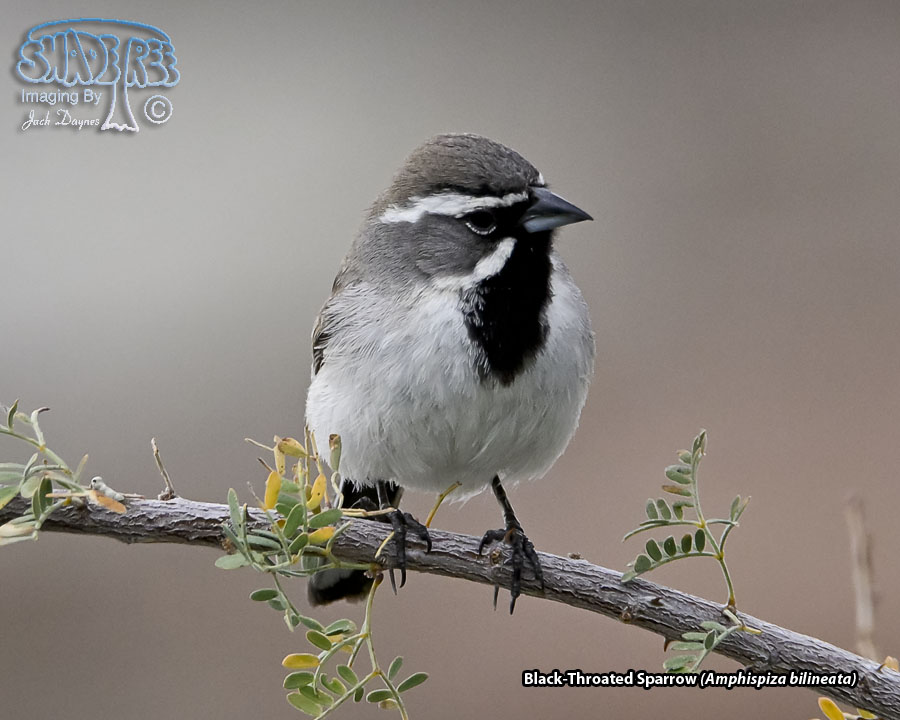
Black-Throated Sparrow(Amphispiza bilineata) |
|
Description: Black-Throated Sparrows find the remoteness of the deserts in the Anza-Borrego ideal habitat year-round. |
Date Taken: 2023:03:14 9:43 |
|
Location:
Anza-Borrego Visitor Center |
|
Camera Information: NIKON Z 9, 800 mm, f/8.0, 1/800 |
File Name: BlackThroatedSparrow_Z9X0369_Anza-Borrego_VisitorCenter |
| © 2023 Jack Daynes, shadeTreeImaging.com |
Click map markers to reveal further information
