Sprague’s Pipit
Anthus spragueii

Perhaps more than any other ecosystem in North America, prairie grasslands have suffered degradation. Once prairies dominated the mid-west from Texas to central Canada. These vast tall-grass ranges hosted immense herds of Bison, Elk, and Pronghorn. Even creatures we now think of as dwellers of mountain wilderness regions roamed here. Bighorn Sheep and Grizzly Bears wandered here and participated in spectacular migrations.
It did not take long after Europeans discovered this seemingly infinite expanse of biological richness, that they began a war of destruction. First to disappear were the Bison, who were slaughtered by the millions. Then, by conquest and agricultural development, the ranges were whittled into smaller and smaller sections. During the 1800s, the earliest efforts began to conserve natural lands and resources. Yet these prairies and grasslands did not garner the attention required to correct the wayward course we had embarked on. I guess it was a harder ‘sell’ than the mountains and canyons such as Yellowstone and Yosemite.
Sprague’s Pipits are humble creatures who depend on these prairie habitats. Not surprisingly, their population has fallen dramatically. Surveys conducted between 1966 and 2015 showed these birds declined in numbers by almost 80%.
Taxonomists regard the Sprague’s Pipit as monotypic (no subspecies).
Canada is developing a sanctuary in southern Saskatchewan, called Grasslands National Park. It is their effort to halt the demise of prairie habitats. I visited and spent a week at this location, and met Sprague’s Pipits and several other grassland species in 2022.
4 Photos
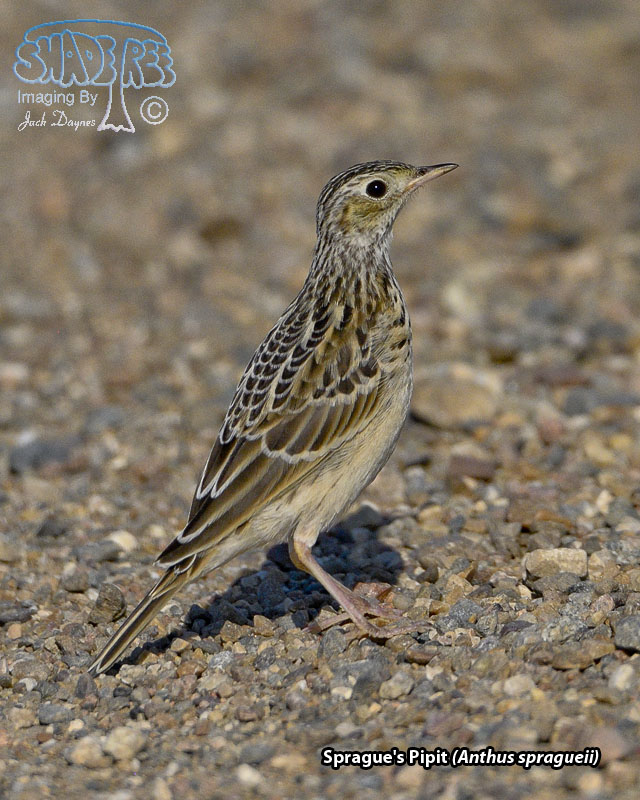
Sprague's Pipit(Anthus spragueii) |
|
Description: I met several species for the first time on my last day visiting the western tract of the park. This Sprague’s Pipit was among them. I spent five nights at Grasslands National Park in southern Saskatchewan to complete my two-month tour of Canada in the spring of 2022. |
Date Taken: 2022:07:14 8:29 |
|
Location:
Grasslands National Park |
|
Camera Information: NIKON D850, 800 mm, f/8.0, 1/8000 |
File Name: SpraguesPipit_8501083-Grasslands.NP-SK |
| © 2022 Jack Daynes, shadeTreeImaging.com |

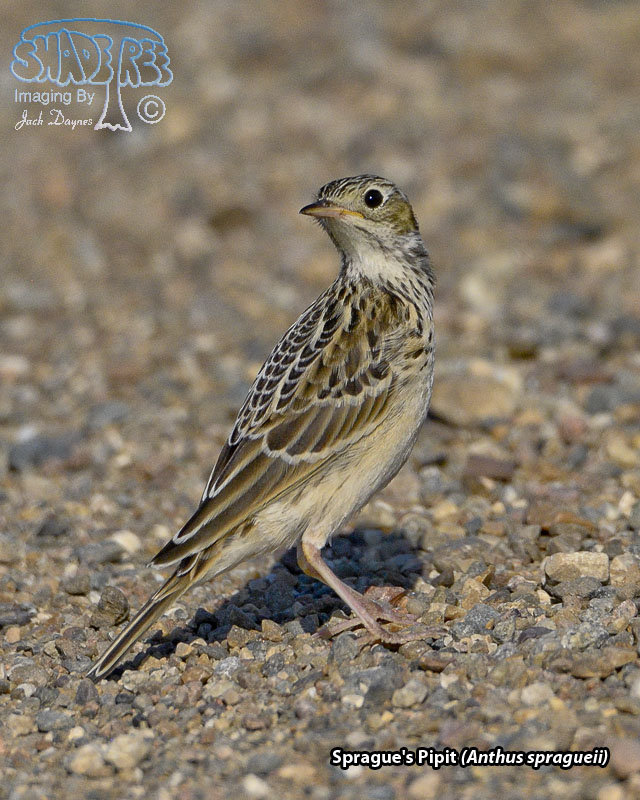
Sprague's Pipit(Anthus spragueii) |
|
Description: I met several species for the first time on my last day visiting the western tract of the park. This Sprague’s Pipit was among them. I spent five nights at Grasslands National Park in southern Saskatchewan to complete my two-month tour of Canada in the spring of 2022. |
Date Taken: 2022:07:14 8:29 |
|
Location:
Grasslands National Park |
|
Camera Information: NIKON D850, 800 mm, f/8.0, 1/8000 |
File Name: SpraguesPipit_8501079-Grasslands.NP-SK |
| © 2022 Jack Daynes, shadeTreeImaging.com |
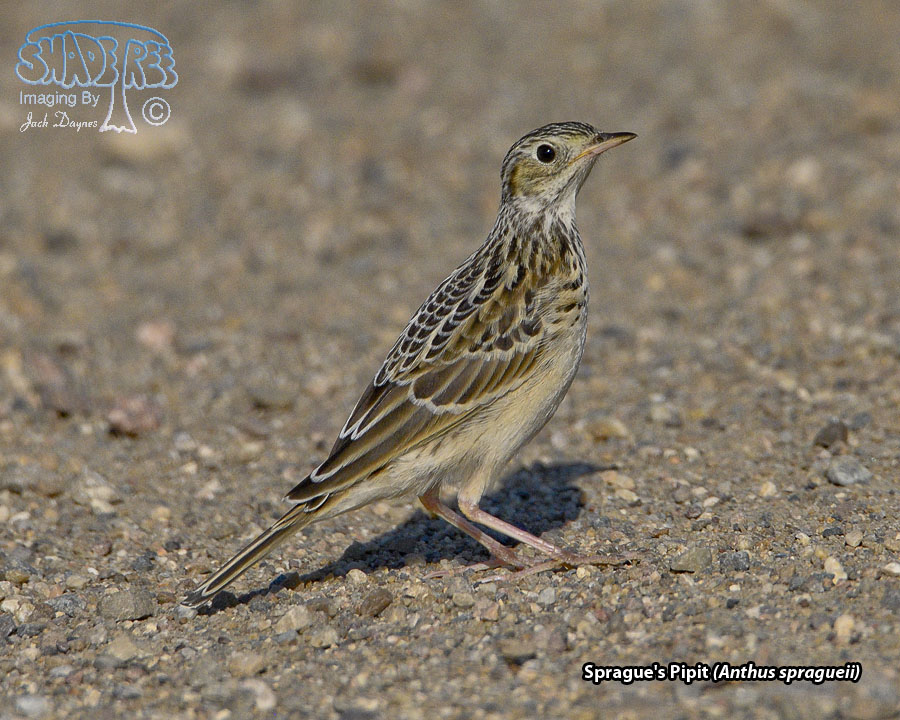
Sprague's Pipit(Anthus spragueii) |
|
Description: I met several species for the first time on my last day visiting the western tract of the park. This Sprague’s Pipit was among them. I spent five nights at Grasslands National Park in southern Saskatchewan to complete my two-month tour of Canada in the spring of 2022. |
Date Taken: 2022:07:14 8:29 |
|
Location:
Grasslands National Park |
|
Camera Information: NIKON D850, 800 mm, f/8.0, 1/8000 |
File Name: SpraguesPipit_8501069-Grasslands.NP-SK |
| © 2022 Jack Daynes, shadeTreeImaging.com |
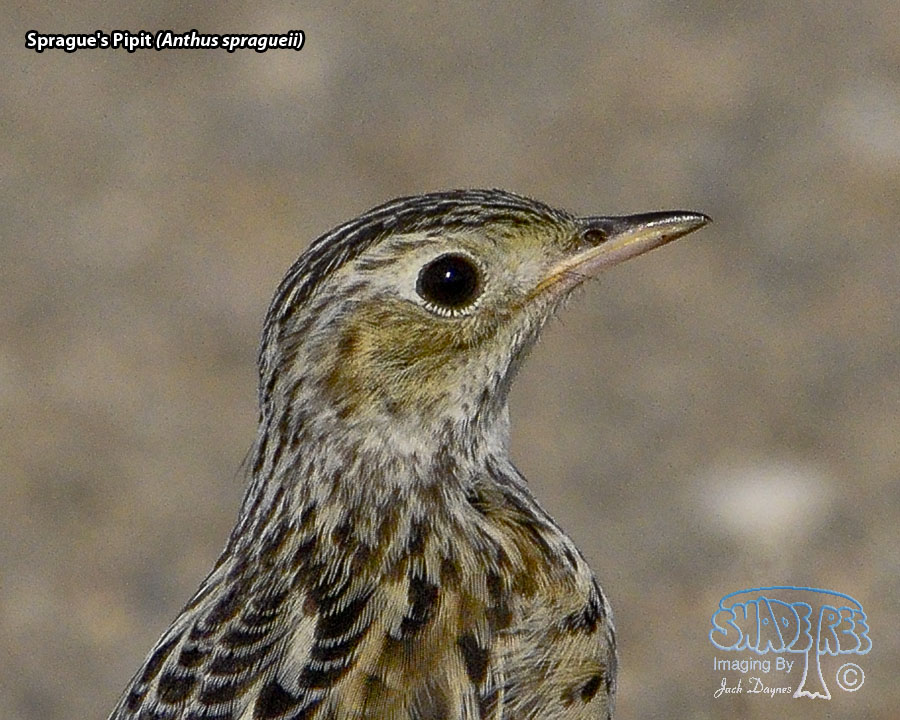
Sprague's Pipit(Anthus spragueii) |
|
Description: I met several species for the first time on my last day visiting the western tract of the park. This Sprague’s Pipit was among them. I spent five nights at Grasslands National Park in southern Saskatchewan to complete my two-month tour of Canada in the spring of 2022. |
Date Taken: 2022:07:14 8:29 |
|
Location:
Grasslands National Park |
|
Camera Information: NIKON D850, 800 mm, f/8.0, 1/8000 |
File Name: SpraguesPipit_8501063-Grasslands.NP-SK |
| © 2022 Jack Daynes, shadeTreeImaging.com |
Click map markers to reveal further information
