Black-Billed Cuckoo
Coccyzus erythropthalmus

Black-Billed Cuckoos breed in the northeastern USA and the southern regions of central and eastern Canada. After the breeding season, these birds travel south to northwestern South America. There they seek tropical rainforests, scrub forests and other woodlands.
Cuckoos specialize in eating caterpillars. They have developed an interesting strategy for dealing with the their prey’s noxious fur-like spines. Most birds are discouraged from taking them as prey. These spines become lodged in the stomach lining of its predators. When the spines lodge in the Cuckoo’s stomach, they regurgitate the entire stomach lining like owls do with the indigestible parts of their prey.
Science does not consider Black-Billed Cuckoos threatened, but their population is in decline. Loss of habitat and poisonous insecticides are the suspected causes for this drop in numbers. These birds are monotypic (researchers recognise no subspecies).
It is well known that Old World cuckoos are brood parasites (i.e. they lay their eggs in other birds’ nests). New World cuckoos may sometimes do so as well, but most of the time they raise their own young.
My earliest encounters with this species were with migrating individuals on South Padre Island. My stay in Texas during spring 2021 introduced me to almost 70 bird species, including the Black-Billed Cuckoo. In 2022, while enjoying an epic journey through western North America, I met one of these birds in Saskatchewan. I was waiting to cross a river on a ferry, when I heard the bird singing. The encounter was only captured in my mind, as I could not get a picture of this shy bird.
8 Photos
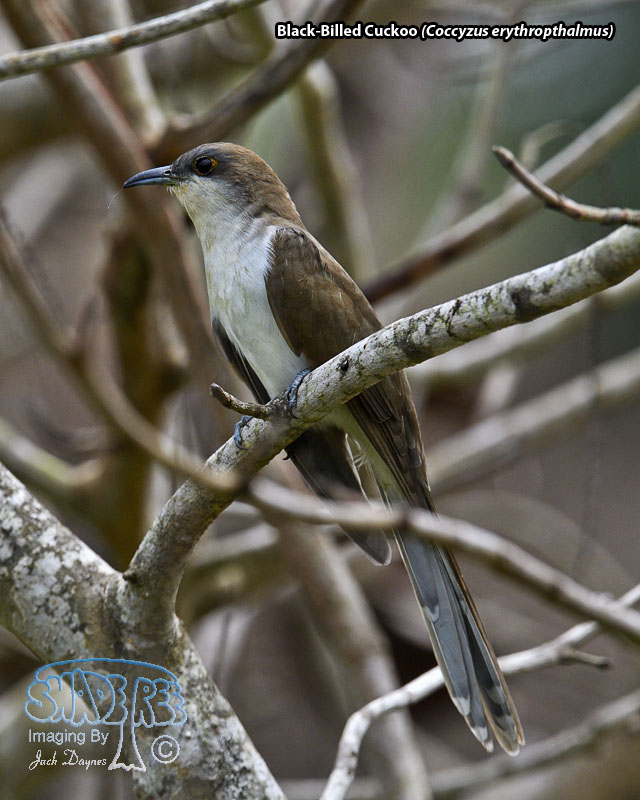
Black-Billed Cuckoo(Coccyzus erythropthalmus) |
|
Description: It took awhile to find an angle that wasn’t obscured by foliage, but at last the bird cooperated. I had an exceptional day at the SPI Convention Centre. I met three new bird species: Veery, Dickcissel, and Black-Billed Cuckoo. |
Date Taken: 2021:04:15 13:48 |
|
Location:
South Padre Island WBC |
|
Camera Information: NIKON D5, 800 mm, f/8.0, 1/2000 |
File Name: BlackBilledCuckoo_D5X6032-SPI_BirdNatureCtr |
| © 2021 Jack Daynes, shadeTreeImaging.com |

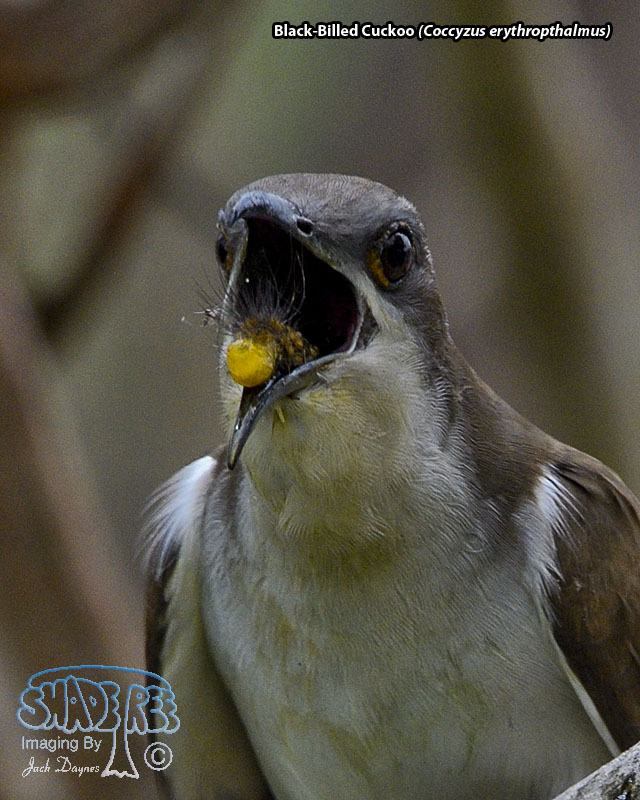
Black-Billed Cuckoo(Coccyzus erythropthalmus) |
|
Description: And down the hatch! This bird has a well-earned reputation for eating caterpillars. It took awhile to find an angle that wasn’t obscured by foliage, but at last the bird cooperated. I had an exceptional day at the SPI Convention Centre. I met three new bird species: Veery, Dickcissel, and Black-Billed Cuckoo. |
Date Taken: 2021:04:15 13:46 |
|
Location:
South Padre Island WBC |
|
Camera Information: NIKON D5, 800 mm, f/8.0, 1/1500 |
File Name: BlackBilledCuckoo_D5X5994-SPI_BirdNatureCtr |
| © 2021 Jack Daynes, shadeTreeImaging.com |
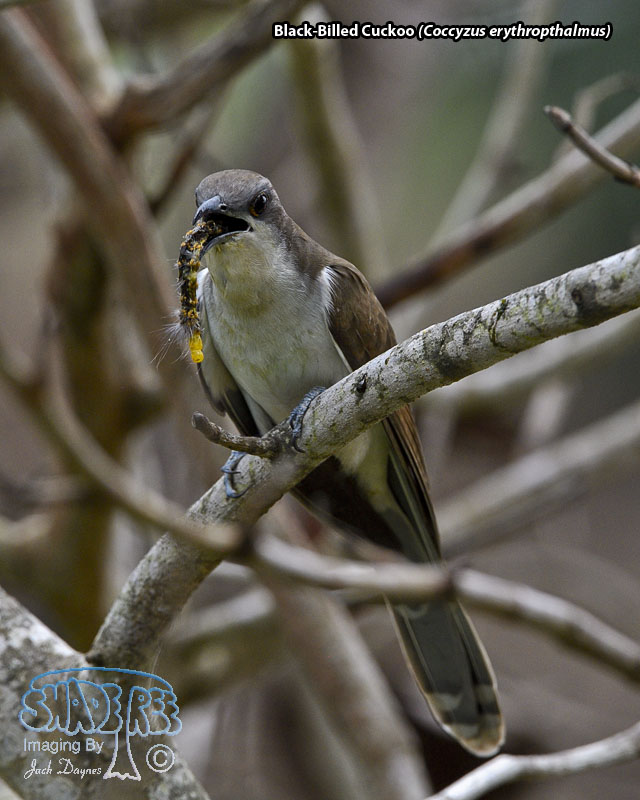
Black-Billed Cuckoo(Coccyzus erythropthalmus) |
|
Description: And down the hatch! This bird has a well-earned reputation for eating caterpillars. It took awhile to find an angle that wasn’t obscured by foliage, but at last the bird cooperated. I had an exceptional day at the SPI Convention Centre. I met three new bird species: Veery, Dickcissel, and Black-Billed Cuckoo. |
Date Taken: 2021:04:15 13:46 |
|
Location:
South Padre Island WBC |
|
Camera Information: NIKON D5, 800 mm, f/8.0, 1/1500 |
File Name: BlackBilledCuckoo_D5X5992-SPI_BirdNatureCtr |
| © 2021 Jack Daynes, shadeTreeImaging.com |
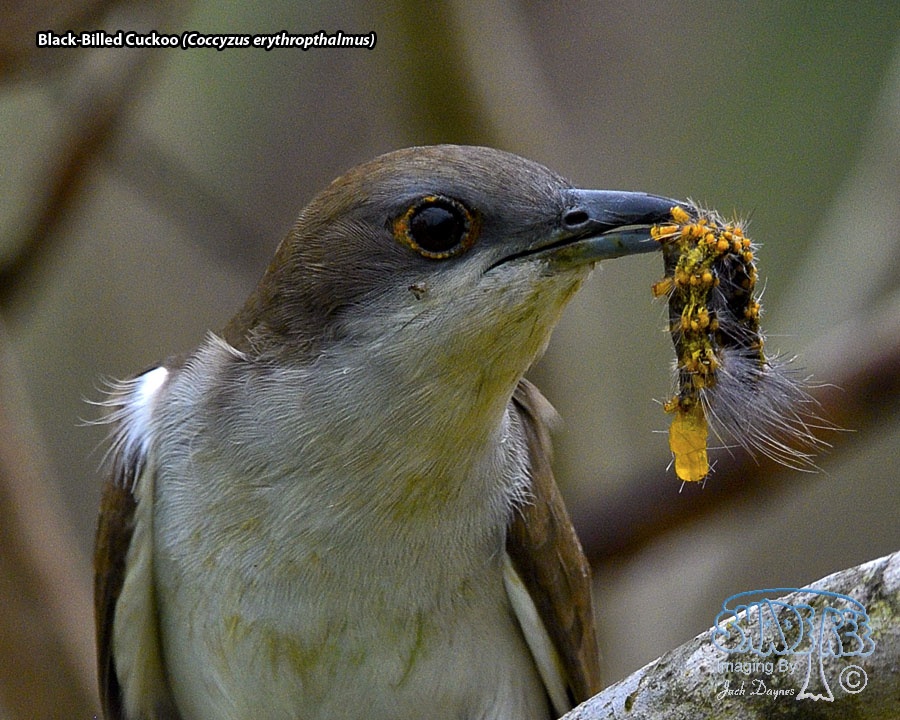
Black-Billed Cuckoo(Coccyzus erythropthalmus) |
|
Description: This bird has a well-earned reputation for eating caterpillars. It took awhile to find an angle that wasn’t obscured by foliage, but at last the bird cooperated. I had an exceptional day at the SPI Convention Centre. I met three new bird species: Veery, Dickcissel, and Black-Billed Cuckoo. |
Date Taken: 2021:04:15 13:46 |
|
Location:
South Padre Island WBC |
|
Camera Information: NIKON D5, 800 mm, f/8.0, 1/1500 |
File Name: BlackBilledCuckoo_D5X5975-SPI_BirdNatureCtr |
| © 2021 Jack Daynes, shadeTreeImaging.com |
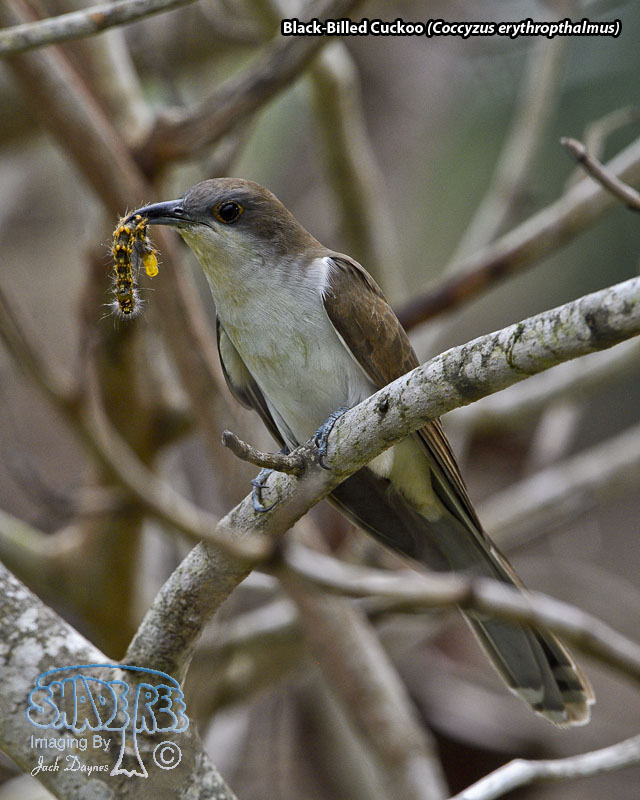
Black-Billed Cuckoo(Coccyzus erythropthalmus) |
|
Description: This bird has a well-earned reputation for eating caterpillars. It took awhile to find an angle that wasn’t obscured by foliage, but at last the bird cooperated. I had an exceptional day at the SPI Convention Centre. I met three new bird species: Veery, Dickcissel, and Black-Billed Cuckoo. |
Date Taken: 2021:04:15 13:46 |
|
Location:
South Padre Island WBC |
|
Camera Information: NIKON D5, 800 mm, f/8.0, 1/1500 |
File Name: BlackBilledCuckoo_D5X5962-SPI_BirdNatureCtr |
| © 2021 Jack Daynes, shadeTreeImaging.com |
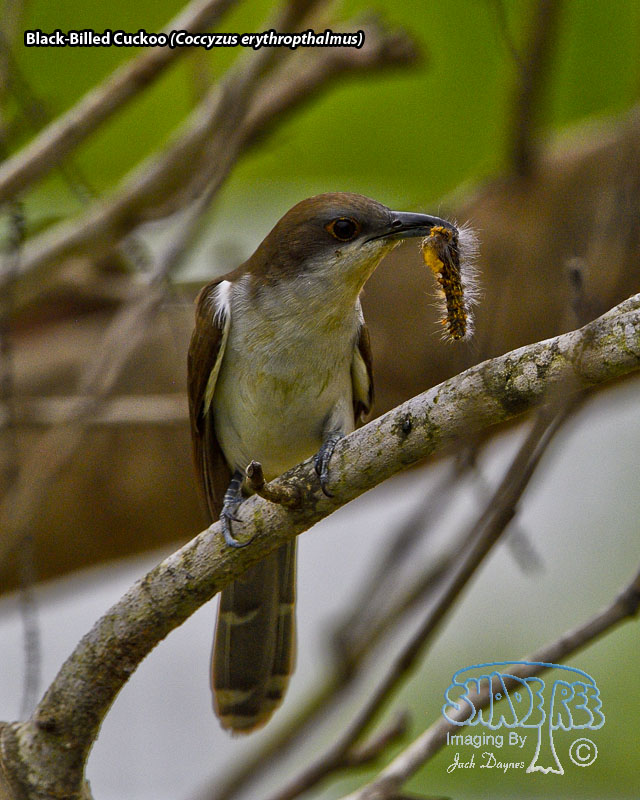
Black-Billed Cuckoo(Coccyzus erythropthalmus) |
|
Description: This bird has a well-earned reputation for eating caterpillars. It took awhile to find an angle that wasn’t obscured by foliage, but at last the bird cooperated. I had an exceptional day at the SPI Convention Centre. I met three new bird species: Veery, Dickcissel, and Black-Billed Cuckoo. |
Date Taken: 2021:04:15 13:45 |
|
Location:
South Padre Island WBC |
|
Camera Information: NIKON D5, 800 mm, f/8.0, 1/3000 |
File Name: BlackBilledCuckoo_D5X5954-SPI_BirdNatureCtr |
| © 2021 Jack Daynes, shadeTreeImaging.com |
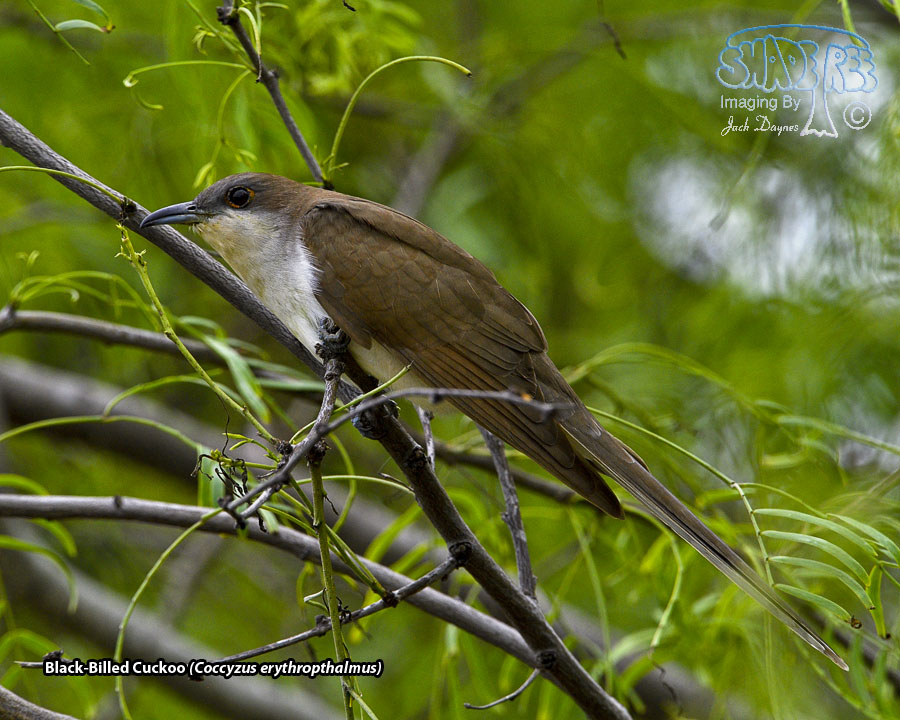
Black-Billed Cuckoo(Coccyzus erythropthalmus) |
|
Description: It took awhile to find an angle that wasn’t obscured by foliage, but at last the bird cooperated. I had an exceptional day at the SPI Convention Centre. I met three new bird species: Veery, Dickcissel, and Black-Billed Cuckoo. |
Date Taken: 2021:04:15 13:44 |
|
Location:
South Padre Island WBC |
|
Camera Information: NIKON D5, 800 mm, f/8.0, 1/2000 |
File Name: BlackBilledCuckoo_D5X5898-SPI_BirdNatureCtr |
| © 2021 Jack Daynes, shadeTreeImaging.com |
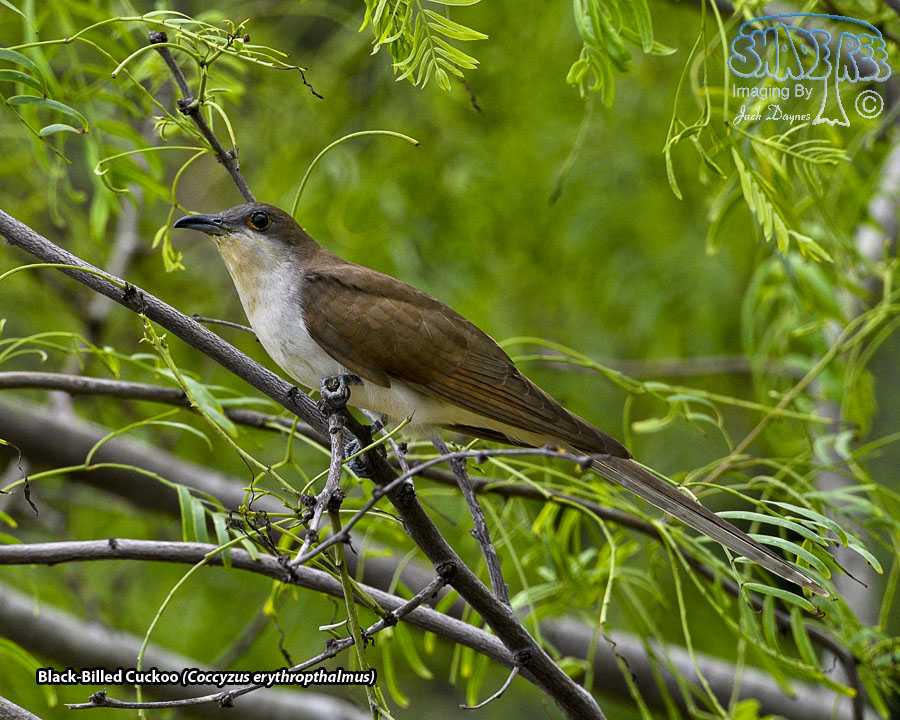
Black-Billed Cuckoo(Coccyzus erythropthalmus) |
|
Description: It took awhile to find an angle that wasn’t obscured by foliage, but at last the bird cooperated. I had an exceptional day at the SPI Convention Centre. I met three new bird species: Veery, Dickcissel, and Black-Billed Cuckoo. |
Date Taken: 2021:04:15 13:42 |
|
Location:
South Padre Island WBC |
|
Camera Information: NIKON D5, 800 mm, f/8.0, 1/1500 |
File Name: BlackBilledCuckoo_D5X5860-SPI_BirdNatureCtr |
| © 2021 Jack Daynes, shadeTreeImaging.com |
Click map markers to reveal further information
