Stilt Sandpiper
Calidris himantopus

Other than the gulf coast of Texas and southern Florida, where a few Stilt Sandpipers spend the winter, we will only see these birds in the USA during migrations. A small portion of the population spends the winter in Mexico, Central America and the western coastline on the Gulf of Mexico. But most of these birds migrate to the South American interior when the breeding season is over. In spring, they travel to the northern limits of the North American continent. There we find them on the Arctic coast of Alaska, Yukon and Northwest Territories. While some birds breed on the southwestern shores of Hudson Bay.
When early ornithologists first met the Stilt Sandpiper, they saw a long-legged bird with partially webbed toes, and a long bill with an expanded tip. So they placed it in the genus Micropalama, even though these traits lined up with others in the sandpiper clan (genus Calidris). Then observers noticed it foraged, not on mudflats, like typical sandpipers, but while wading up to their bellies in shallow water. They believed it fit in with the Yellowlegs (genus Tringa), some even believing it was some kind of blend of dowitcher and yellowlegs. Folks gave these birds names such as Bastard Yellowlegs, Stilted Sandpiper, Mongrel, Long-legged Sandpiper, and Frost Snipe.
Taxonomists classify the Stilt Sandpiper as monotypic (i.e. no subspecies).
The first Stilt Sandpiper I met was in San Diego (California) in late July 2013, when an out-of-place bird stopped to spend some time at the South Bay. It was most likely headed south after breeding in Alaska. In the spring of 2020 and again in 2021 and 2024, I met them in south Texas, where some of them may have spent the winter, or were moving north to breed in the high Arctic.
13 Photos
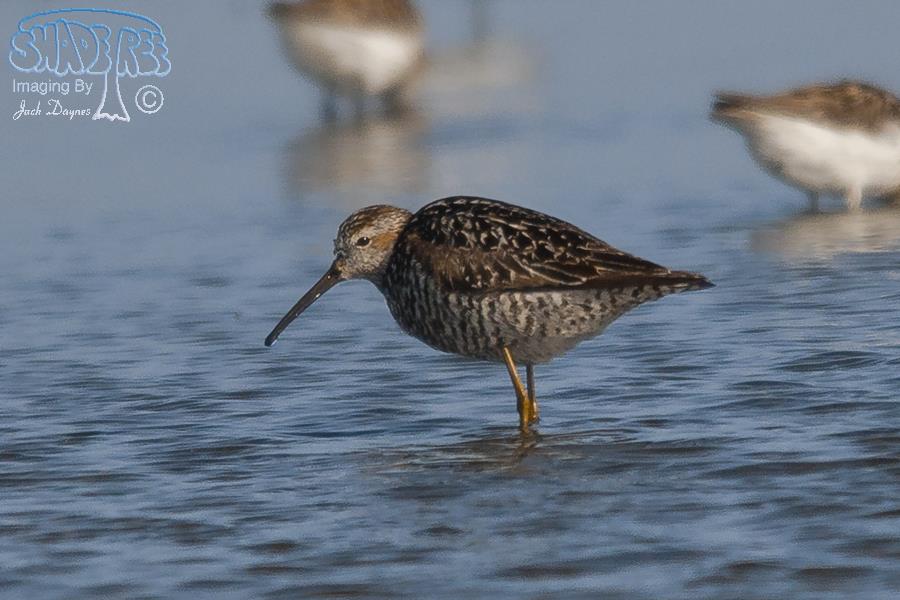
Stilt Sandpiper(Calidris himantopus) |
|
Description: Normal migration would have this bird well to the east. Found at the Saltworks. Part of the South San Diego Bay NWR, San Diego, California. |
Date Taken: 2013:07:24 7:37 |
|
Location:
Saltworks |
|
Camera Information: NIKON D3X, 800 mm, f/5.6, 1/2500 |
File Name: D3X0645-StiltSandPiper |
| © 2013 Jack Daynes, shadeTreeImaging.com |

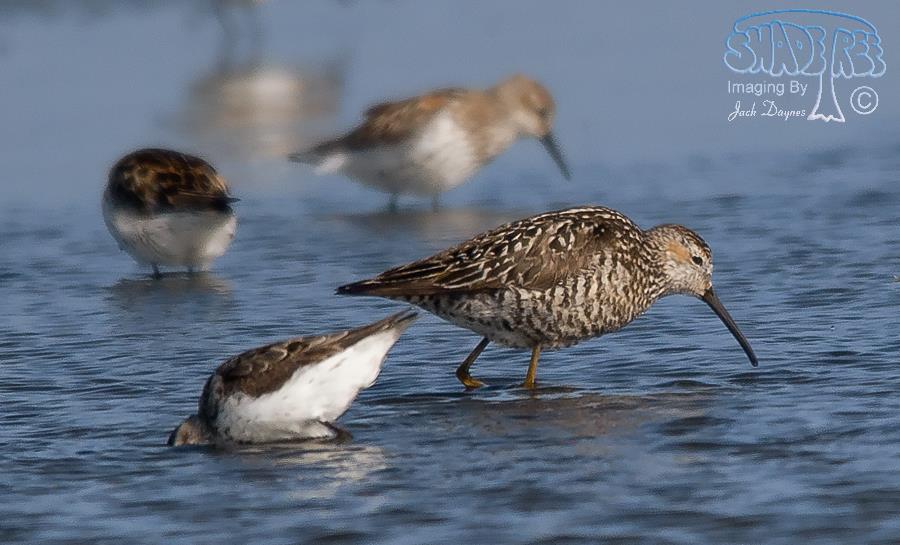
Stilt Sandpiper(Calidris himantopus) |
|
Description: Normal migration would have this bird well to the east. This bird was found at the Saltworks. Part of the South San Diego Bay NWR, San Diego, California USA |
Date Taken: 2013:07:24 7:38 |
|
Location:
Saltworks |
|
Camera Information: NIKON D3X, 800 mm, f/5.6, 1/2500 |
File Name: D3X0664-StiltSandPiper |
| © 2013 Jack Daynes, shadeTree-Imaging.com |
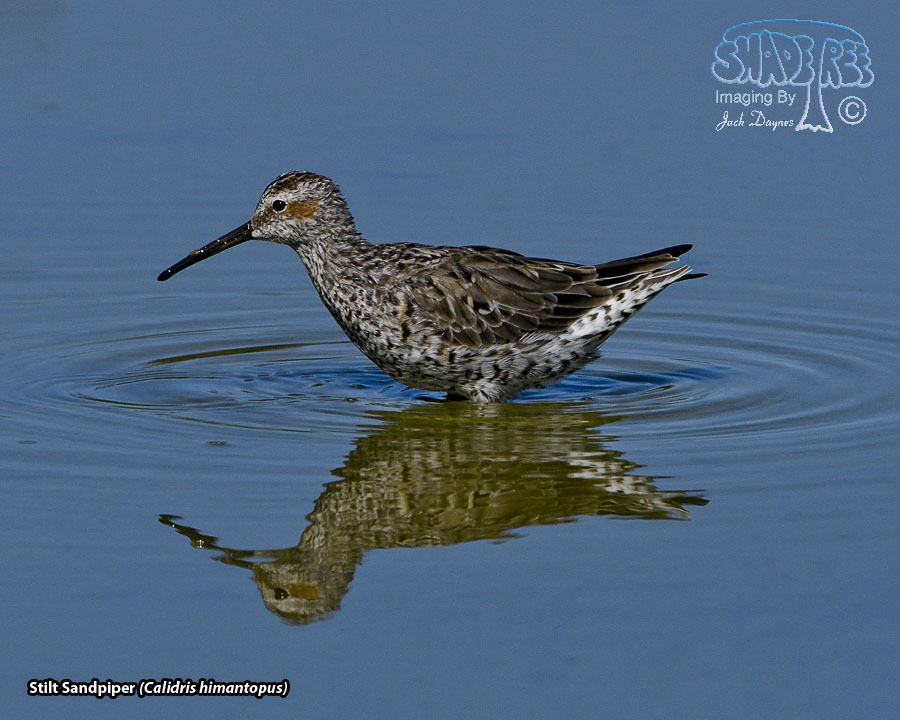
Stilt Sandpiper(Calidris himantopus) |
|
Description: Until I visited South Padre, I’d only met the Stilt Sandpiper at a distance in South San Diego Bay. The Convention Center on South Padre Island, Texas is a first rate birding destination. I spent several hours in the morning and several more in the afternoon on this day. |
Date Taken: 2020:04:30 16:42 |
|
Location:
Convention Center |
|
Camera Information: NIKON D500, 800 mm, f/7.1, 1/4000 |
File Name: StiltSandpiper_D501385-South-Padre |
| © 2020 Jack Daynes, shadeTreeImaging.com |
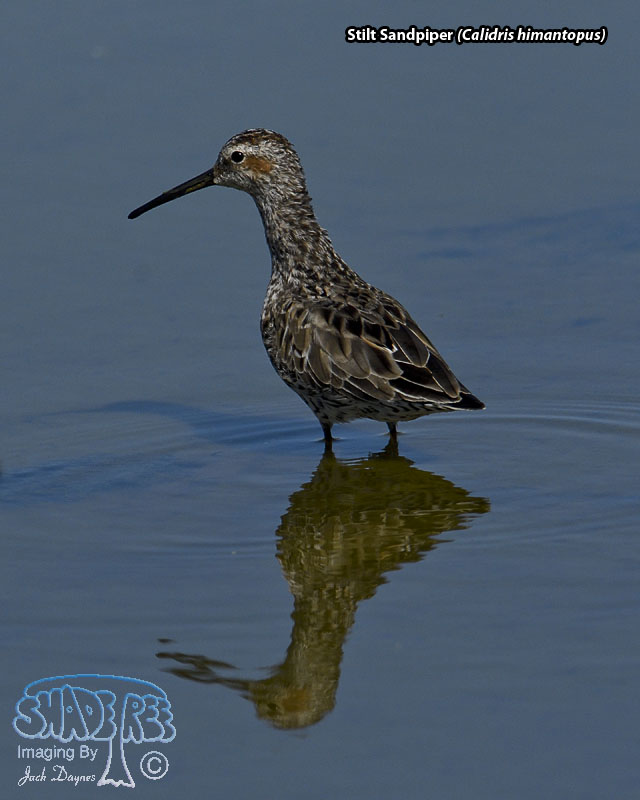
Stilt Sandpiper(Calidris himantopus) |
|
Description: Until I visited South Padre, I’d only met the Stilt Sandpiper at a distance in South San Diego Bay. The Convention Center on South Padre Island, Texas is a first rate birding destination. I spent several hours in the morning and several more in the afternoon on this day. |
Date Taken: 2020:04:30 16:43 |
|
Location:
Convention Center |
|
Camera Information: NIKON D500, 800 mm, f/7.1, 1/3200 |
File Name: StiltSandpiper_D501410-South-Padre |
| © 2020 Jack Daynes, shadeTreeImaging.com |
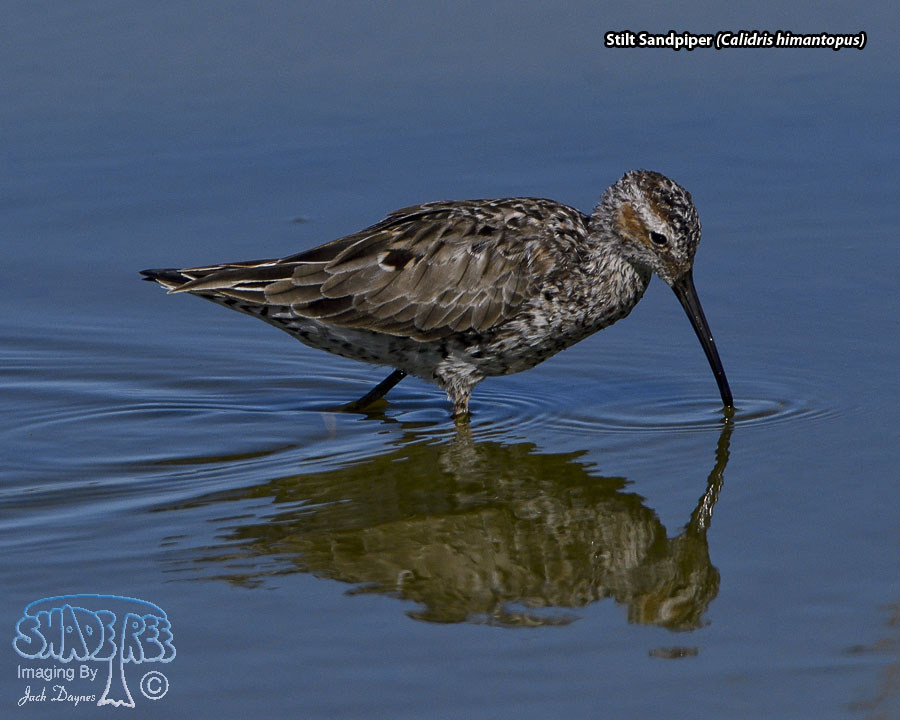
Stilt Sandpiper(Calidris himantopus) |
|
Description: Until I visited South Padre, I’d only met the Stilt Sandpiper at a distance in South San Diego Bay. The Convention Center on South Padre Island, Texas is a first rate birding destination. I spent several hours in the morning and several more in the afternoon on this day. |
Date Taken: 2020:04:30 16:45 |
|
Location:
Convention Center |
|
Camera Information: NIKON D500, 800 mm, f/7.1, 1/3200 |
File Name: StiltSandpiper_D501447-South-Padre |
| © 2020 Jack Daynes, shadeTreeImaging.com |
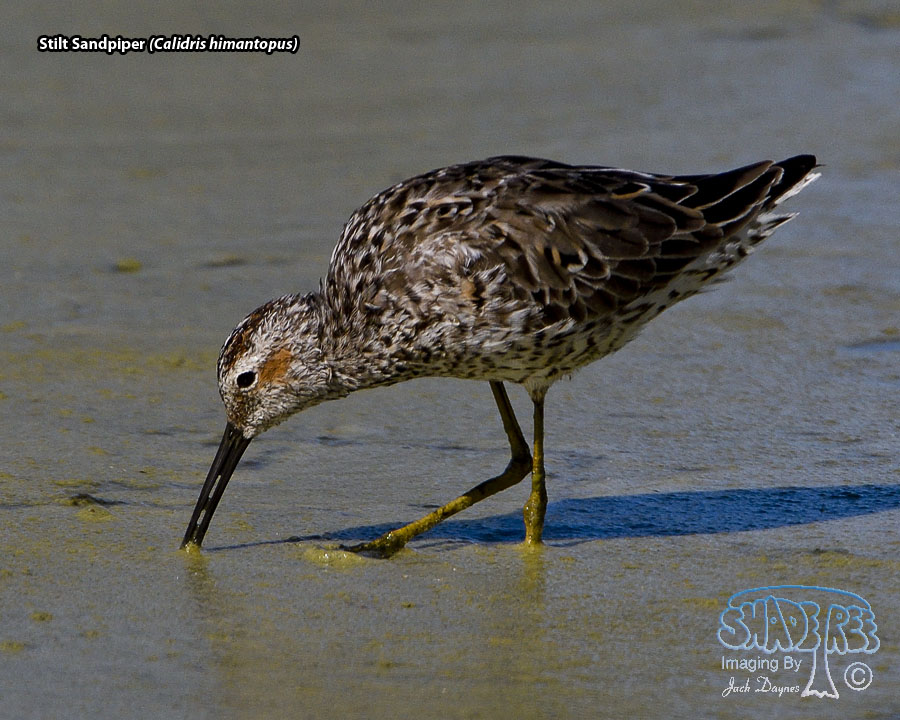
Stilt Sandpiper(Calidris himantopus) |
|
Description: Until I visited South Padre, I’d only met the Stilt Sandpiper at a distance in South San Diego Bay. The Convention Center on South Padre Island, Texas is a first rate birding destination. I spent several hours in the morning and several more in the afternoon on this day. |
Date Taken: 2020:04:30 16:57 |
|
Location:
Convention Center |
|
Camera Information: NIKON D500, 800 mm, f/7.1, 1/2500 |
File Name: StiltSandpiper_D501493-South-Padre |
| © 2020 Jack Daynes, shadeTreeImaging.com |
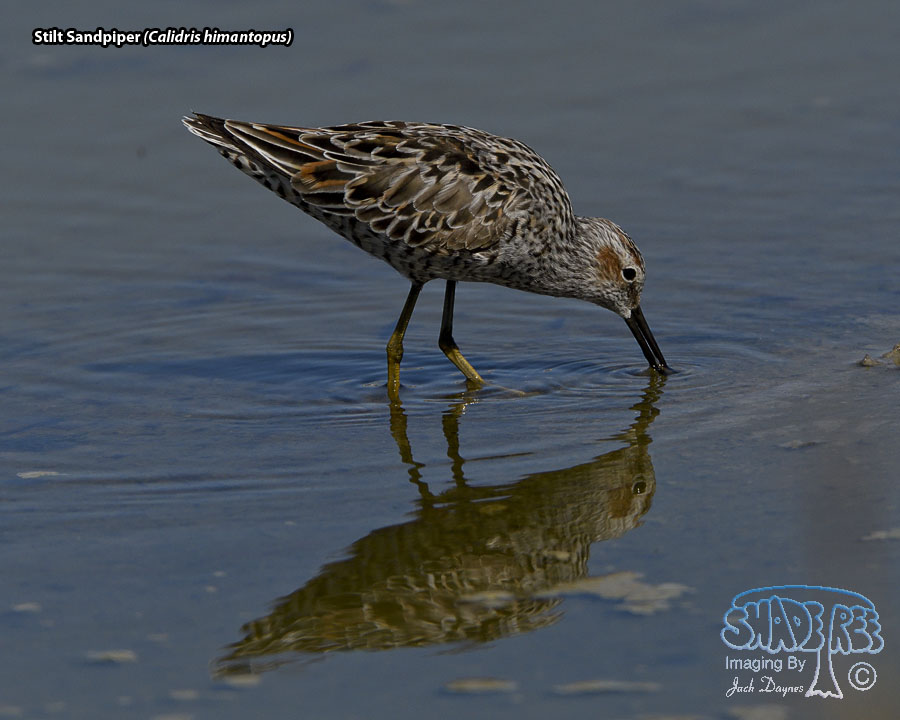
Stilt Sandpiper(Calidris himantopus) |
|
Description: Stilt Sandpipers winter in South America, even to Argentina, and pass through the USA and most of Canada to breed in the high Arctic. My second full day on South Padre Island, Texas was less birdy than my first day, but still I met some great birds. |
Date Taken: 2020:05:02 16:29 |
|
Location:
Convention Center |
|
Camera Information: NIKON D500, 800 mm, f/6.3, 1/4000 |
File Name: StiltSandpiper_D502973-South-Padre |
| © 2020 Jack Daynes, shadeTreeImaging.com |
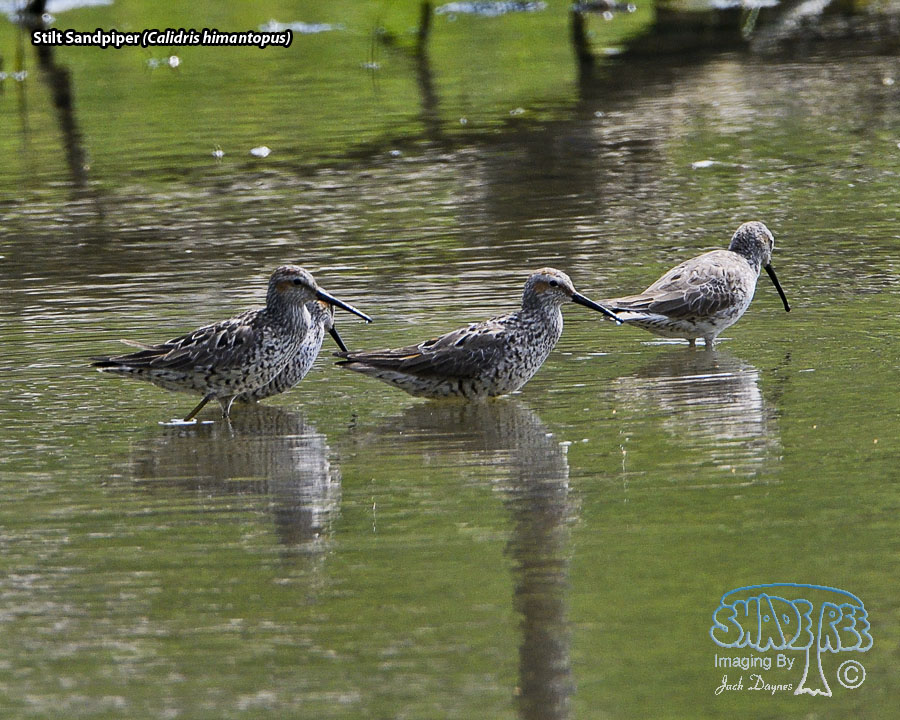
Stilt Sandpiper(Calidris himantopus) |
|
Description: Stilt Sandpipers found the shallow remnant pond in the otherwise dry resaca a viable place to forage. I rode my bike across the reserve at Resaca de las Palmas on my last full day in Brownsville Texas. |
Date Taken: 2020:05:07 10:36 |
|
Location:
Resaca de las Palmas |
|
Camera Information: NIKON D500, 800 mm, f/8.0, 1/1250 |
File Name: StiltSandpiper_D503769-Resaca-de-las-Palmas |
| © 2020 Jack Daynes, shadeTreeImaging.com |
Stilt Sandpiper(Calidris himantopus) |
|
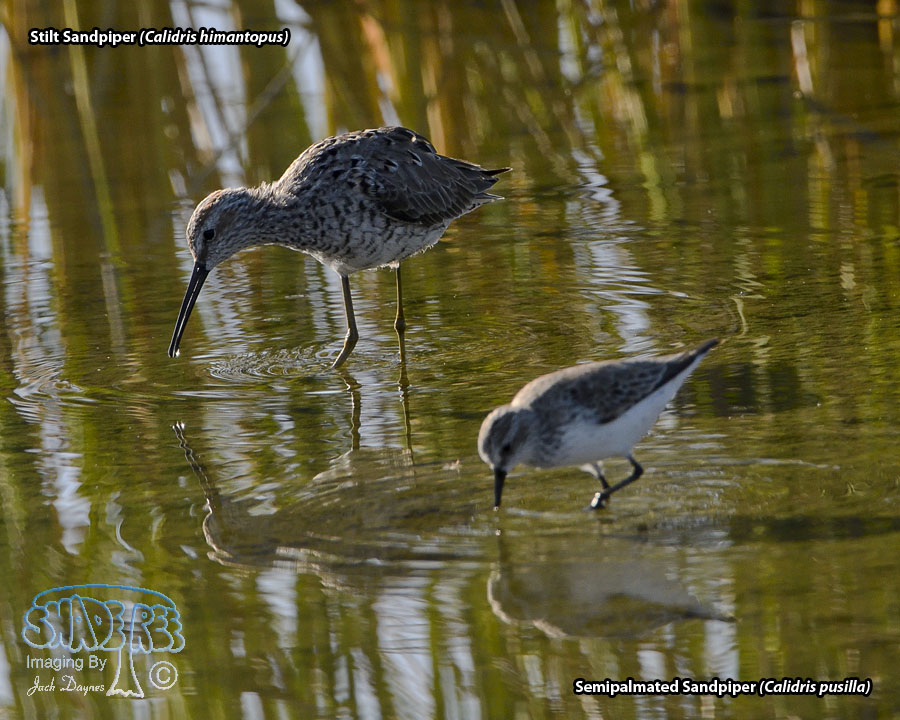
Description: Seen here feeding near a Semipalmated Sandpiper, until I visited South Padre, I’d only met the Stilt Sandpiper at a distance in South San Diego Bay. The Convention Center on South Padre Island, Texas is a first rate birding destination. I spent several hours in the morning and several more in the afternoon on this day. |
Date Taken: 2020:04:30 8:26 |
|
Location:
Convention Center |
|
Camera Information: NIKON D500, 800 mm, f/8.0, 1/1250 |
File Name: StiltSandpiper_D509626-South-Padre |
| © 2020 Jack Daynes, shadeTreeImaging.com |
Stilt Sandpiper(Calidris himantopus) |
|
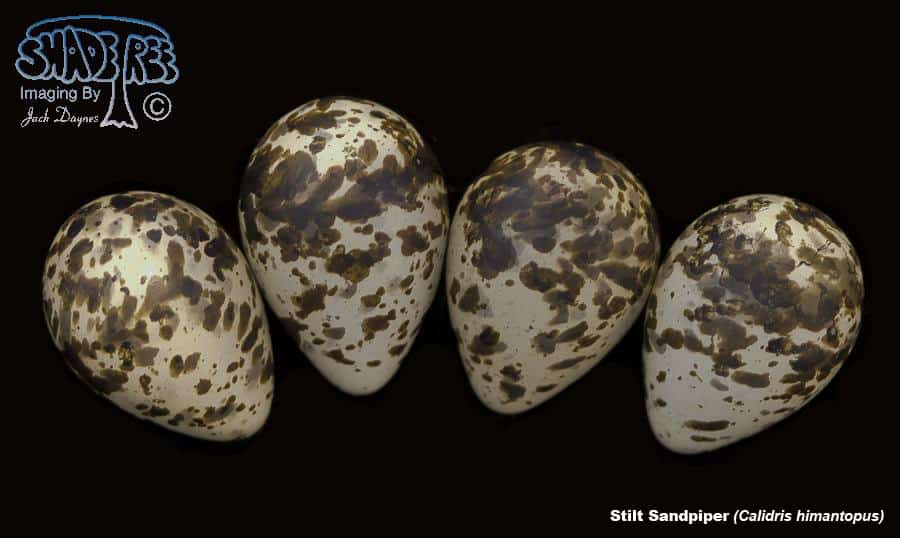
Description: Part of the collection at the Western Foundation of Vertibrate Zoology in Camarillo, California. |
Date Taken: 2011:11:01 15:14 |
|
Location:
W. Fdn. of Vertibrate Zoology |
|
Camera Information: NIKON D3X, 105 mm, f/8.0, 1/1 |
File Name: StiltSandPiper_D3X4602-Eggs |
| © 2011 Jack Daynes, shadeTree Imaging |
Stilt Sandpiper(Calidris himantopus) |
|
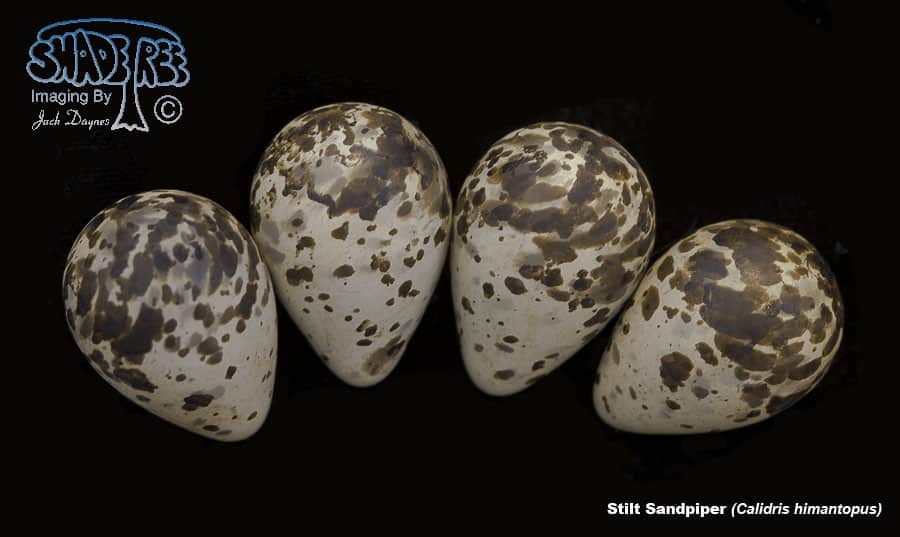
Description: Part of the collection at the Western Foundation of Vertibrate Zoology in Camarillo, California. |
Date Taken: 2011:11:01 15:15 |
|
Location:
W. Fdn. of Vertibrate Zoology |
|
Camera Information: NIKON D3X, 105 mm, f/8.0, 1/1 |
File Name: StiltSandPiper_D3X4605-Eggs |
| © 2011 Jack Daynes, shadeTree Imaging |
Stilt Sandpiper(Calidris himantopus) |
|
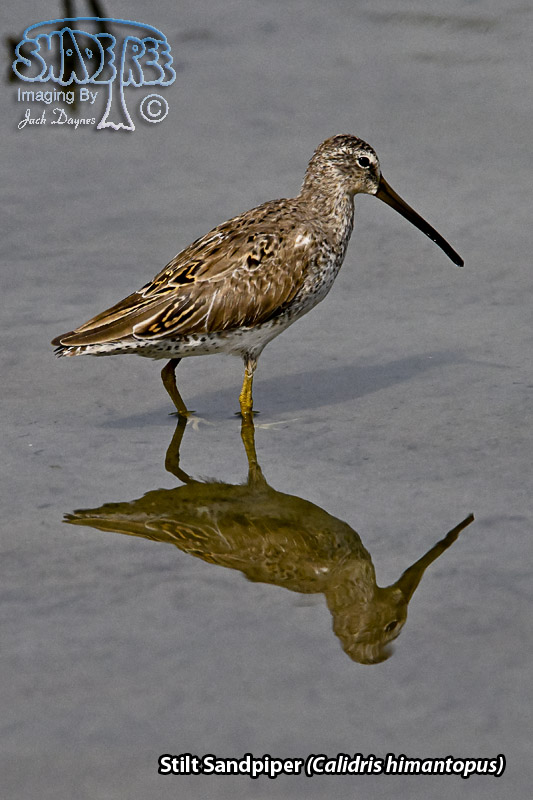
Description: Stilt Sandpipers' longer legs help distinguish it from the similar-looking dowitchers. |
Date Taken: 2024:04:17 15:06 |
|
Location:
South Padre Island |
|
Camera Information: NIKON Z 9, 800 mm, f/8.0, 1/20000 |
File Name: StiltSandpiper_Z9X7534_SPI-BirdingNatureCenter |
| © 2024 Jack Daynes, shadeTreeImaging.com |
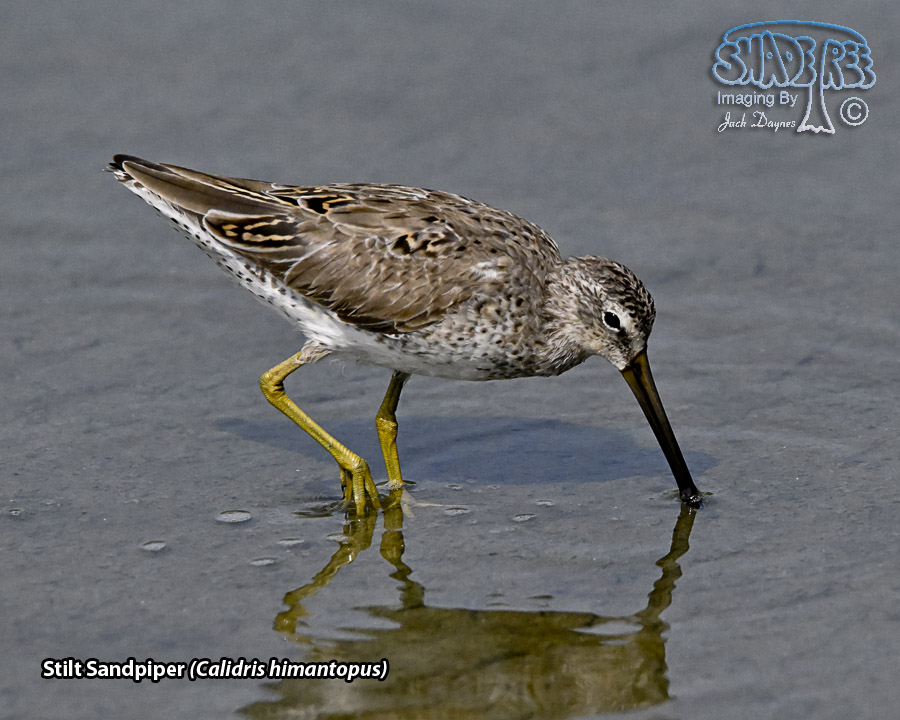
Stilt Sandpiper(Calidris himantopus) |
|
Description: Stilt Sandpipers' longer legs help distinguish it from the similar-looking dowitchers. |
Date Taken: 2024:04:17 15:05 |
|
Location:
South Padre Island |
|
Camera Information: NIKON Z 9, 800 mm, f/8.0, 1/20000 |
File Name: StiltSandpiper_Z9X7480_SPI-BirdingNatureCenter |
| © 2024 Jack Daynes, shadeTreeImaging.com |
Click map markers to reveal further information
