Palm Warbler

Setophaga palmarum
Palm Warblers get their name from the region where they spend winters. Nesting further north than most moth-eaters (genus Setophaga), summers find them in regions (mostly in Canada) dominated by boggy shrub lands surrounded by conifers. Such habitats are unfriendly to their namesake palm trees. Even in winter we find them often in marshy lowlands in habitats that seem better suited to sparrows.
In keeping with their low-to-the-ground reputation, they usually place their nests on the ground below a small conifer, though they sometimes place the nest on a low branch about a foot from the ground.
Taxonomists call out two subspecies, diagnosed chiefly by coloration on the bellies of these birds in breeding plumage:
- S. p. palmarum breeds in Canada from southwestern Mackenzie Valley (NWT) east through northern Saskatchewan and Manitoba to northern Ontario, and south from central Alberta through central Saskatchewan and southern Manitoba to northern Minnesota, Wisconsin, and southern Ontario. They spend winters chiefly in the Caribbean Basin, with some occurring north to the southeastern United States, and some spend winters south along the eastern edge of the Yucatan Peninsula and Costa Rica.
- S. p. hypochrysea breeds further east, from eastern Ontario through central and southern Quebec to Labrador and Newfoundland, and south from New Brunswick and Nova Scotia, through northern New England to New York. They spend winters primarily on the Gulf Coast from Louisiana to Florida.
Until my 2023 trip to Ontario Canada, my only meeting with this species had been on Isla Socorro in the Revillagigedo Islands, during the 2017 science expedition I was privileged to attend. Before crossing into Canada, I stopped in Ohio at Magee Marsh on the shore of Lake Erie. The Palm Warbler was one of the memorable birds I met there.
6 Photos
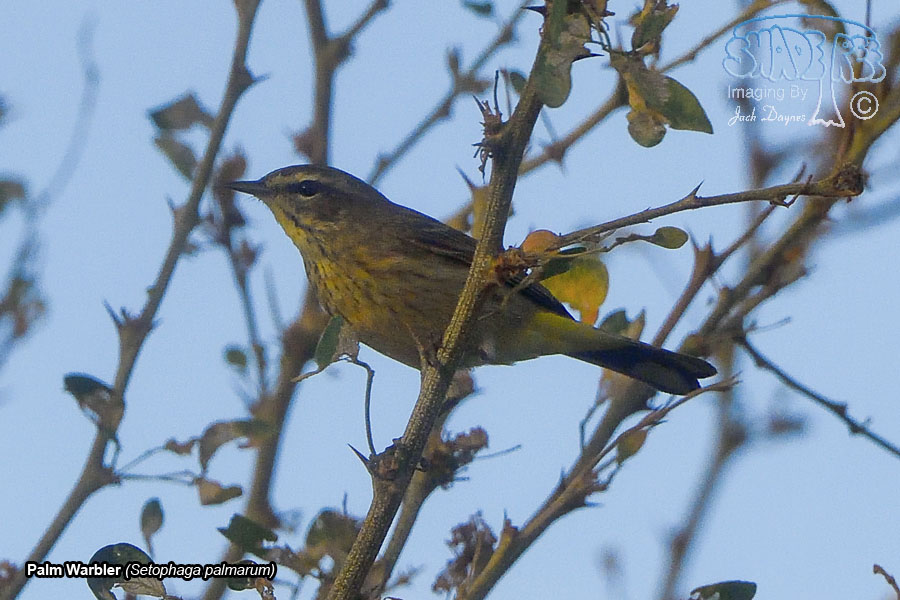
Palm Warbler(Setophaga palmarum) |
|
Description: One of several migrant species found on our first afternoon on Isla Socorro. The largest of the islands in the Archipielago de Revillagigedo, and part of the state of Colima, Mexico. |
Date Taken: 2017:02:15 16:52 |
|
Location:
Marine Base |
|
Camera Information: NIKON D5, 550 mm, f/8.0, 1/3200 |
File Name: PalmWarbler_D5X7996 |
| © 2017 Jack Daynes, shadeTreeImaging.com |

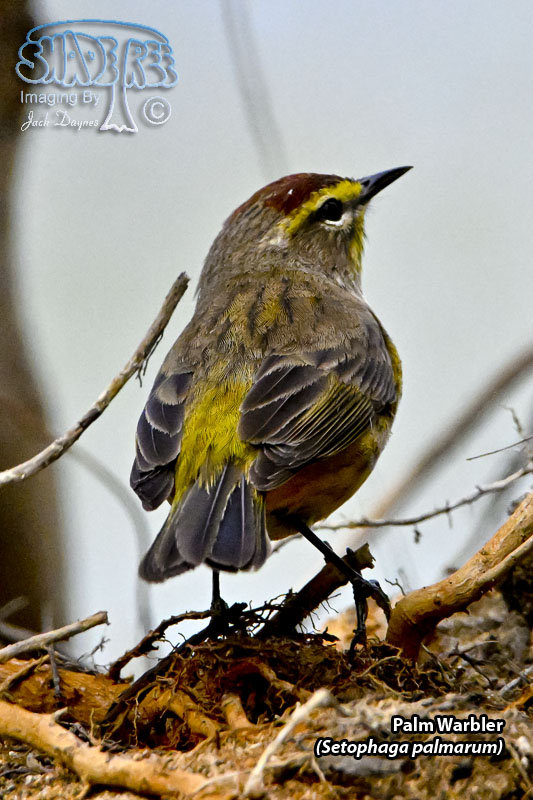
Palm Warbler(Setophaga palmarum) |
|
Description: My last stop in Ohio, before entering Canada in 2023 was at Magee Marsh, on the southern shore of Lake Erie. Spring migration was in full swing, and many birds staged there, fattening up before flying over the Great Lakes. |
Date Taken: 2023:05:07 13:45 |
|
Location:
Magee Marsh |
|
Camera Information: NIKON Z 9, 800 mm, f/8.0, 1/6400 |
File Name: PalmWarbler_ZX91599_MageeMarsh-OH |
| © 2023 Jack Daynes, shadeTreeImaging.com |
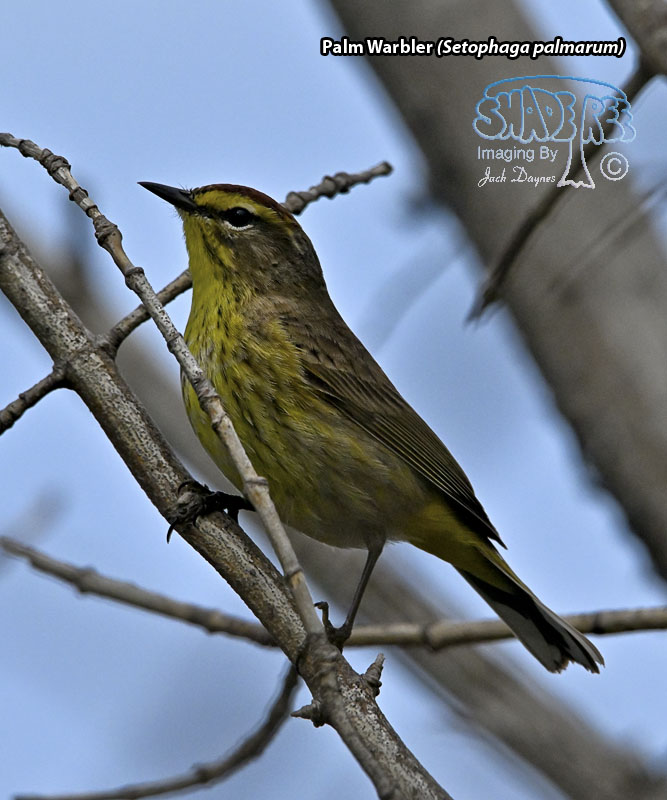
Palm Warbler(Setophaga palmarum) |
|
Description: My last stop in Ohio, before entering Canada in 2023 was at Magee Marsh, on the southern shore of Lake Erie. Spring migration was in full swing, and many birds staged there, fattening up before flying over the Great Lakes. |
Date Taken: 2023:05:07 13:46 |
|
Location:
Magee Marsh |
|
Camera Information: NIKON Z 9, 800 mm, f/8.0, 1/6400 |
File Name: PalmWarbler_ZX91674_MageeMarsh-OH |
| © 2023 Jack Daynes, shadeTreeImaging.com |
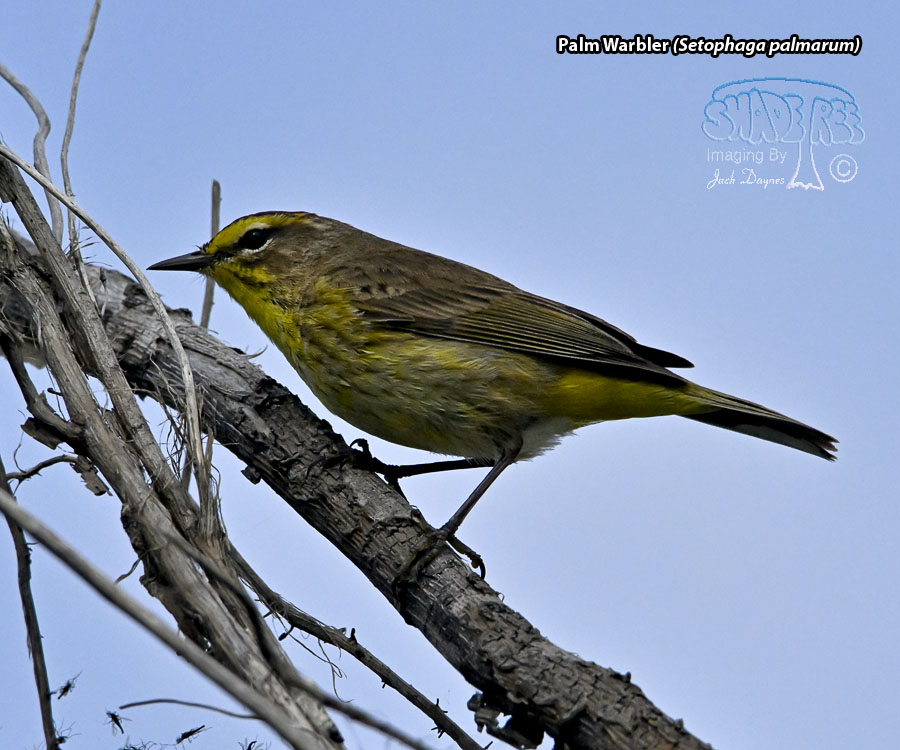
Palm Warbler(Setophaga palmarum) |
|
Description: My last stop in Ohio, before entering Canada in 2023 was at Magee Marsh, on the southern shore of Lake Erie. Spring migration was in full swing, and many birds staged there, fattening up before flying over the Great Lakes. |
Date Taken: 2023:05:07 13:46 |
|
Location:
Magee Marsh |
|
Camera Information: NIKON Z 9, 800 mm, f/8.0, 1/6400 |
File Name: PalmWarbler_ZX91728_MageeMarsh-OH |
| © 2023 Jack Daynes, shadeTreeImaging.com |
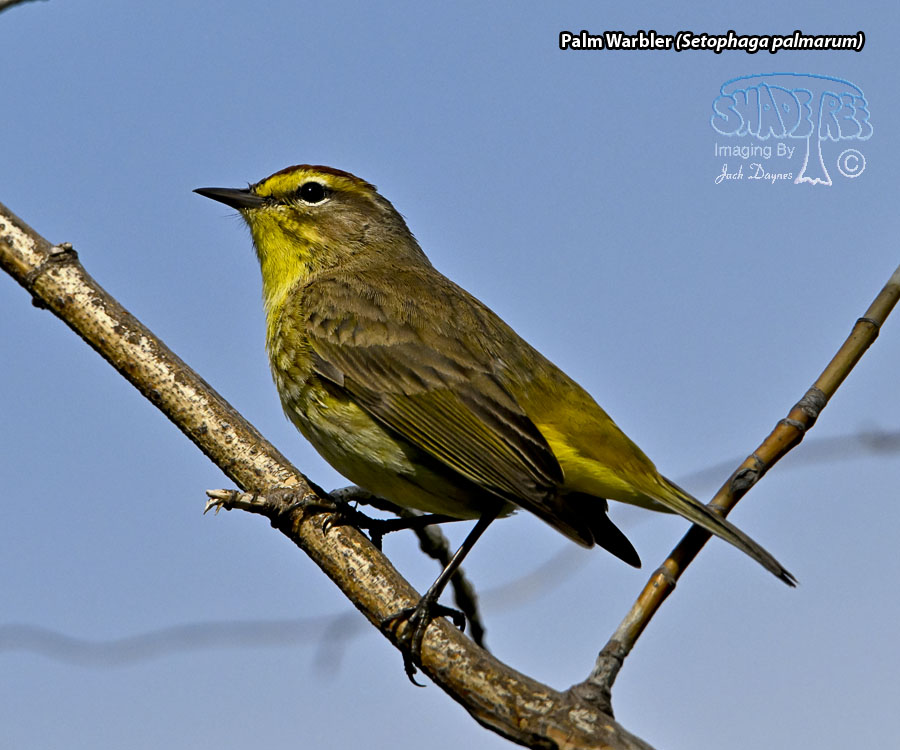
Palm Warbler(Setophaga palmarum) |
|
Description: My last stop in Ohio, before entering Canada in 2023 was at Magee Marsh, on the southern shore of Lake Erie. Spring migration was in full swing, and many birds staged there, fattening up before flying over the Great Lakes. |
Date Taken: 2023:05:07 13:48 |
|
Location:
Magee Marsh |
|
Camera Information: NIKON Z 9, 800 mm, f/8.0, 1/6400 |
File Name: PalmWarbler_ZX91793_MageeMarsh-OH |
| © 2023 Jack Daynes, shadeTreeImaging.com |
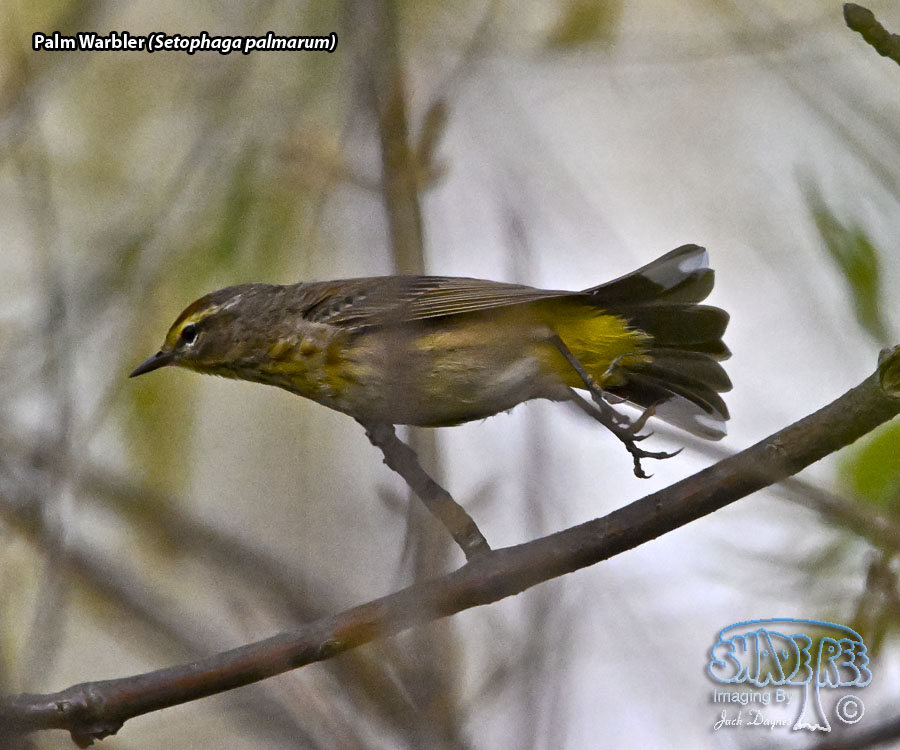
Palm Warbler(Setophaga palmarum) |
|
Description: My last stop in Ohio, before entering Canada in 2023 was at Magee Marsh, on the southern shore of Lake Erie. Spring migration was in full swing, and many birds staged there, fattening up before flying over the Great Lakes. |
Date Taken: 2023:05:07 14:02 |
|
Location:
Magee Marsh |
|
Camera Information: NIKON Z 9, 800 mm, f/8.0, 1/6400 |
File Name: PalmWarbler_ZX91844_MageeMarsh-OH |
| © 2023 Jack Daynes, shadeTreeImaging.com |
Click map markers to reveal further information
